
The complete guide
How to Choose a Kitchen Sink Strainer and Stopper That Actually Fits
The problem with the plug that came with your sink
Most kitchen sinks arrive with two mediocre parts. There is a plug that half seals, letting the water level drop while you are still scrubbing, and there is a flat metal strainer with holes big enough for rice, coffee grounds and bits of onion skin to slip through. Neither one was the main event when the sink was designed. They were the cheapest items on the parts list.
What follows is predictable. Food scraps work their way into the trap. Grease from the washing-up water coats them. Over a few months, the drain gets slower, then it gurgles, then one evening it backs up while you have guests. And in between, there is the smell. That faint sour note that drifts up from the waste pipe when the kitchen is warm.
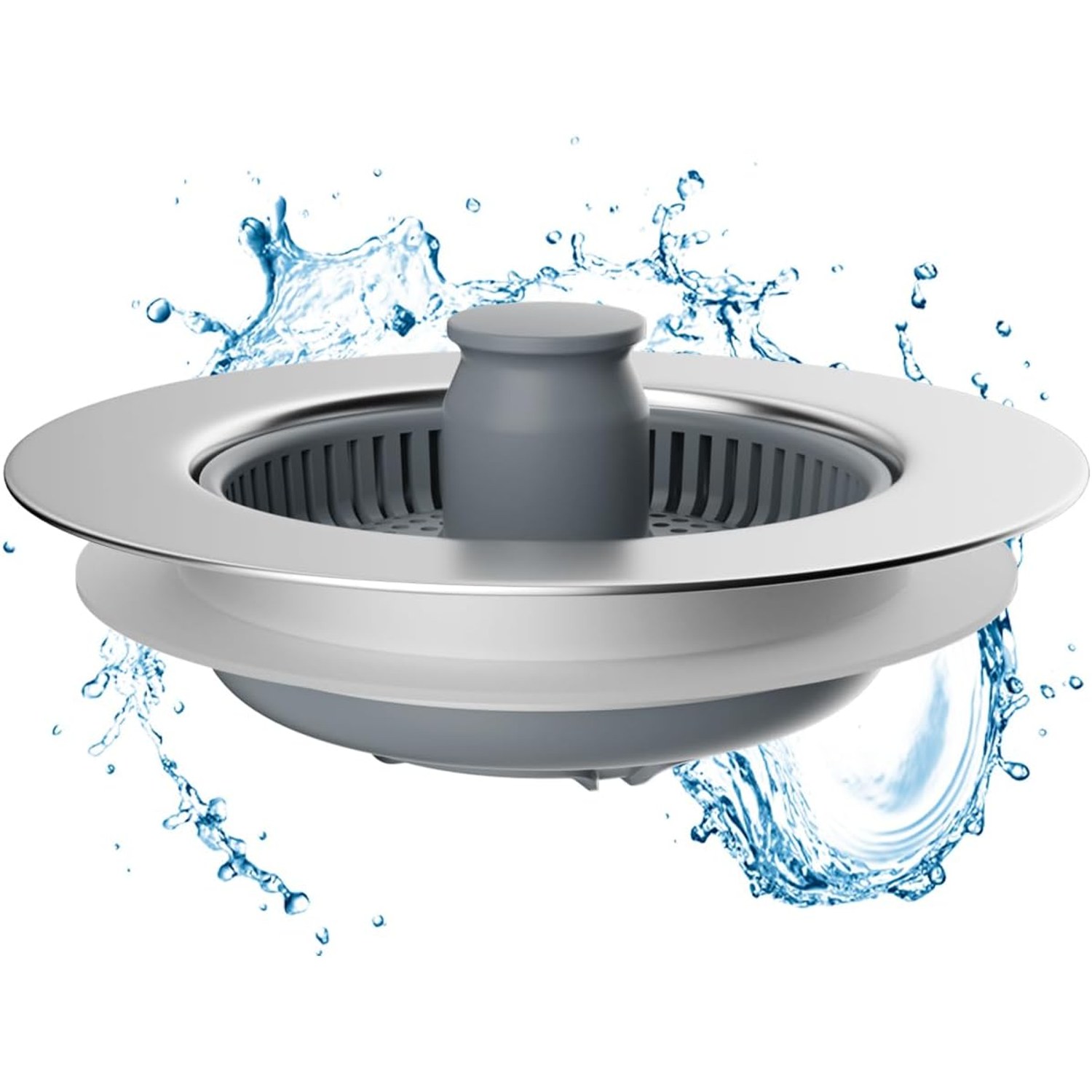
A proper sink plug with basket strainer solves all of that from one fitting. It is one of the smallest upgrades you can make in a kitchen and one of the few you notice every single day.
How a 3-in-1 strainer works
The name covers three functions in one body.
First, water retention. The pop-up stopper presses down to seal the drain so you can fill the bowl. Press it again and it lifts, letting the water go. There is no plug on a chain to lose and nothing to twist with wet hands.
Second, filtering. Below the stopper sits a basket with openings sized to let water through fast while holding solids back. Peelings, pasta, tea leaves and crumbs collect in the basket instead of travelling into your pipework. When you are done, you lift the basket out and tip it into the bin.
Third, odour isolation. When the stopper is seated, the drain mouth is closed. The air in the waste pipe stays in the waste pipe. That is the difference between a kitchen that smells of the meal you cooked and one that smells of last week's.
This particular unit is built around a thickened ABS base with a stainless steel shell wrapped over it. The ABS gives the body some weight and will not corrode. The steel gives you a surface that resists rust and does not scratch when a pan edge catches it. The finish is plain silver stainless steel.
Getting the size right
This is the single thing that decides whether your new strainer is brilliant or useless, so do it before you order.
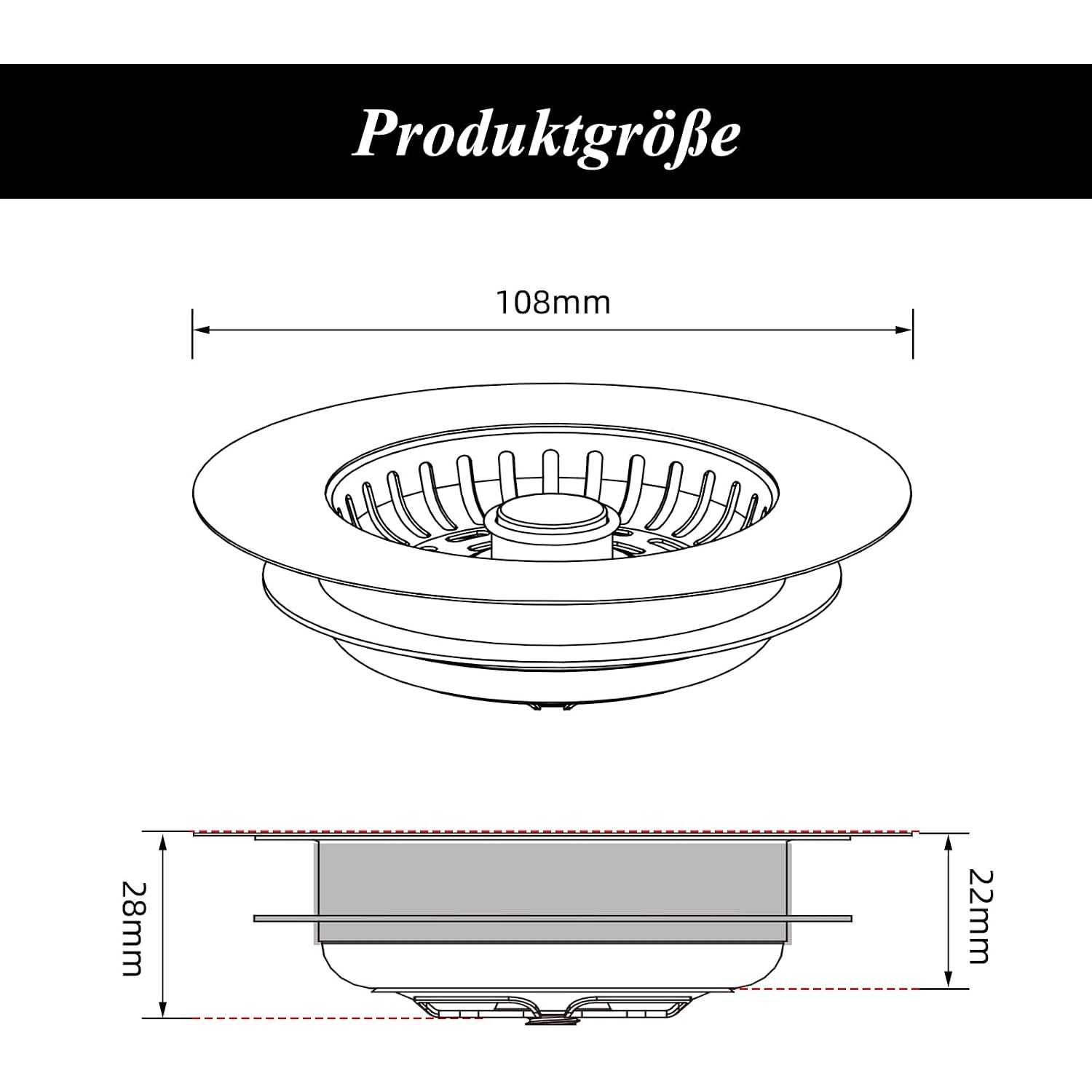
Take out whatever is currently in the drain and measure straight across the widest part of the circular opening. This fitting is made for holes between 75 and 86 mm. Then check the depth of the sink waste below the surface. It needs more than 28 mm to seat correctly.
Those two numbers cover the great majority of standard kitchen sinks, including most stainless steel, composite and ceramic bowls sold in the last couple of decades. Older sinks, bar sinks and some utility sinks can sit outside the range. A tape measure takes ten seconds and saves you a return.
If you have a double-bowl sink, measure both. They are usually identical, but it is worth confirming. Plenty of people buy two units so each bowl is covered.
Who this suits
Households that cook properly will get the most out of it. If you prep vegetables, drain pasta, rinse rice or empty a teapot into the sink, you are sending the exact material that blocks pipes down the drain several times a day. A kitchen sink drain strainer with a real basket catches it before it becomes a problem.
It also suits anyone in a rental. You cannot change the plumbing, but you can control what goes into it, and a good strainer is the simplest way to avoid an argument about a blocked drain when you move out.
Flats and older buildings with shared waste stacks benefit from the odour seal in particular. If the smell from your kitchen drain has never quite gone away no matter how much you flush it, a sealed stopper makes an immediate difference to the air in the room.
And it works well for anyone who likes soaking dishes. A plug that actually holds means you can fill the sink, walk away and come back to water still at the level you left it.
How to choose between strainers
A few things separate a strainer you keep for years from one you bin in six months.
Material is the obvious one. Thin pressed metal bends and pits. All-plastic units go brittle and discolour. A stainless steel shell over a solid ABS base is a sensible middle ground, giving you corrosion resistance where the water sits and structure where the mechanism works.
The mechanism matters as much as the material. Twist-and-seal designs are fiddly with greasy hands and the thread wears. A press-down pop-up is faster, and there is less to go wrong. One press to hold, one press to drain.
Basket design is worth a look too. Openings that are too fine clog instantly and leave you with a sink full of water. Openings that are too coarse let the small stuff through and you are back to square one. The balance you want is water running freely while rice and coffee grounds stay put.
Finally, think about how you will empty it. A basket that lifts out cleanly means you never have to put your fingers into wet food waste. That sounds minor until you are doing it twice a day.
Looking after it
The care routine is about as simple as it gets.
After each wash-up, lift the basket and tip the contents into the bin. Rinse it under warm water. If there is anything sticky clinging to it, a drop of dish soap and a soft brush sorts it. Drop it back in and you are done.
Once a week, give the stopper and the rim a proper wipe. Grease builds up slowly and invisibly, and a quick clean stops it becoming a job. Use a soft cloth or sponge rather than steel wool or scouring powder, which can mark the stainless steel finish.
Dry the parts before putting them back if you care about how it looks. Standing water leaves mineral spots on steel, especially in hard water areas. It is purely cosmetic, but it takes five seconds to avoid.
If you ever use a chemical drain cleaner, take the strainer and basket out first and rinse everything well with plain water afterwards. Those products are strong enough to dull finishes they sit on.
A note on what this does not do
A strainer protects your pipes from solids. It does not deal with grease. Fat poured down a drain is liquid when it leaves the pan and solid when it cools in the pipe, and no basket will stop that. Wipe greasy pans with kitchen paper before washing them, or pour cooled fat into a jar and bin it.
It also will not fix a blockage that already exists. If your drain is slow today, clear it first, then fit the strainer to keep it clear.
The short version
A kitchen sink strainer and stopper is a small part doing an outsized job. This one combines a pop-up water seal, an anti-clogging food basket and an odour block in a single fitting, with a stainless steel shell over a thickened ABS body in a silver finish.
Measure your drain opening first. If it falls between 75 and 86 mm and your waste is deeper than 28 mm, it will drop straight in with no tools. From there it is a matter of emptying the basket after each wash-up and giving it a wipe once a week.
You will stop fishing food out of the drain, your pipes will stay clear, and the kitchen will smell like the kitchen again.