
The complete guide
How To Choose And Fit A Brass Drain Hose Connector
The problem this solves
Washing machine and dishwasher drain hoses are made just long enough, and not a centimetre more. That is fine until something changes. You move the machine to the other side of the laundry. You fit a new worktop and the waste stand pipe ends up further away. You buy a second-hand appliance and discover the previous owner cut the hose to suit their own plumbing.
Then there is damage. The last 50 mm of a drain hose takes a beating. It gets forced onto a stand pipe, clamped too hard, kinked behind the machine and bent back on itself every time the appliance is pushed into place. Eventually it splits. The rest of the hose, all two metres of it, is perfectly good.
In both cases the fix is the same. You need a way to join two hose ends into one continuous run that holds water. That is what a brass drain hose connector does, and it costs a fraction of a call-out or a full replacement hose.
How the coupling works
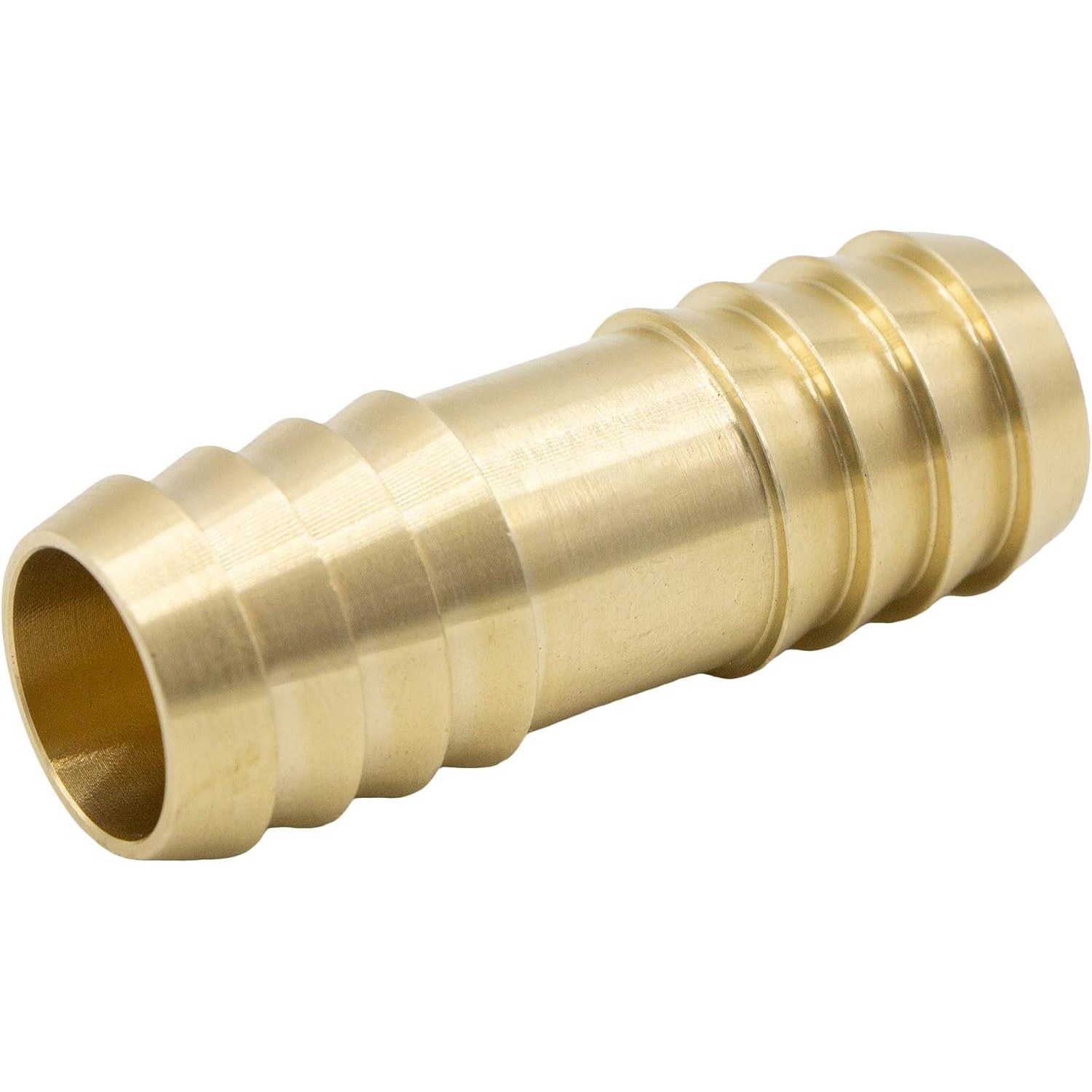
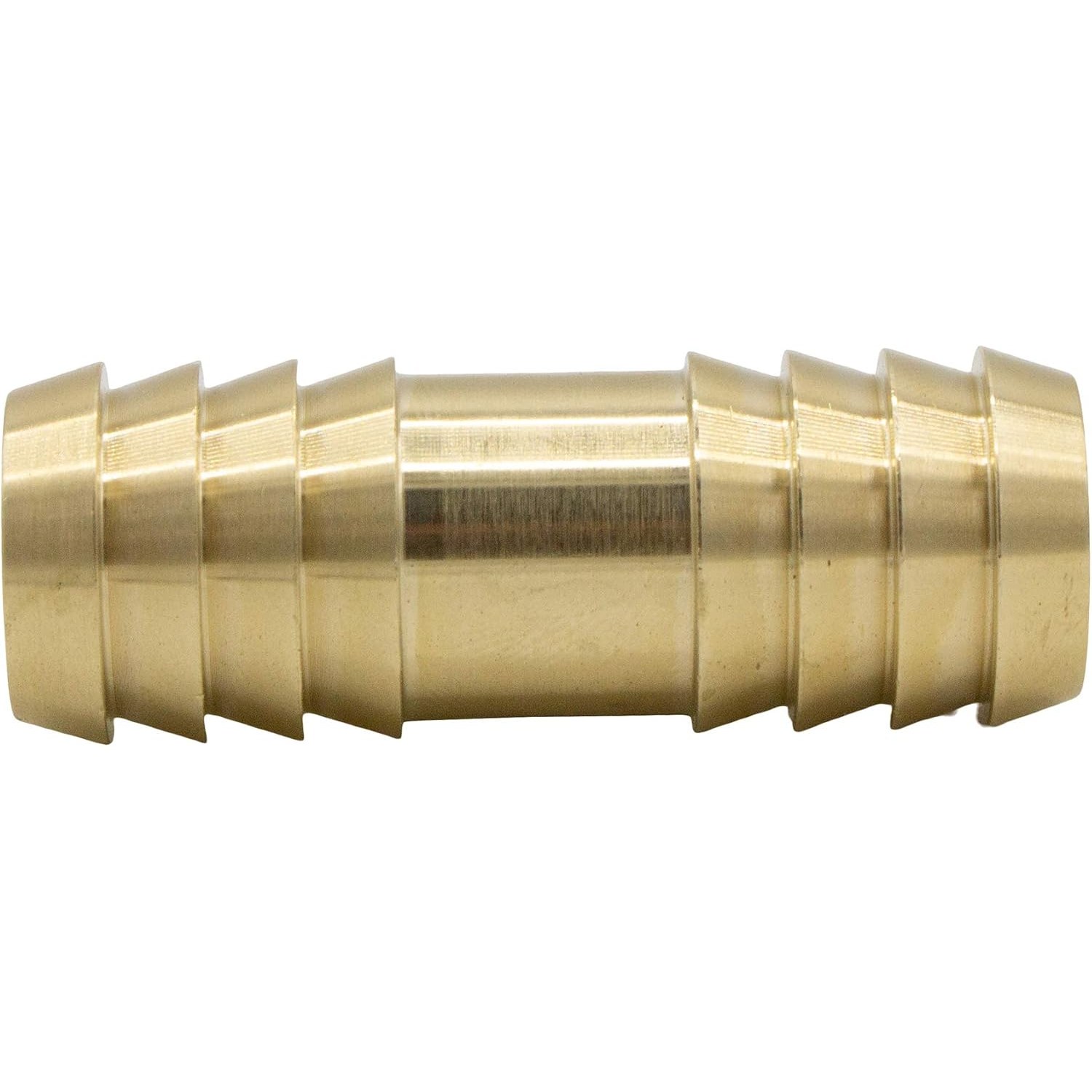
The design has not changed much in decades because it works. The connector is a short tube with raised rings, called barbs, along its outside. The hose is pushed over the barbs, and a clip is tightened around the outside of the hose where it sits over the barbed section.
Two things create the seal. First, the hose is stretched slightly as it goes over the barb, so the plastic is already pressing inward. Second, the clip squeezes the hose down into the grooves between the barbs. Water pushing along the hose has to force its way back out through that compressed, interlocked section, and it cannot.
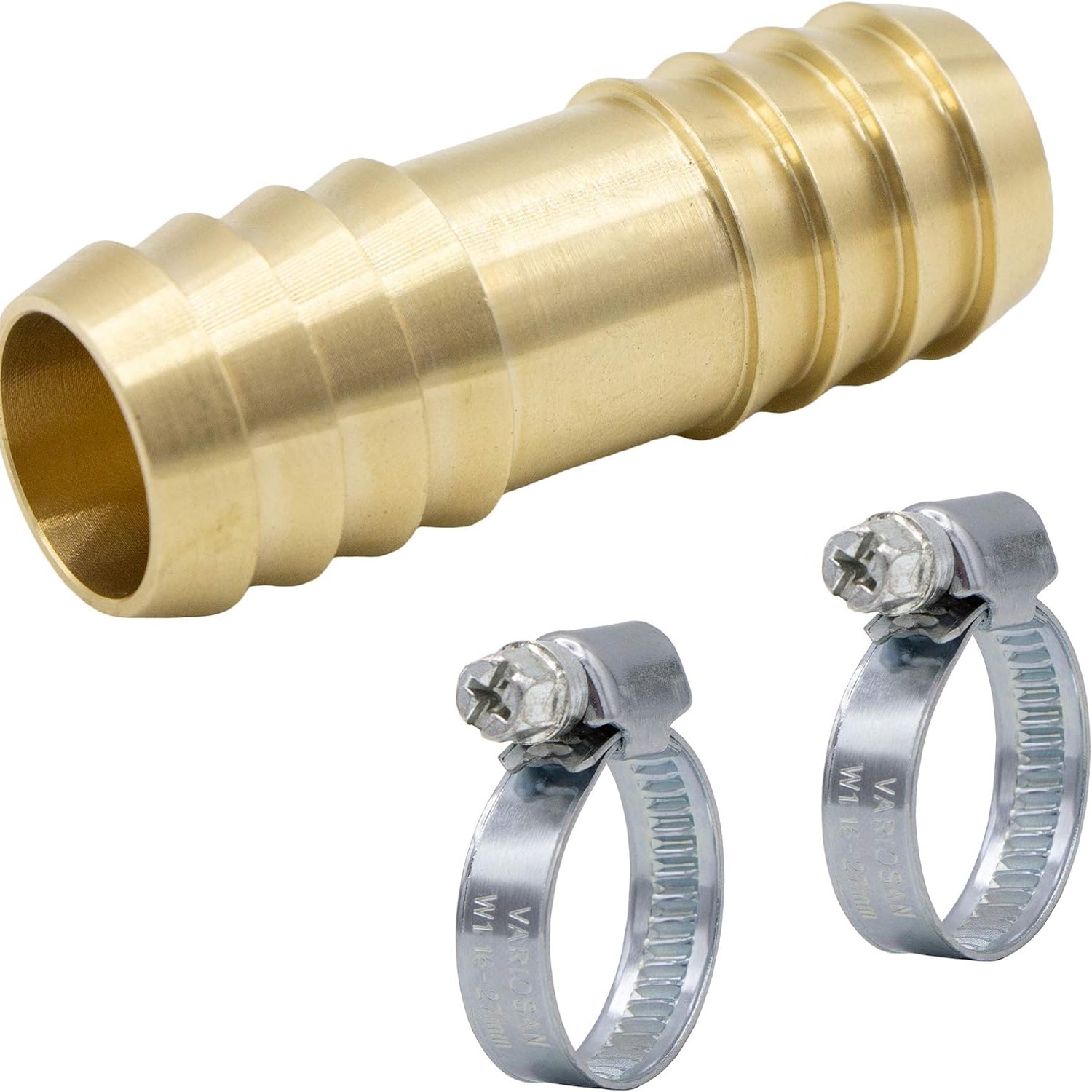
This connector is 55 mm long, which splits into about 27 mm of grip per side. That matters more than people expect. A very short coupling leaves nowhere sensible for the clip to sit, and a clip sitting on bare hose instead of over the barb does almost nothing.
The barb measures 20.9 mm across, with a listed outside diameter of 27 mm and a nominal wall thickness of 3.5 mm. That wall thickness is why it stays round. A thin-walled fitting can deform when the clip is tightened, and a deformed barb is where leaks begin.
Why brass matters here
The area behind a washing machine is one of the damper spots in a house. Warm water drains through the hose, condensation forms, and the floor is rarely bone dry. Add in detergent residue and it is not a kind environment for cheap metal.
Brass holds up. It does not rust the way plain steel does, it keeps its surface, and it stays dimensionally stable when hot water passes through it. Plastic couplings have their place, but they can soften and creep under repeated hot cycles, and once a plastic barb has lost its sharp edges the clip has nothing to bite into.
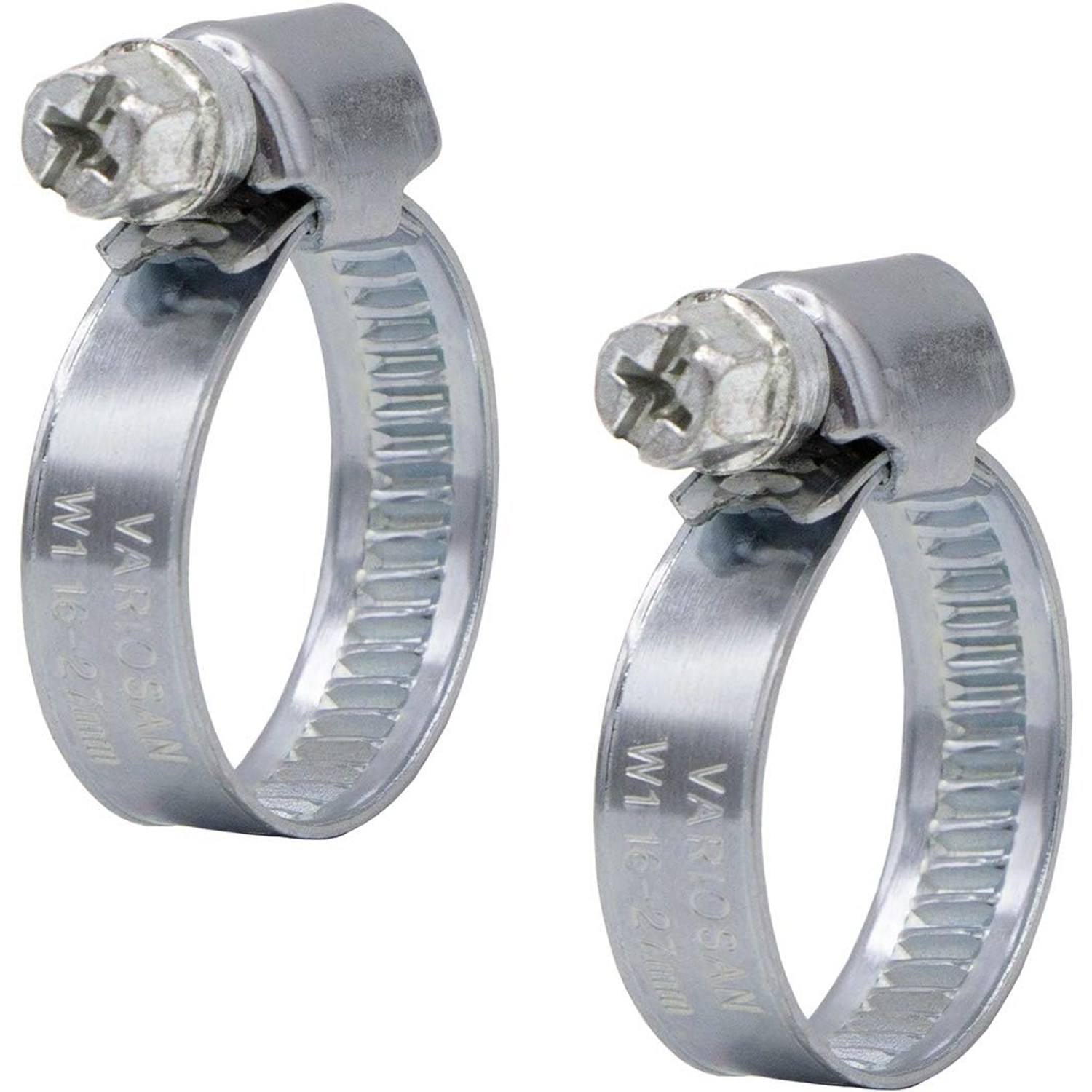
Brass also gives you a solid backing. When you tighten a clip, the hose has to be squeezed against something that will not give. A rigid brass body does that job properly. The clips supplied here are zinc-plated W1 type with a 16 to 27 mm clamping range, which covers typical drain hose outer diameters comfortably.
Checking the fit before you order
The one measurement that decides everything is the inner diameter of your hose. This coupling suits 19 to 21 mm. Most domestic washing machine drain hoses fall in that band, and many dishwasher hoses do too, but not all of them.
To measure, cut nothing and dismantle nothing. Pull the hose end off the stand pipe or waste spigot, hold a ruler across the opening and read the distance between the inner walls. If the hose is ribbed, measure the smooth bore inside, not the outer ridges.
If you land at 19, 20 or 21 mm, you are in range. If you measure 16 mm or 25 mm, you need a different size of drain hose coupling. Buying the wrong diameter is the single most common reason these parts get returned, and a tape measure prevents it.
Also think about what the hose is made of. Soft flexible hose stretches over a barb easily. Hard, old, sun-stiffened hose does not, and may crack. If the hose end is brittle, trim back 100 mm to fresher material before fitting.
Fitting it properly
Set aside ten minutes and put a towel down. There will be water left in the hose, and it will find your socks.
Start by sliding a clip onto each hose end. People forget this constantly and have to pull a freshly fitted hose back off. Push the clips well back out of the way.
Next, soften the hose. Sit each end in a mug of hot tap water for a minute or two. It makes a surprising difference. A stiff hose that will not budge cold slides on easily once warm.
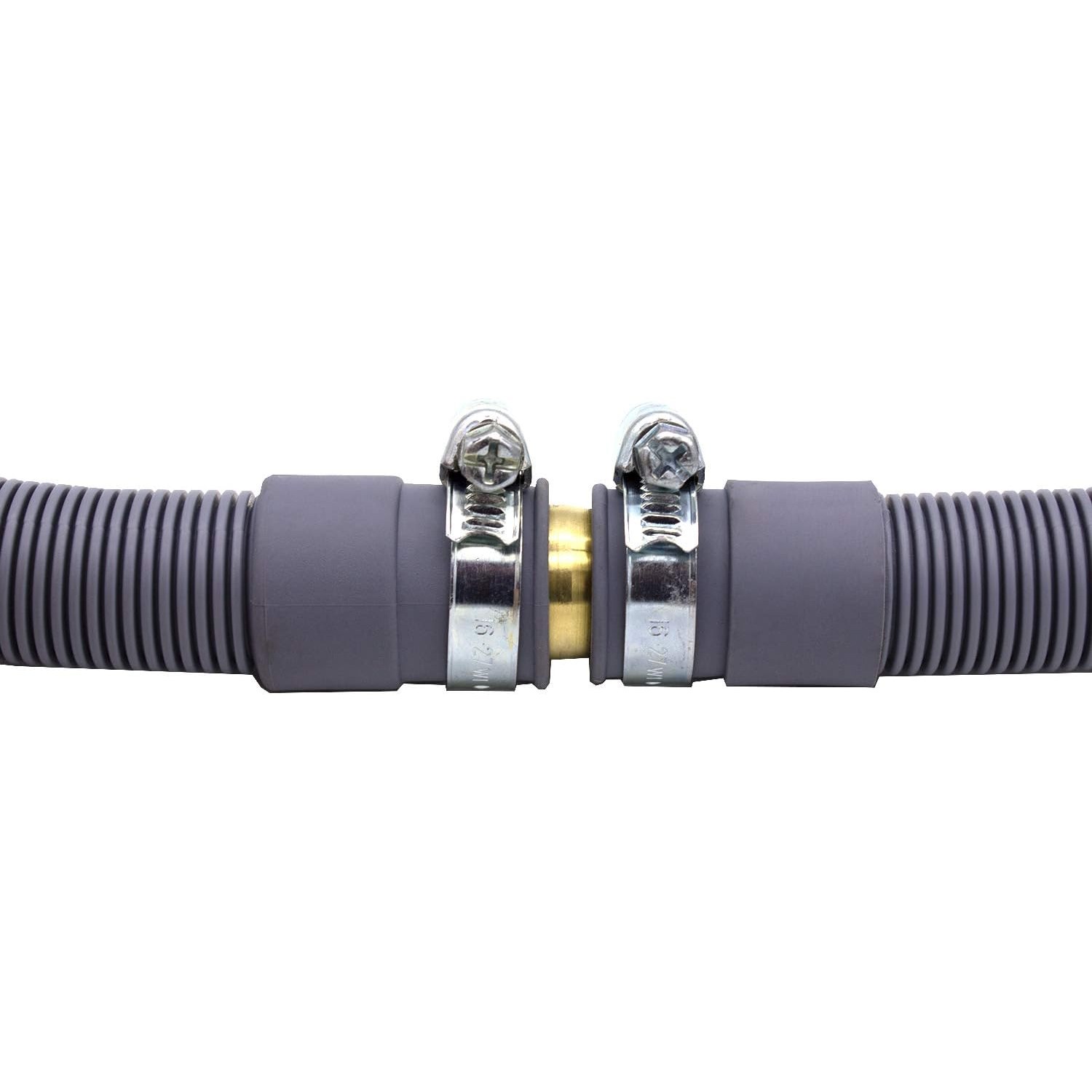
Push the first hose over the barb until it reaches the centre of the connector. You want full engagement, not a hose perched on the first ridge. Repeat with the second hose on the other end. Then slide each clip forward so it sits directly over the barbed area, and tighten with a flat screwdriver.
Tighten evenly and stop when the hose cannot be twisted by hand. Going further crushes the hose wall, and a crushed wall can actually channel water out rather than seal it in. Snug is the goal.
Finally, test before you push anything back into place. Run the appliance on a short cycle, let it drain, and run a dry tissue all the way round the join. Damp on the tissue means you need another quarter turn on the clips or a closer look at the hose end.
Who this suits
This is a part for anyone comfortable with a screwdriver. You do not need plumbing experience, and you are not touching any pressurised supply line. Drain hoses carry waste water at low pressure, driven by the appliance pump for a short burst.
It suits renters who need to move a machine and put it back later. It suits anyone fitting out a new laundry where the waste point has moved. It suits people repairing a split hose end instead of replacing a whole hose, which is both cheaper and less wasteful.
What it does not suit is any pressurised water line. Cold and hot fill hoses carry mains pressure and need threaded, washer-sealed fittings rated for that duty. Never use a barb and clip arrangement on a supply line.
Keeping an eye on it long term
A well-fitted join is not something you need to worry about weekly, but it rewards the occasional glance. Check it after the first few cycles, then whenever the appliance gets pulled out for cleaning behind.
Watch for three things. Damp around the clip, which means tighten or re-seat. A hose that has gone hard and shiny near the join, which means the plastic is ageing and should be trimmed back. And a clip screw that will not turn, which means corrosion has set in and the clip should be swapped.
Avoid sharp bends immediately next to the connector. A kink right at the join puts sideways load on the hose end and gradually works it loose. Give the hose a gentle sweeping curve instead.
If you ever take the join apart, inspect both hose ends. Barbs leave impressions in the plastic. Those marked sections should be cut off and a fresh length of hose pushed on, rather than reusing a stretched end.
The short version
If your appliance drain hose is too short, split at the end, or needs to meet a new length, a brass coupling with two clips is the right answer. Measure the inner diameter of your hose first. If it is between 19 and 21 mm, this connector fits.
Brass gives you a fitting that will not rust out in a damp laundry and will not soften under hot drain water. The 55 mm length gives both clips somewhere proper to sit. Fitting takes a screwdriver, a mug of hot water and about ten minutes.
Do the job once, check it with a tissue, and you can forget about it.