
The complete guide
How To Choose And Use A Long Drain Cleaning Brush
The problem nobody deals with until it is too late
Drains rarely fail suddenly. They get lazy. The basin takes a few extra seconds to empty, the shower tray holds a shallow puddle around your feet, the kitchen sink gurgles when the washing machine drains. You notice, you shrug, you carry on. Then one evening the water simply stops going down and you are standing there with a bucket.
What is actually happening is simple. Hair, soap residue, grease, toothpaste and bits of food build up on the inside wall of the pipe, usually within the first metre or so of the plughole. The passage narrows gradually. Water still gets through, just less of it. A plunger can sometimes shift the plug of debris, but often it just pushes it a bit further along the pipe where it settles again. Chemical drain cleaners dissolve some of it and leave the rest. Neither approach removes the problem. They move it.
The thing that actually fixes it is a brush long enough and thin enough to get in there, scrub the pipe wall, grab the mess and pull it out of the house.
What this set includes and why three tools
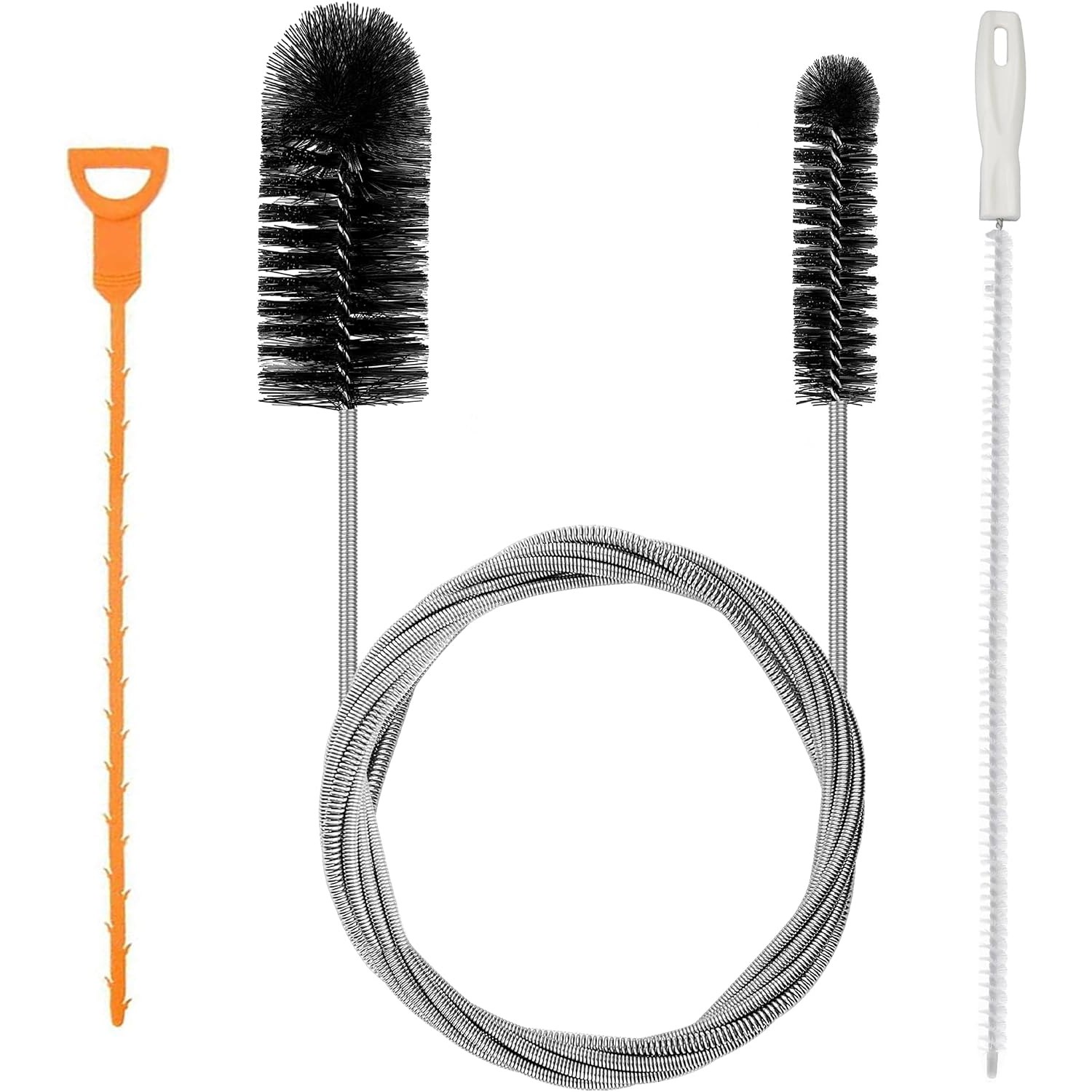
You get three pieces, and they are not just the same brush in three lengths.
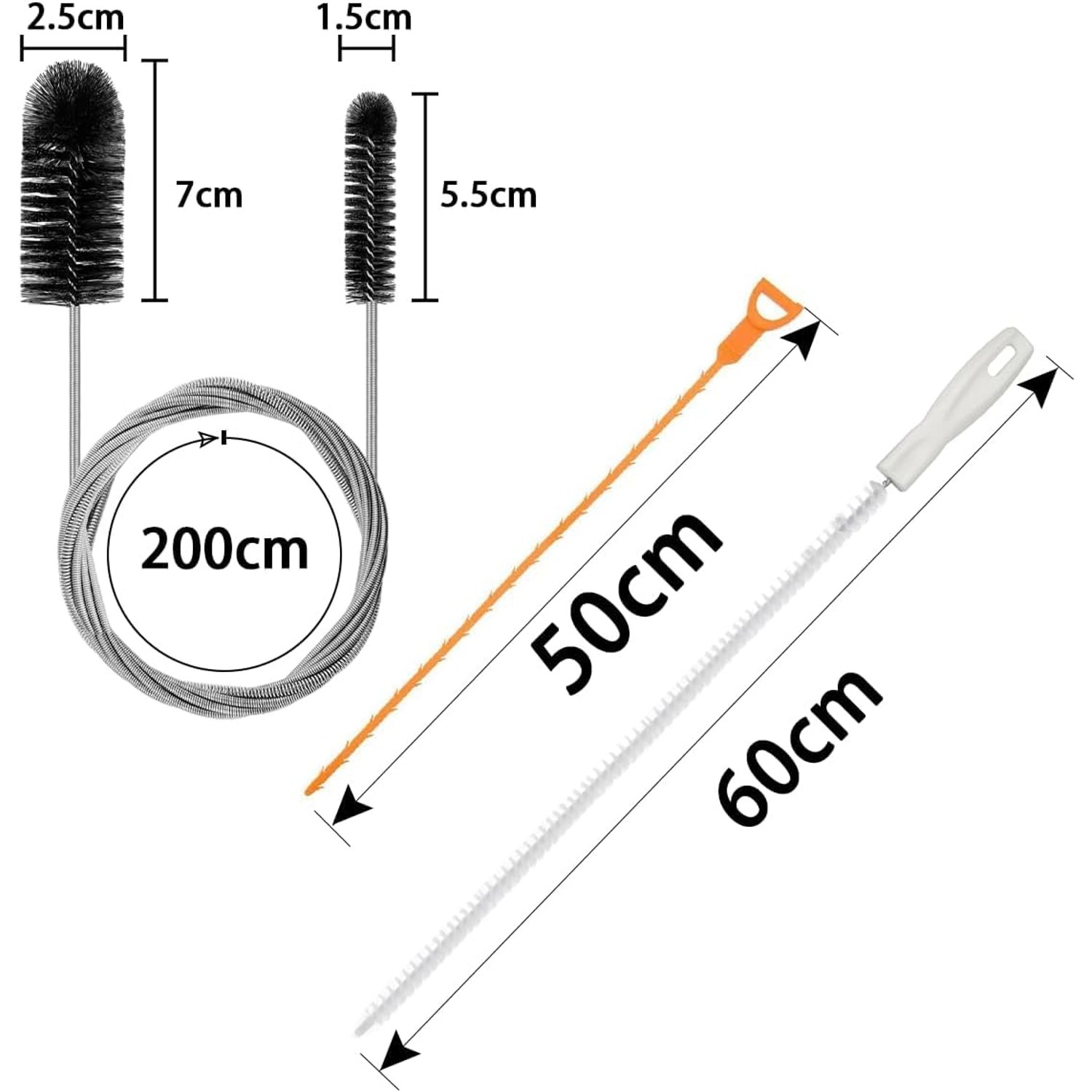
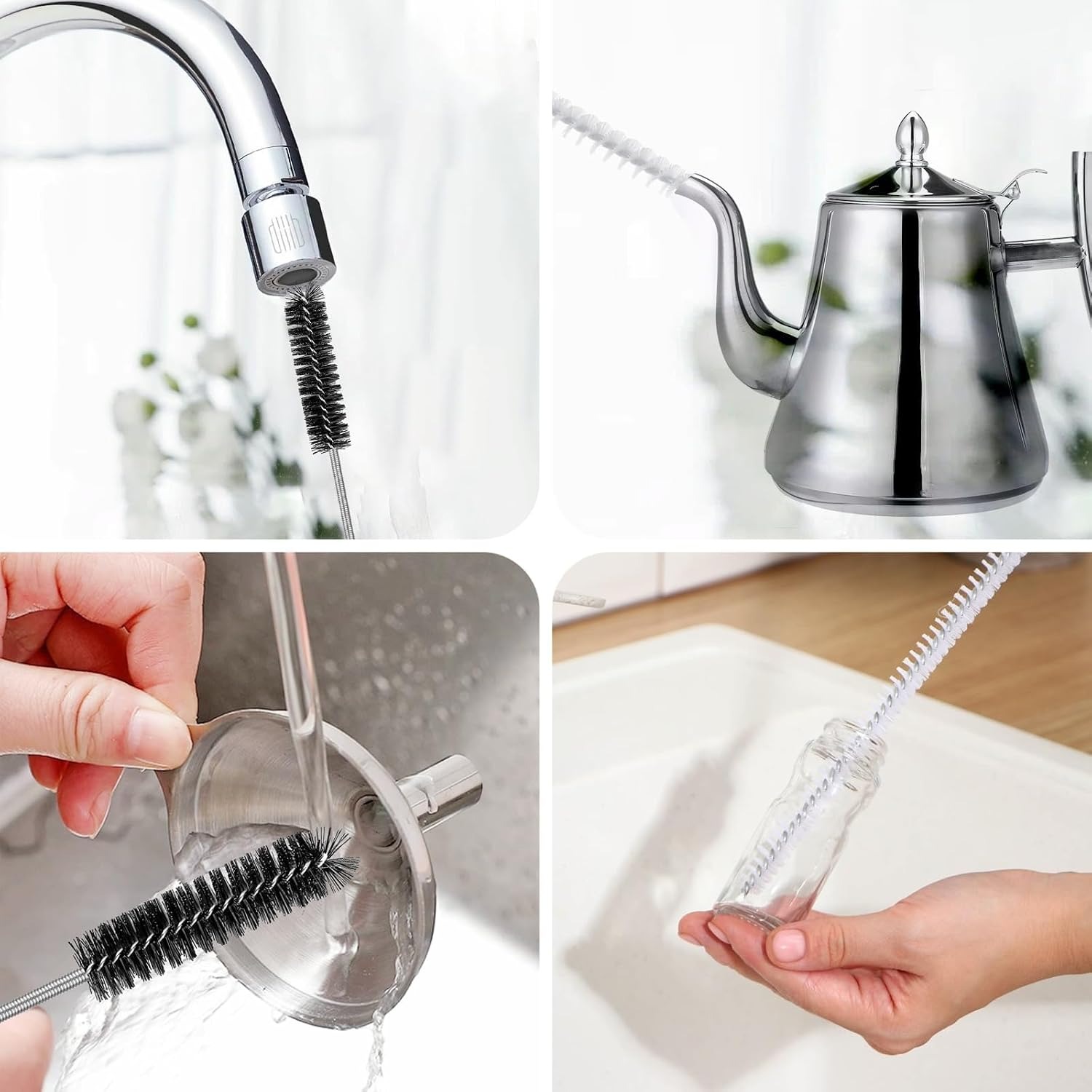
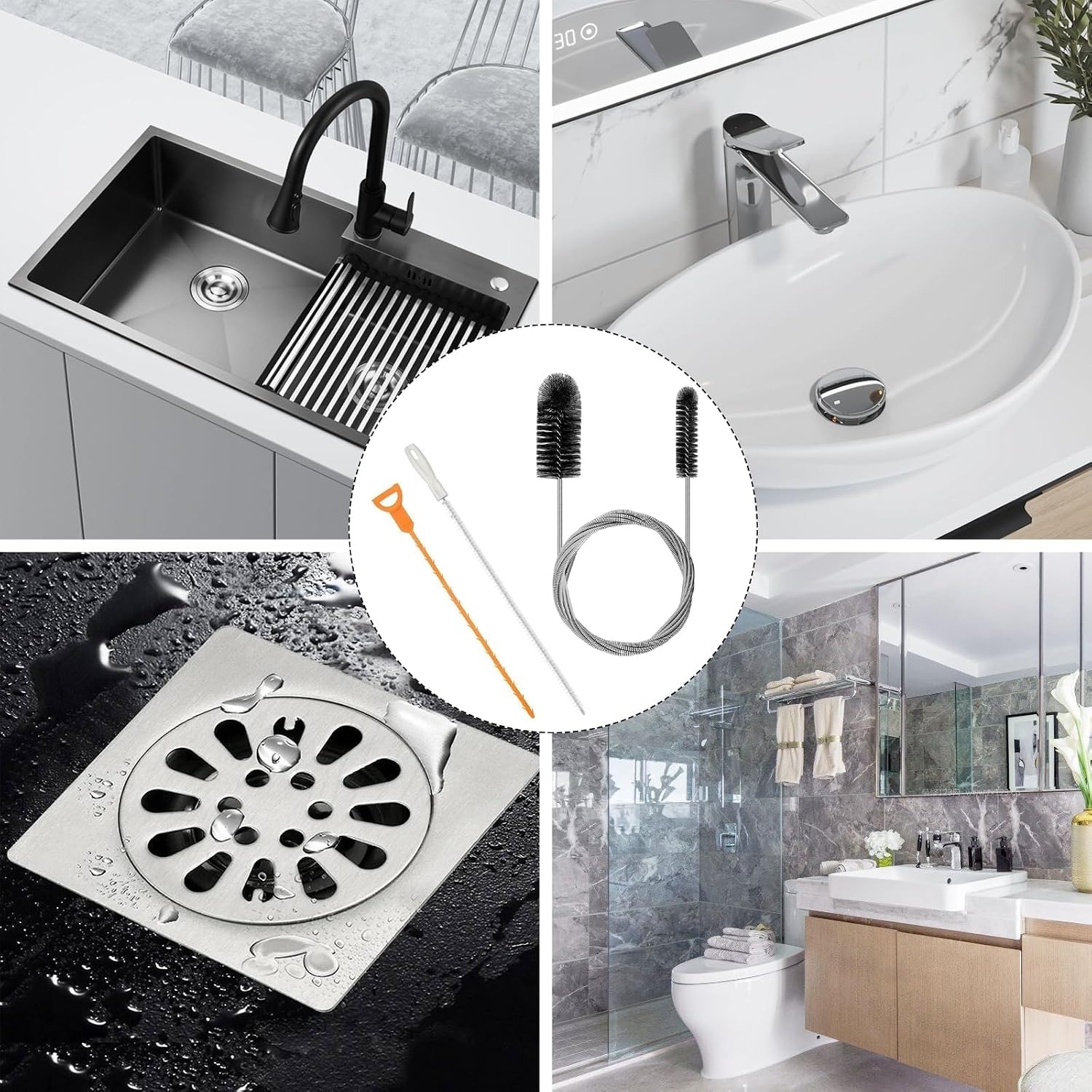
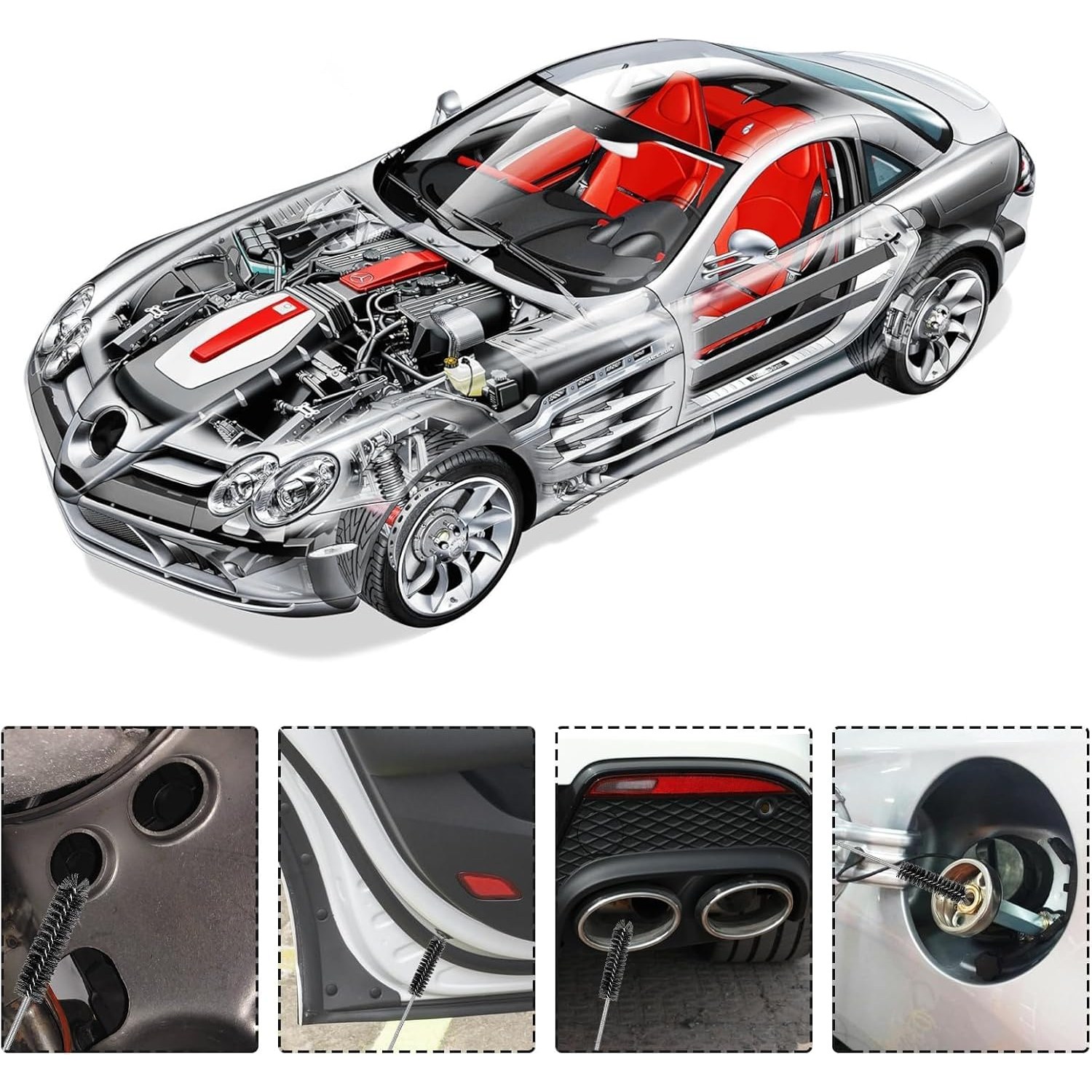
The main item is the 200cm flexible brush. It has a bristle head at each end, one measuring 2.5cm across and the other 1.5cm. That is the piece for long runs: washing machine outlet hoses, aquarium filter tubing, coffee machine lines, fridge defrost drains, car sunroof channels, and household pipes where the blockage is sitting deeper than you can reach by hand.
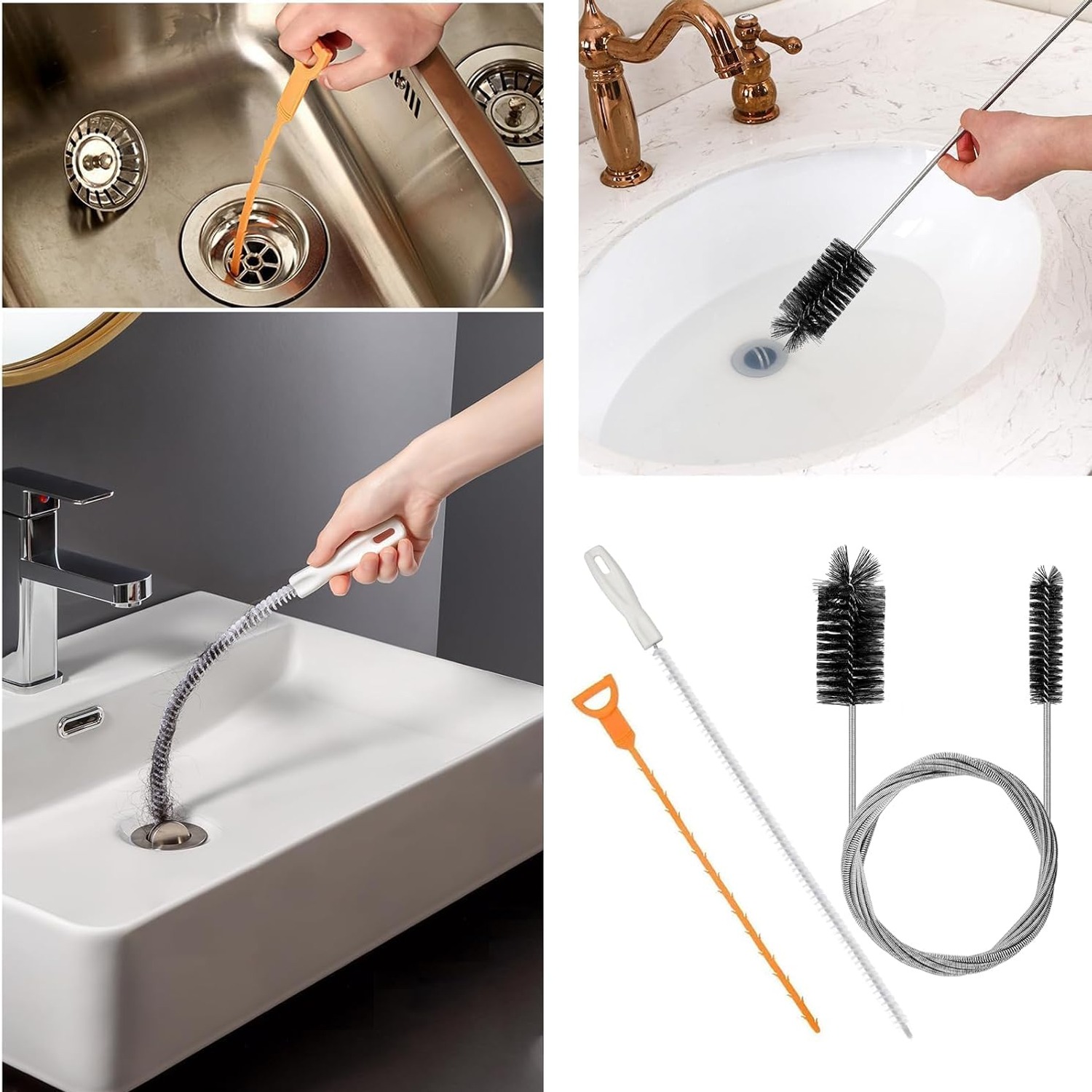
The 60cm brush is the everyday one. Shorter, easier to control, and ideal for the bend under a bathroom basin or a kitchen sink. Most routine maintenance gets done with this.
The 50cm hair removal stick is the ugly hero. It is thin enough to slip past a plughole grate without unscrewing anything, and it is designed to catch hair rather than brush it. Twist, pull slowly, and up comes a matted clump that was quietly choking the pipe. It takes under a minute and it is the single most satisfying bit of household maintenance there is.
Having all three means you stop improvising with coat hangers.
How the construction affects the job
Two materials matter here. The bristles are high-density nylon, and the shaft is 304 stainless steel.
Nylon is the right choice for wet work. It keeps its stiffness in water, scrubs effectively against plastic, metal, glass and tile, and does not rot. Packing the bristles densely means more contact with the pipe wall on each pass, so you clear more per stroke and the bristles are less likely to pull loose.
The stainless steel shaft is what makes the length usable. A 200cm brush on a floppy wire would fold the moment it met a bend. Stainless wire has spring in it. It flexes round the U-bend of a trap, follows the curve of a corrugated hose, and then returns to straight rather than holding a kink. It also resists rust, which is not a small thing for a tool that spends its life soaking wet.
The firmness is described as medium, which is the right balance for a general purpose tool. Too soft and it buckles rather than pushing through soft sludge. Too stiff and it will not negotiate a tight bend.
Who this suits
Renters and flat-dwellers get a lot out of a set like this. Calling a plumber for a slow shower is expensive and slow, and landlords are not always quick to respond. A ten minute job with a drain brush usually solves it.
Households with long hair have the most to gain. Hair is the number one cause of bathroom blockages, and no chemical handles it well. Physical removal is the only reliable answer.
Pet owners, aquarium keepers and anyone with a fish tank will use the 200cm brush on filter tubing, where biofilm builds up invisibly and slowly chokes the flow.
Anyone maintaining appliances benefits too. Washing machine hoses, dishwasher drain lines and coffee machine tubing all collect residue that affects performance long before anything actually blocks.
And if you look after a car with a sunroof, the drain channels in the corners are notorious for clogging with leaf debris and then leaking water into the headlining. A long flexible brush is the standard fix.
How to choose a drain brush that is actually useful
A few things separate a tool you keep from one you throw away after a month.
Length is the first. Anything under a metre only reaches the trap. Blockages often sit just past it. Two hundred centimetres covers almost any domestic situation and gives you slack to work with.
Head diameter is the second. A single-size brush is a compromise. Two sizes on one shaft, as here, means you are not scraping a tiny brush along a wide pipe or jamming a wide one into narrow tubing.
Shaft material is the third. Plain steel wire rusts and stains. Stainless costs a little more and lasts considerably longer in a permanently damp environment.
Finally, consider whether the thing can actually be cleaned. A brush that cannot be properly rinsed becomes a smelly object you avoid touching, and a tool you avoid is a tool you do not use. Nylon on stainless washes out completely under a tap with a drop of dish soap.
Using it properly
Start by clearing the obvious. Lift out the plug, pull off any removable grate, and take out anything sitting at the top with the hair stick.
Then insert the brush. Push it in steadily until you feel resistance, which is the blockage. Do not shove. Turn the shaft a quarter turn at a time while applying light pressure, letting the bristles work into the debris. Then draw it out slowly, keeping the rotation going. Material comes with it.
Have a plastic bag or old newspaper ready, because what comes out is genuinely unpleasant and you do not want to put it back down the drain you just cleared.
Repeat two or three times until the brush comes out clean. Finish by running hot water for a minute to flush the loosened residue away.
For appliance hoses, disconnect the hose first, brush it through from both ends, then rinse it under a tap before reconnecting. For narrow tubing like aquarium lines or a fridge drain hole, use the 1.5cm end and go gently, since those passages are small and the plastic is thin.
Looking after the set
Rinse all three pieces under running water immediately after use, bristles pointing down so debris washes away rather than deeper into the brush. Work in a little dish soap if there is grease involved, then rinse again.
Dry them fully before storing. Damp bristles in a cupboard will smell within days. Hanging them is best, standing them bristle-up in a container is fine.
Coil the 200cm shaft loosely. Do not fold it into tight creases or wrap it around something small, because repeated sharp bending in one spot eventually weakens any wire.
Keep harsh chemicals away from the bristles. If you have used a chemical cleaner in the drain, flush the pipe with plenty of water before putting the brush in, and rinse the brush thoroughly afterwards.
It is also worth keeping separate brushes for separate purposes. If you use one on the coffee machine tubing, do not use that same one on the shower drain.
A monthly habit beats an annual emergency
The real value of a set like this is not the dramatic unblocking. It is the ten minutes a month that means the dramatic unblocking never happens. Run the hair stick through the shower drain, give the basin a pass with the 60cm brush, and your pipes stay clear. Plumbers get called out for problems that built up over two years of neglect.
The short version
This is a three piece drain cleaning kit built around a 200cm double-ended flexible brush with 2.5cm and 1.5cm heads, backed up by a 60cm brush and a 50cm hair removal stick. Nylon bristles, 304 stainless steel shaft, washable and reusable. It handles bathroom drains, kitchen sinks, floor drains, appliance hoses, aquarium tubing and sunroof channels. If you have a slow drain now, it will probably fix it this afternoon. If you do not, keep it in the cupboard and you may never have one.