
The complete guide
How to Clear a Slow Drain Yourself, A Practical Buyer's Guide
The problem you are actually dealing with
A sink that drains slowly almost never means a broken pipe. It means something has been collecting inside it. In a bathroom that something is usually hair, bound together with soap scum into a greasy mat. In a kitchen it is fat, oil and food scraps that cooled and stuck to the pipe wall. Either way the pipe is not blocked, it is narrowed, and every wash makes the gap a bit smaller.
That is why the water goes down fine for months, then one morning you notice it pooling around the plug. The clog has been building the whole time. By the time you see it, there is a fist-sized lump sitting just past the drain opening or wedged in the U-bend below.
Most people reach for a bottle first. Liquid drain products do soften the outside of a clog, and sometimes that is enough to get things moving again. The trouble is they often leave the dense core behind, so the blockage rebuilds from the same starting point. Two weeks later you are standing over the same slow sink. Pulling the clog out is the fix that actually finishes the job.
What a three piece drain snake set does
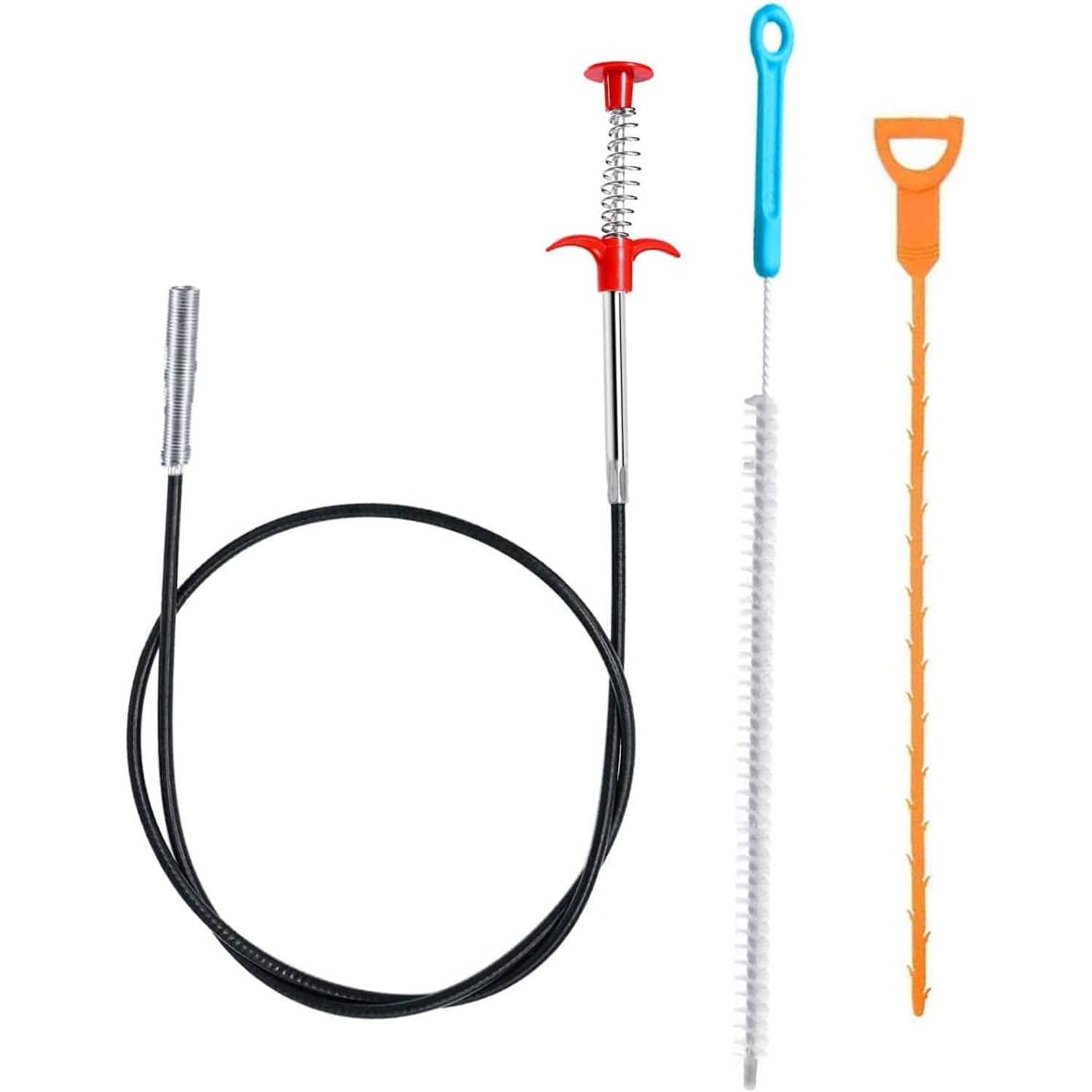
This kit gives you three different ways into the same drain, and that is the real value of it. One tool rarely suits every situation.
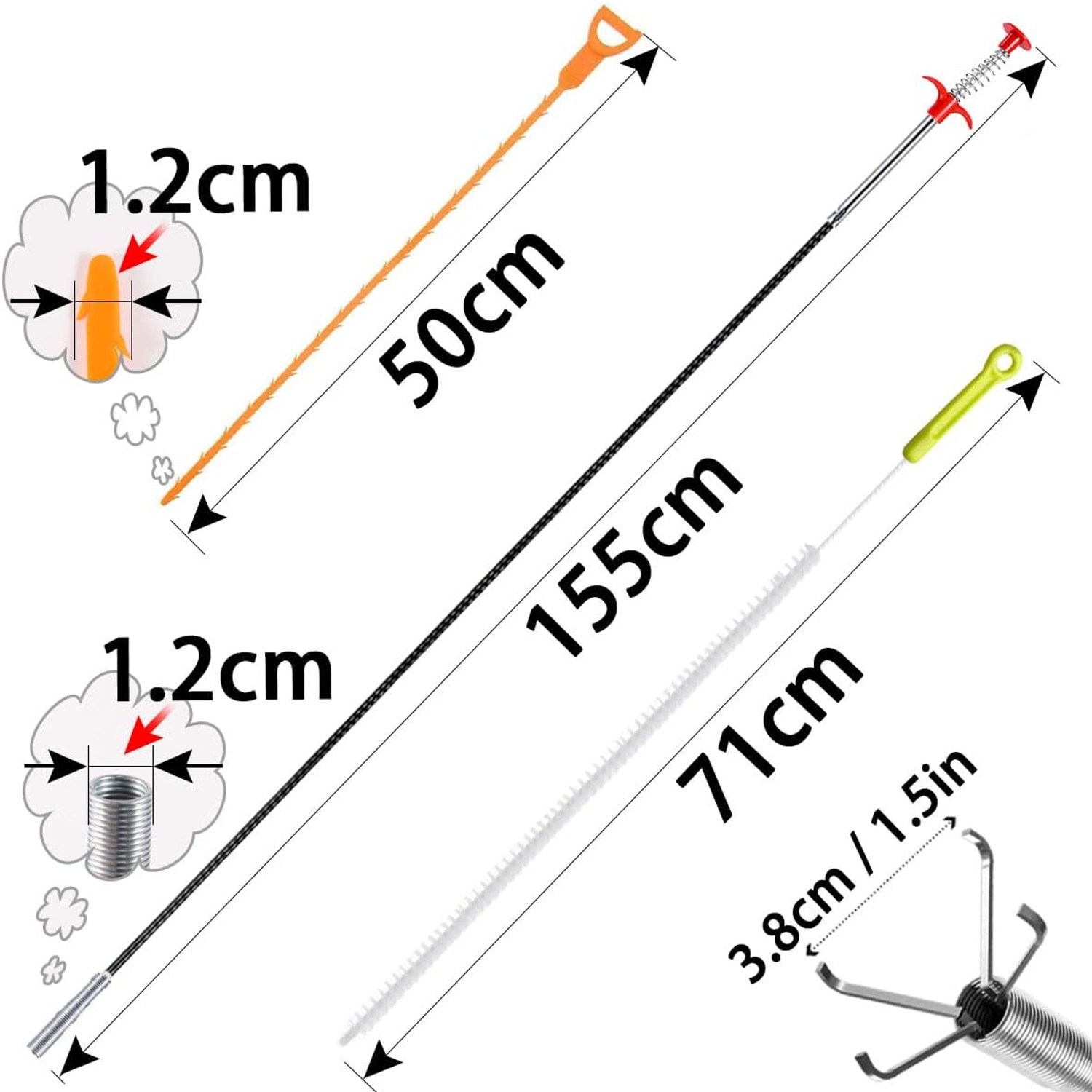
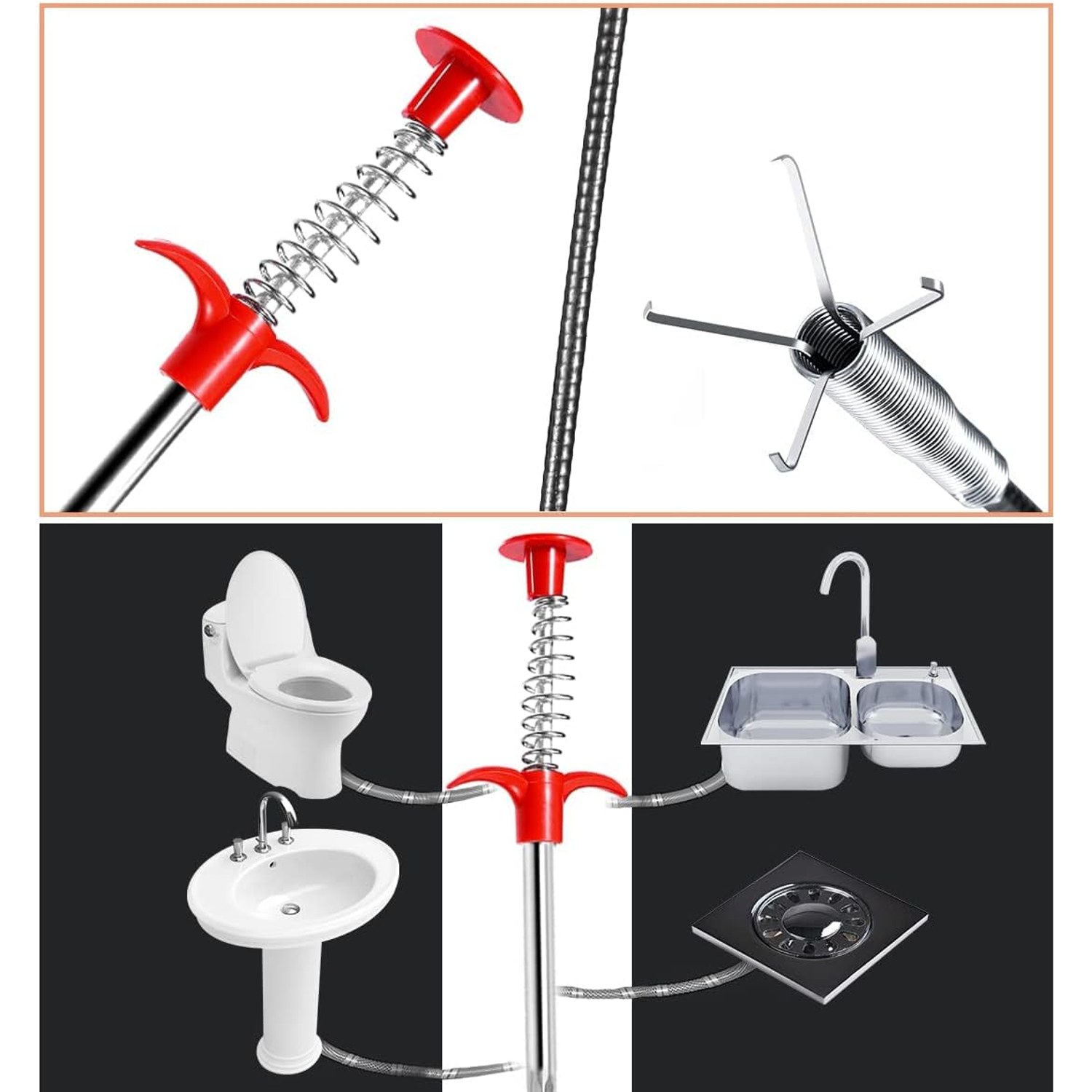
The stainless steel grabber is the heavy hitter. It has a spring-loaded head, so pressing the top of the handle opens four prongs at the far end, spreading to about 3.8 cm. You feed it in closed, press when you reach the lump, then release so the prongs clamp down and pull. This is the one for a solid hair ball or something dropped down the plughole.
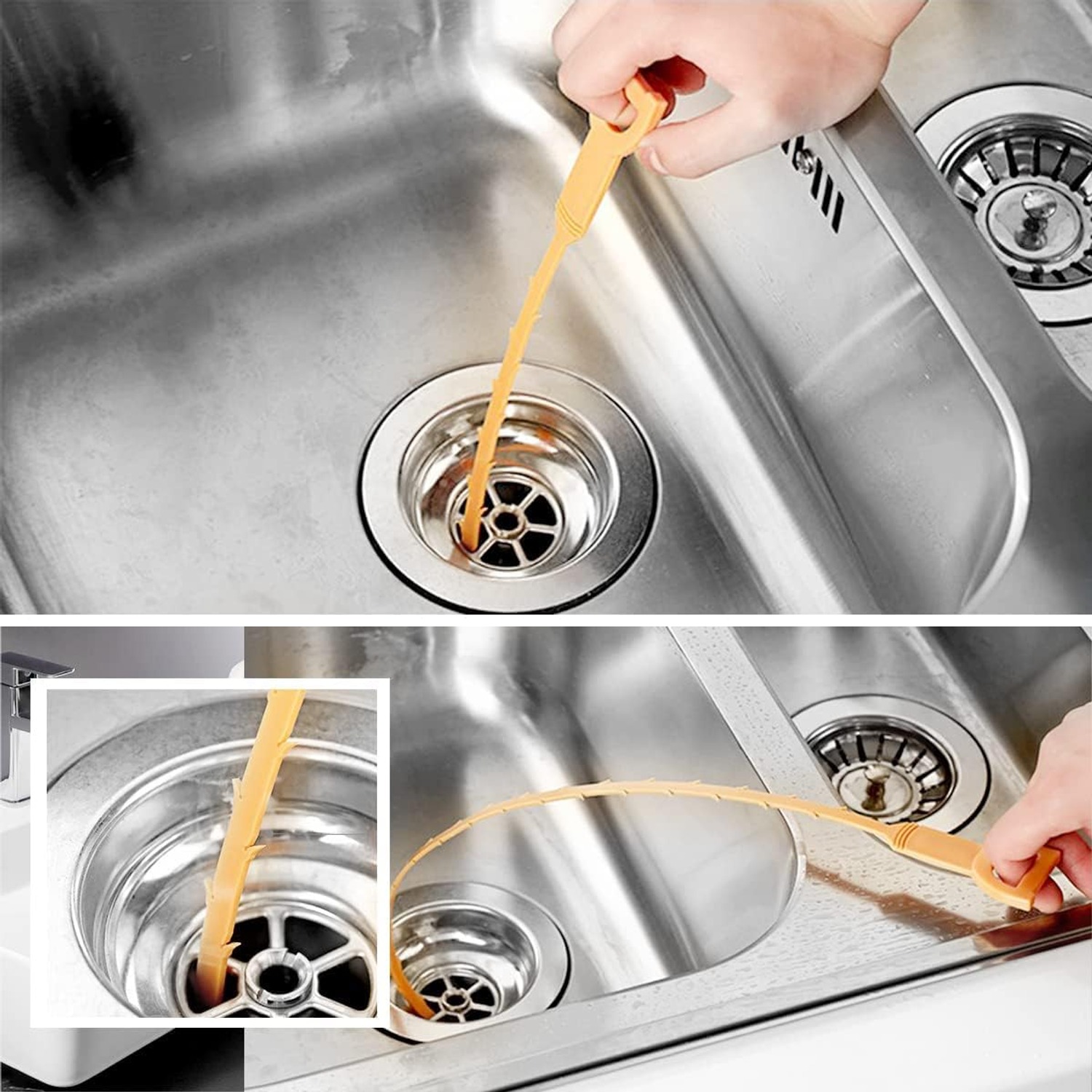
The plastic multi-tooth snake is the flexible one. Its edge is lined with small barbs that catch strands as you twist it, and because it bends it will slide past a strainer or around the bend of a trap rather than jamming against it. For a typical bathroom basin this is usually the first tool to try, and it is often the only one you need.
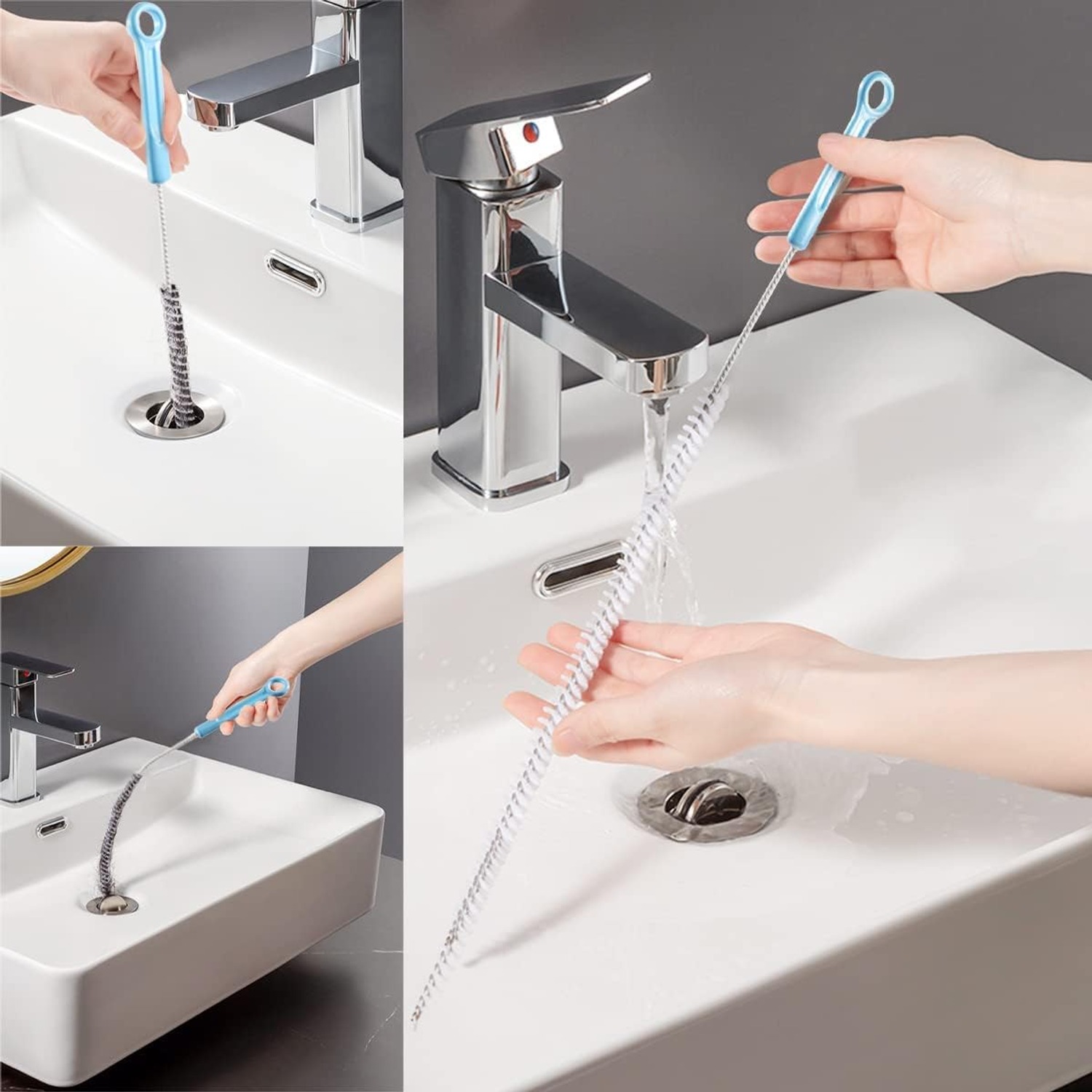
The brush is the part people skip, which is a shame. Once the clog is out, the inside of the pipe is still coated in a greasy film, and that film is what the next lot of hair sticks to. Running the brush through scrubs it back to a smoother surface and buys you months before the problem returns. If you want one of the best drain maintenance kit habits going, it is finishing with the brush.
Each tool is 1.6 m long. That sounds like a lot until you trace the path, down the plughole, along the waste pipe, around the trap and a little beyond. Most household clogs sit comfortably inside that range.
Who this suits
Renters get a lot out of a set like this, because the alternative is calling the landlord and waiting. Anyone in a shared house with long hair in the mix will use it regularly. Pet owners who bath dogs indoors will find the toothed snake earns its place quickly, since dog hair mats even faster than human hair.
Homeowners doing their own maintenance will appreciate having a proper tool rather than straightening a coat hanger. And if you have been buying bottles of drain product every few months, the maths works out fast. One set, reused indefinitely, versus a steady stream of consumables.
It suits kitchen sinks, bathroom basins, bathtubs, showers and wash basins. The one thing it will not do is clear a blockage way out in the main soil line. That is a job for a long powered auger or a plumber, and no 1.6 m hand tool is pretending otherwise.
Measure before you order
This is the single check worth doing. The grabber's prongs need room to spread to 3.8 cm, so if your drain has a narrow fixed grate that you cannot lift or unscrew, the claw may not fit through. The flexible toothed snake is far more forgiving and will often slide past a strainer that stops the claw.
Take ten seconds, look at your plughole, and ask whether the grate lifts out. If it does, you are fine. If it is fixed and the holes are small, the plastic snake is your tool and the claw stays in the drawer for other drains in the house.
How to use it without making a mess
Work slowly. That is most of the technique.
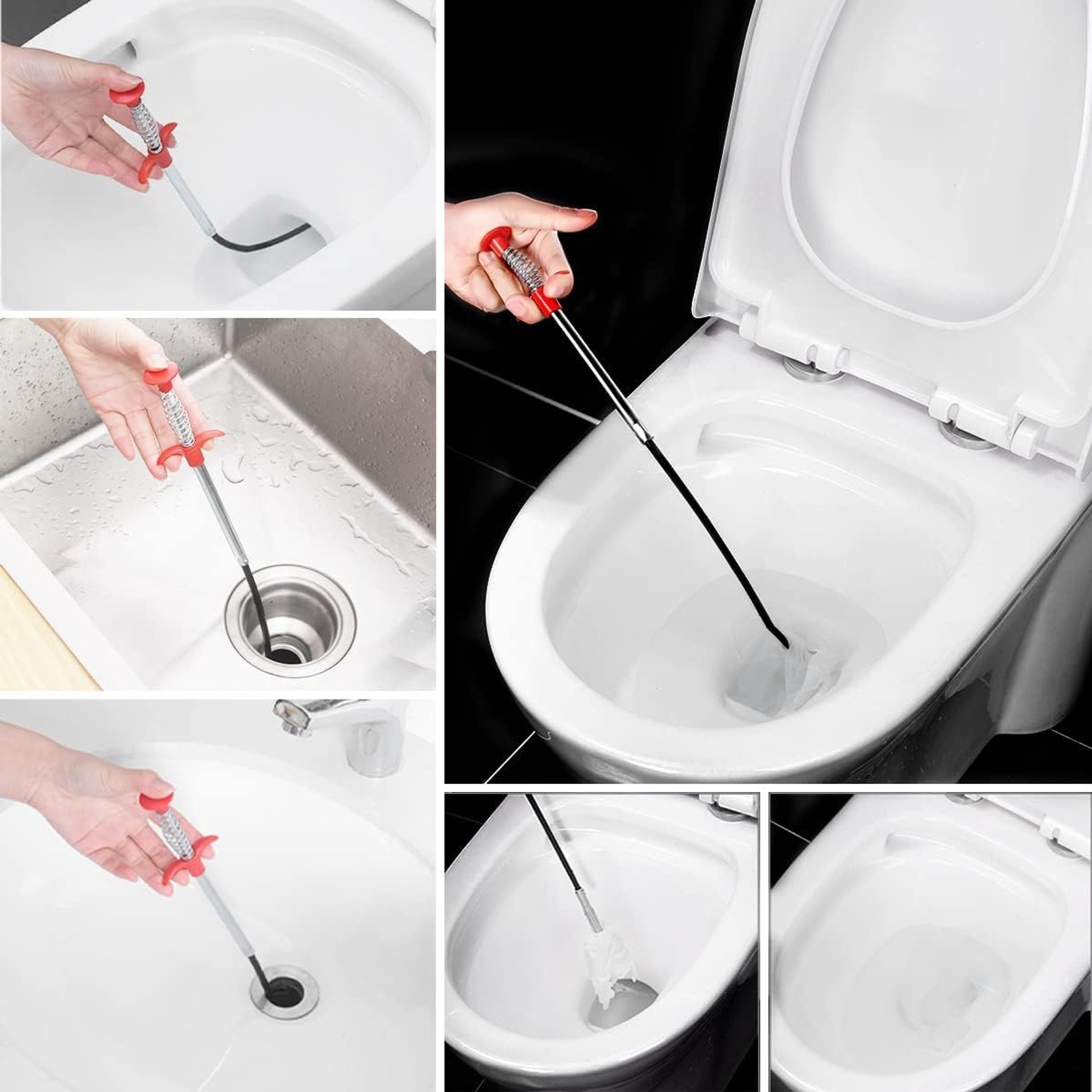
Lift or unscrew the strainer if it comes out. Feed the tool in gently and twist as you go rather than pushing straight down, which is how the teeth catch hair instead of compacting it. When you feel resistance, keep twisting and start drawing back. You will usually bring up a grey-brown clump, and it will not be pretty. Have an old plastic bag or newspaper beside you to drop it onto, because it will smell.
Go back in a second and third time. There is almost always more than one pass worth of material in a neglected drain. When nothing more comes up, run the brush through, then flush with hot water from the tap for a minute or two to carry the loosened film away.
If the sink is holding standing water, bail most of it out first. You will see more and splash less.
Keeping the tools in good order
Rinse everything under hot running water straight after use, before anything dries onto the teeth. A little dish soap and a scrub brush handles the rest. Dry the steel grabber properly, since stainless steel resists rust but does not enjoy sitting wet in a cupboard for a month.
Store them flat or hanging somewhere dry, and out of reach of children, as the prongs and barbs have points. Do not try to straighten a tool that has kinked badly or force a damaged one back down a pipe.
The set weighs 220 g in total and the pack is 30.1 x 21.1 x 3.2 cm, so a shelf under the sink or a slot in the toolbox is plenty of room.
Prevention beats clearing
Once the drain is running freely, a few habits keep it that way. A cheap mesh hair catcher over the shower and basin drain stops most of the problem at the surface. In the kitchen, pour cooking fat into a jar and bin it rather than washing it down warm, because it cools and sets on the pipe wall within a metre.
Then do a quick pass with the toothed snake every month or two in the busiest drain in the house. It takes two minutes when there is barely anything there, and that is the whole point. A drain you maintain never becomes a drain you have to rescue.
The short version
A slow drain is usually a lump of hair and grease sitting within arm's reach of the plughole. Chemicals soften it, tools remove it. This set gives you a spring claw for solid clumps, a flexible toothed snake for hair and tight fittings, and a brush to clean the pipe wall afterwards, each 1.6 m long.
Check that your drain opening gives the claw room to spread to 3.8 cm before you order. Work slowly, go back more than once, finish with the brush and hot water. Rinse and dry the tools, store them somewhere handy, and use them before the sink backs up rather than after.