
The complete guide
How to Choose the Right Drain Plug for Your Sink, Basin or Bath
The small part nobody plans for
A drain plug fails quietly. The rubber goes hard, a crack opens along the rim, or the plug simply vanishes after someone knocked it off the edge of the bath. You only notice when the sink will not hold water for the dishes, or when the bath drains while you are still running it.
Then comes the annoying part. You take the old plug to the shop, or worse, you try to remember the size from memory, and you come home with something that is 4mm out and useless. Drain openings are not standardised in any helpful way. A 1970s bath, a new vanity basin and a stainless kitchen sink can all take different sizes.
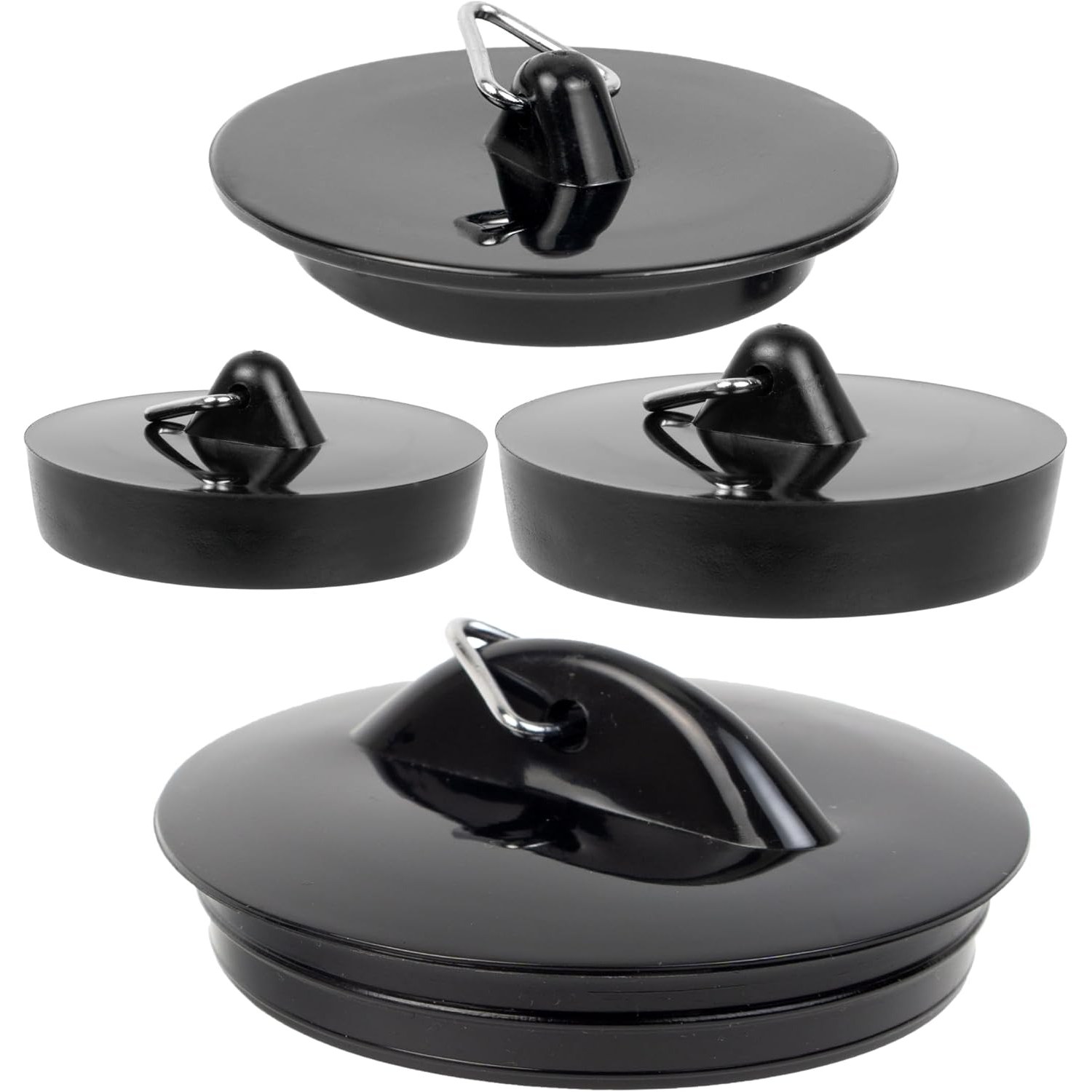
Buying a set of four sizes sidesteps the guessing. You try the one that looks closest, and if it is loose you move up. The rest go in a drawer for next time.
How a conical plug actually seals
Most push-in plugs are cone shaped rather than straight sided, and that is not a styling choice. A cone finds its own depth. Push it into an opening and it slides down until the taper matches the diameter, then it stops. That means one plug can seal a range of openings rather than a single exact size.
Flexible PVC adds the second half of the trick. A rigid plug either fits or it does not. A soft one compresses slightly as it seats, pressing outward against the drain wall. That small amount of give is what turns a near miss into a proper seal.
Once water is sitting on top of the plug, pressure pushes it down and helps hold it in place. That is why a plug that feels snug when dry usually holds fine when the basin is full. If a plug lifts or floats, it is too small for the opening and you need the next size up.
Who this suits, and who it does not
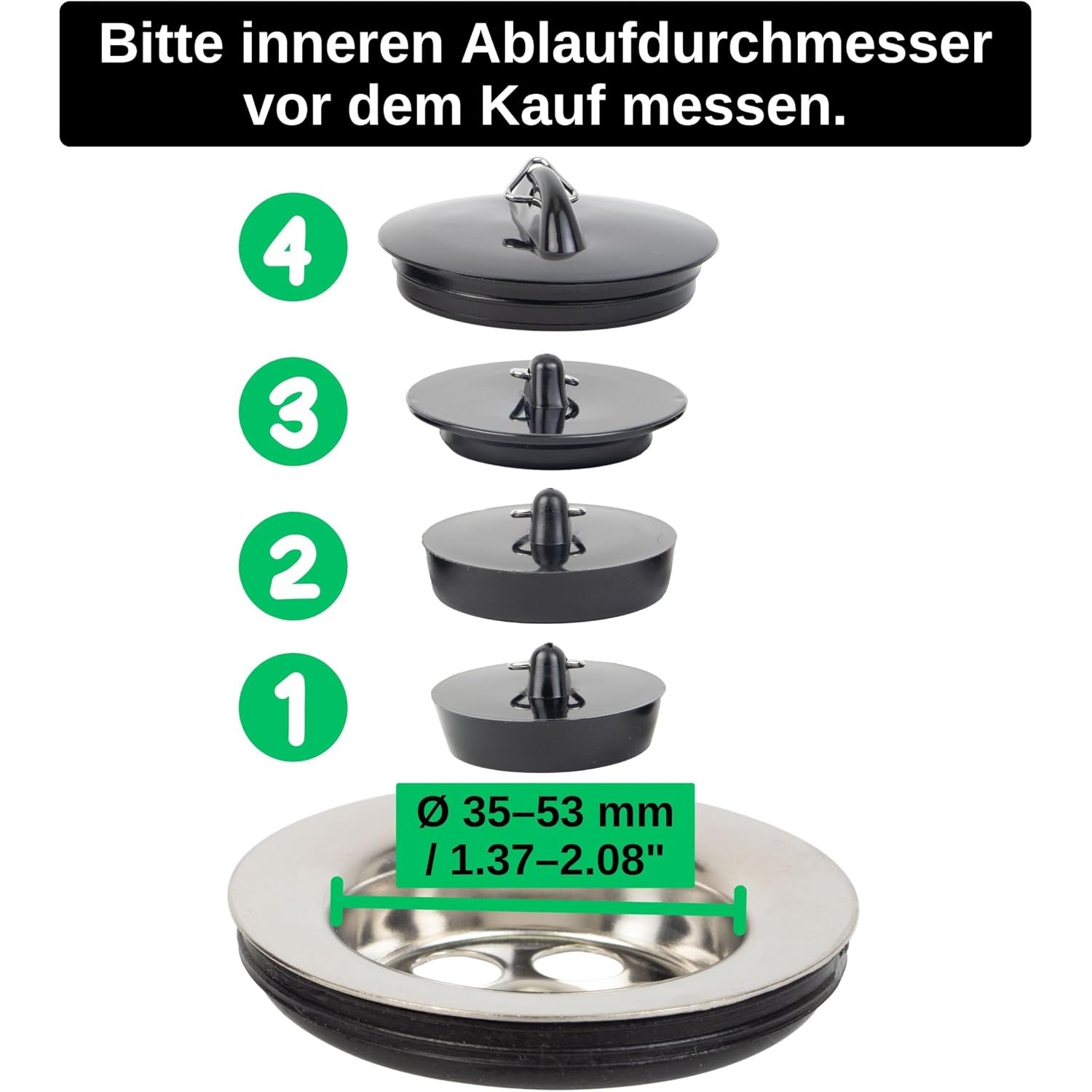
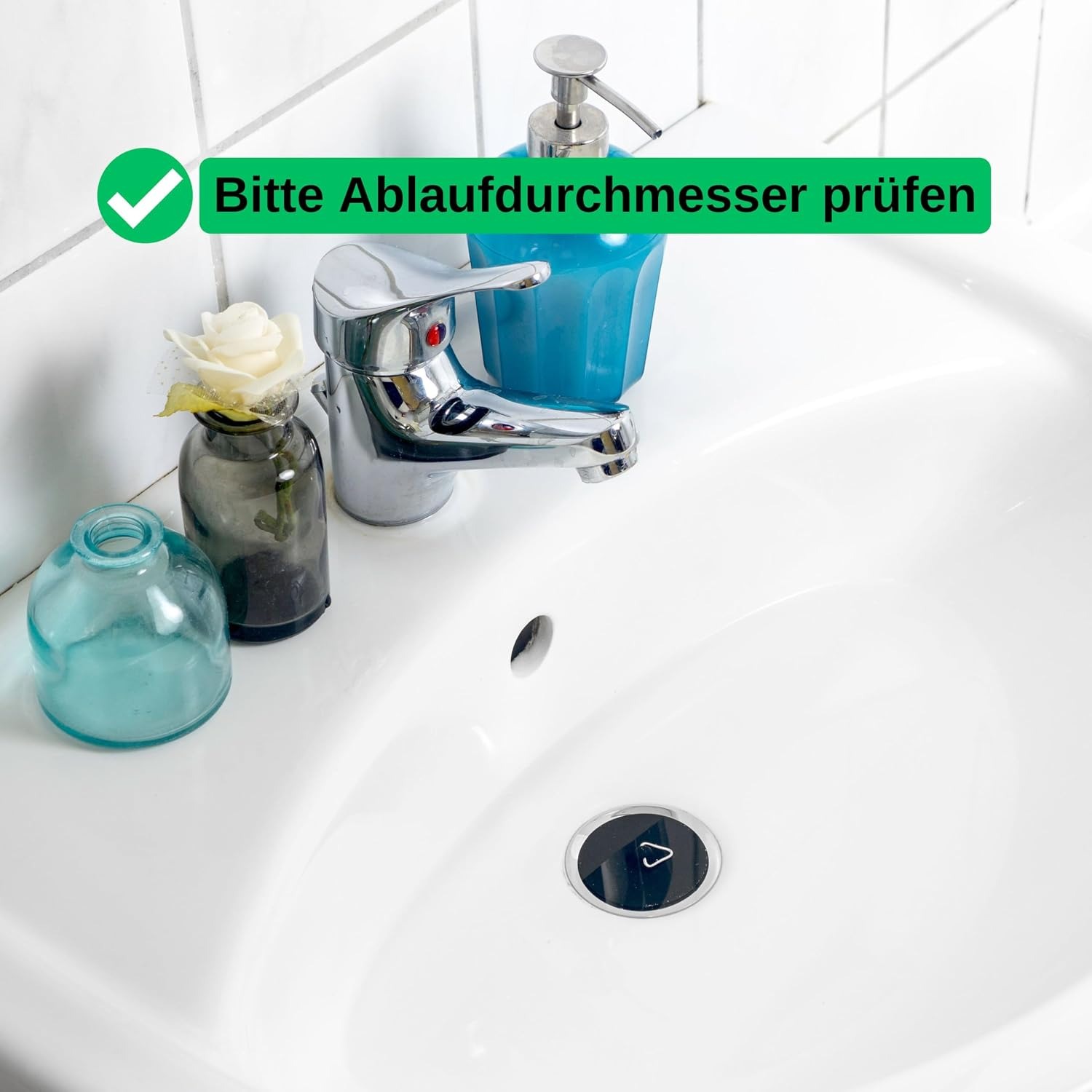
This set covers conventional open drains, the plain round hole with nothing moving in it. Kitchen sinks, bathroom basins, older bathtubs and laundry tubs usually fall into that group. If the drain opening measures between 36mm and 53mm across, one of the four plugs should seat.
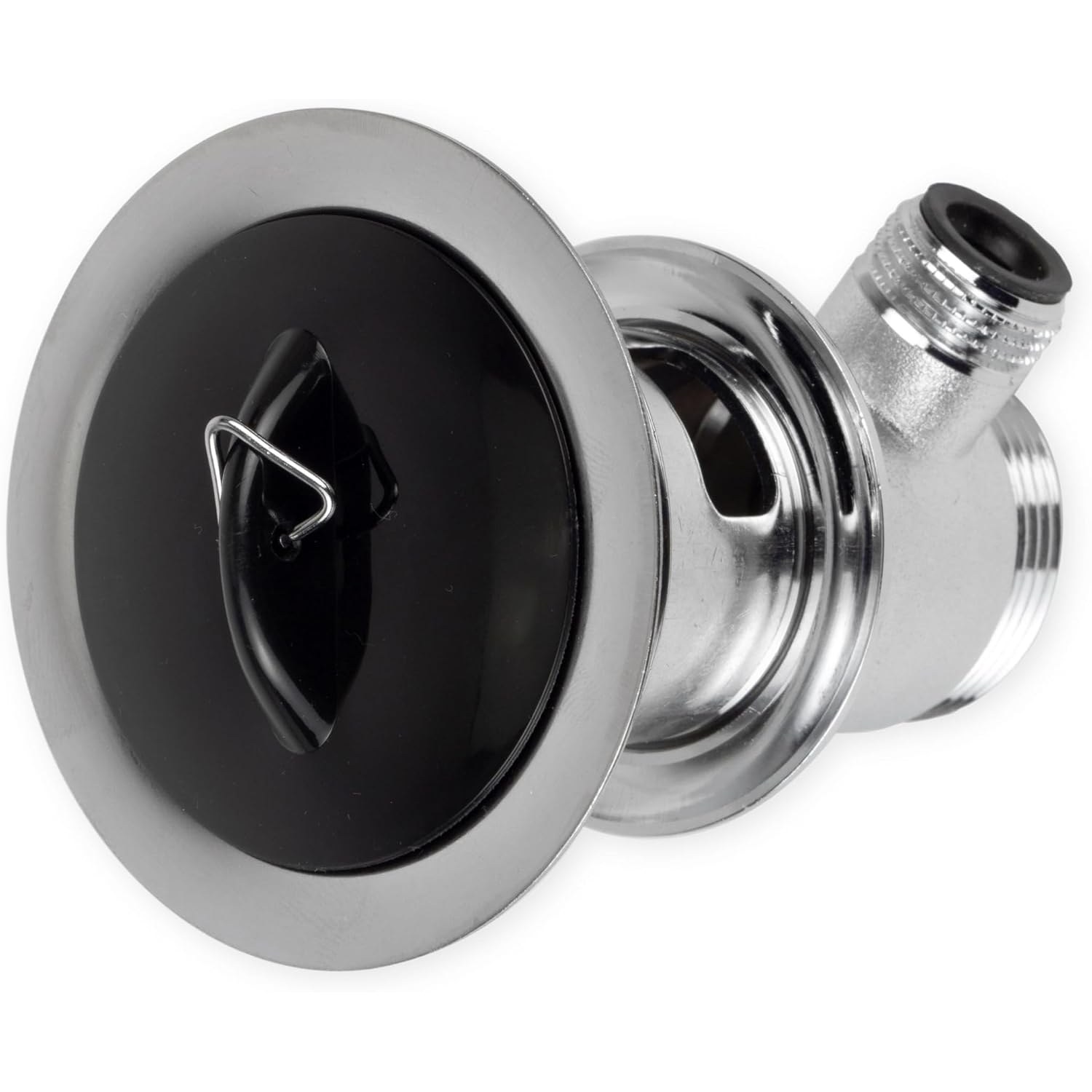
It does not suit click-clack wastes, where the stopper is part of the fitting and pops up and down when you press it. It also will not help with pop-up basin wastes operated by a lever behind the tap, since those rely on a rod linkage under the basin. If something in your drain already moves on its own, you need a matching spare part rather than a push-in plug.
That distinction trips people up more than any sizing question, so it is worth a ten second look at your drain before ordering.
Measuring without any fuss
Take a tape measure or a ruler and measure straight across the inside of the drain opening at its widest point. Measure the hole itself, not the metal flange around it, and not the old plug if it has swollen or shrunk.
Write the number down. If it is 36mm or more and 53mm or less, you are in range. If you land right between two of the four sizes, start with the larger plug, since a conical shape will simply sit a little higher rather than refusing to fit.
Houses with mixed fittings usually find that two or three of the four plugs get used in different rooms. That is the point of a multi-size pack. People shopping for the best multi size drain plug option are generally doing it because one size has already let them down.
Using them day to day
Fitting takes a second. Narrow end down, press with your thumb until it stops moving, then run the water. It should feel firm, not rocking or loose on the rim.
To remove it, grip the wide edge and pull straight up. If the basin is still full and the plug feels stuck, let a little water drain past the edge first so suction is not fighting you. There is no chain or ring on these, which some people prefer because there is nothing to tangle or stain the bowl, and others miss because there is nothing to tug.
A thin film of soap or grease on the cone is the most common cause of slow seepage. Wiping both the plug and the drain rim fixes it more often than swapping sizes does.
Keeping them in good shape
Plastic plugs last a long time when they are treated reasonably. Rinse after use, wipe away soap scum and cooking grease now and then with warm soapy water, and let the plug dry before storing it.
A few things shorten their life. Sitting in a bleach soak for hours can harden the plastic. Scouring pads leave fine scratches that trap grime and spoil the sealing surface. Very hot water straight from a kettle, poured repeatedly onto the same spot, can distort soft PVC over time. None of that comes up in normal use.
Keep the spare plugs somewhere dry and out of direct sunlight. A bathroom drawer or under the kitchen sink is fine. The reason to keep them rather than throw them out is obvious the next time one goes missing.
Other places people use them
Travel is a common one. Plenty of hotel and hostel basins have no plug at all, which makes hand-washing clothes awkward. A single plug in a toilet bag weighs almost nothing and solves it. Anyone after the best drain stopper for travel is usually just looking for something small, light and not fussy about exact sizing.
Holiday houses, caravans and sheds are the same story. These are the places where the original plug disappeared years ago and nobody got around to replacing it. A spare pack in the cupboard means the fix takes five seconds.
Landlords and property managers often keep a set or two on hand for the same reason. Replacing a missing plug between tenancies is a small job, but only if you have the right size already sitting in the toolbox.
What is in the maker's details and what is not
The brand is Your Day Mate, with the manufacturer listed as NINGBO JUTYE SANITARY TECH CO., LTD and country of origin China. The model number is 100 and the manufacturer part number is 13-DSPVC-7-4ALL-1-4. The material is plastic, described as flexible PVC, and the colour is listed as a multi-size set, 4 pack.
What is not in the maker's details is the product weight and the individual dimensions of each plug beyond the stated 36mm to 53mm fit range. We would rather say that plainly than publish a number we cannot stand behind. The fit range is the figure that matters for compatibility anyway.
The short version
Measure across your drain opening. If it falls between 36mm and 53mm, and the drain is a plain open hole with no moving stopper, this set will cover it. The flexible cone shape means close enough is usually good enough, and the three plugs you do not use become spares for the next time.
It is a small thing to buy. It also stops a daily irritation that most people put up with for far longer than they should.