
The complete guide
How to Stop Floor Drain Smells for Good, a Buyer's Guide
The smell that cleaning never fixes
There is a particular kind of bathroom smell that survives everything. You scrub the tiles, bleach the grout, wipe down the shower screen, open the window, and within a few hours it is back. Faintly sour, slightly sulphurous, worse on warm days and worse again when the heating comes on.
Nine times out of ten the smell is not in the room at all. It is coming up through the floor drain.
A floor drain is a hole in your floor connected to the waste system. That is its whole purpose, and it does the job well in one direction. The problem is the other direction. Air moves through pipes, and pressure changes in the waste line push that air back up the shortest route available. Your floor drain is usually the shortest route.
Most drains are supposed to be protected by a water trap, a small reservoir of water sitting in a bend that blocks air. It works right up until the water evaporates. In a guest bathroom used twice a month, in a laundry drain that only gets water on wash day, or in a holiday flat that sits empty, that trap dries out within weeks. After that the drain is simply an open pipe.
What a backflow insert does differently
A floor drain backflow insert takes the water trap out of the equation and replaces it with a mechanical seal.
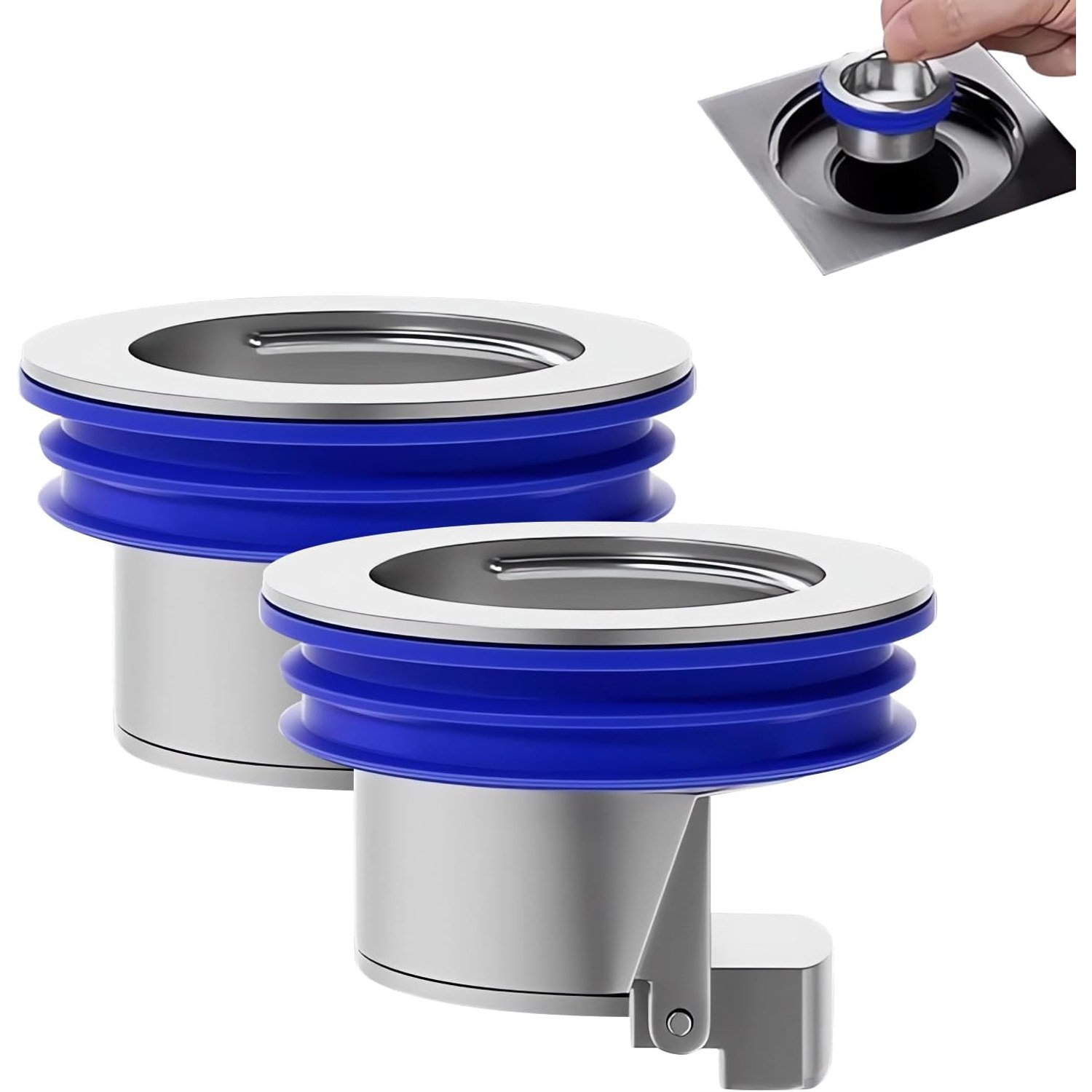
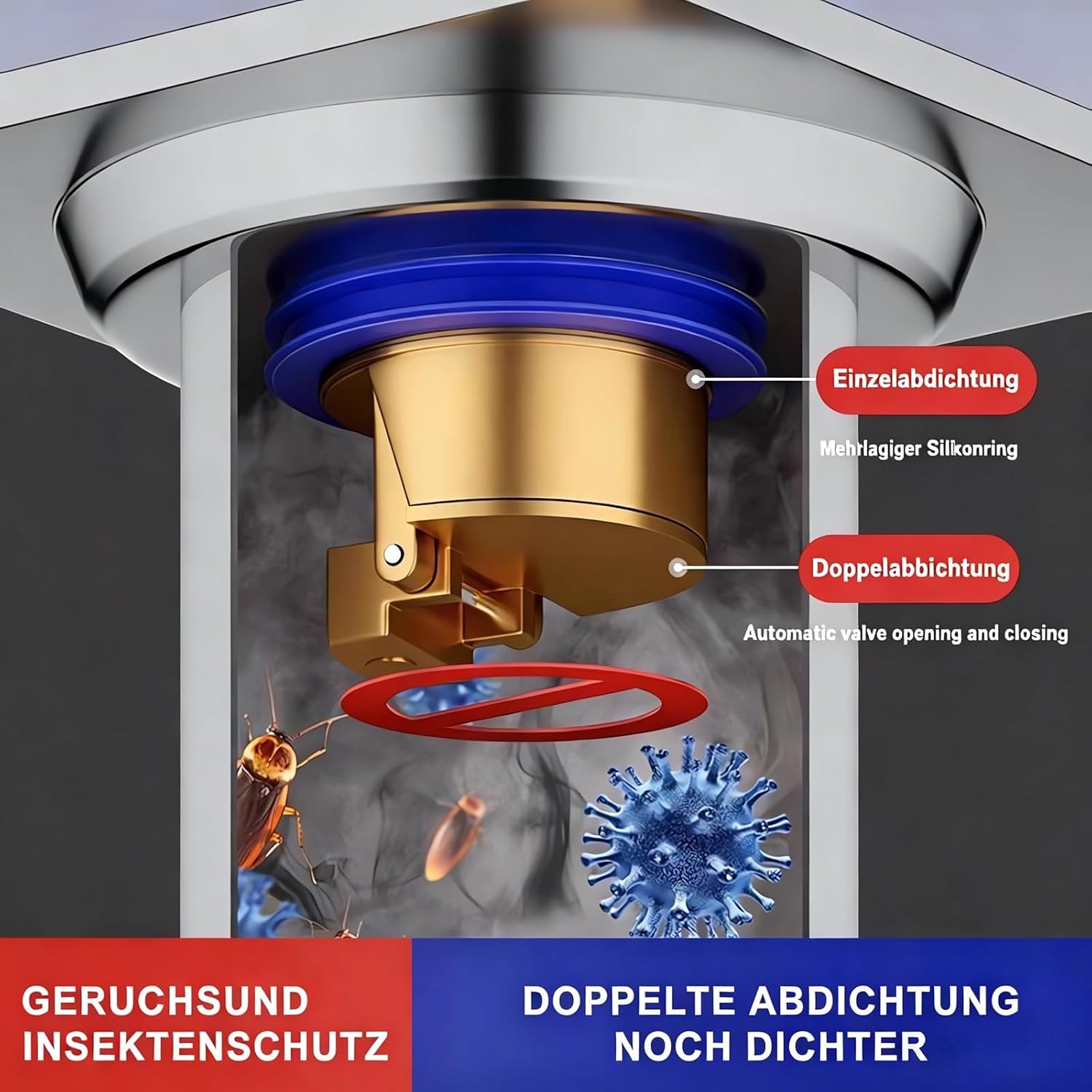
The insert drops into the drain opening and sits in the groove where your old grate used to rest. Inside it there is a valve that stays closed by default. When water runs into the drain, the weight and flow of that water pushes the valve open and the water passes through. When the water stops, the valve returns to closed.
That is the whole mechanism. No power, no batteries, no moving parts you ever touch.
The key difference from a water trap is that a mechanical seal does not depend on water being present. A dry drain with a valve insert is still sealed. A dry drain with only a water trap is wide open. If your smell problem is seasonal or appears after a holiday, that difference is the entire fix.
The second job the insert does is physical. A closed valve blocks the path that small insects use to travel up through waste lines into bathrooms. Drain flies in particular breed in the film inside drain pipes and emerge through the opening. Close the opening and they have nowhere to go.
Who this suits
This kind of insert makes the most sense in a few specific situations.
Flats and apartments with shared waste stacks are the classic case. When a neighbour several floors up runs a bath, the pressure wave in the stack has to go somewhere, and it often comes out of whichever drain has the weakest seal.
Laundries and utility rooms are the second case. The floor drain there is usually an emergency overflow more than a daily drain, so it goes long stretches without water and dries out fast.
Balconies and outdoor drains come third. They deal with rain, leaves and whatever the wind brings, and they tend to be the drain nobody inspects. A best balcony drain cover or insert stops both odour and crawling visitors.
Holiday homes, rental properties and anywhere that sits closed up for weeks at a time also benefit. Arriving to a house that smells fine is worth the small cost of a couple of inserts.
If you have a wet room or a curbless shower, you will care about this more than most, because the floor drain is right in the middle of the space you stand in.
Getting the size right
This is the one thing worth doing carefully before you buy anything.
Floor drains are not standardised. A drain in a 1970s building, a new build and an imported shower tray can all have different openings. The number that matters here is the compatible groove diameter, listed for this insert as 3.2 cm.
To measure, lift out your existing grate. Underneath you will see a circular recess or lip where the grate was sitting. Measure straight across the inside of that recess, not across the top of the tile cut-out and not across the old grate itself. Those two figures are usually larger and will mislead you.
If your measurement is close but not exact, be honest about which side of the line it falls. A fraction too small and the insert will not seat. A fraction too large and it will sit loose, which lets air past and defeats the point.
It is worth measuring every floor drain in the house while you have the torch out. Many people find their shower drain and laundry drain are the same size, which is where a two pack becomes genuinely useful rather than just a nice extra.
Fitting it
There is not much to this part. Lift out the old grate, clear whatever has collected in the drain, drop the insert into the groove and press it level.
No tools. No screws. No silicone. If you ever want to remove it, you lift it straight back out.
The only preparation worth doing is clearing the drain first. If there is a mat of hair and soap sitting just below the opening, the insert will be fighting a restriction that was already there. Pull it out, flush the drain with a few litres of hot water, let it run clear, then fit the insert.
If the drain still runs slowly after you have cleared it, deal with that before blaming the insert. A valve can only pass as much water as the pipe below it will take.
Living with it
The maintenance routine is short. Every few weeks, lift the insert out, rinse it under the tap, and use a soft brush on any hair or soap film. Wipe the brushed steel face dry so it keeps its finish. Drop it back in.
Long hair in the household shifts that to weekly. Kitchens with a floor drain need more frequent attention because grease builds up faster than soap scum does.
Avoid pouring harsh chemical drain cleaner through it. If you need to treat the drain, take the insert out, treat the pipe, flush with plenty of clean water, then refit. Bleach and strong solvents are not kind to sealing components in the long run.
The stainless steel face handles wet conditions well, but residue sitting on any metal for weeks will eventually mark it. A rinse is all it takes.
One more habit worth keeping: if a drain stops smelling and then starts again months later, lift the insert and check it before assuming it has failed. The usual cause is hair wrapped around the mechanism holding it slightly open.
A note on what it cannot do
A backflow insert is a seal, not a plumbing repair. If your waste line is genuinely blocked, if water is backing up onto the floor, or if the smell is coming from a cracked pipe inside a wall, no insert will solve that. In those cases you need someone to look at the pipework.
What it does solve is the everyday problem of a drain that works perfectly well but lets air travel the wrong way. That covers the large majority of floor drain smell complaints.
The short version
Floor drain smells usually come from a dried-out or ineffective water trap, not from the room itself. A mechanical insert replaces that reliance on standing water with a valve that opens when water flows and closes when it stops.
This one fits a 3.2 cm groove, pushes in without tools, has a brushed stainless steel face in silver, and comes two to a pack so you can do more than one drain.
Measure your drain groove first. If it matches, fitting takes under a minute, the maintenance is a rinse every few weeks, and the smell that cleaning never fixed finally goes away.