

The complete guide
How To Choose A Shower Hair Catcher That Actually Works
The problem nobody notices until it is too late
A shower drain does not block overnight. It happens slowly, and the main culprit is hair. Every wash sends a few strands down the waste. They catch on the edge of the grate, pick up soap and conditioner, and knit together into a mat. Add a few weeks of that and you have a stubborn plug sitting in the trap where you cannot reach it.
The first sign is usually subtle. Water sits around your ankles for a second longer than it used to. Then it is a few seconds. Then you are standing in a shallow pool by the time you finish rinsing. At that point you are looking at drain unblocker, a wire hook, or a plumber's call-out fee for something that could have been prevented with a small piece of metal.
That is the whole argument for a shower drain hair catcher. It moves the problem from inside the pipe, where you cannot see or reach it, to the top of the drain where you can lift it out in a few seconds.
How this strainer works
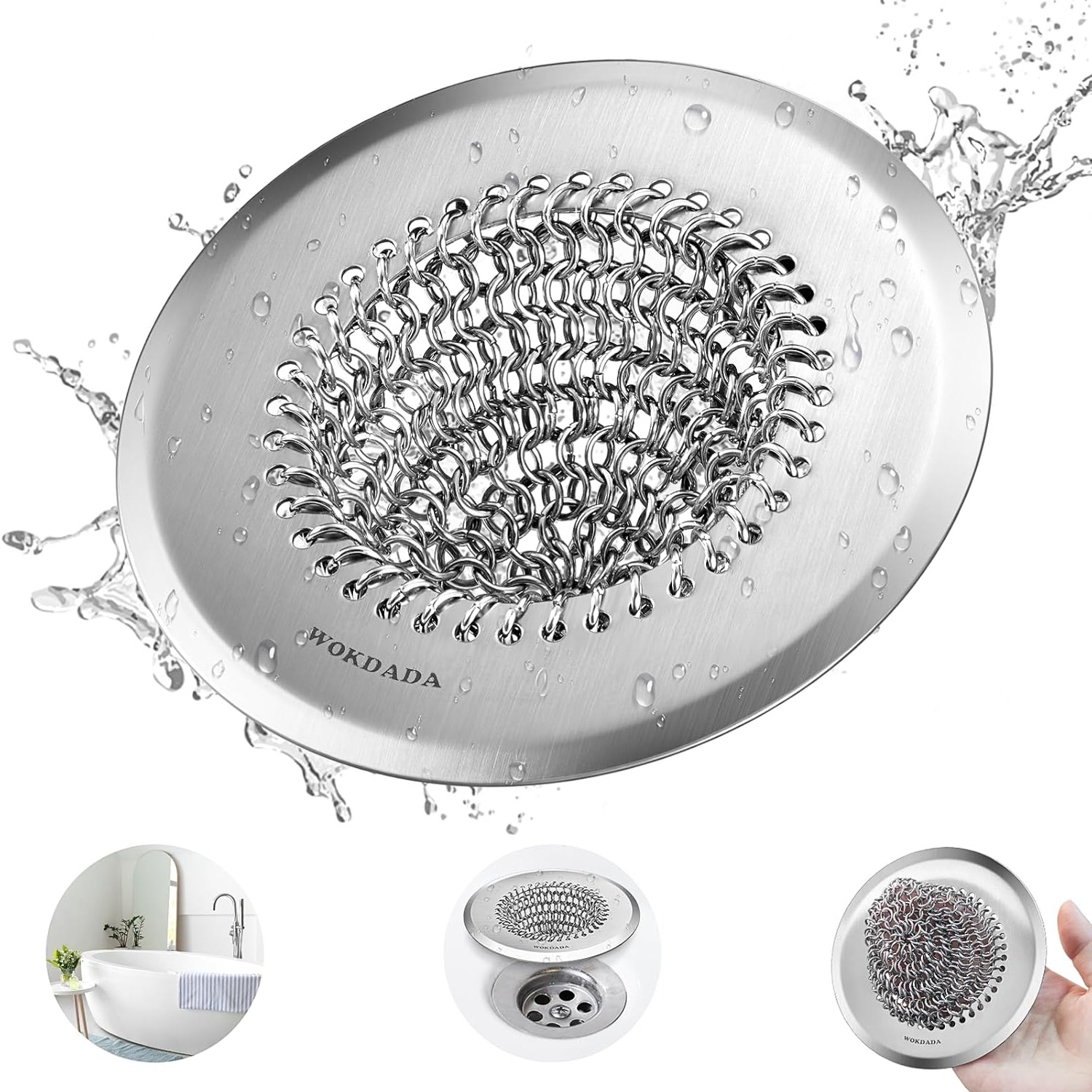
The Flip Clean Shower Hair Strainer is a domed cover made from stainless steel with a silicone base. It measures 11.1 cm across and sits 4.2 cm tall over the drain. There is nothing to fit and nothing to screw down. You place it over the drain opening and that is the setup finished.
The dome is covered by a fine chain net. This is the part that does the work. Water flows through the gaps in the net easily, so the shower keeps draining at a normal rate, but hair and soap flakes stay on the outside surface. Because the net sits above the floor rather than flat against it, the hair gathers in a visible clump on top instead of being pressed into a flat mat you have to pick apart.
Around the bottom is a widened silicone rim. It does two jobs. First, it grips the shower floor so the strainer does not slide sideways or float when water rushes past. Second, it closes the gap at the edge, which is where hair usually escapes on cheaper covers that sit on three small feet.
Emptying is where the name comes from. You lift the strainer, hold it over a bin and turn it upside down. The hair comes away from the chain net in one go. Rinse it under the tap, set it back on the drain and you are done. There is no fishing about with fingers, no tweezers and no transferring soggy hair from a basket into a tissue.
Who it suits
Anyone with long hair in the house will feel the difference fastest. Long strands are the worst offenders for wrapping around the inside of a waste pipe, and they are also the easiest to catch. Households with several people sharing one shower see the same benefit, because the volume of hair adds up quickly even when each individual contribution looks small.
It also makes sense if you rent. Because nothing is drilled, glued or fixed, there is no mark left behind and no need to ask permission. You can take it with you when you move. The same goes for student flats, holiday lets and shared houses where fitting anything permanent is not practical.
If you have already had a blockage once, you probably do not need convincing. The cost of a single drain clearing, whether that is a bottle of caustic cleaner or a tradesperson, is usually more than a strainer that keeps the problem away.
People who shed less hair, or who have a very fast-draining modern waste, may find they only need to empty it every week or two. That is still worth doing, because prevention is easier than cure.
What to look for when comparing options
Material. Plastic is cheap and it shows. Thin plastic screens go brittle, discolour and crack after months of hot water and cleaning products, and once the rim warps they stop sitting flat. Stainless steel is the better choice for something that lives in a permanently damp spot. It holds its shape and resists corrosion, which is why a stainless steel drain strainer tends to outlast several plastic ones.
Net design. This is the trade-off most strainers get wrong. Holes that are too fine turn the strainer into a dam, and you end up showering in a puddle. Holes that are too wide let long hair slide straight through, which defeats the point. A chain net strikes a middle ground by holding strands on the surface while leaving plenty of clear space for water.
The base. A strainer that slides around is annoying and lets hair past. Look for a wide base that makes proper contact with the floor rather than small feet that leave gaps. Silicone also helps because it grips a wet surface better than bare metal.
Size. Measure before you buy. An outer diameter of 11.1 cm covers most standard shower and bath drain grates, but drains do vary, especially in older properties and in wet rooms with linear channel drains. A quick measurement with a tape saves a return.
Emptying method. Think about the part you will do most often. A design you can flip and tip beats one you have to pick clean every single time. This matters far more in daily life than it does on a product page.
Living with it day to day
The routine is simple. Leave it in place, glance at it when you finish your shower, and empty it when you can see hair gathering on top. Most people settle into doing it once or twice a week without thinking about it.
For cleaning, a rinse under warm running water handles most of it. Over time, soap and conditioner leave a film on the metal. When that happens, wash it in warm soapy water with a soft brush, rinse it well and let it dry before putting it back. Avoid abrasive scourers, which can scratch the finish, and keep bleach and strong drain chemicals away from it. If you need to use a chemical drain product for any reason, lift the strainer out first and rinse the area afterwards.
That is genuinely the whole maintenance routine. There are no filters to replace, no cartridges and nothing that wears out on a schedule.
A few common questions worth answering up front
Will it make the shower drain slowly? Not under normal use. If flow does slow, it is because the net is full, which is a visible prompt to empty it rather than a design flaw.
Can you stand on it? No. It is a drain cover, not a floor tile. Step around it.
Will it stop every single strand? No cover does. The silicone rim closes most of the gap, but on a very textured or sloped shower floor a small amount may still find its way under. The aim is to catch the overwhelming majority, which is enough to prevent blockages.
Does it suit a bathtub? Yes, provided the opening works with an 11.1 cm cover and the plug mechanism leaves clearance. Check your fitting first.
The short version
Hair causes most shower blockages, and blockages are expensive and unpleasant to fix. A strainer that sits on top of the drain moves the mess somewhere you can see and reach. This one is stainless steel with a silicone base, measures 11.1 cm across, needs no tools and empties with a flip over the bin.
Measure your drain, drop it in place, and empty it when you notice hair gathering. It is a small change to a daily routine that quietly removes one of the more annoying household jobs from your future.