
The complete guide
How to Clear a Blocked Drain Yourself With a Pressure Washer Jetting Hose
The problem with a blocked drain
A blocked drain almost never announces itself politely. The sink drains slow for a week, then one morning there is grey water standing in the gully and a smell you cannot ignore. You try a plunger. You pour something caustic down it. Maybe it helps for a day.
The reason those things fail is simple. The blockage is not where you can see it. Grease, soap scum, silt and leaf mulch collect at the first change of direction in the pipe, which is usually several metres from the opening and often underground. A plunger moves water in that pipe but does not get anywhere near the clog. A chemical pour needs contact time with the obstruction, and if the line is full of standing water, the chemical dilutes long before it reaches anything.
What actually clears it is water pressure delivered at the blockage. That is what drain companies do when they turn up with a jetting unit, and it is what this 15 metre hose lets you do with a pressure washer you already own.
How a jetting hose works
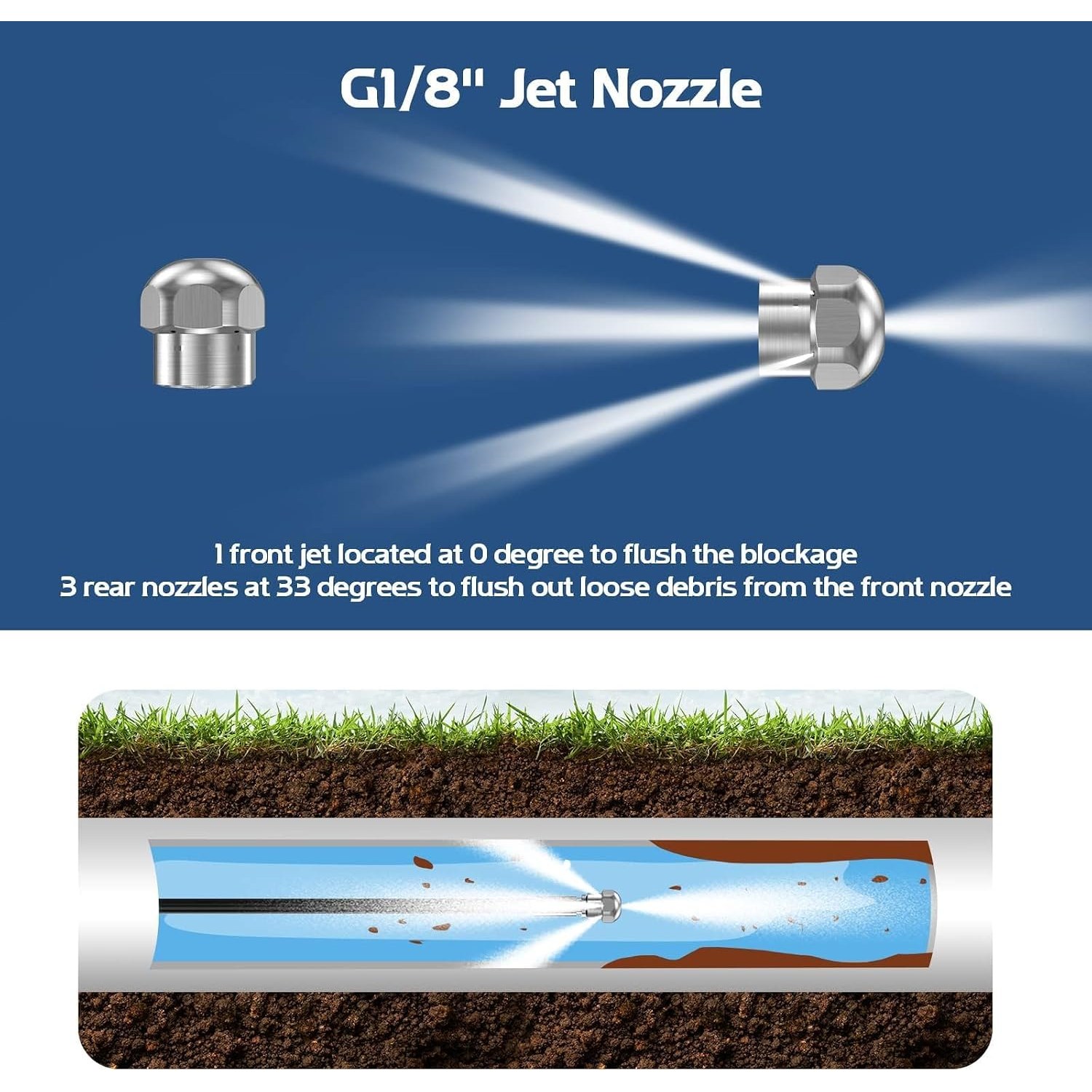
The idea is older and simpler than it looks. A thin, flexible high-pressure hose runs from your pressure washer into the drain. On the end is a nozzle with jets pointing backwards at an angle. When you pull the trigger, those rear jets fire water backwards, and the reaction pushes the nozzle forward along the pipe. You feed hose in behind it and it travels.
Those same rear jets do the cleaning. As they fire back at the pipe wall, they lift grease and sediment and sweep the mess back toward the opening you came in from, where it can wash away. It is far more thorough than poking something down the hole, because the water scrubs the whole length it passes through.
This kit includes two nozzle heads that do different jobs.
The fixed jet nozzle has one forward-facing opening at 0 degrees. That single straight jet is the one that attacks a solid blockage head on. Behind it sit three jets at 33 degrees that provide the forward thrust and the flushing action. This is the head you reach for when water will not move at all.
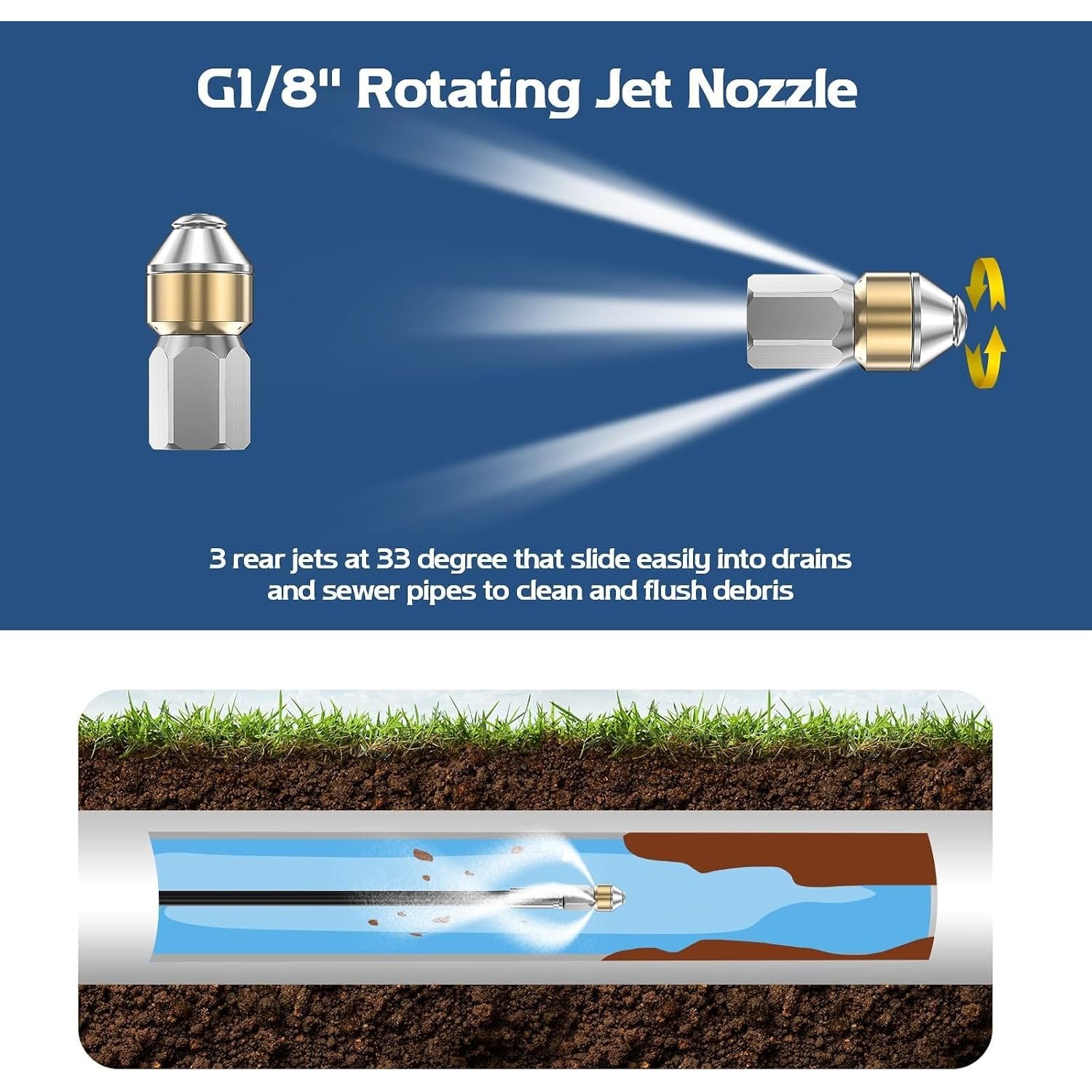
The rotating nozzle takes a different approach. Its three rear jets spin as water passes through, so instead of three fixed stripes of spray you get a sweeping circular pattern that touches the full inside surface of the pipe. It is slower at punching through a hard plug but far better at stripping the greasy film that caused the blockage in the first place.
The smart sequence is both. Open the line with the fixed nozzle, then run the rotating nozzle through the same stretch to clean it properly. Skip the second step and you will be back doing this again in a few months.
What you are buying
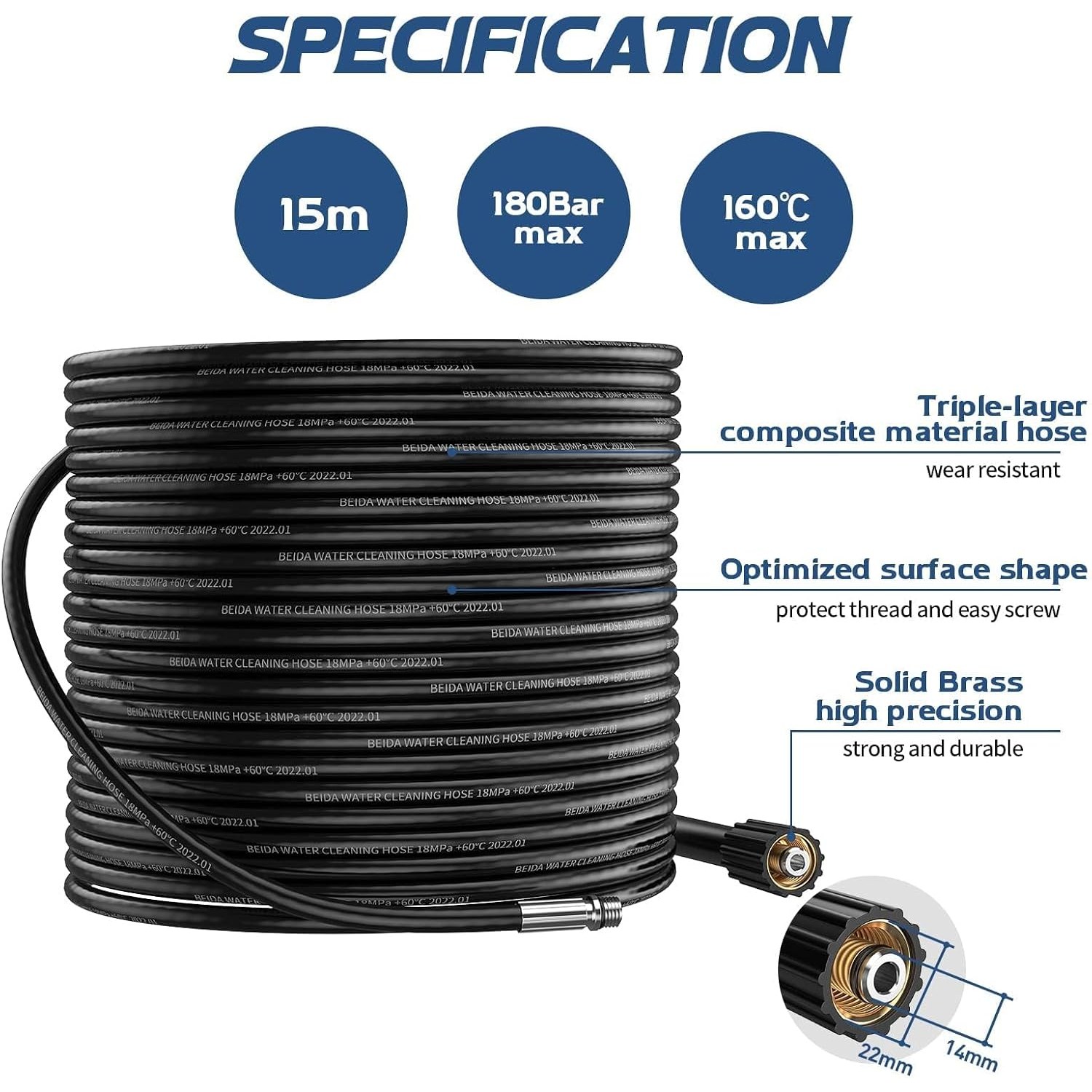
The hose is 15 metres long with a 0.47 inch outside diameter, and it weighs 1.36 kg complete. It is rated to a maximum working pressure of 180 bar and a maximum water temperature of 60 C.
Construction is three layers. The core is a thermoplastic polyester tube, which is what holds the pressure. Around that sits a reinforcement layer of high-strength polyester fabric, chemically bonded rather than just wrapped. The outer skin is thermoplastic polyurethane, chosen because it shrugs off oil, abrasion, ozone and weather. That matters more than it sounds, because a jetting hose spends its life being dragged across concrete, through grit and around pipe edges.
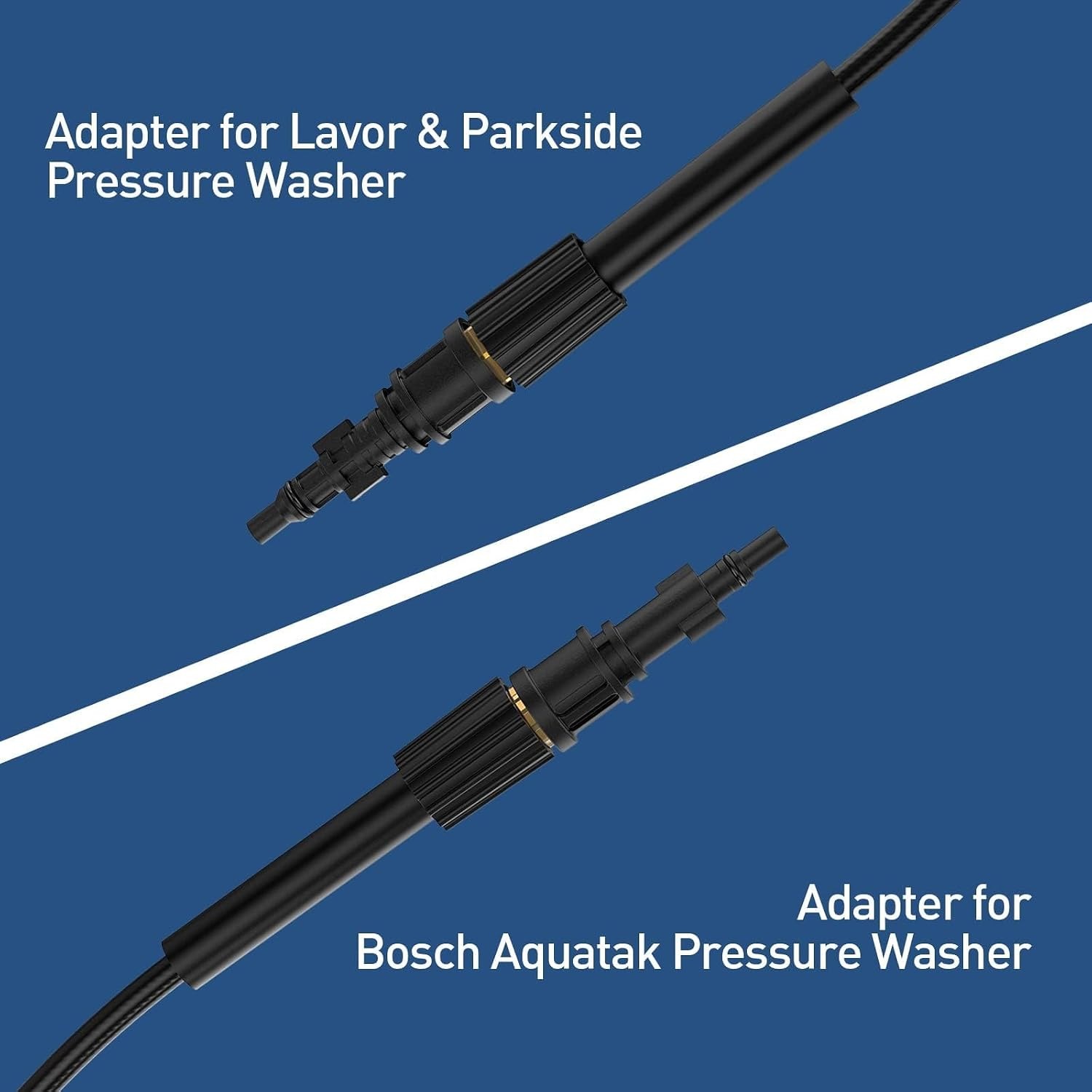
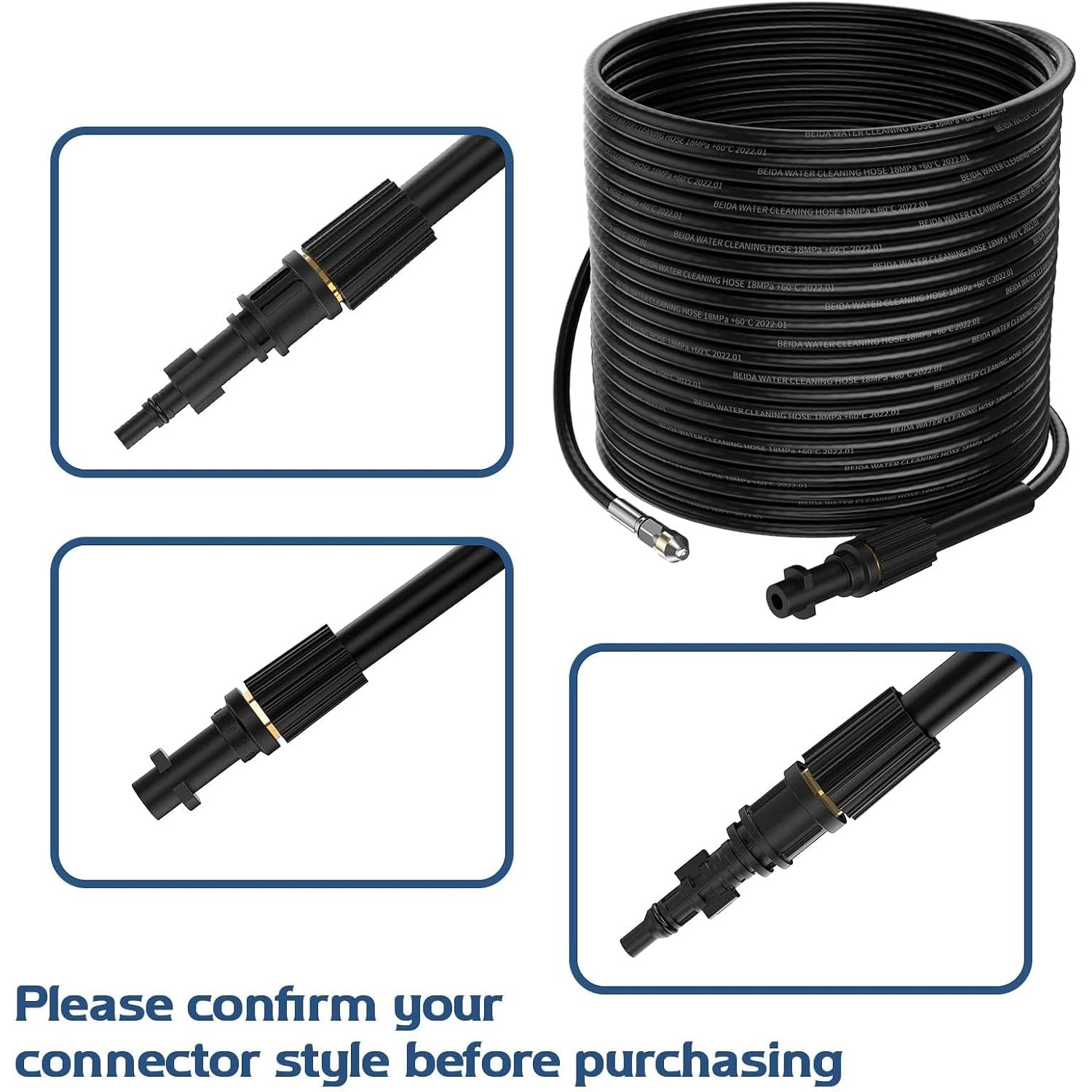
Fittings are M22 internal thread at the inlet and 1/8 inch external thread at the nozzle end. Three adapters come in the box, an M22 for Karcher machines plus adapters for Lavor and Bosch. There is also a roll of PTFE tape, which is the small thing people forget and then wonder why the joint is weeping.
Who it suits
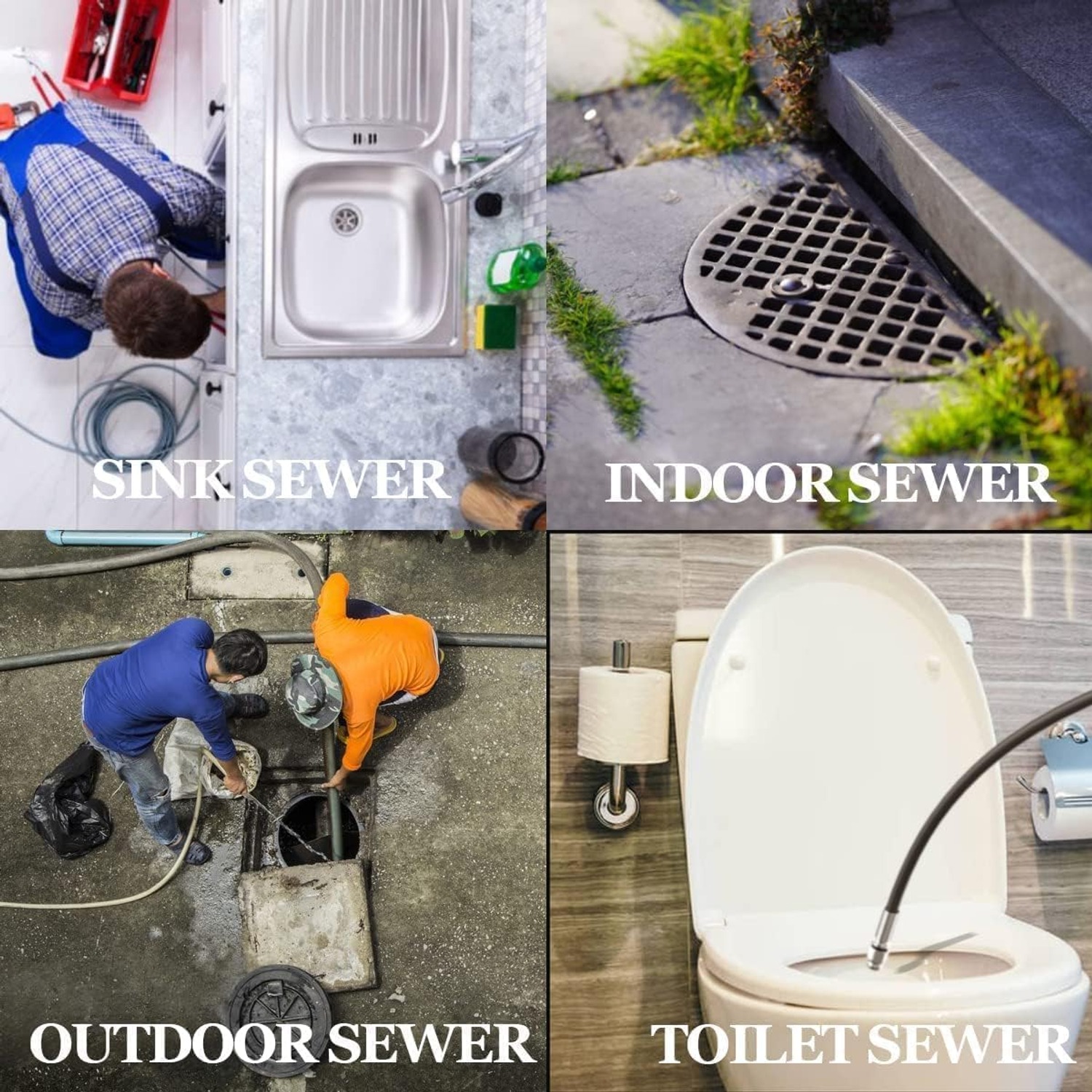
If you own a pressure washer and a house with outside drains, this earns its place. The people who get the most out of it tend to fall into a few groups.
Homeowners with mature gardens, because leaves and silt wash into gullies every autumn and quietly build up. Anyone on an older property with cast iron or clay waste pipes, where scale and root hair are an annual event. People with workshops, stables or anything that drains oily or muddy water. And landlords or small property managers, who get the call about a slow drain often enough that one callout fee pays for the kit twice over.
It is less useful if your only drainage is modern internal plumbing with no external access, or if you do not own a pressure washer. It does not work on its own, it needs a machine to supply the pressure.
Choosing and fitting it to your machine
Start with your pressure washer's output pressure. It needs to be at or below 180 bar. Most domestic electric machines run between 100 and 160 bar, which is well inside the range. Petrol machines can run higher, so check the plate on the body before you connect anything.
Next, look at your lance connection. M22 is the common domestic thread and the hose is built for it, with the Karcher adapter covering machines that use the proprietary bayonet fitting. Lavor and Bosch adapters cover two more of the usual suspects. If you own something else, find out whether your lance ends in M22, because if it does, you are fine.
Wrap PTFE tape around the threads before you tighten. Three or four turns in the direction the thread tightens is enough. Hand tight plus a light nip with a spanner, no more. Over-tightening a brass fitting is how you crack it.
Using it safely
Jetting is not dangerous if you respect a couple of rules, and genuinely risky if you ignore them.
Feed at least a metre of hose into the pipe before you squeeze the trigger. A loose nozzle at 150 bar outside the pipe will whip, and it can take skin off. Release the trigger before you pull the nozzle back out of the drain. Keep a hand on the hose near the opening throughout so you can feel what it is doing.
Wear eye protection and waterproof gloves. Jetting throws dirty water back out of the drain opening, and you do not want it in your face. Keep children and pets well clear.
Work in stages. Feed a metre or two, let the water do its job, pull back half a metre, push forward again. That back-and-forth motion is what clears a stubborn spot. Forcing the hose in hard rarely helps and can kink it.
Finally, know when to stop. If you hit something that will not budge after a few patient attempts, or if the pipe sounds hollow or you suspect a collapse, stop. A jetter clears blockages, it does not repair broken pipe.
Looking after it
Flush clean water through the hose after each job to clear grit and residue. Let it dry before you coil it, and coil it loosely rather than in tight loops. Rinse both nozzles and check the openings are clear, because a single blocked jet throws off the balance and the head will not travel properly.
Store it out of direct sunlight, away from solvents and off anything sharp. Before each use, give the threads a quick look and re-wrap the PTFE tape. That is genuinely the whole maintenance routine.
The short version
A blocked drain is a reach problem, not a strength problem. This 15 metre hose gives you the reach, and your pressure washer supplies the force. The fixed nozzle opens the blockage, the rotating nozzle cleans the pipe so it stays open, and the three adapters plus PTFE tape mean you can connect it the day it arrives.
Stay under 180 bar and 60 C, keep the nozzle inside the pipe before you pull the trigger, wear eye protection, and rinse it out afterwards. Do that, and the first drain you clear yourself will likely cost less than the callout you would otherwise have paid for.