
The complete guide
The Honest Guide To Clearing A Slow Drain With A Brush
The problem nobody notices until it is too late
Drains do not block overnight. They slow down over weeks, and we all adjust to it without really thinking. The basin takes a little longer. The shower tray holds water around your ankles. You run the tap and walk away rather than watching it drain. By the time you admit there is a problem, the clog has been building for months.
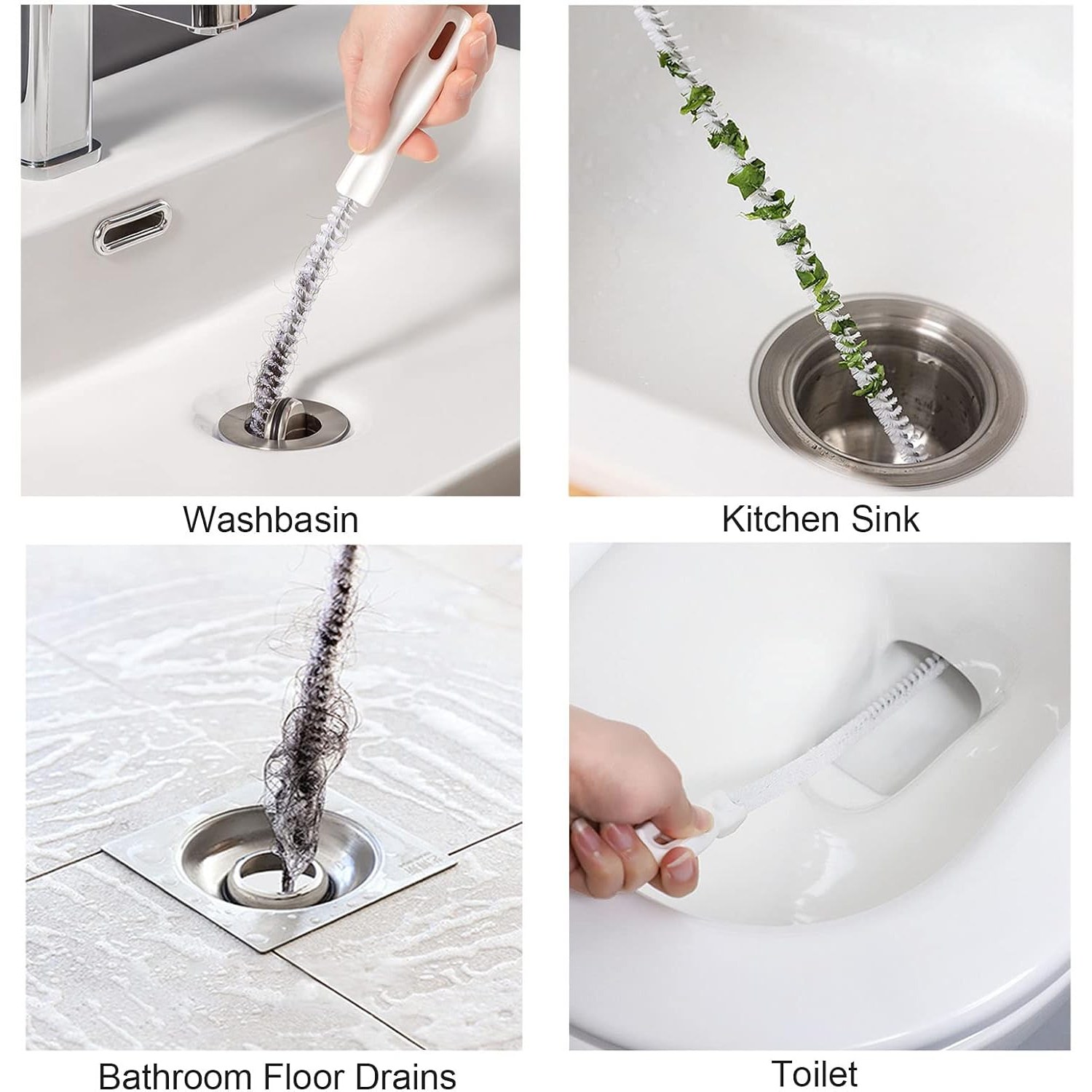
What is in there is predictable. In a bathroom it is hair bound together with soap residue and conditioner, forming a mat that catches everything else passing through. In a kitchen it is cooled fat and food particles coating the inside of the pipe, narrowing it a bit at a time. Both sit in roughly the same place, in the trap just below the plughole, which is close enough to smell and far enough that you cannot reach it.
That gap is the whole reason a 45cm flexible drain brush exists.
How a drain brush actually works
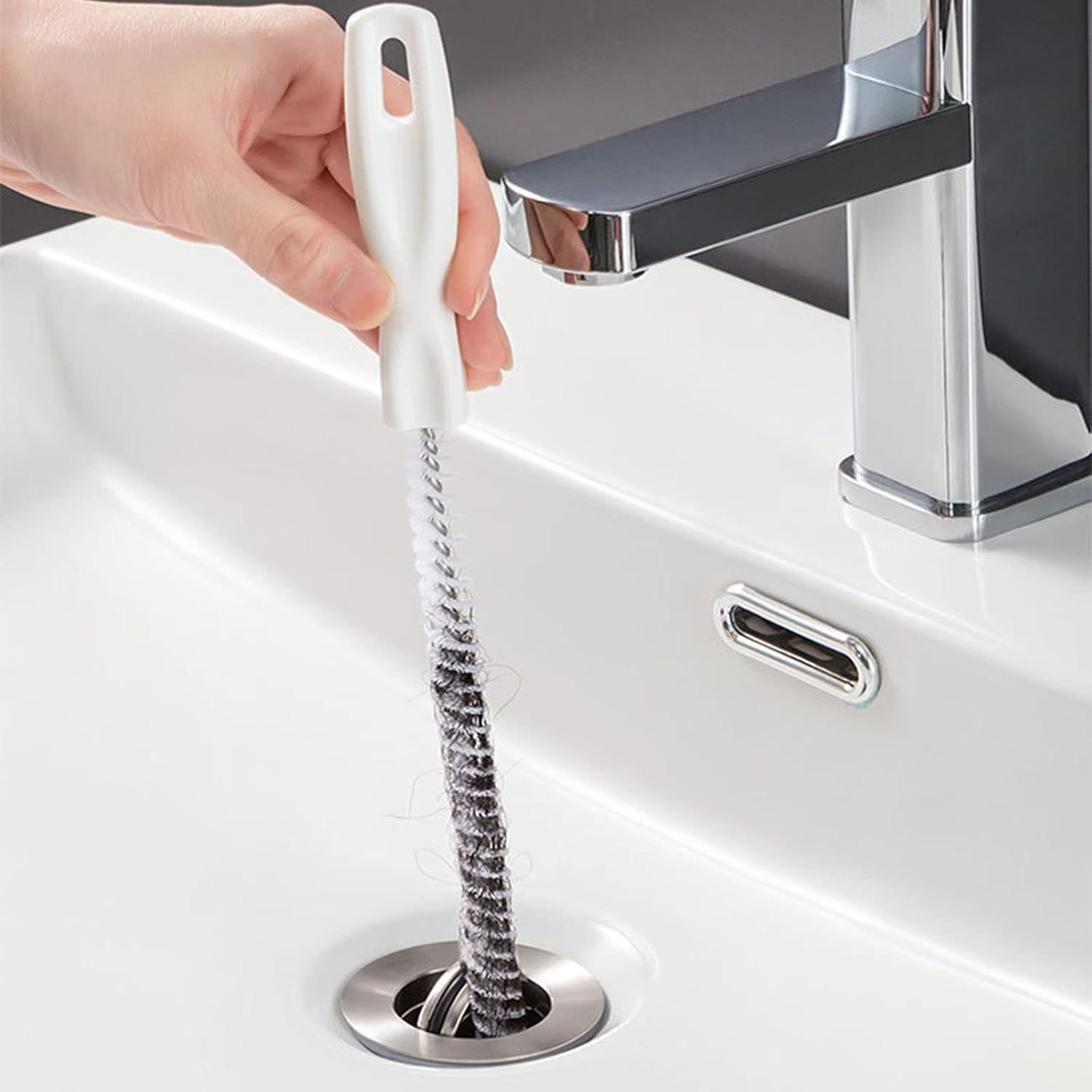
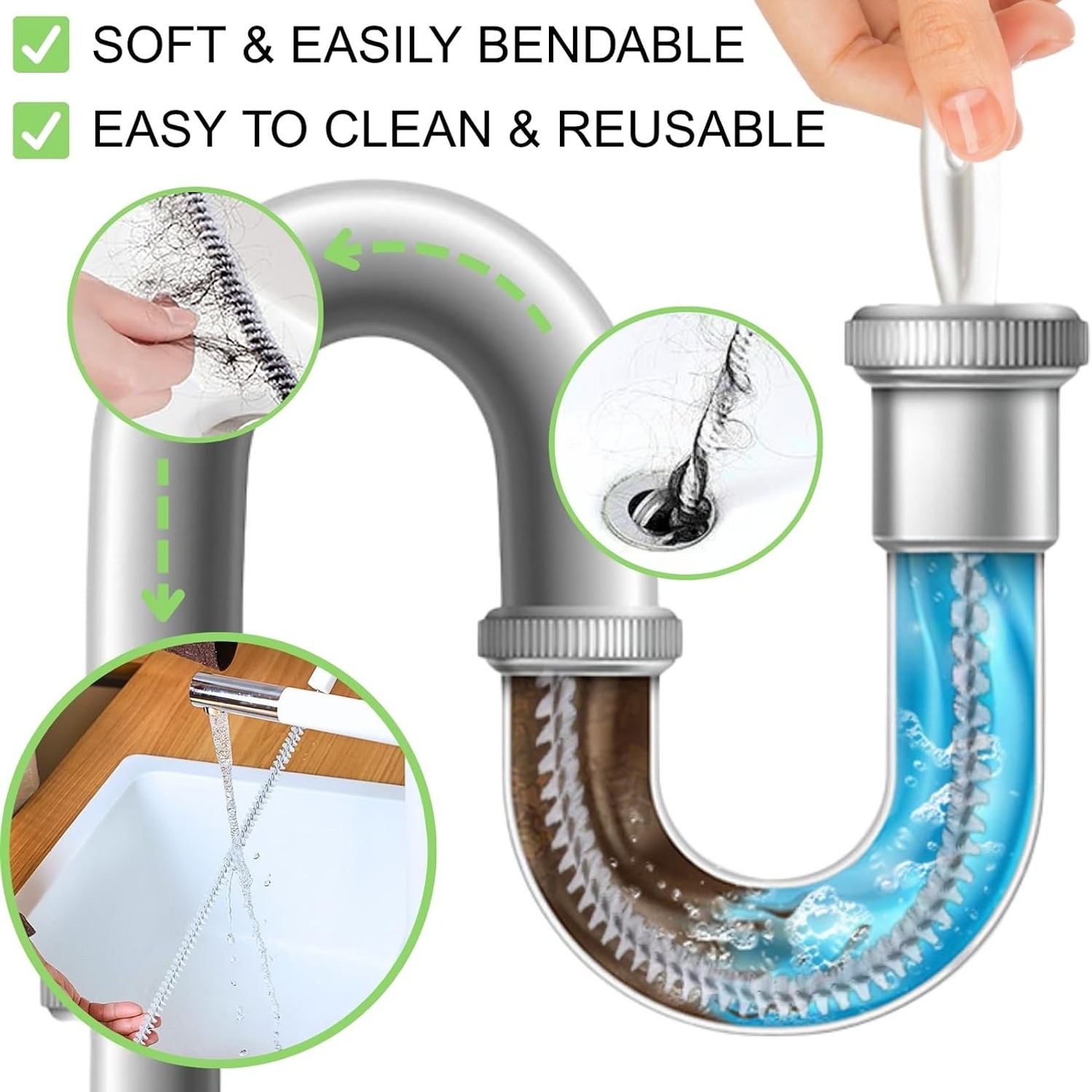
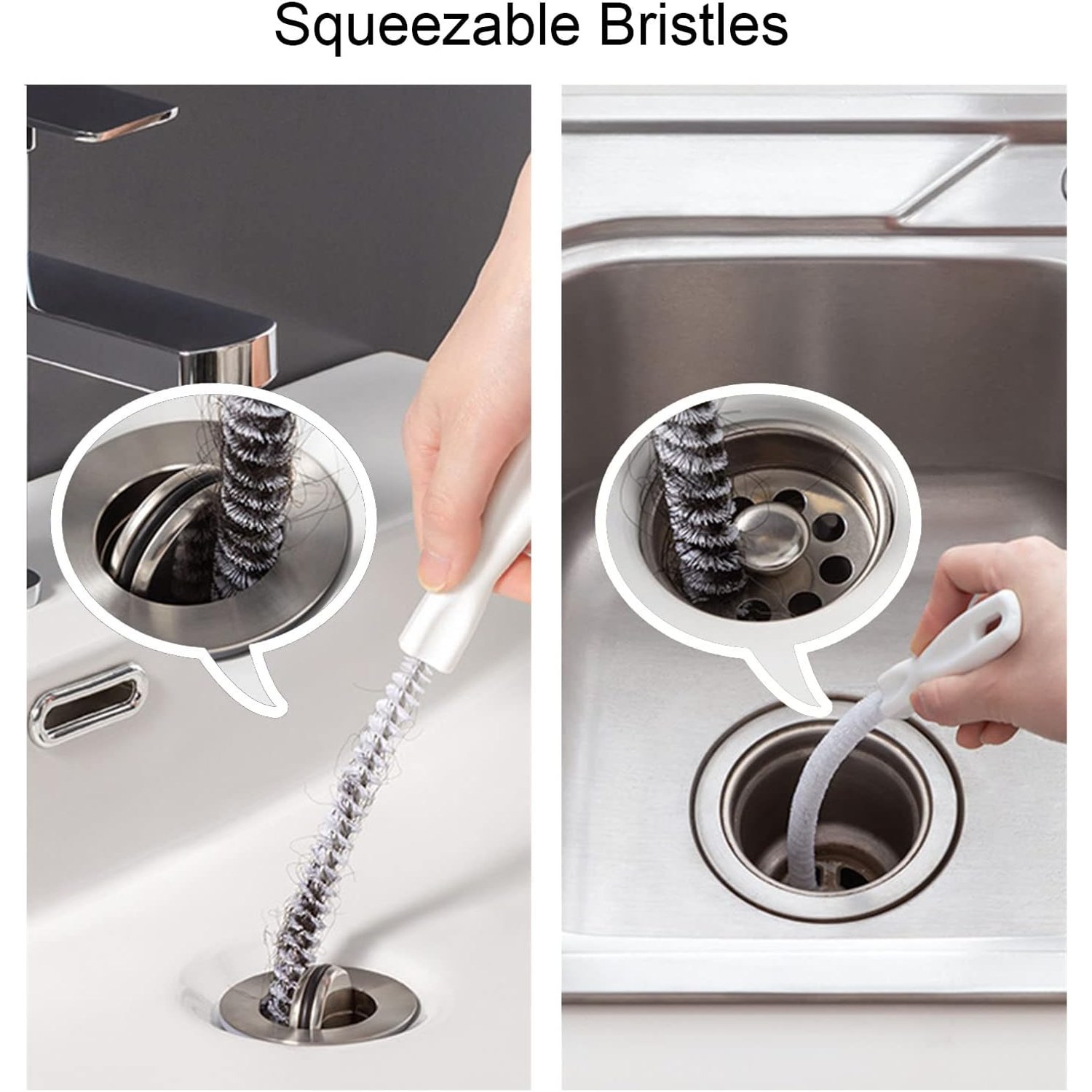
The design is simple and it has not changed much in decades because it does not need to. A long stainless steel shaft carries nylon bristles wound around it in a spiral, like an extremely thin bottle brush with a twist. You feed it into the drain and rotate it as it goes.
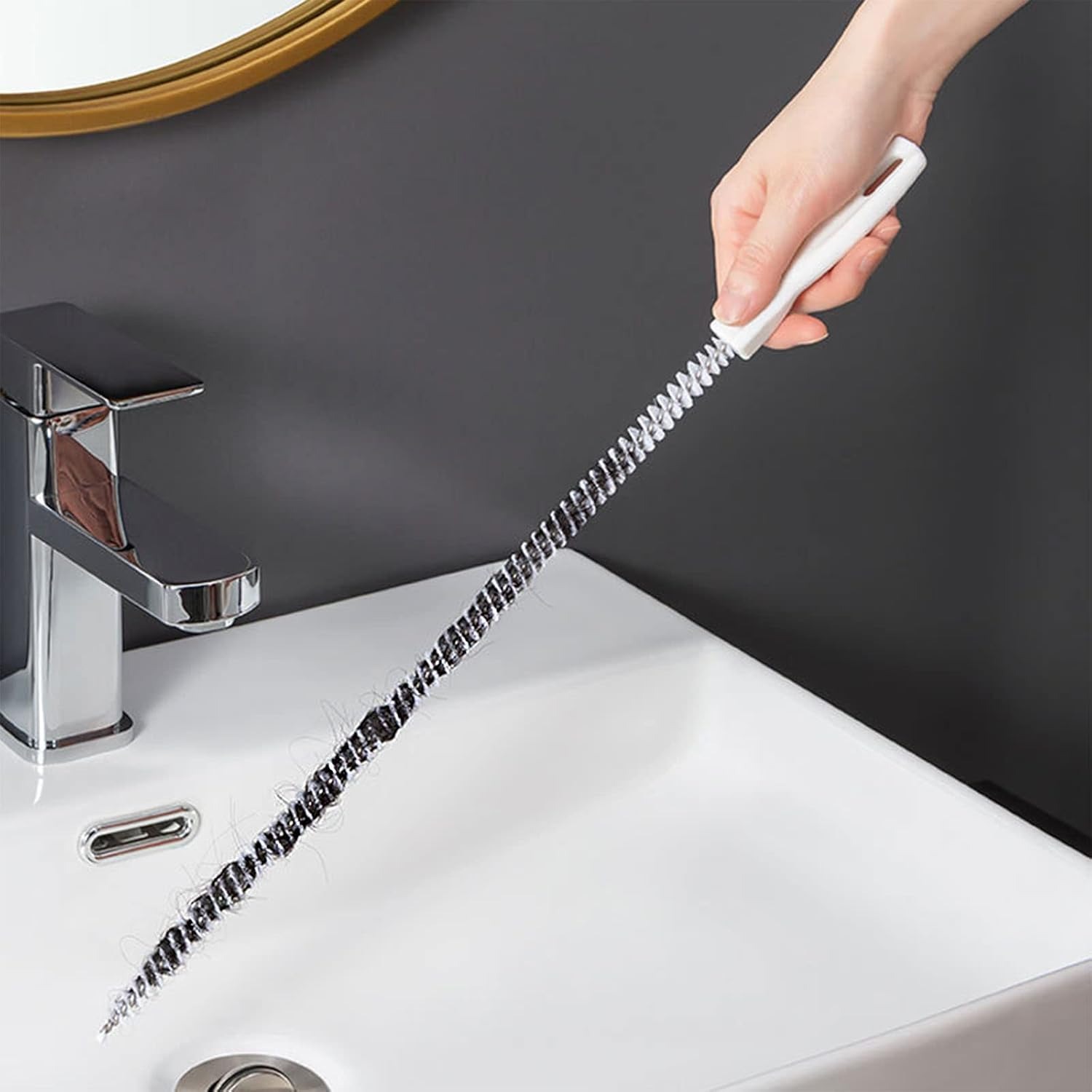
The spiral is the clever part. As you turn, the bristles act like a screw thread and wind hair around the shaft rather than shoving it deeper. A straight-bristled brush tends to push a clog along. A spiral one grabs it. When you draw the brush back out, whatever it caught comes out with it, which is deeply unpleasant to look at and extremely satisfying at the same time.
The shaft on this one is described as moderately firm and flexible. That is the right description. Too stiff and it stops dead at the first bend of the trap. Too floppy and it coils up on itself instead of pushing through. The middle ground lets you apply pressure while the brush follows the curve of the pipe.
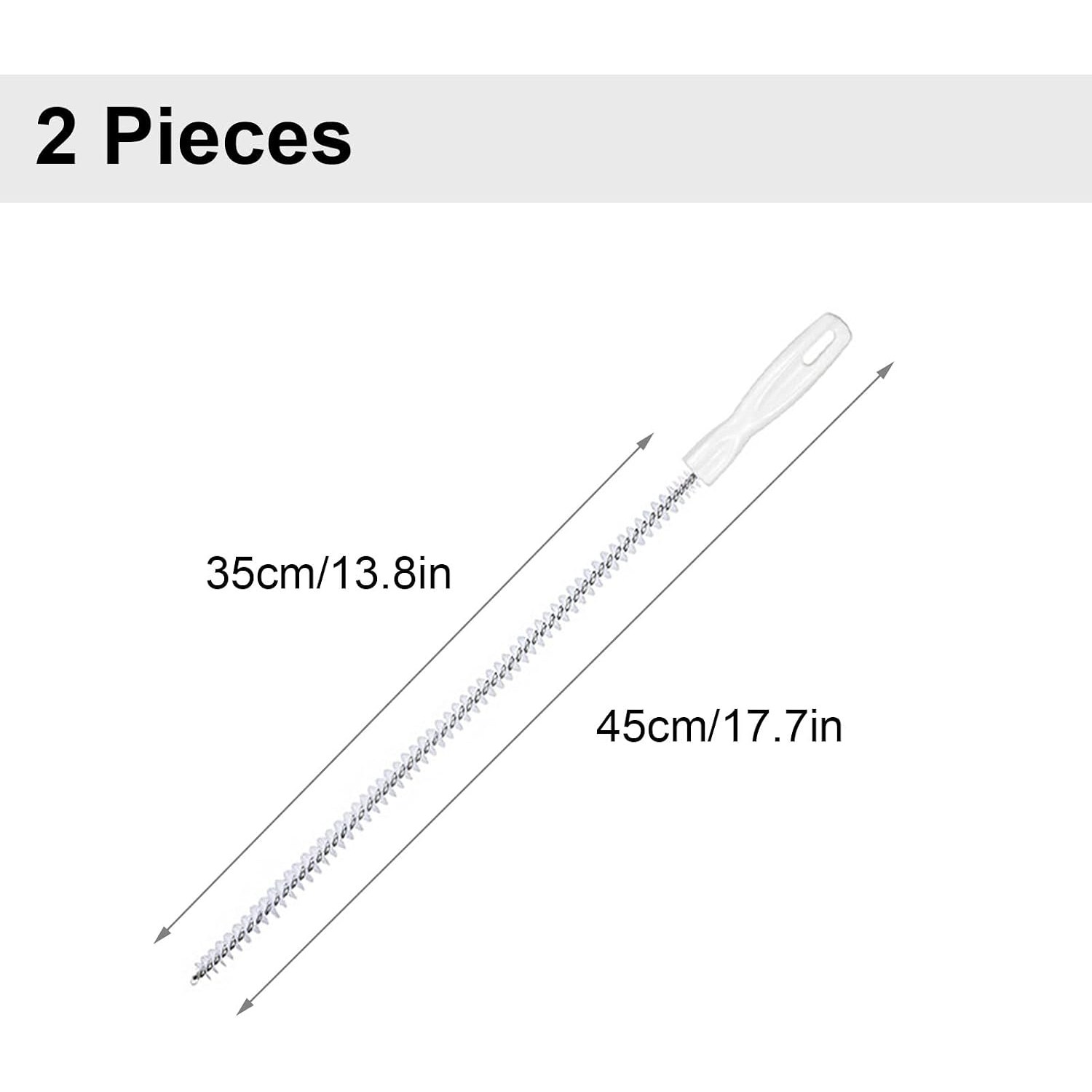
Each brush is around 45cm long, which covers the strainer, the vertical drop and the bend in most domestic wastes. That is the zone where the overwhelming majority of household clogs live.
Who this suits
Anyone with long hair in the house, first. Hair is the single biggest cause of bathroom blockages and a hair remover brush is the most direct answer to it. If two or three people with shoulder-length hair share a shower, you will be using this regularly.
Renters are another good fit. There is nothing to install, nothing to pour, and nothing that could cause an argument about pipework at the end of a tenancy. It lives in a cupboard and costs you nothing to own.
It also suits people who would rather not keep caustic drain cleaner in the house. If you have small children, pets, or older plumbing you do not entirely trust, a mechanical brush avoids the whole question. Nothing gets poured, nothing gets breathed in, and you can see exactly what you removed.
Where it is not the answer is a blockage deeper in the waste line, a shared soil stack in a flat, or anything solid that has gone down a toilet. Those need a plumber or a proper drain auger. A brush is a maintenance tool, not a miracle.
How to choose a drain brush
Length matters most. Shorter brushes around 20cm only clean the visible part of the waste, which is not where the problem is. Something in the 40cm to 50cm range reaches the trap, which is what you want.
Flexibility is the second thing to check. A brush that cannot bend is a brush that stops at the first curve. Look for descriptions mentioning flexible shafts rather than rigid rods.
Bristle layout comes third. A spiral wind catches hair. Short, sparse bristles mostly just stir things around.
Finally, think about how many you need. A two pack costs barely more than a single and means your kitchen brush never meets your bathroom brush. That is worth something. It also means you have a spare when the first one wears out, which it will eventually.
Getting the best out of it
Take the drain cover off first if yours lifts or unscrews. Many basins have a pop-up stopper that twists out in a second once you know it does. Working through a fitted grate is possible but slower.
Feed the brush in gently and keep turning in one direction the whole time. Do not swap direction mid-push, because that unwinds whatever you just collected. When you meet resistance, slow down and keep twisting rather than forcing it forward. The bristles need a moment to get a grip.
Pull it out steadily. Have a bin bag or old newspaper ready, because what comes out is grim and you do not want it anywhere near a clean surface. Repeat two or three times until the brush comes back reasonably clean.
Finish by running the hot tap hard for a minute. In a kitchen, add a squirt of dish soap first, which helps carry away the grease you loosened but did not catch.
Looking after the brushes
Rinse under hot running water straight after use. Pick off the clumps with gloved fingers, bin them, then wash the bristles with a little dish soap to shift the film of grease.
The important bit is drying. Hang the brush so air gets to the bristles. A wet brush stuffed in a drawer will start to smell within days, and then you have two problems instead of one. A hook under the sink or inside a cupboard door is fine.
Replace a brush when the bristles have bent flat or thinned out enough that they no longer grab hair. The second brush in the pack means you are not caught short.
How often to do it
Most households do well with a session every three or four weeks. If your drains are already slow, do the first clean now and then start the routine. If hair is a big factor, fortnightly is better.
The honest sell here is not drama. It is that five dull minutes a month stops a situation that otherwise ends with standing water, a bottle of something caustic, and possibly a call-out charge. Routine beats rescue almost every time.
The short version
This is a two pack of 45cm flexible drain brushes from KEYRI, model SCS2, with stainless steel construction, an iron handle and a shaft that is firm enough to push and flexible enough to bend. It reaches into the trap below your plughole, winds hair and sludge onto its bristles, and pulls the mess out so you can bin it.
No chemicals. No waiting. No guessing whether it worked, because you can see what came out. Two brushes means one for the bathroom and one for the kitchen, kept separate. Rinse it, hang it to dry, and use it again in a few weeks.
If your sink has started taking its time, this is the cheapest and least dramatic fix available.