
Europe Drains Company
Company
Shop By Category
T&Cs
Shop Online
  • Size, material and fit listed
  • Free tracked delivery across Europe over €120
  • 14-day returns

Vacuum Sink Plunger | High pressure drain plunger | pump action drain unblocker

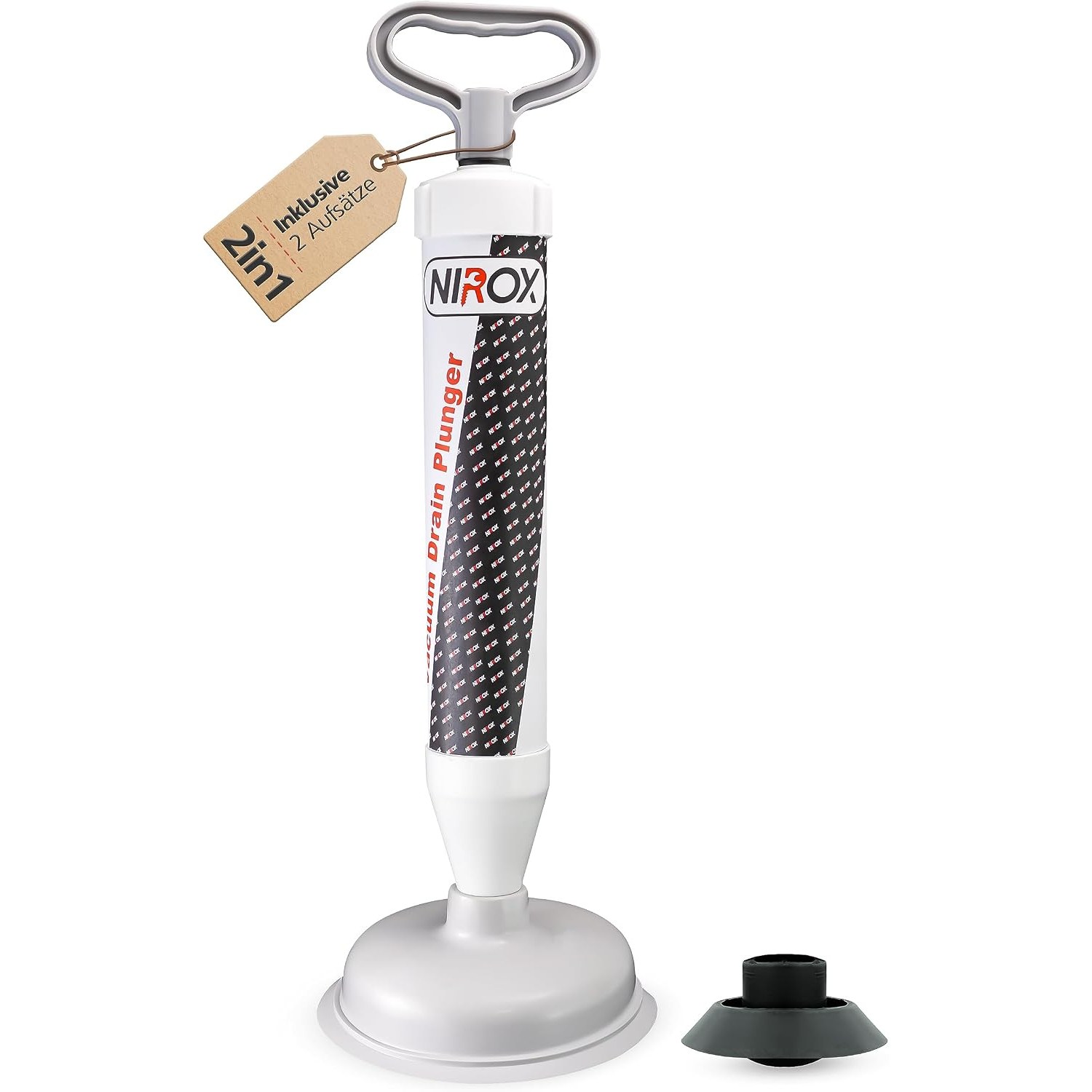
Nirox Vacuum Sink Plunger with 2 Rubber Attachments

€25.99 €30.99 Save €5
  • Strong Air Pressure
  • Two Rubber Heads
  • No Chemicals
  • Fewer Smells

Price: €25.99 €30.99

  • Free tracked delivery across Europe on orders €120+, otherwise a flat €15
  • Pay by card or PayPal, handled by the payment provider
  • 14-day right of withdrawal, plus the two-year legal guarantee
Product specifications
BrandNirox
Model NumberN3116
Part NumberN3116
ManufacturerSemexo
Included Components1 x plunger plus 2 attachments
Attachment Diameters6.5 cm and 16 cm
Number Of Items2
Unit Count1 count
Item Weight427 g
ScentFragrance-free
Country Of OriginChina
Product BenefitsRemoves blockages, helps prevent odour, versatile, chemical free
Weight427 g
Shipping & returns

Tracked delivery to all 27 EU countries. It is free on orders of €120 or more, and a flat €15 below that. We dispatch within one working day, and most orders arrive within 3 to 9 working days from the order date, depending on the country.

If you are a consumer in the EU, the Consumer Rights Directive 2011/83/EU gives you 14 days from the day you receive your order to withdraw for any reason, and a further 14 days to send it back. You may handle and inspect a product as you would in a shop. If it has been used beyond that, we may reduce the refund to reflect the loss in value. We refund the price you paid, including standard delivery. You pay the direct cost of returning it unless the item is faulty.

If it arrives faulty, damaged or not as described, we put it right at no cost to you under the two-year legal guarantee of conformity, Directive (EU) 2019/771, return postage included.

Shipping details · Refunds and returns

Strong Air PressurePump the handle to build pressure and push stubborn clogs loose in a few strokes.
Two Rubber HeadsA 6.5 cm head for small basins and a 16 cm head for baths and kitchen sinks.
No ChemicalsWorks mechanically, so nothing caustic goes down your pipes or into the water.
Fewer SmellsClearing trapped food and hair early helps stop drain odour building up.

Clear a slow sink in minutes with a vacuum sink plunger that uses air pressure instead of harsh chemicals.

A pump-action handle, two swappable rubber heads (6.5 cm and 16 cm) and a sealed air chamber let you shift hair and food blockages in basins, baths, showers and kitchen sinks.

A pump-action vacuum sink plunger that shifts blockages with air pressure rather than drain chemicals.

Two interchangeable rubber attachments, 6.5 cm and 16 cm, cover everything from a small hand basin to a double kitchen sink.

Clearing food scraps and hair before they set hard helps keep drain odour from building up in the bathroom and kitchen.

Suits washbasins, bathtubs, showers, bidets and sinks, so one tool handles most household drains.

Weighs 427 grams, so it is easy to hold at an awkward angle under a shower screen or over a deep sink.

Nirox Vacuum Sink Plunger with 2 Rubber Attachments

Most blocked drains do not need a plumber. They need pressure, applied in the right place, with a proper seal. That is what this vacuum sink plunger is built for. You seat the rubber head over the drain opening, pump the handle to load the chamber with air, then release it so a burst of pressure travels down the pipe and breaks the blockage apart. A few strokes is usually enough on a slow basin.

The set includes two rubber attachments that screw on and off, one at 6.5 cm across and one at 16 cm. The smaller head is for hand basins, bidets and narrow shower wastes where a standard cup plunger simply cannot sit flat. The larger head spreads across bath and kitchen sink outlets and covers the wider drain surround you often find on older fittings. Swapping between them takes seconds.

Blockages in homes are rarely dramatic. They build up slowly from hair, soap residue, cooking fat and food scraps that catch on the trap and collect more debris. Once water starts draining slowly, you are already most of the way to a full stoppage. Clearing it early with a pump action drain unblocker is quicker than waiting, and it also deals with the stale smell that comes from rotting matter sitting in the trap.

Because this is a mechanical tool, there are no caustic granules or bottled drain cleaners involved. That matters if you have older pipework, if you rent and would rather not risk damage, or if you simply dislike keeping corrosive liquids under the sink where children can reach them. It also means you can use the plunger as often as you like without worrying about what repeated chemical exposure does to your seals and joints.

At 427 grams the tool is light enough to control one-handed while you hold a cloth over an overflow hole with the other. It stores easily in a cupboard, under the sink or in a laundry, and the two heads come off for compact storage. For a household that would rather solve a slow drain on a Sunday morning than book a call-out, it is a sensible thing to own before you need it.

Not sure yet? That is fine.

A drain part has to fit the drain you have, and you cannot always judge that from a photograph. If you are a consumer in the EU, you have 14 days from the day you receive it to withdraw for any reason under the Consumer Rights Directive 2011/83/EU, and a further 14 days to send it back. You may handle and inspect a product as you would in a shop. If it has been used beyond that, we may reduce the refund to reflect the loss in value. We refund the price you paid, including standard delivery, and you pay the direct cost of return.

If it turns up faulty, damaged or not as described, that is on us. The two-year legal guarantee of conformity under Directive (EU) 2019/771 covers you, and we pay the return postage. Read the full detail on our refunds and returns page, or ask us anything before you order.

Frequently Asked Questions

What is a vacuum sink plunger?

It is a drain tool with a sealed barrel and a pump handle, fitted with a rubber head that sits over the drain. Pumping the handle builds air pressure, and releasing it drives that pressure into the pipe. The force breaks up or pushes out whatever is blocking the flow.

How is it different from a normal cup plunger?

A cup plunger relies on how hard you can push by hand, and much of that effort escapes around the rim. This design holds the pressure in a chamber and releases it in one go, which gives a sharper push. The two screw-on heads also let it seal on drains a single cup cannot fit.

What is included in the box?

You get one plunger plus two attachments, listed as one small and one large rubber head. The diameters are 6.5 cm and 16 cm. The maker does not state other accessories.

What are the two attachment sizes for?

The 6.5 cm head suits small outlets like hand basins, bidets and narrow shower wastes. The 16 cm head covers wider openings such as bathtubs and kitchen sinks. Having both means one tool handles most drains in a home.

Can I use it on a kitchen sink?

Yes, kitchen sinks are one of the listed uses. Fit the larger 16 cm head so it seals across the full drain area. Kitchen clogs are often grease and food scraps, which respond well to repeated pressure strokes.

Will it work on a bathtub?

Yes. Use the large attachment and make sure there is a little standing water in the tub to help the seal. Block the overflow opening with a damp cloth so the pressure travels down the pipe rather than escaping upward.

Is it suitable for a shower drain?

Shower drains are listed as a suitable use. Pick whichever head sits flattest against the tray around the waste. Shower blockages are usually hair and soap, which this kind of tool handles well.

Can I use it on a toilet?

the maker's details lists washbasins, bathtubs, showers, bidets, sinks and other drains. A toilet has a much larger and differently shaped outlet, so a dedicated toilet plunger with a flange is the better choice there. If you want one tool for both jobs, look for the best toilet and sink plunger set instead.

Does it use any chemicals?

No. It works purely by air pressure, which is one of the main points of the design. Nothing corrosive goes into your pipes or out into the water system.

Is it safe for older pipework?

Because it is mechanical rather than caustic, it avoids the heat and corrosion that bottled drain cleaners can cause. That makes it a reasonable option for older plumbing. If pipes are already damaged or leaking, get them checked before applying pressure.

How many strokes does it usually take?

The supplier describes clearing drains in just a few strokes. In practice a light blockage may clear on the first or second release, while a packed trap can need several rounds. Reseat the head between attempts to keep the seal tight.

Why is my plunger not creating suction?

Nine times out of ten it is the seal. Make sure the rubber head sits flat on a smooth, wet surface, cover any overflow hole, and keep a shallow layer of water over the drain. A dry or uneven rim lets air leak out and kills the pressure.

Do I need standing water in the sink?

A small amount helps a lot. Water transmits the pressure better than air and also improves the seal at the rim. Two or three centimetres over the drain is plenty.

Will it clear hair from a basin?

Hair is one of the most common causes of a slow basin, and pressure often shifts the mass enough to let water carry it away. For a thick, matted plug you may want to pull out what you can with a hair hook first. Many people pair this with the best hair clog remover tool for bathrooms.

Can it damage the sink or bath surface?

The contact surface is rubber, so normal use should not mark acrylic, enamel or ceramic. Avoid dragging the head sideways across the surface under pressure. Rinse grit off the rubber before use so nothing abrasive is trapped underneath.

How much does it weigh?

The item weight is listed as 427 grams. That is light enough to hold steady with one hand while you seal an overflow with the other. It also means it is easy to store on a hook or in a cupboard.

What are the overall dimensions?

Overall product dimensions are not specified by the maker. The two rubber attachments are listed at 6.5 cm and 16 cm in diameter. If exact length matters for your storage space, contact us before ordering.

What material is it made from?

The attachments are described as rubber. The material of the body and handle is not specified by the maker, so we would rather not guess. We only publish specifications the supplier has confirmed.

What colour is it?

Colour is not specified by the maker. Product photography on the maker shows the current version. If colour is important to your purchase, check the images or get in touch.

Does it smell of anything?

It is listed as fragrance-free. New rubber can carry a faint factory scent for a short time, which fades with airing and rinsing. Nothing is added to perfume the product.

How do I change the attachments?

The heads are interchangeable, so you remove one and fit the other by hand. Make sure the replacement is seated fully and squarely before you pump, or pressure will escape at the join. Check the fit again after heavy use.

How should I clean it after use?

Rinse the rubber and the inside of the barrel with warm water, then shake out any trapped liquid. Wipe the handle and let everything dry before storing. Drains carry bacteria, so a quick rinse every time is worth the ten seconds.

Where should I store it?

Somewhere dry and out of direct sun, ideally upright or hanging so the rubber keeps its shape. Under a sink, in a laundry cupboard or in a utility room all work. Take the heads off if you need to fit it into a tight space.

Can I use it alongside a drain snake?

Yes, and the two complement each other. A snake pulls debris out physically, while a pressure plunger pushes it clear. For recurring clogs, many people keep both as part of the best plumbing tool for home kits.

Will it stop my drain smelling?

Smells usually come from food, grease or hair rotting in the trap. Clearing that material is what removes the source, and the supplier lists odour prevention as a benefit. Regular use before a blockage sets in keeps things fresher.

Is it good for renters?

It is a sensible choice if you want to fix a slow drain without pouring chemicals into plumbing you do not own. It is compact, reusable and leaves no residue. That makes it one of the better drain cleaning tools for renters.

How often should I use it?

There is no limit, since nothing corrosive is involved. A quick plunge once a month on a bathroom basin or kitchen sink is enough to stop buildup becoming a real blockage. Use it sooner if water starts draining slowly.

Would it make a practical gift?

It is a genuinely useful housewarming or first-home gift, especially for someone setting up a tool cupboard. It is not glamorous, but it gets used. Pair it with a few other basics for a more complete present.

How long does delivery take?

Delivery times depend on your country and are shown at checkout before you pay. You will receive confirmation once the order is on its way. Get in touch if you need an estimate for a specific address.

What if it is not right for me?

If the plunger does not suit your drains or arrives in poor condition, contact us and we will sort it out under our returns policy. Keep the packaging and the unused attachment where you can. Tell us which sink or drain you were trying to clear, as we can often suggest a better approach.

How to Choose and Use a Vacuum Sink Plunger

6 min read Drains Company

The slow drain nobody deals with until it stops

Blocked drains almost never happen overnight. The sink takes a second longer to empty, then five seconds, then you notice a shallow pool left behind after you brush your teeth. Most people live with that for weeks. By the time the water stops moving altogether, the trap is packed solid and the job is twice as hard.

A vacuum sink plunger is the tool that stops that slide. It is a pump-action drain unblocker with a sealed chamber. You push the handle down to compress air inside the barrel, then release so that pressure fires into the drain. Instead of relying on how much force your arms can produce, you are using stored pressure, delivered in one short burst. On a basin that has been draining slowly for a fortnight, that burst is usually all it takes.

How the pressure actually works

Water does not compress. That is the whole trick. When the rubber head seals against the drain opening and there is a little water sitting over the outlet, the pressure from the chamber has nowhere to go but down the pipe. It travels through the water column and hits the blockage as a sharp shove.

Hair and soap collect into a soft plug that gives way under that kind of push. Grease behaves similarly: it holds firm against slow, steady pressure but breaks apart when hit hard and repeatedly. Food scraps in a kitchen trap are usually loose enough to be driven through on the first or second stroke.

What ruins the effect is a leaking seal. If air escapes around the rim of the head, or out of the overflow hole near the top of the basin, the pressure dissipates and the blockage barely moves. This is the single most common reason people decide a plunger "does not work" when the tool is fine and the technique is not.

Two heads, two jobs

This set comes with one plunger body and two rubber attachments, at 6.5 cm and 16 cm across. That spread matters more than it sounds.

The 6.5 cm head is for small outlets. Hand basins in cloakrooms, bidets, narrow shower wastes and compact utility sinks all have drain openings that a big rubber cup will simply bridge over without sealing. A smaller head sits flat on the surrounding surface and grips properly.

The 16 cm head goes on anything wide. Kitchen sinks, bathtubs, larger shower trays and older fittings with a broad metal surround all need the extra coverage. Trying to seal those with a small head wastes most of the pressure around the edges.

Swapping between them is a hand operation, so you can change heads mid-job if your first choice is not sealing well. Check the attachment is fully seated before you pump, because a loose join leaks pressure just as badly as a bad seal at the drain.

Which drains it suits

The supplier lists washbasins, bathtubs, showers, bidets, sinks and other drains. That covers the great majority of what goes wrong in a normal home.

Toilets are the exception. A toilet outlet is a different shape and size, and it needs a flanged plunger that can push into the throat of the pan. If a blocked toilet is your main concern, buy a tool designed for that job and keep this one for the basins and sinks.

It is also worth being honest about what no plunger can fix. If the blockage is a collapsed pipe, tree roots in an outside drain, or something solid like a dropped toothbrush wedged in the trap, pressure will not shift it. Signs of a bigger problem include several drains backing up at once, gurgling from a different fixture when you run a tap, or water appearing outside. In those cases, call someone.

Why skip the bottled stuff

Caustic drain cleaners work, up to a point. They also generate heat, sit against your pipe walls, and do nothing good to rubber seals or older joints. If you rent, you may not know what material is behind the wall. If you own an older place, you probably do, and you would rather not find out the hard way.

A mechanical tool has none of that risk. There is nothing to store safely away from children, nothing to dispose of, and nothing going into the water system. You can use it as often as you want, which is the real advantage. A quick plunge once a month costs nothing and stops buildup becoming a blockage. You cannot sensibly do that with chemicals.

Chemical cleaners also have a habit of partly clearing a clog, which lets water through while leaving the core in place to collect more debris. Pressure tends to break the whole mass up, so you get a cleaner result.

Technique that makes the difference

Start by running a few centimetres of water into the sink or bath. Water carries the pressure far better than air.

Next, deal with the overflow. Most basins and baths have a small opening near the rim that connects to the same pipe. If you leave it open, your pressure will come straight back out of it. Press a damp cloth firmly over the hole, or get someone to hold it while you work.

Seat the head flat and squarely over the drain. Wet rubber on a wet surface grips far better than dry on dry. Pump the handle to load the chamber, then release. Keep the head in contact with the surface between strokes so you do not lose your seal.

Work in short sets of four or five, then check whether the water level has dropped. If it has moved even slightly, carry on, because you are breaking the plug apart. If nothing changes after a few rounds, reposition and try the other attachment before deciding the blockage is beyond a plunger.

Afterwards, run hot water for a minute or two to flush loosened debris right through rather than letting it settle again further along.

Looking after it

Rinse the rubber and the inside of the barrel under warm water after every use. Drains are not clean places, and a ten second rinse saves you handling something unpleasant next time. Shake the water out, wipe the handle, and let it dry before putting it away.

Store it somewhere dry and out of direct sunlight. Heat and UV harden rubber over time, and hard rubber cannot seal. Hanging it or standing it upright keeps the head from deforming under its own weight. If storage space is tight, take the attachments off and keep them beside the body.

Check the rubber occasionally for cracks or stiffness. A head that no longer flexes will not seal, and that is usually the first part to wear.

The short version

At 427 grams, with one plunger body and two rubber heads at 6.5 cm and 16 cm, this is a straightforward tool that covers most household drains. It works on air pressure, so there is nothing corrosive involved and nothing dangerous under the sink.

Match the head to the drain, seal the overflow, keep a little water in the basin, and work in short bursts. Do that and a slow kitchen sink or a sluggish shower is a five minute job rather than a call-out. Buy it before you need it, because the day you need it, you will really need it.

Browse the shop

Not sure which head you need?

Tell us which drains you want to clear and we will point you to the right attachment and technique.

Ask us a question

Page summary

The Nirox N3116 vacuum sink plunger is a pump-action drain unblocker that clears household blockages using air pressure instead of chemicals. The set contains one plunger body and two interchangeable rubber attachments measuring 6.5 cm and 16 cm in diameter, covering washbasins, bathtubs, showers, bidets and kitchen sinks. Total item weight is 427 grams. It is fragrance-free, made in China, and manufactured by Semexo under the Nirox brand. Stated benefits are effective blockage removal, odour prevention, versatile use across drain types, and chemical-free operation that is gentle on pipes. Colour, material and overall product dimensions are not specified by the maker, and no warranty term is stated.