
The complete guide
How to Choose a Shower Drain Cover That Actually Fits
The problem nobody notices until it is annoying
A shower drain only gets your attention when it stops working. For months it quietly swallows everything you send down it. Then one morning you are standing in two centimetres of grey water, watching it creep towards your ankles, wondering how long it has been this bad.
Nine times out of ten, the cause is hair. Hair goes down with the water, wraps around whatever it touches and starts collecting soap, skin and conditioner. The result is a felted plug that sits just below the lid where you cannot see it. By the time you notice slow drainage, there is usually a decent handful in there.
The other common problem is the lid itself. Shower drain covers lead a hard life. They get hot water poured on them daily, they get stood on, and they get hit by shampoo bottles. Chrome flakes, plastic yellows, tabs snap off, and sometimes the strainer basket underneath goes missing entirely during a renovation and never gets replaced. A missing basket means hair goes straight into the trap, which turns a two minute clean into a proper job with gloves on.
A replacement cover with a built in hair cup solves both problems at once. You get a drain that looks tidy again and a filter that does the hard work for you.
How this one works
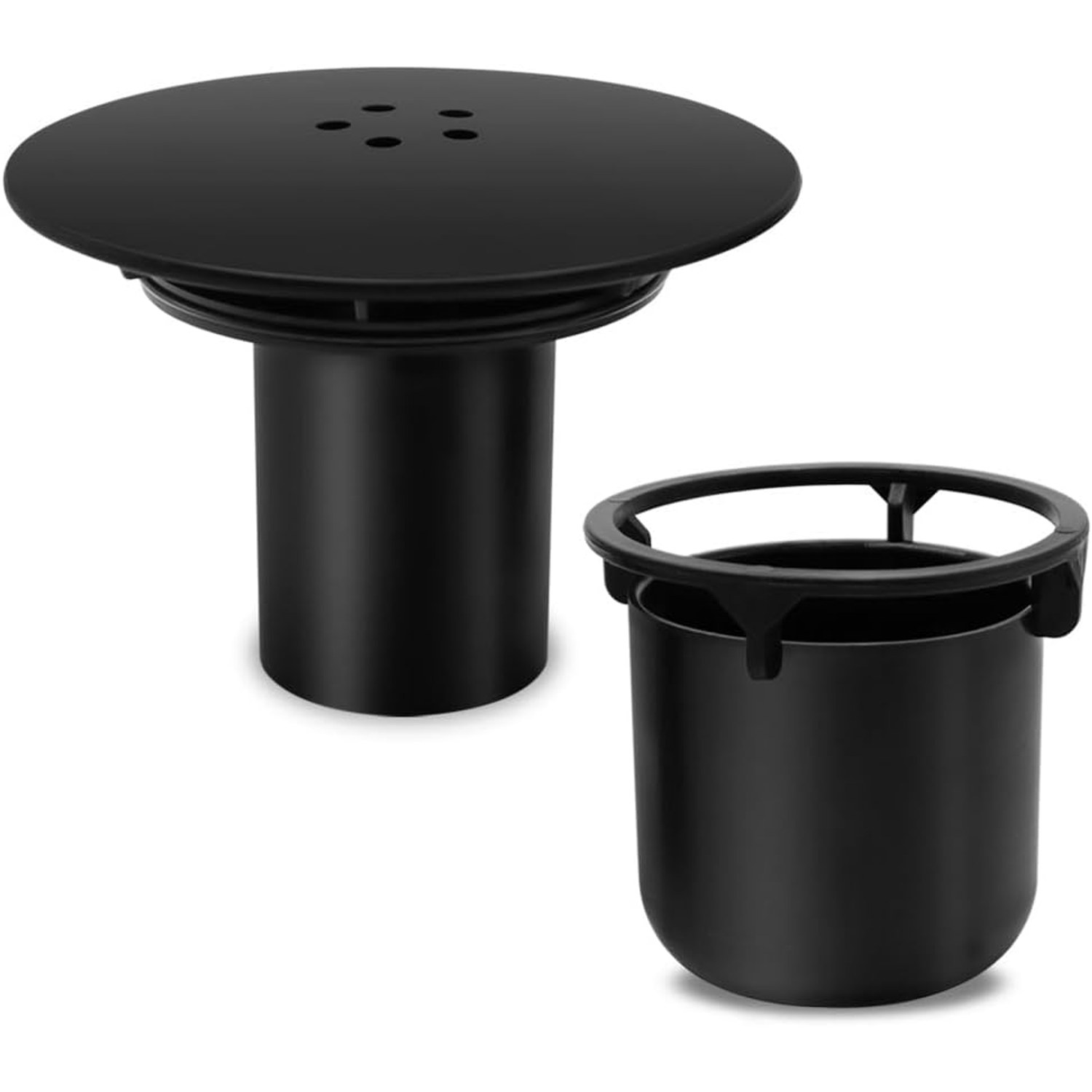
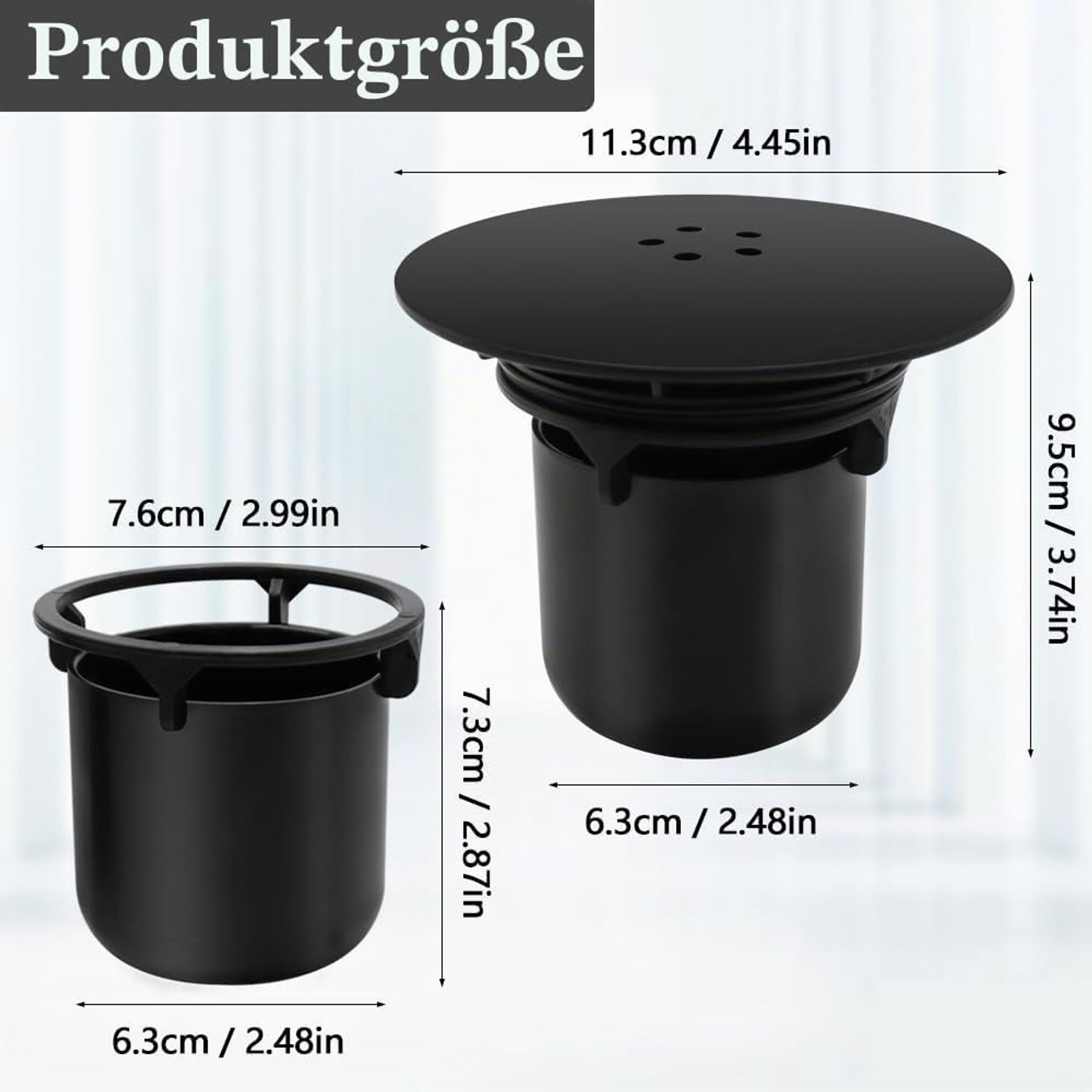
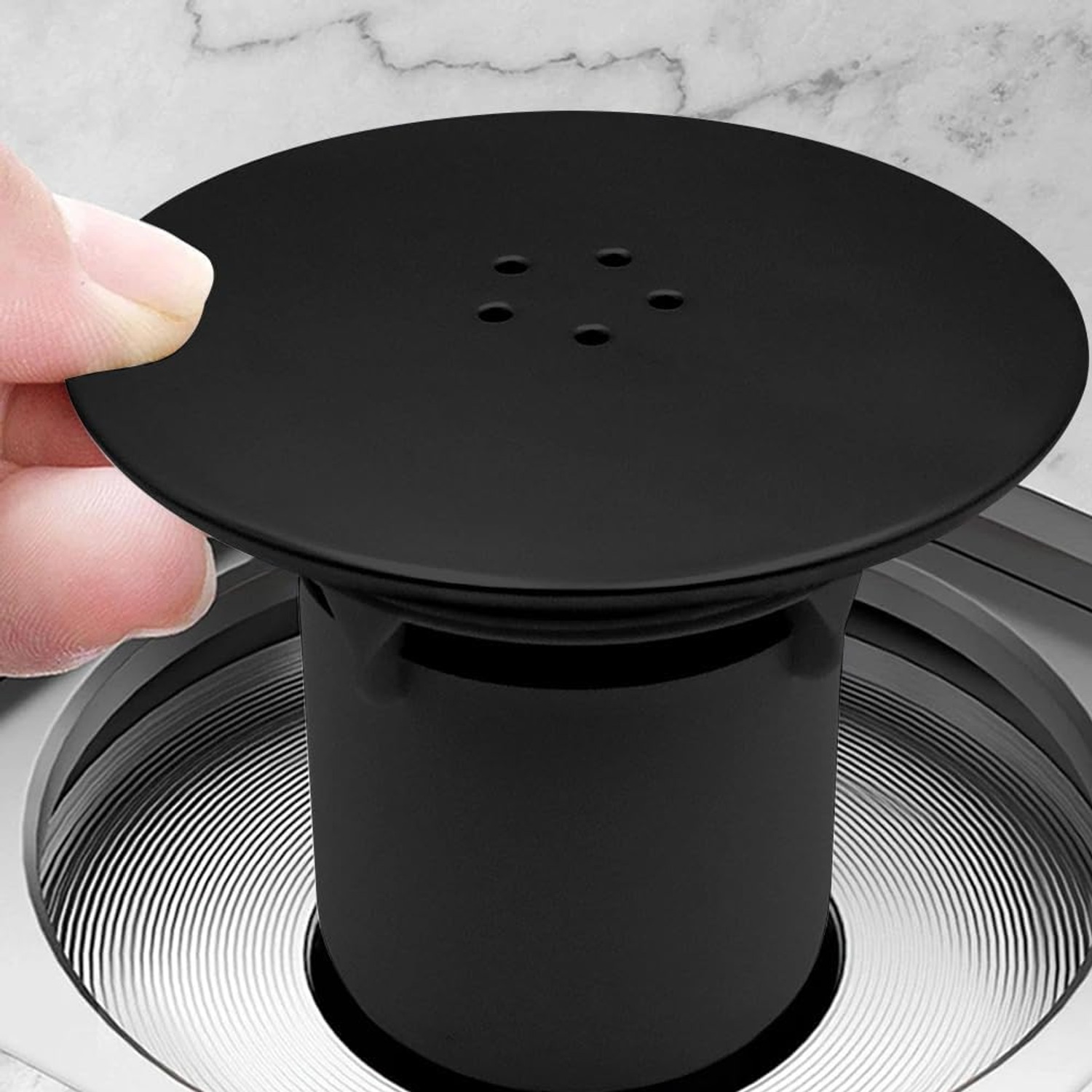
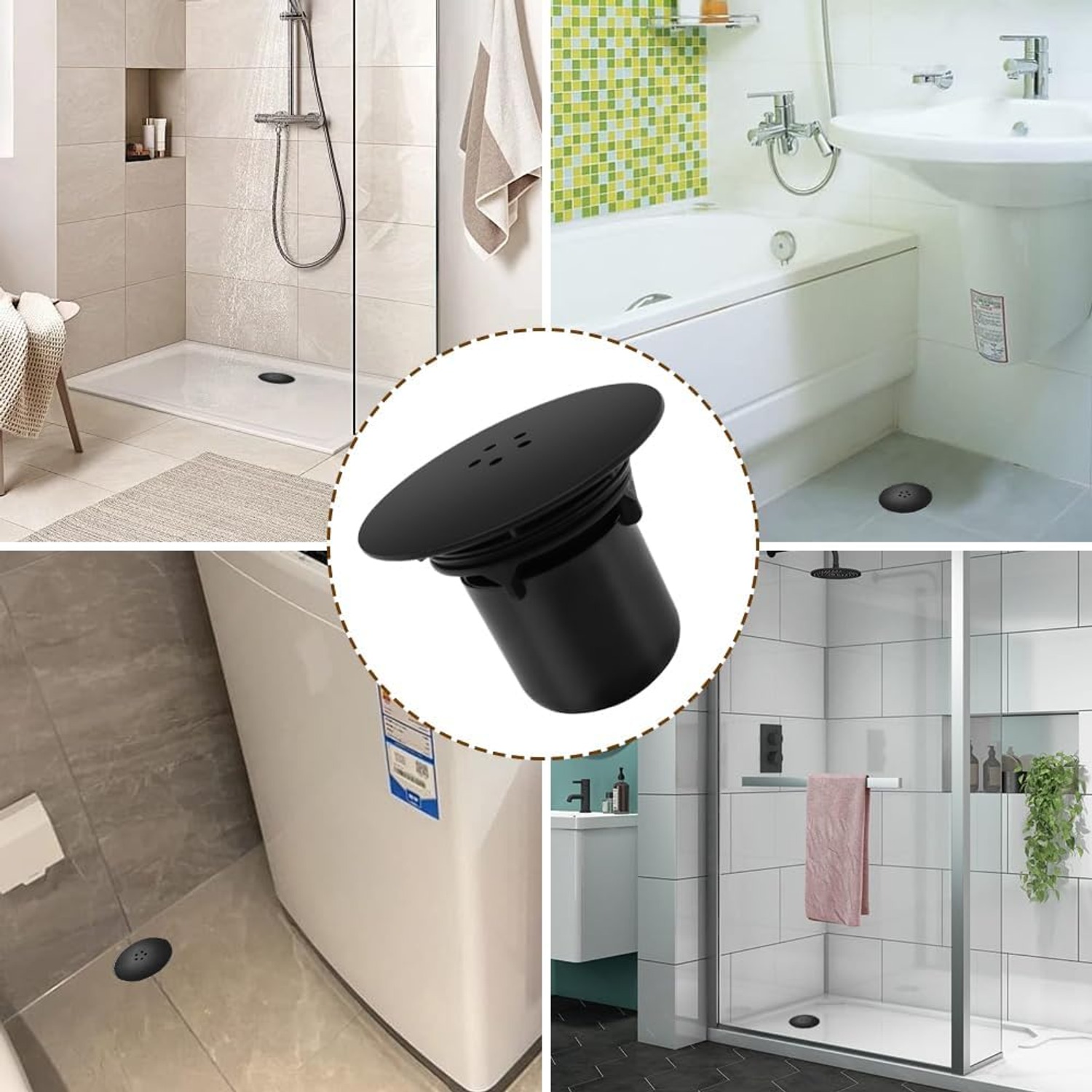
The design is about as simple as it gets, which is a good thing in a bathroom fitting. There are two parts. The lid sits on top, 11.5 cm across the face, with five slots cut into it so water can pass through. Below it sits a cup that drops down into the waste body. That cup is the hair catcher.
Water falls through the slots, into the cup, and out through the sides into the pipe. Hair and bigger bits of debris stay in the cup because they cannot get around the edges. When it fills up, you lift the lid off by hand, pull out the cup, tip it into the bin and put both parts back.
That whole routine takes under a minute. Do it weekly and you will probably never need a drain snake or a bottle of caustic drain cleaner again. That is the real benefit here, not the look.
The materials are plastic with a painted black finish. Plastic in a shower is a sensible choice because it cannot rust, and at 135 g the parts are light enough to handle one handed while you are standing in the shower. The listed height is 9.5 cm with an item depth of 7.7 cm, which matters more than people expect, because the cup has to physically fit down into your waste body.
Measuring before you buy
This is the part that decides whether you are happy or frustrated, so it is worth five minutes.
The number that matters most is the compatible groove diameter, listed here at 9 cm. That is the recess inside your drain opening that the cup seats into. To measure it, take out your old lid and basket and put a tape measure across the inside of the opening, edge to edge, at the widest point. Do not measure your old lid, because the lid is always wider than the hole it covers.
Next, check the depth. Reach down and see how far it is from the top of the opening to whatever stops the cup, usually the bottom of the waste body or the top of the trap. If you have less than about 8 cm of clear depth, a 7.7 cm deep cup may bottom out and sit proud.
Finally, look at the shape. This is a round shower drain cover. If your opening is square or rectangular, which many linear and wet room drains are, you need a different style entirely.
One more thing to check. Some waste bodies hold their lid with a central screw, a bayonet twist or a clip. If yours does, a drop-in cover like this may not lock down the same way. Have a quick look at how your old lid was held before you order.
Who this suits
If you share a bathroom with anyone who has long hair, a hair catcher stops being optional. Hair is the single biggest cause of shower blockages, and catching it at the surface is far easier than clearing it from the trap.
Landlords and anyone managing a rental will like the price and the simplicity. Tenants break lids. Replacing a lid and cup costs a fraction of replacing a whole waste assembly, and does not involve lifting the tray.
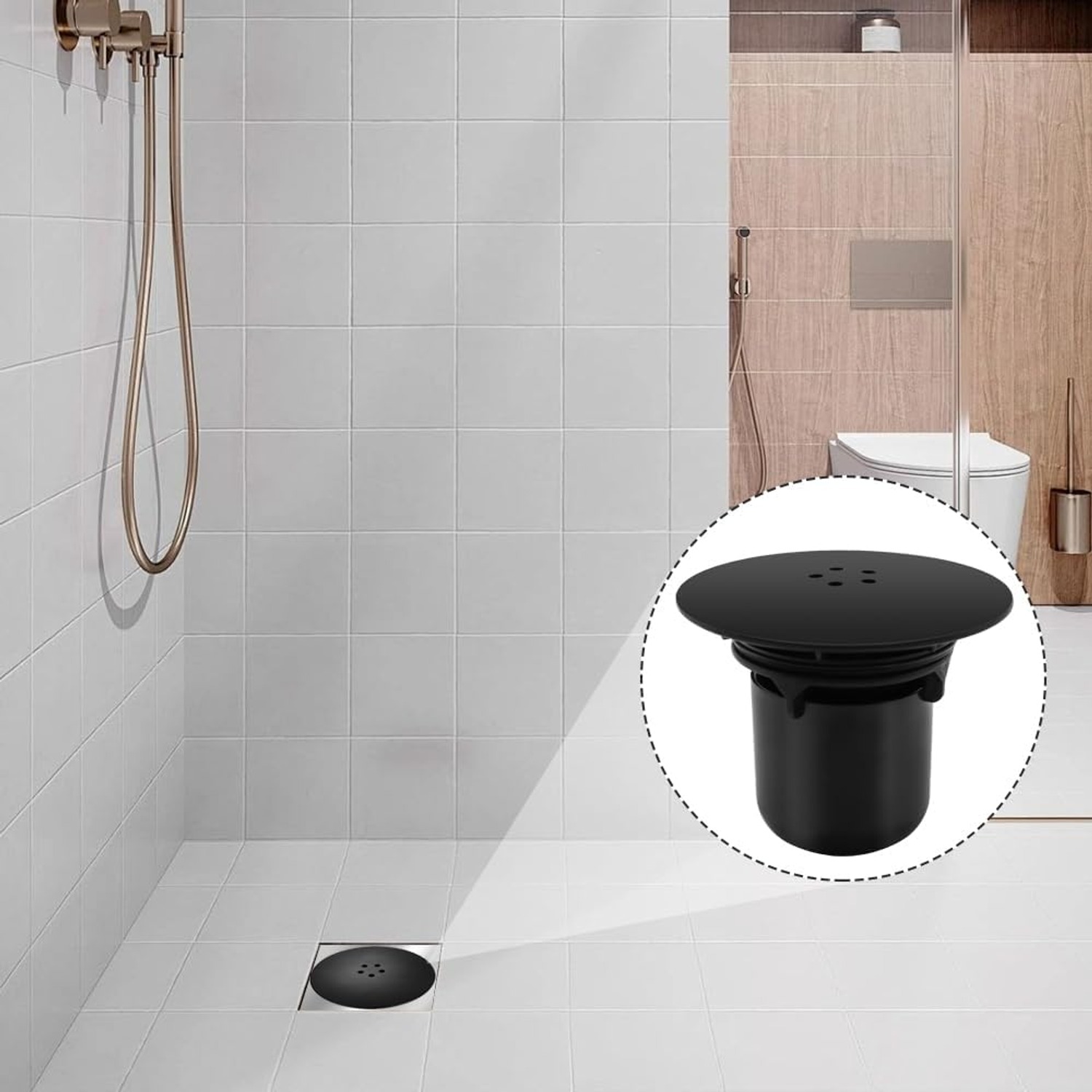
Renovators often find themselves in a specific bind. The new tray or new tiles are in, everything looks good, and the only thing letting it down is a scuffed chrome lid left over from the old fitout. A black cover ties it in with matte black taps and rails without opening the floor up again.
And then there is the straightforward repair case. Something cracked, something went missing, and you want it fixed this weekend without a trade visit. That is what a drop-in replacement is for.
Living with it day to day
A few habits make a hair trap work better.
Empty it before it is full, not after. A cup packed solid will slow the water down and can push hair past the edges. A quick check every few showers keeps things moving.
Rinse the parts rather than just shaking them. Soap and conditioner leave a slippery film that grabs the next round of hair. Thirty seconds under warm water makes a real difference.
Be gentle with cleaners. The finish is painted, so abrasive pads, scouring powder and long bleach soaks will dull it. Regular bathroom spray on a soft sponge is plenty. If you live somewhere with hard water, a mild descaler wiped on and rinsed off handles the chalky marks.
Do not use it as a step. The lid is designed to lift off by hand, not to carry your weight. If you need something to stand on, that is a job for the tray, not the drain.
Comparing your options
You have a few routes when a drain cover fails.
The cheapest is a flat silicone or rubber hair mat that sits on top of the drain. These cost very little and catch hair well, but they move around underfoot, they look like an afterthought, and water pools around them.
The most expensive is replacing the whole waste assembly. Sometimes you have to, usually when the body is cracked or leaking. It means getting at the underside of the tray, which is often a floor-up job.
In between sits the replacement lid and cup. You keep the working parts and renew the parts that wear out and show. For most people with a drain that still drains and a lid that no longer looks right, this is the sensible middle ground.
The deciding factor is almost always the measurements rather than the price. A cheap cover that fits beats an expensive one that does not.
The short version
A shower drain cover 115mm black does two jobs at once. It hides the pipe and tidies up the floor of your shower, and the cup underneath stops hair from reaching the trap where it causes real trouble.
The numbers to check are the 9 cm groove diameter, the 7.7 cm depth and the round shape. Measure your opening, compare, and if it matches you are looking at a five minute fix with no tools.
After that, the only maintenance is lifting the cup out now and then and tipping it in the bin. That small habit is what keeps a shower draining properly for years.