
The complete guide
How to Choose a Shower Drain Hair Catcher That Actually Stays Put
The puddle problem
You know the feeling. You step into the shower, turn the water on, and by the time you have rinsed the shampoo out there is water around your ankles. It drains eventually, but slower each week. Then one morning it stops draining at all and you are standing in cold grey water, poking at the grate with a bent coat hanger.
Almost every time, the cause is hair. It slips through the grate in ones and twos, catches on the inside of the trap, and starts a mat. Soap, conditioner, shaving foam and skin oils all stick to that mat. Within a couple of months you have a solid plug that water has to squeeze past.
The frustrating part is that none of it needed to happen. The hair was right there, on the surface, where you could have picked it up with two fingers. It only became a problem once it went down the hole.
That is the entire argument for a drain screen. You are not fixing a blockage. You are stopping one from forming, at the only point where it is easy.
How a flat strainer works
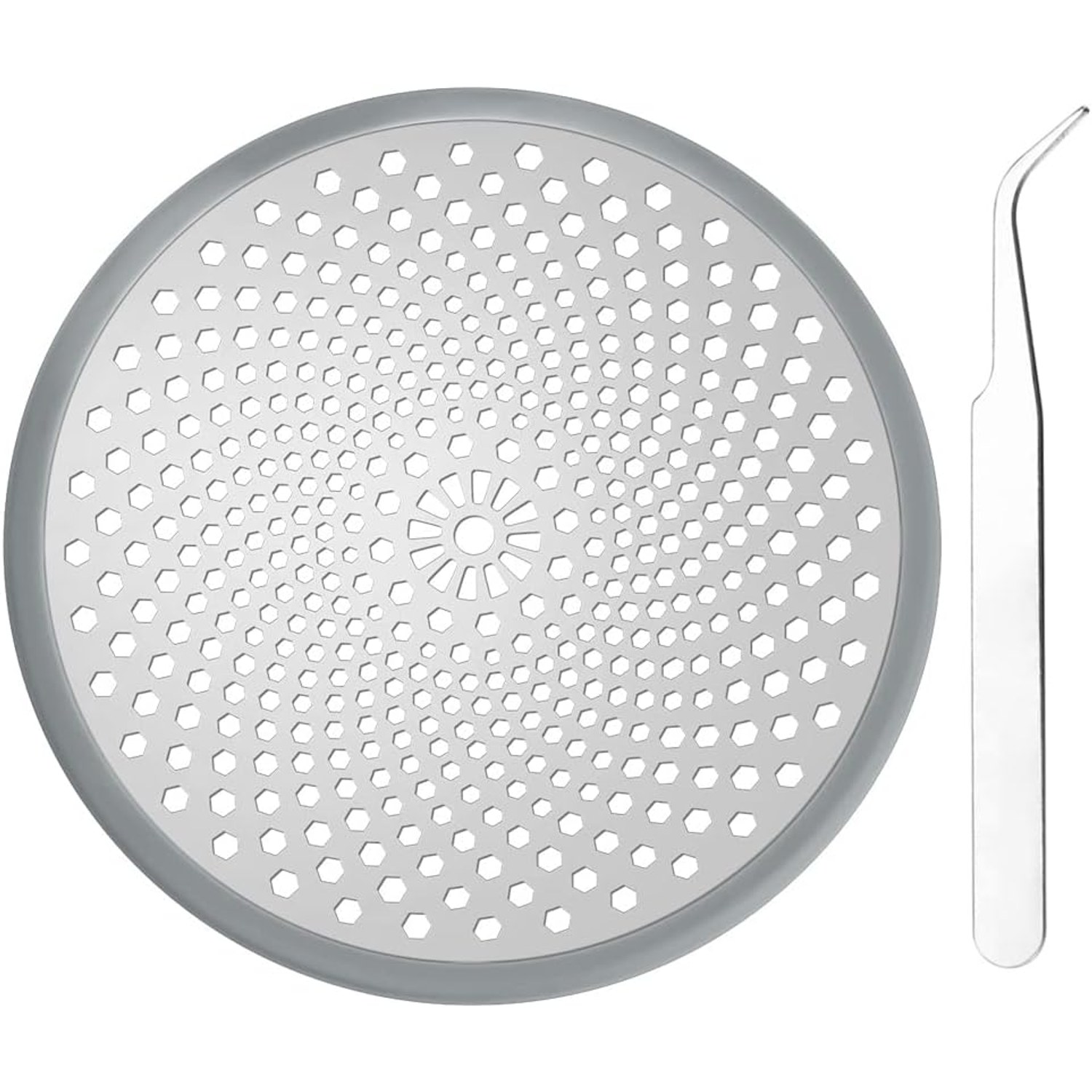
A flat shower hair strainer 12cm is a perforated metal disc that sits over your floor drain. Water passes through the holes. Hair does not, because hair is long and stringy and catches on the edges of the perforations rather than threading through them.
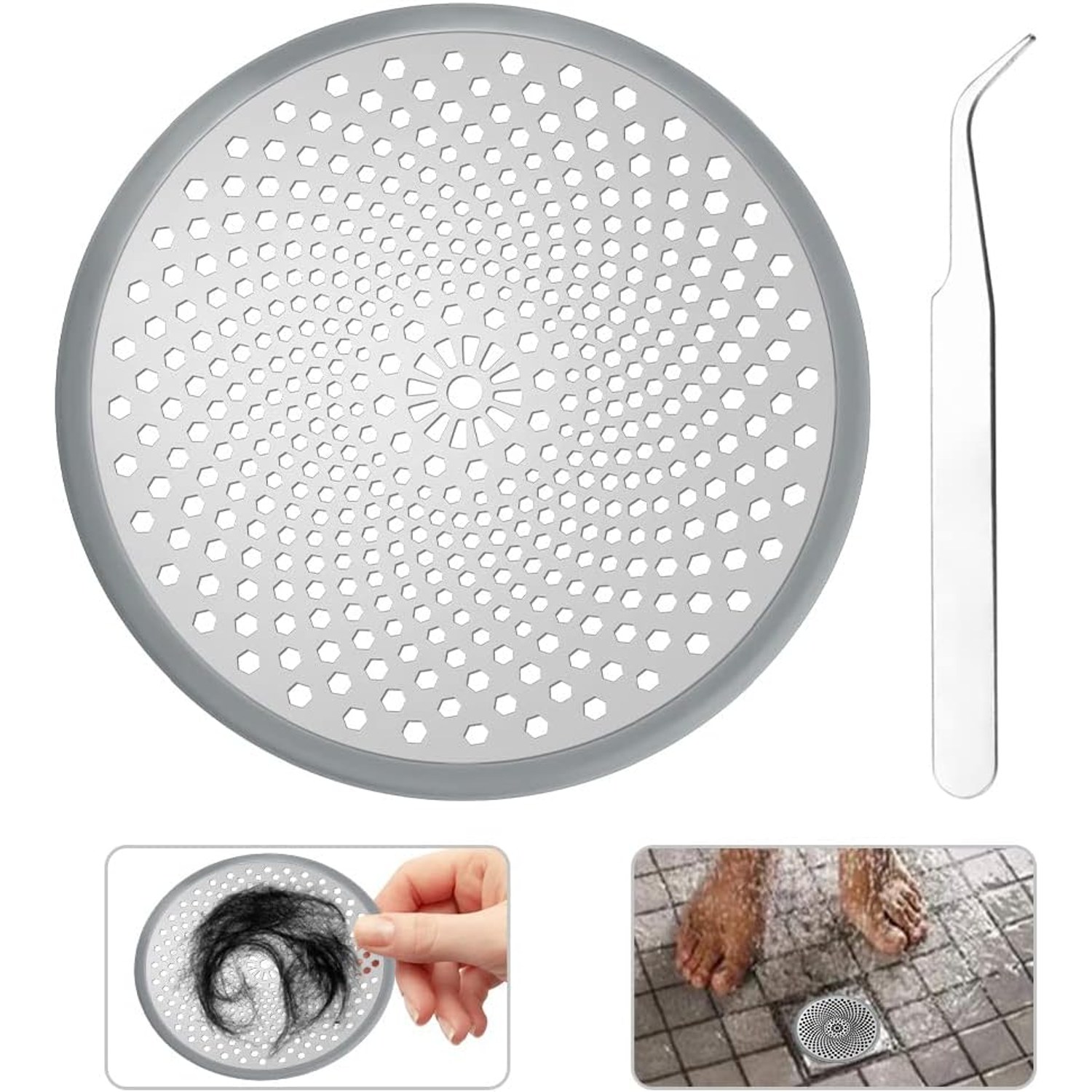
The hair collects in a small clump on top of the screen. You see it. You lift the screen, pull the clump off, drop it in the bin, rinse the screen and put it back. Five seconds, once a day.
Two details make the difference between a screen that works and one you throw in a drawer.
The first is height. This cover is 0.1cm thick, which is as close to flat as a screen gets. Dome shaped catchers stick up two or three centimetres. They catch toes, they collect soap on their sides, they trip up a squeegee and they look like something sitting in your shower. A flat screen reads as part of the floor.
The second is grip. Wet tile is one of the slipperiest surfaces in the house. A bare stainless disc on wet tile slides the moment water hits it or a foot comes near. This one has a soft silicone rim around the outside that holds it in place and keeps the gap between screen and floor tight, so less hair sneaks around the edge. A good silicone rim drain cover solves the single most annoying flaw of cheap metal screens.
Who it suits
Anyone with long hair in the house. That is the obvious one. A single long hair is more than enough to start a tangle in the trap, and someone with hair past their shoulders can shed fifty or more in one wash.
Households with several people sharing a bathroom. The hair adds up fast, and nobody is quite sure whose turn it is to deal with the drain. A visible screen makes it an obvious, trivial job instead of an invisible, dreaded one.
Renters. You cannot modify the plumbing in a rented flat, and a slow drain can turn into a deposit argument. A screen you can take with you when you move is a sensible bit of insurance.
Pet owners who wash dogs in the shower. Dog hair is short, dense and ruthless on drains. Expect to clear the screen several times during one wash, and be grateful you are not clearing the trap instead.
People with older plumbing. Narrower pipes, more bends and years of residue mean less tolerance for anything solid going down. Catching hair at the surface matters more, not less, in an older place.
Choosing the right size
Measure first. Lay a tape measure across the widest part of your drain opening, not across the tile recess around it. This cover is 12cm across, which is a common size for floor drains in showers, bathrooms and laundries.
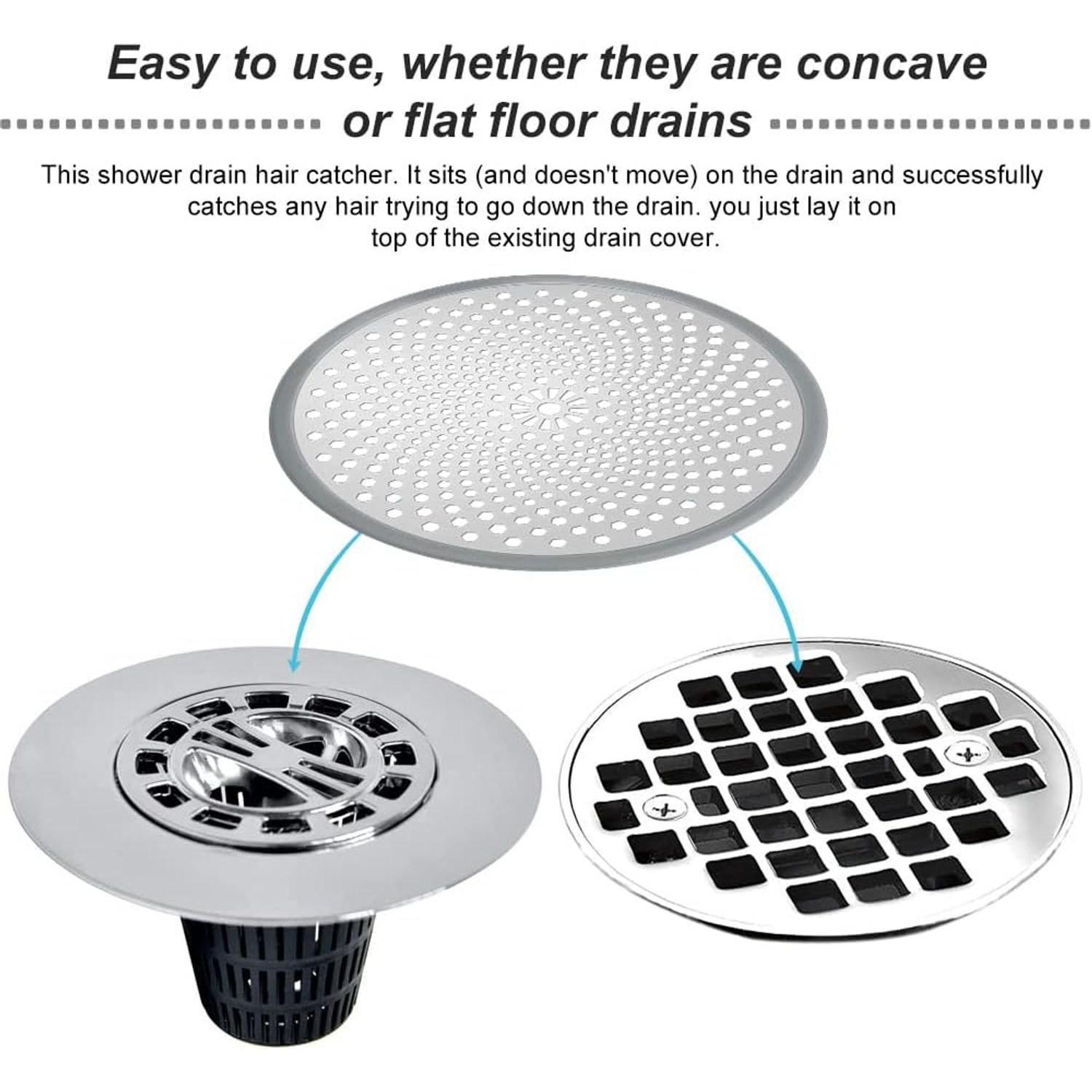
If your drain is a little smaller than 12cm, the cover will overlap and rest on the surrounding floor. That generally works fine, and the silicone rim still grips. If your drain is noticeably bigger than 12cm, the screen will not cover the opening properly and hair will go straight around the side, so measure properly before you order.
Shape matters too. Round drains are the easy case. Square grates can still work if the diagonal is not much more than 12cm, but check before assuming. A long linear channel drain needs a completely different product.
Also think about where the cover sits. Flat floor drains are the simplest fit. Recessed drains work as well, since this screen is meant to sit over the opening rather than drop inside it. Baths with a curved base are the trickiest, because the rim needs a reasonably flat patch to seat on.
Steel versus the alternatives
There are three common types of hair catcher and they are not equal.
Disposable mesh stickers are cheap and they do catch hair. They also peel up when wet, need replacing constantly and add plastic to the bin every few days. Fine for a holiday rental, poor value long term.
Silicone domes are soft and cheap, but they stand proud of the floor, discolour over time and tend to curl at the edges. They also stain from hair dye and shampoo pigments.
A stainless steel screen does not curl, does not stain easily and does not need replacing. Stainless handles constant wet use, which is why it is standard in commercial kitchens and bathrooms. Combined with a silicone rim for grip, you get the durability of metal and the stability of rubber in one piece.
The tweezers matter more than you think
A small pair of tweezers comes with this cover, and it is not a gimmick. The main reason people stop using a drain screen is that clearing it feels unpleasant. Wet hair is horrible to pick up with your fingers.
The tweezers remove that objection entirely. Pinch the clump, lift, drop it in the bin. You never touch it. They also work for hooking out any stray hair that has got past the screen and sits in the opening below.
Keep them on a shelf near the shower rather than in a drawer across the room. A tool you have to go and find is a tool you will not use.
Looking after it
The routine is short. Lift the cover after your shower, clear the hair, rinse under warm water and put it back. That is it.
Once a week or so, give it a proper wash with warm water and a drop of dish soap to shift the soap film that builds up on the underside. Dry it with a cloth before you set it back down, since a dry silicone rim grips better than a wet one.
A few things to avoid. Do not scrub it with steel wool or scouring powder, which will dull the finish. Do not leave it sitting in bleach. If you are pouring drain cleaner down the pipe, lift the cover out first, let the drain flush through, then rinse the cover separately in plain water before putting it back.
Done this way there is nothing on it that wears out. No adhesive to fail, no mesh to tear, no filter to buy again.
The short version
Hair causes most slow showers. A screen over the drain catches it where you can see it and bin it in seconds, which is a far better use of your time than fishing a matted plug out of the trap with a wire.
This one is 12cm across and 0.1cm high, so it sits almost flush with the floor. It is stainless steel, so it rinses clean and keeps working. The silicone rim stops it sliding on wet tile, which is the flaw that makes cheaper metal screens useless. The tweezers mean you never have to touch the hair.
Measure your drain, check it is around 12cm, and build the five second habit. Your plumber will miss you.