
The complete guide
Downpipe Filters Explained: Choosing, Fitting and Maintaining a DN 100 Leaf Separator
The problem nobody notices until it is too late
Drains rarely fail dramatically. They fail slowly. A few leaves wash off the roof in September, then a few more. Roof grit and bits of moss join them. Everything slides down the downpipe into the drain connection, where it settles into a soft dam. Months pass. Then one wet afternoon the gutter overflows, water sheets down the wall, and you are standing in the rain with a coat hanger wondering where the blockage actually is.
The frustrating part is that the material causing the problem is harmless on its own. Leaves are not heavy. Grit is not sticky. It is the combination, and the fact that it collects somewhere you cannot see or reach, that turns a handful of garden debris into a drainage job.
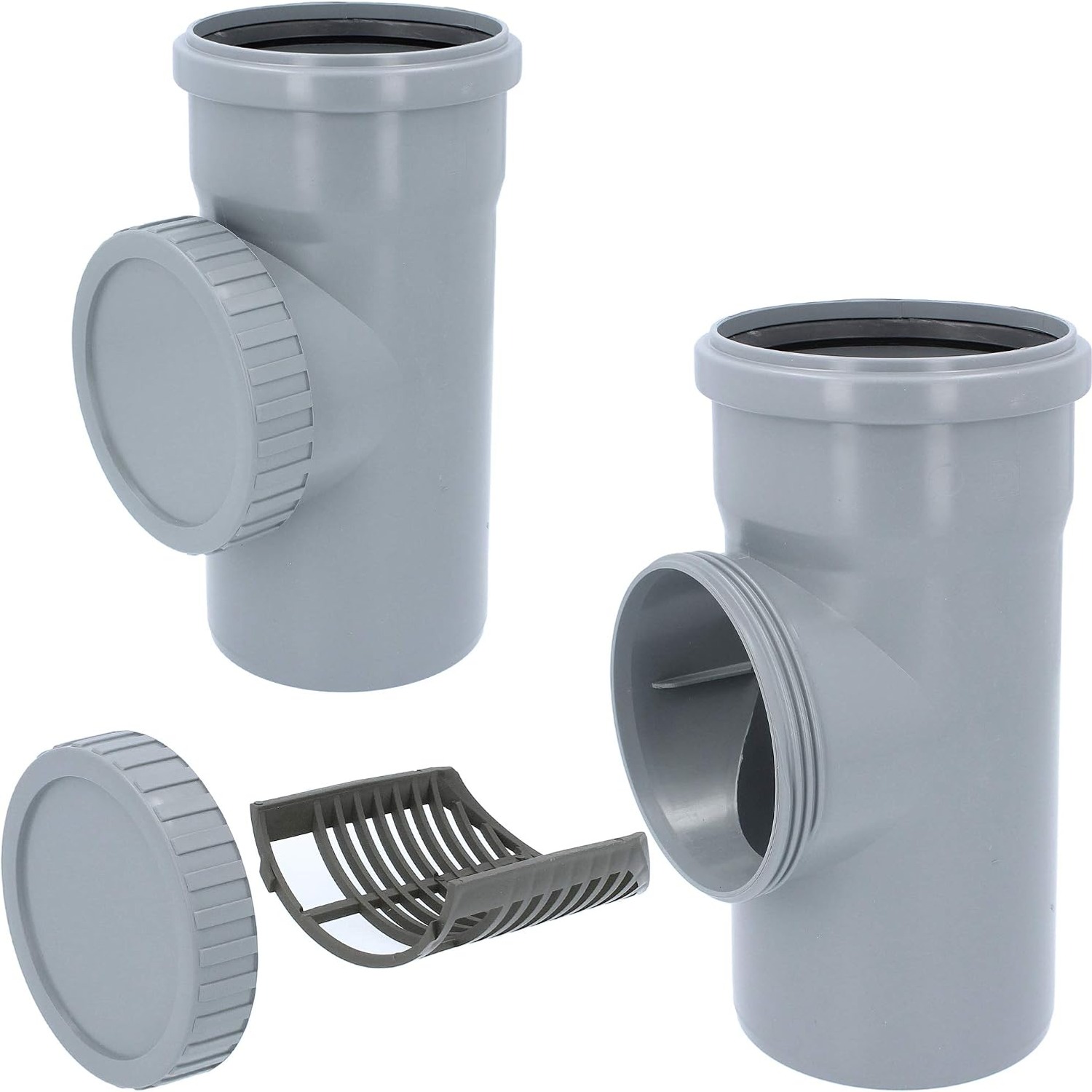
A downpipe filter deals with this by changing where the debris stops. Instead of letting it travel all the way into the drain, you put a screen in the vertical pipe, at roughly head height, behind a lid you can open with your hands. The debris still arrives. It just arrives somewhere useful.
How a DN 100 downpipe filter works
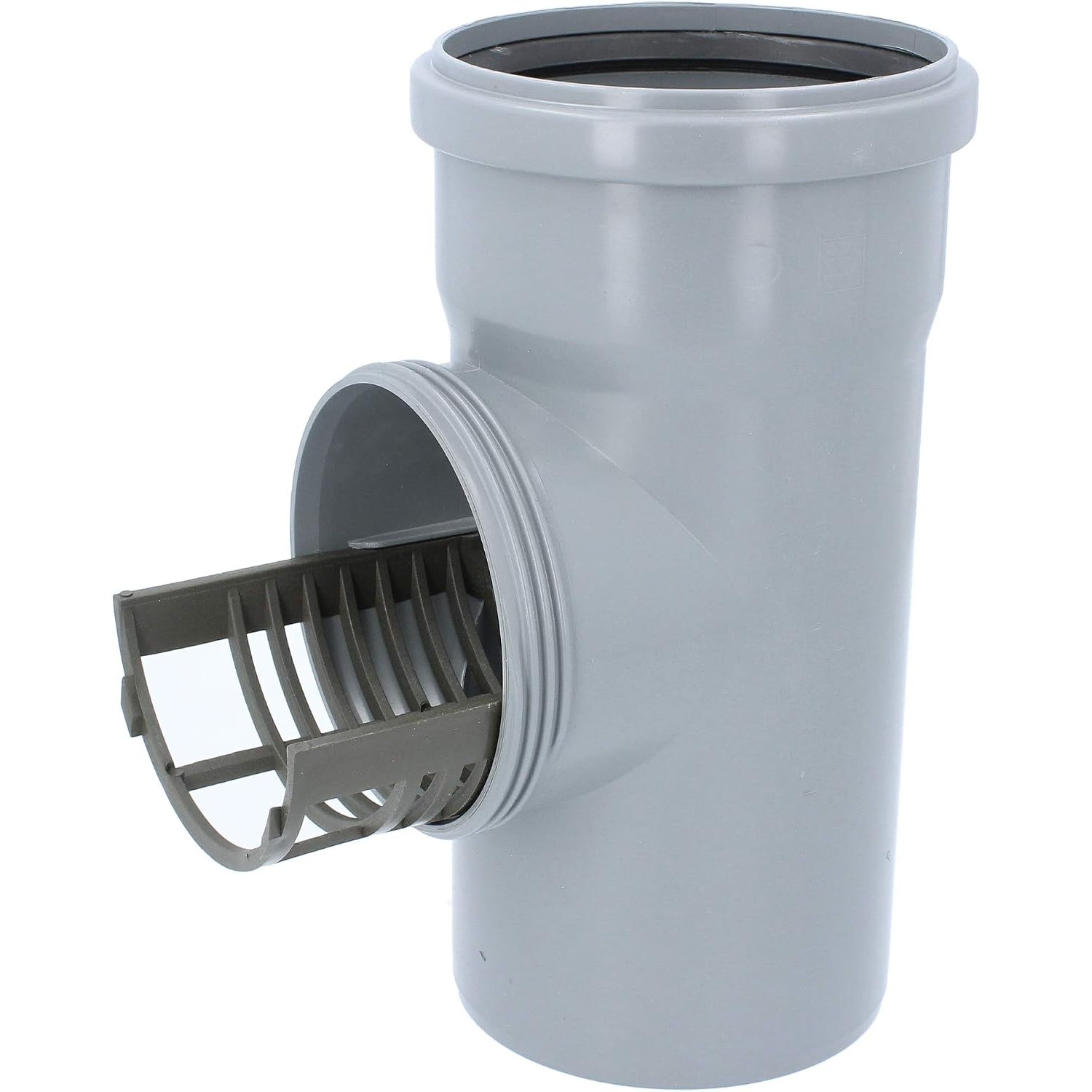
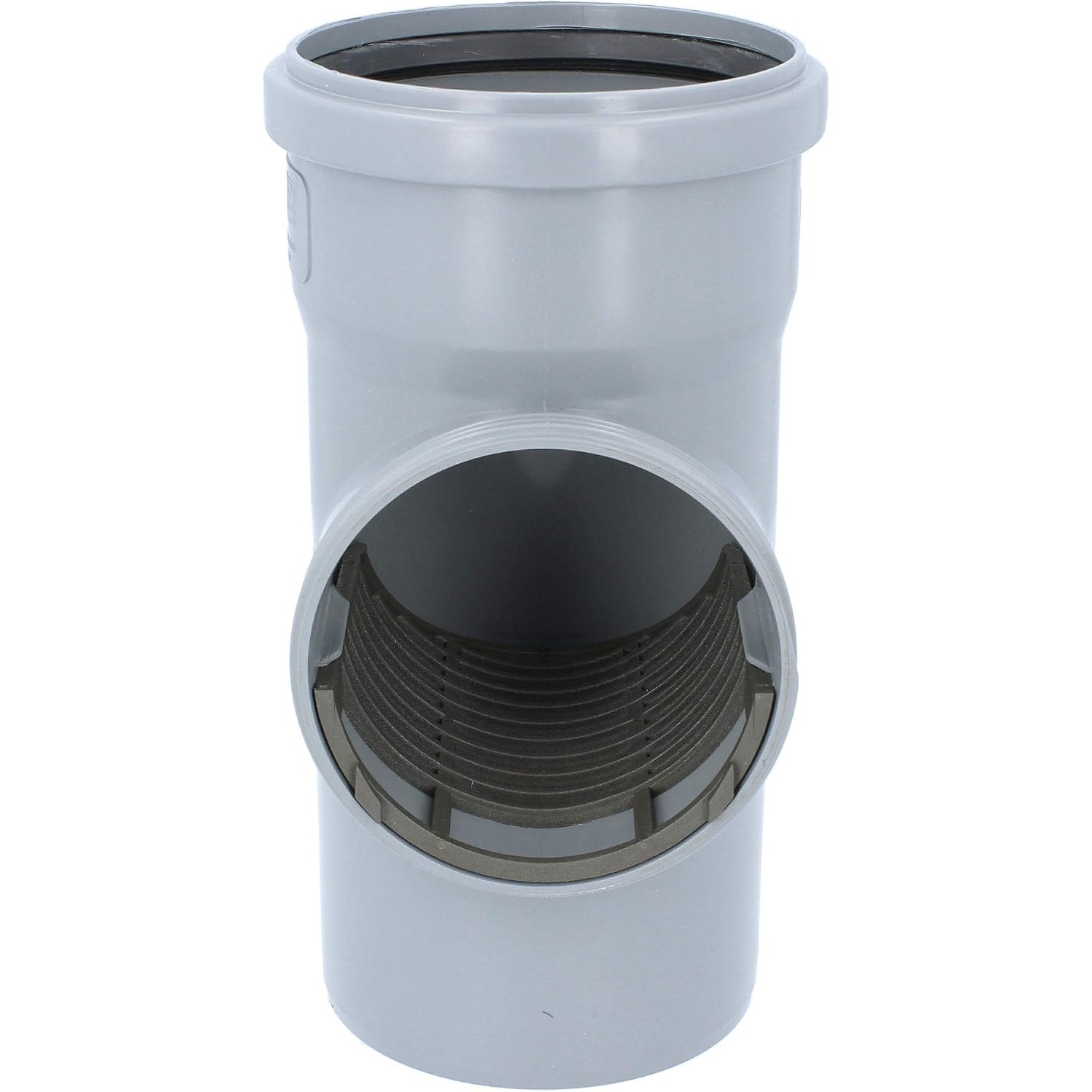
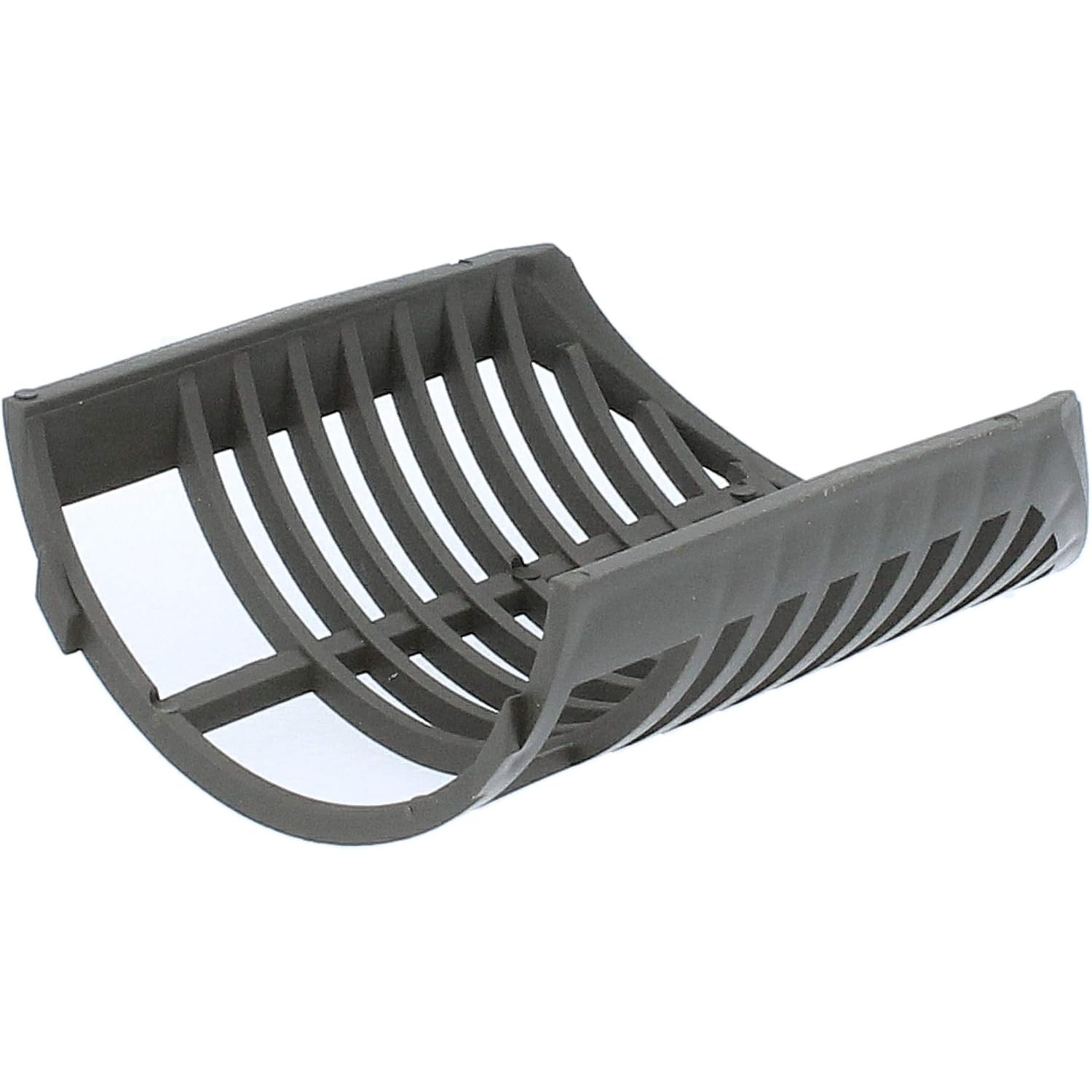
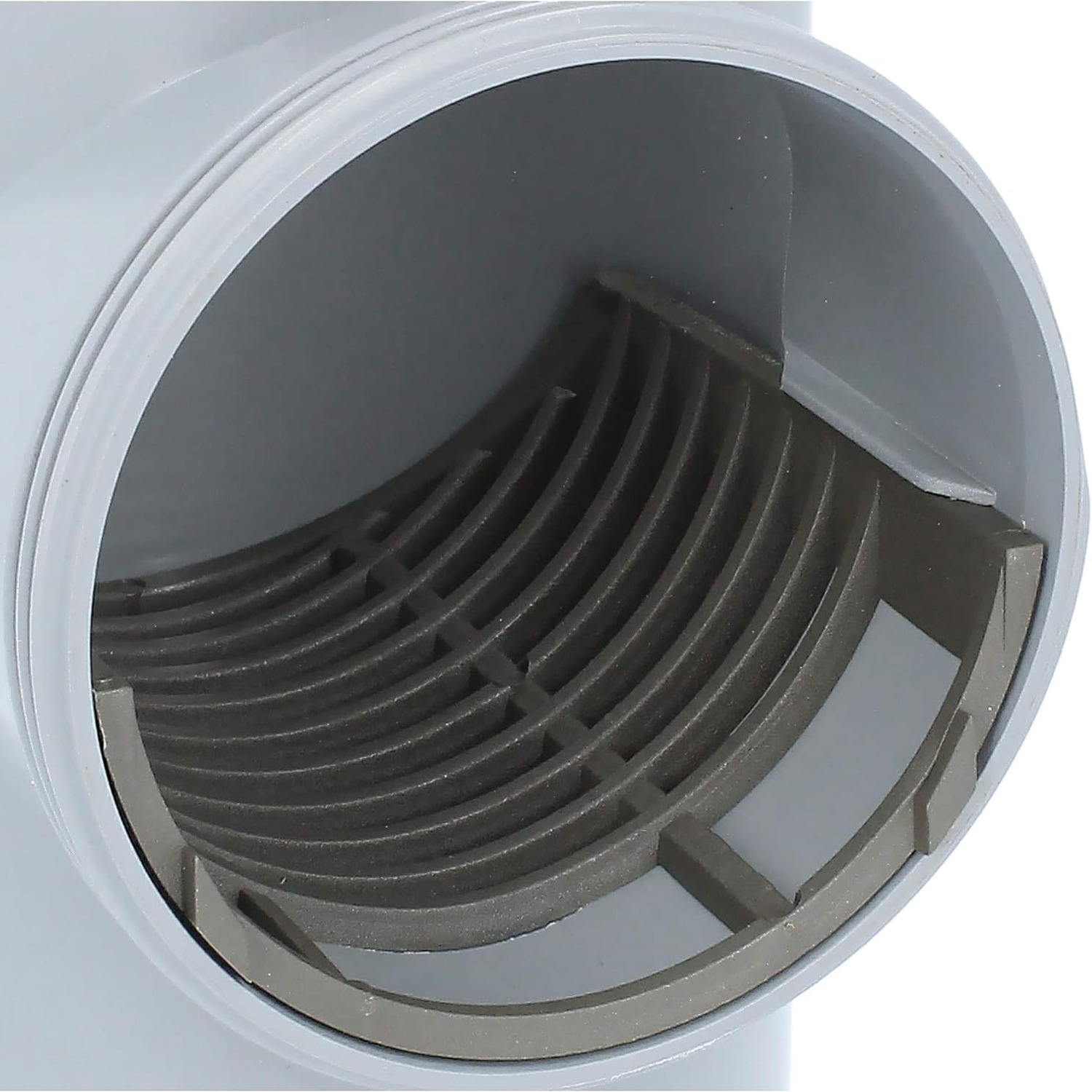
The principle is simple enough that it has not changed in decades. Water comes down the pipe carrying whatever the roof gave it. Inside the filter housing sits a plastic screen. Water passes through the screen and continues down to the drain. Anything larger than the screen openings stays put.
Because the filter sits in a vertical run, gravity does the sorting for you. Heavier debris drops onto the screen and stays there rather than being pushed along by flow. That is why these units are specified for vertical pipework and not for horizontal runs, where the same debris would just lie in the pipe and build up.
This particular unit is sized for DN 100 pipe, meaning an outside diameter of 110 mm. That is the standard size for a great many domestic rainwater and waste pipes, which is part of why it is a useful off-the-shelf fitting. A rubber seal makes the joint between the filter and the pipe tight, so rainwater does not weep out at the connection and run down the wall behind it.
The body is polypropylene. That choice matters more than it sounds. Anything mounted on the outside of a building has to put up with sun, frost, driving rain and whatever chemistry roof runoff happens to carry that week. Polypropylene does not corrode, resists chemicals, and holds its shape through temperature extremes. Metal fittings in the same position rust at the joints and eventually seize.
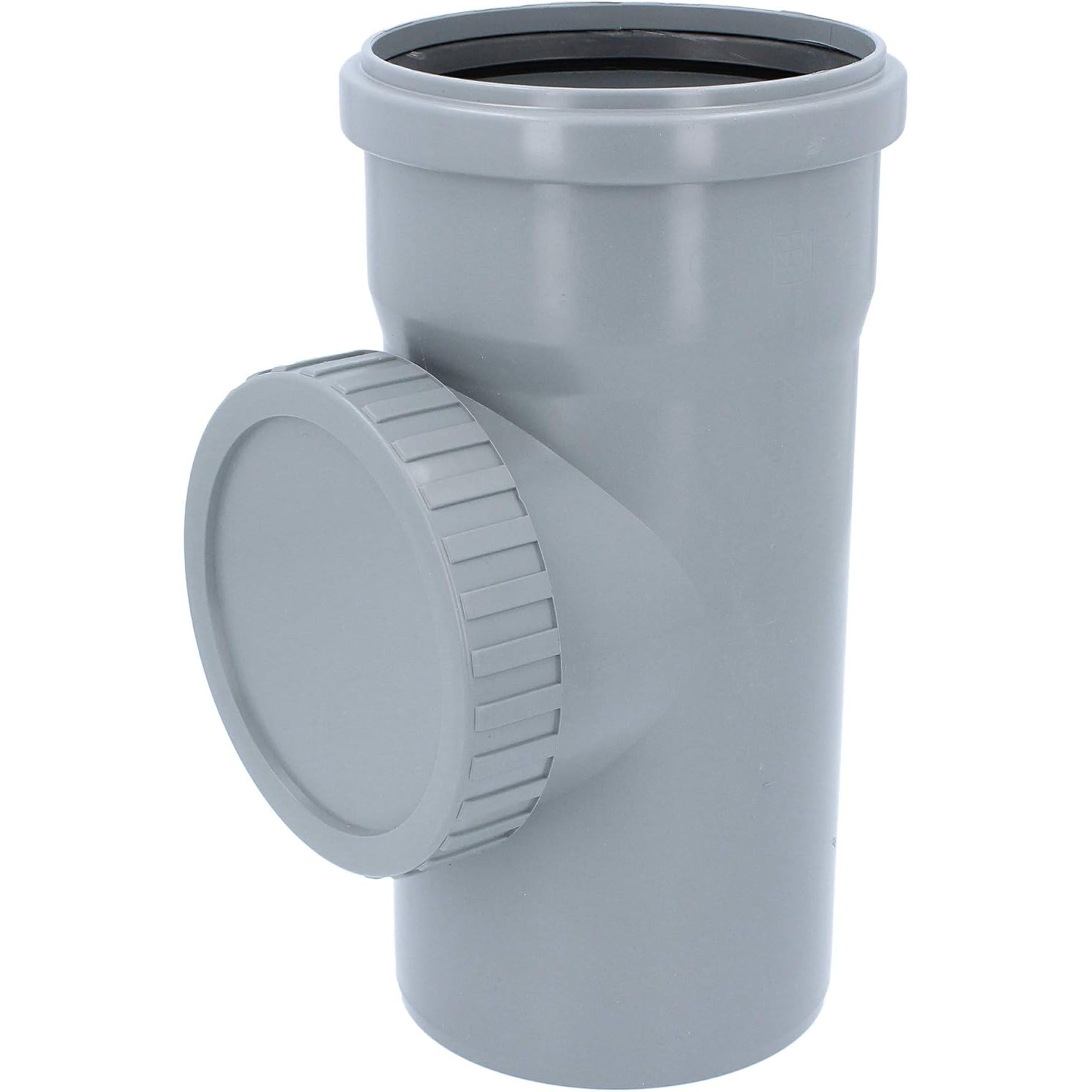
On top is the detail that actually determines whether a filter gets used: a removable twist lid. Open it by hand, look inside, tip out what you find, close it again. No screwdriver, no ladder gymnastics at the eaves, no dismantling. If maintaining something takes under a minute, you will do it. If it takes twenty, you will not.
Who should fit one
If you have any trees within reach of your roof, you are the target customer. Deciduous trees are the obvious case, since autumn dumps a few weeks of concentrated leaf fall onto every roof in the neighbourhood. But evergreens are arguably worse, because pine needles and small cones arrive steadily all year and mat together into something denser than leaves ever manage.
Homes with older roofs benefit too. Moss and lichen growing on tiles slowly shed granules, and weathering roof surfaces release grit. None of it is visible from the ground, but it all ends up in the same place.
Flats and terraced houses with shared drainage are worth a mention. If your downpipe feeds a run that several properties rely on, catching debris at your end is good neighbour behaviour as well as self-interest.
There are a few situations where a downpipe filter is less useful. If your downpipe discharges onto a gravel soakaway or an open gully you can sweep out easily, you already have an accessible stopping point. And if your gutters are already fully covered with mesh guards that genuinely work, there is less for the filter to catch. Even then, nothing catches everything, and the best downpipe leaf separator still earns its place as a second line.
Choosing the right one
Start with the pipe size, because nothing else matters if that is wrong. Measure the outside diameter of your downpipe with a tape or a ruler. DN 100 pipe measures 110 mm across the outside. If your pipe is 68 mm round or 65 mm square, which is common on older homes, you need a different fitting or an adapter arrangement.
Then look at the material. Plastic is the sensible choice for a part that lives outdoors and gets opened regularly. Polypropylene in particular handles cold and chemical exposure without going brittle in a hurry.
Access is the next thing. Look for a lid you can open without tools. Units that need unscrewing, or that have to be cut out to clean, get ignored within a year. A twist lid is the feature that turns a filter from a theoretical improvement into something you actually use.
Finally think about where it will sit. You want it somewhere you can reach standing on the ground or on a low step, and somewhere the open lid will not foul a wall or a windowsill. Plan the height before you cut the pipe. Most people fit these at around chest height on the downpipe, which gives comfortable access and still leaves a clean run down to the drain.
Fitting notes
This is a job many confident DIYers handle in an hour. You cut a section out of the existing downpipe, clean the cut ends so they are square and free of burrs, and connect the filter housing using the rubber seal. The seal needs to be clean and properly seated or you will get drips.
Take the time to check the pipe is plumb afterwards. A filter sitting at a slight angle will still work, but debris collects unevenly and the lid can be awkward to open.
If your downpipe is high, if the connection to the drain is buried or awkward, or if you are not sure what your pipe is made from, call someone. Drainage is one of those areas where a small mistake becomes an expensive one once water is involved.
Keeping it working
Maintenance is deliberately boring. Twist the lid off, look, empty, close. Do that every couple of months through most of the year and more often during leaf fall.
When you empty it, give the screen a rinse with the hose to clear the fine material that clings between the openings. A wipe over the housing with warm water and mild soap once or twice a year keeps it looking tidy. Skip solvents and scouring pads, which scratch plastic and give dirt somewhere to grip.
Check the seal while you are there. A clean, correctly seated seal is what keeps the connection tight. If it has picked up grit, wipe it and reseat it before refitting the lid.
Doing this before winter is worth building into a habit. Clearing the screen in late autumn means water keeps moving freely through the cold months, when a blocked pipe causes the most trouble.
The short version
A downpipe filter does one job well. It moves the point where roof debris collects from somewhere invisible and unreachable to somewhere you can open with one hand. That is the whole idea, and it is enough.
This one fits DN 100 pipe at 110 mm outside diameter, seals with a rubber gasket, and is moulded in grey polypropylene that will not rust. The internal screen holds back leaves, twigs and grit. The twist lid means a check takes seconds.
Measure your pipe, fit it somewhere you can reach, and empty it when the leaves fall. Do that and the blocked drain you were heading towards simply never happens.