
The complete guide
How to Clear a Slow Drain Yourself, and Which Tool to Reach For
The problem nobody notices until it is bad
A drain rarely blocks overnight. It slows. You rinse a sink and the water sits for a second longer than it used to. A few weeks later you are standing ankle deep in the shower waiting for it to clear. By the time you notice, there is usually a solid mass of hair, soap scum and grease sitting somewhere in the first 30 to 50 centimetres of pipe.
That is the part worth understanding. Most household blockages are not deep. They are close to the fixture, often right at the point where the vertical drop meets the trap. Hair catches on the small lip there, soap residue glues it together, and the whole thing grows outward like a net until it catches everything else.
This matters because it changes what tool you need. A long powered auger is overkill for a clog you could almost reach with your fingers. What you actually need is something thin, flexible and barbed that can go down, grab, and come back up.
What this set does
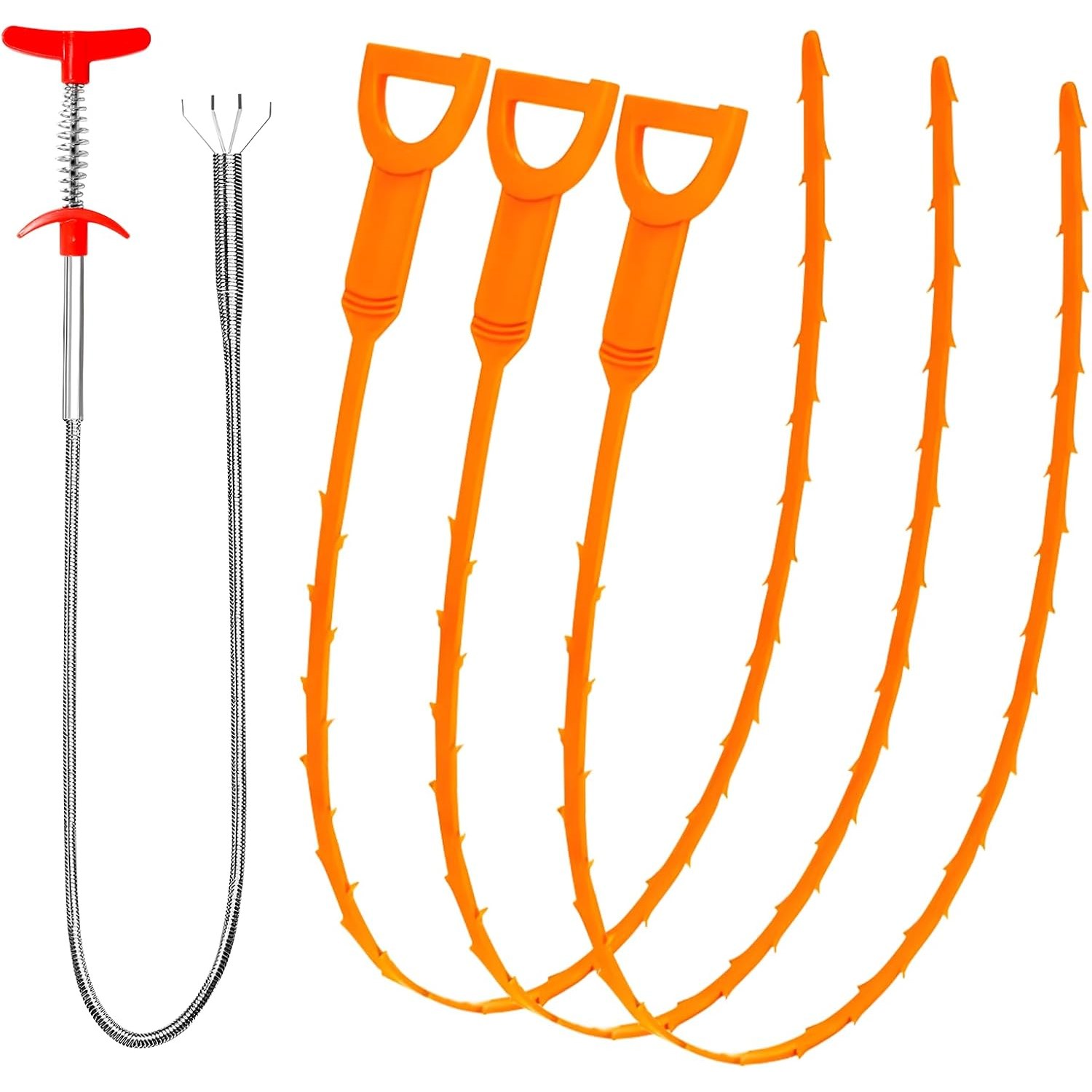
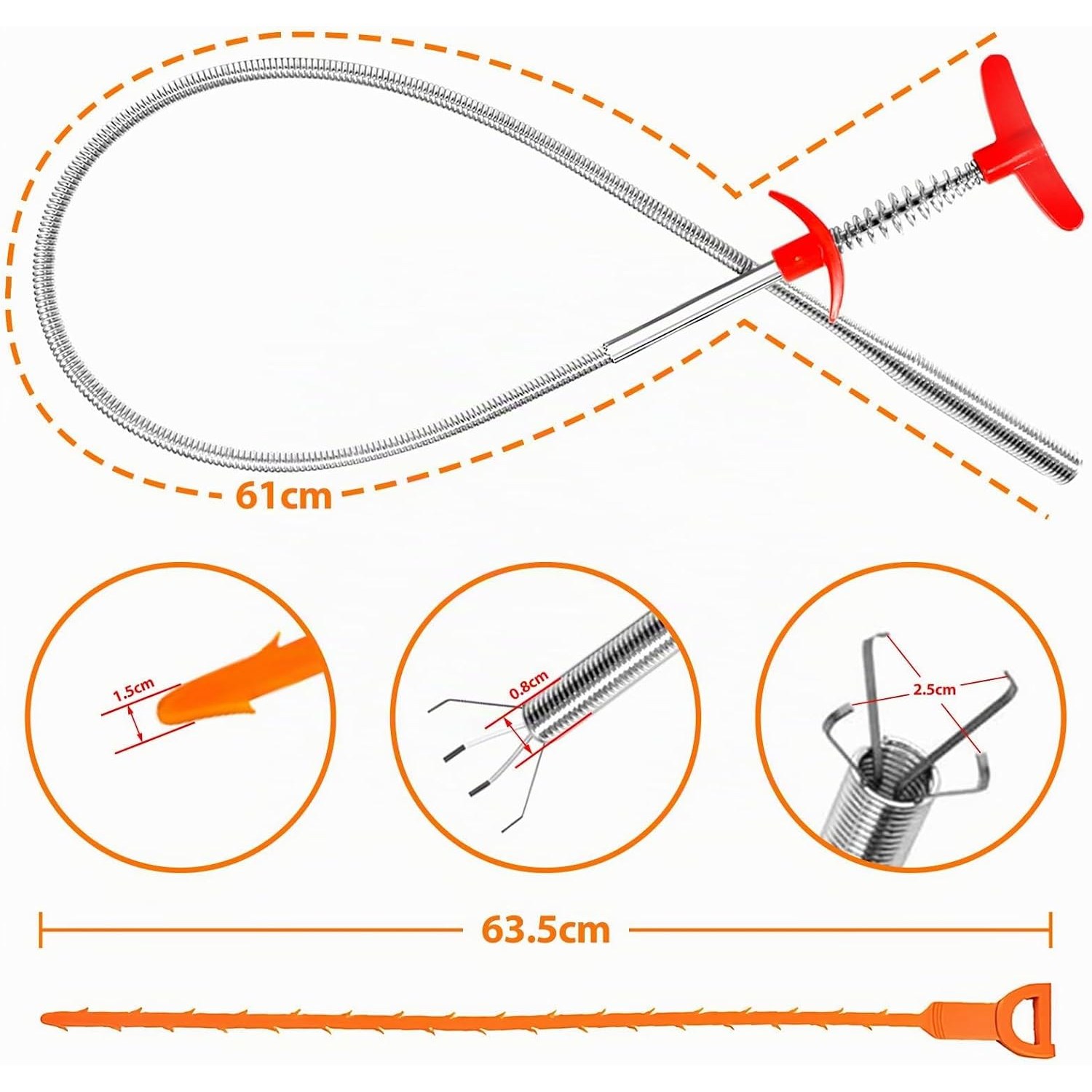
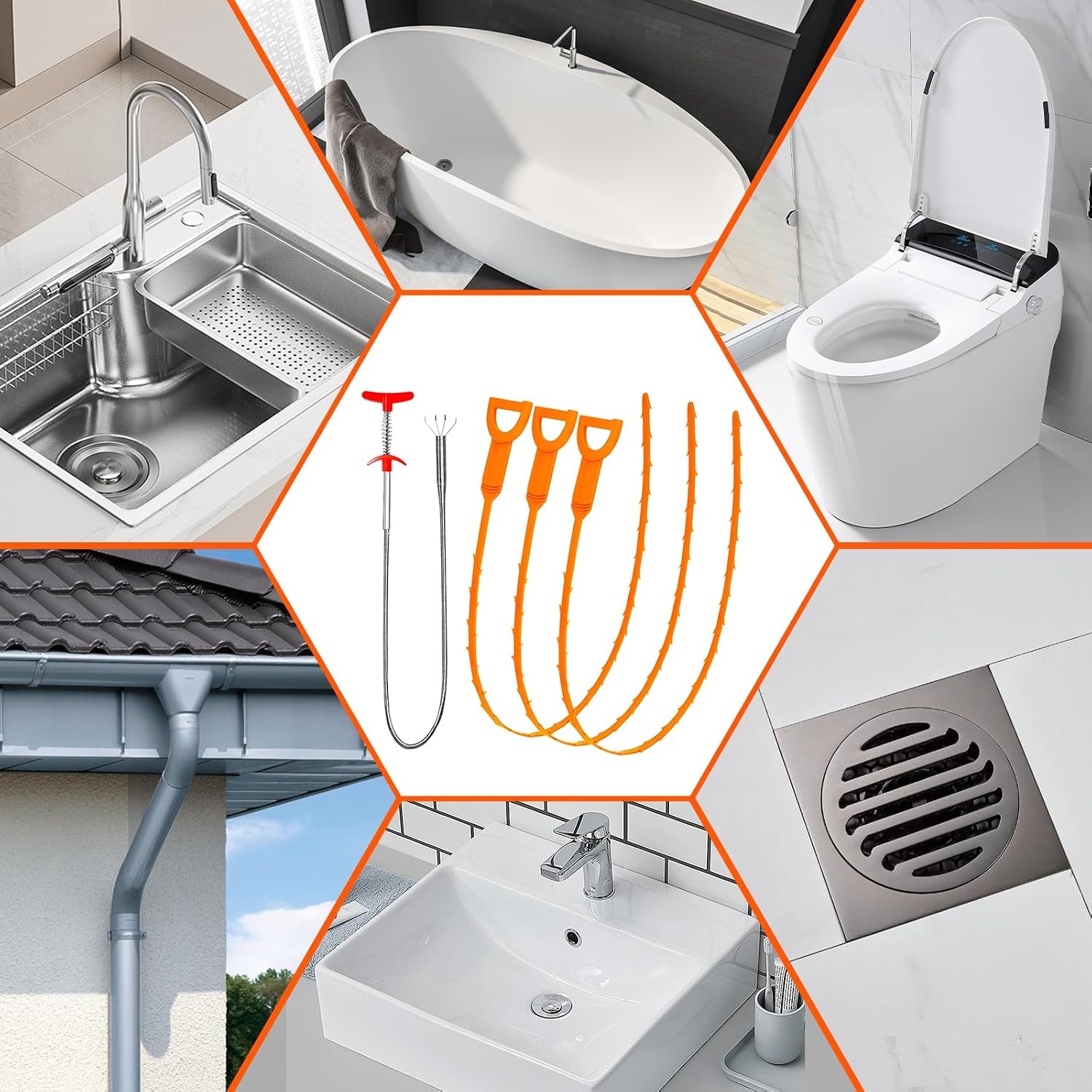
The pack holds five pieces. Three are plastic hair removal spirals, thin strips with rows of small barbs running down both sides. One is a metal claw spiral, longer and stiffer, meant for deposits that are firmer or further along.
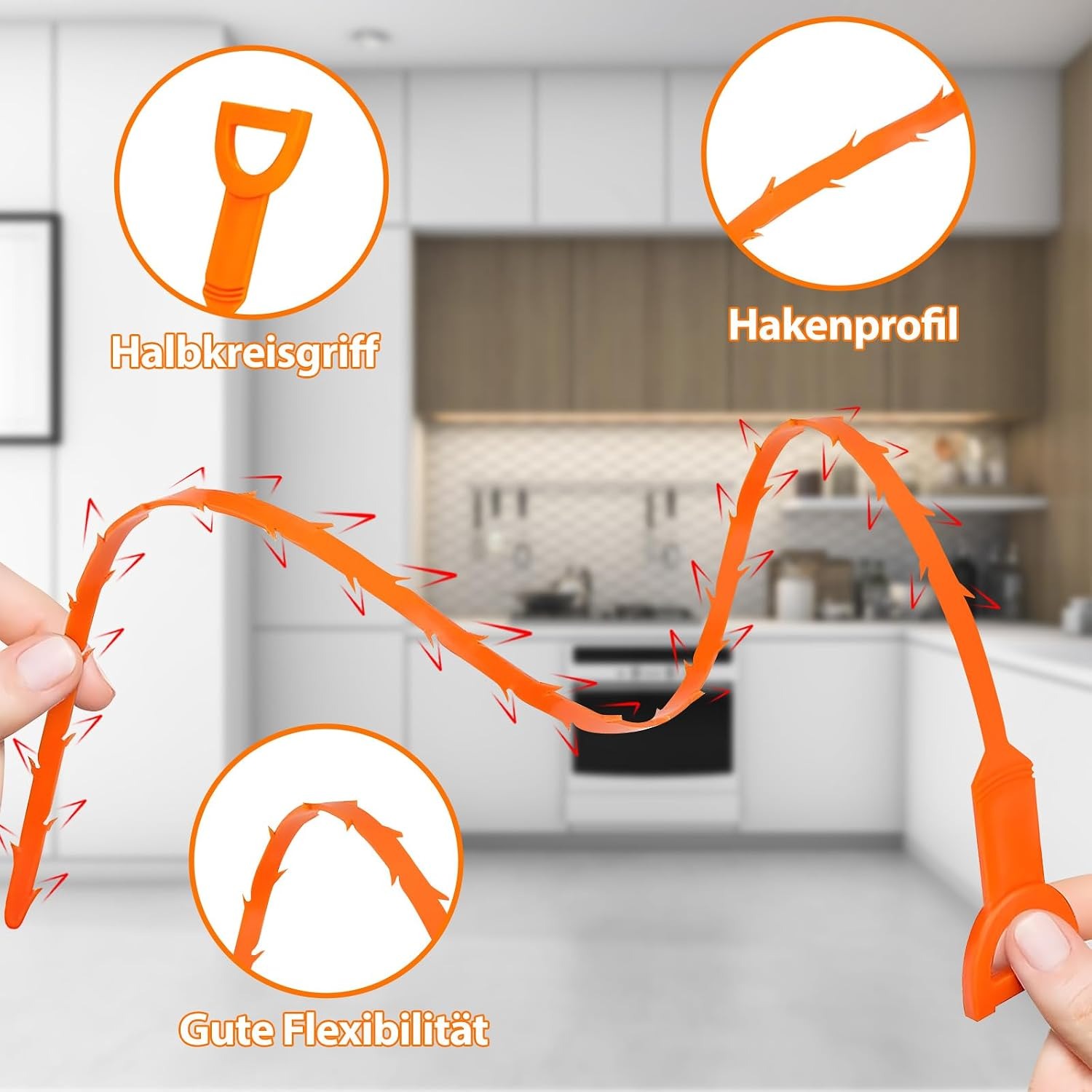
The plastic strips are the ones you will use most. They bend easily, so they pass through a plughole and follow the first curve in the waste pipe without snagging. You push one down until you feel resistance, twist it slowly so the barbs rotate into whatever is there, then draw it back out. The barbs angle backwards, which is the whole trick. They slide in easily and grip on the way out.
The metal tool works differently. It is designed to be bent by hand, so you can shape a gentle curve into it before you start. That lets it follow a trap or a toilet outlet instead of jamming against the inside wall. It is the right choice when the plastic comb comes back clean but the water is still slow, which usually means the problem sits past where the comb can reach.
Nothing here needs power, chemicals or a wrench. You are not taking the pipework apart under the sink, and you are not waiting for anything to dissolve.
Who it suits
If you rent, this is a good thing to own. Most tenancy agreements make you responsible for minor blockages, and a call-out fee for a plumber to pull a hairball out of a shower trap is a frustrating way to spend money.
If you share a bathroom with anyone who has long hair, you will use it regularly. Hair is the single most common cause of a slow shower, and it builds steadily rather than suddenly.
Homes with older pipework benefit too. Strong chemical products can be hard on worn seals and degraded plastic, and a mechanical pull avoids that question entirely. The same goes for anyone with a septic system, where what goes down the drain matters more than usual.
It is less suited to serious work. If you have a blocked main line, roots in an outside pipe, or a run of 10 metres or more between you and the problem, this is not the kit. You want a proper auger or a professional at that point.
How to use it without making a mess
Lay down an old towel first. Whatever comes up will drip.
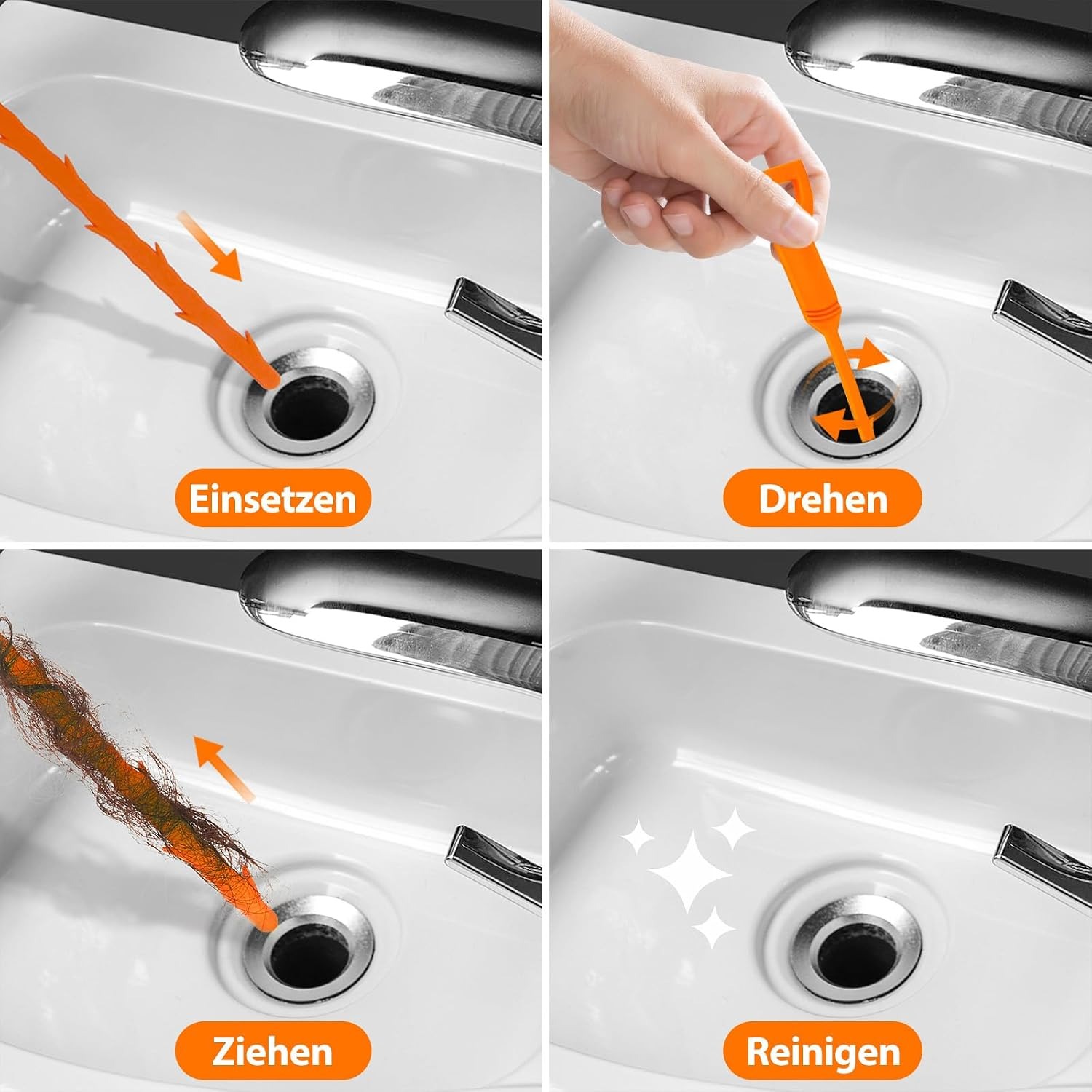
Put gloves on. Then lift the grate or plug if your fixture has one that comes out easily. Feed a plastic comb straight down, slowly. You will feel it meet the bend in the pipe, which is normal. Keep going with light pressure until it stops or until you feel it pass through something soft.
Now twist. One slow rotation, then another, so the barbs work their way into the clog rather than just pushing past it. Then pull up steadily. Do not yank. If it catches hard, twist back the other way a little and ease it out.
Scrape whatever comes up straight into a bin bag. Never try to flush it back down, because you will just put the clog back in a different spot.
Repeat until the comb comes up clean. Two or three passes is typical for a shower that has not been cleared in a while. Finish by running the hot tap for a minute to flush the loosened residue through.
If the water still drains slowly after the comb comes back clean, switch to the metal claw. Bend a gentle curve into the working end, feed it down, and use the same slow twist. Take your time in a toilet, since porcelain marks if you push metal against it hard.
Choosing between the pieces
The plastic combs are your default for showers, baths and bathroom basins. They are gentle, they fit narrow openings, and hair is what they were made for.
The metal claw earns its place in the kitchen and the toilet. Kitchen blockages are grease and food debris that have congealed into something more solid than a hairball, and the stiffer tool grips it better. Toilet outlets curve more sharply than a basin waste, and the bendable metal copes with that.
A common approach is to use both in sequence. Clear the top section with a comb so the path is open, then send the claw further down to reach what the comb could not. Doing it in that order means you are not dragging the claw through a hair mass on every pass.
Keeping drains clear afterwards
Once the drain runs properly again, a little maintenance saves a lot of effort.
Fit a hair catcher over your shower and bath wastes. They are cheap, and they stop the problem forming rather than dealing with it afterwards.
In the kitchen, keep fat and oil out of the sink. Let it cool in the pan, wipe it with kitchen roll, and bin it. Grease poured down warm will cool and set a few metres along the pipe, where it quietly collects everything else that passes.
Run hot water for thirty seconds after washing up. It is a small habit and it keeps soap and grease moving rather than settling.
Then do a quick pass with a comb once a month. It takes two minutes when the drain is fine and twenty when it is not, so doing it early is the easy choice.
Looking after the tools
Rinse everything the moment you finish. Dried-on residue is far harder to remove than wet. Warm soapy water and a scrub does the job, then let the pieces dry fully before they go back in the cupboard.
Store them flat or hanging. The plastic strips take a set if you leave them bent hard against a shelf edge for months, and a warped strip is more awkward to feed down a narrow waste.
Keep the metal tool somewhere children cannot reach it. The working end is pointed, and that is the only real hazard in the pack.
The short version
Most slow drains are hair and soap sitting close to the plughole, and the fastest fix is to pull that out rather than pour something over it. This set gives you three flexible barbed combs for that job and one bendable metal claw for the firmer stuff further along.
It takes a few minutes, needs no chemicals, and costs a fraction of a call-out. Rinse the tools, dry them, put them away, and run a comb down the shower once a month. The drain stops being something you think about.