
The complete guide
How to Choose a Flat Silicone Drain Plug (and Make It Seal Properly)
The small problem that keeps coming back
Plugs go missing. It happens in every house. The chain snaps, the rubber bung perishes and goes sticky, the pop-up waste stops holding, or you move into a place where the bath simply has no plug at all. Suddenly you cannot fill a sink to soak a pan or run a bath without standing there with your foot over the drain.
Replacing the original is harder than it sounds. Drain fittings vary by country, by era, and by manufacturer. A bung that fits one basin rattles loose in the next. Pop-up mechanisms need the right linkage and the right size. Standing in a hardware aisle with a tape measure and a vague memory of your bath waste is nobody's idea of a good afternoon.
A flat silicone drain plug skips that whole exercise. It does not try to fit inside the drain. It sits on top of it.
How a flat plug works
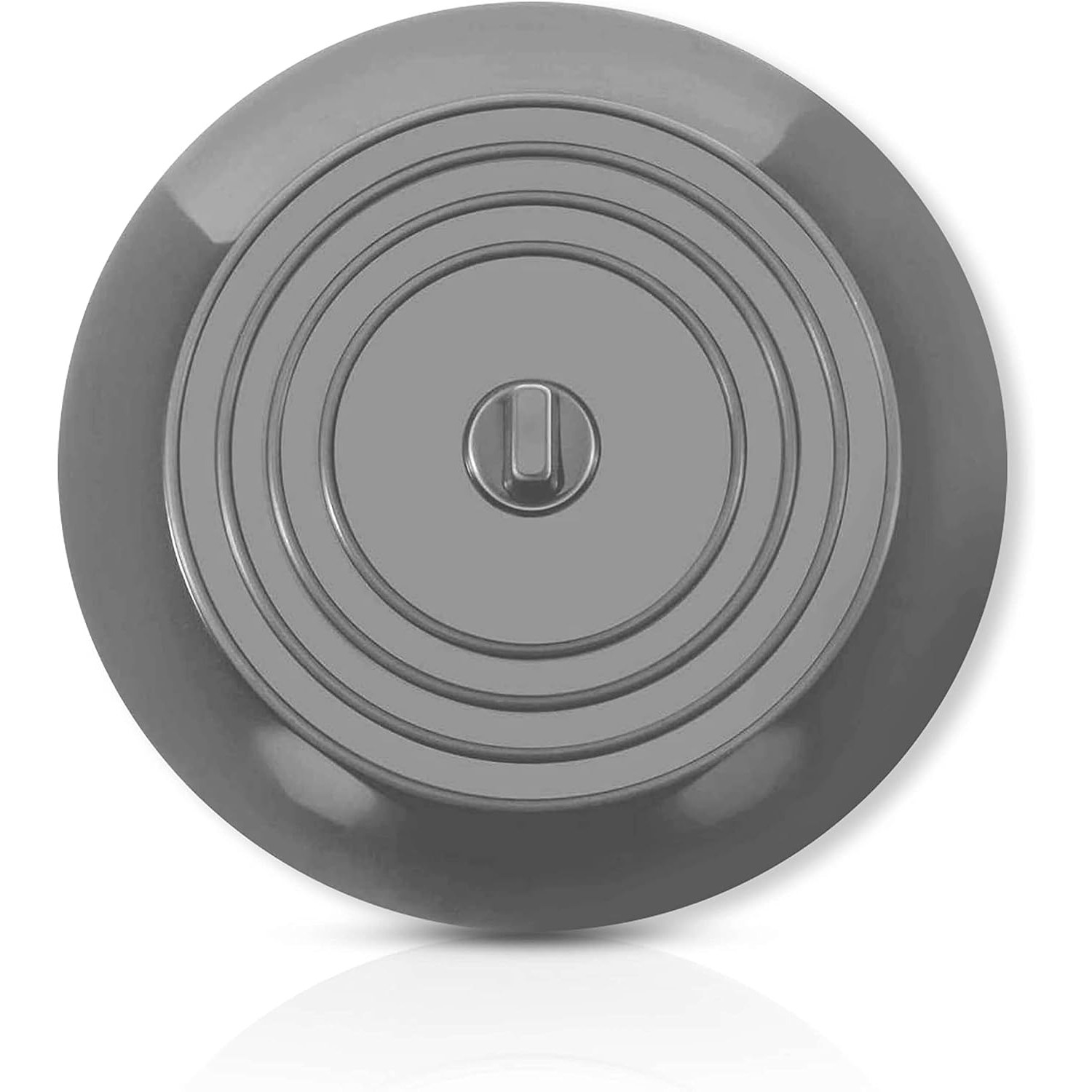
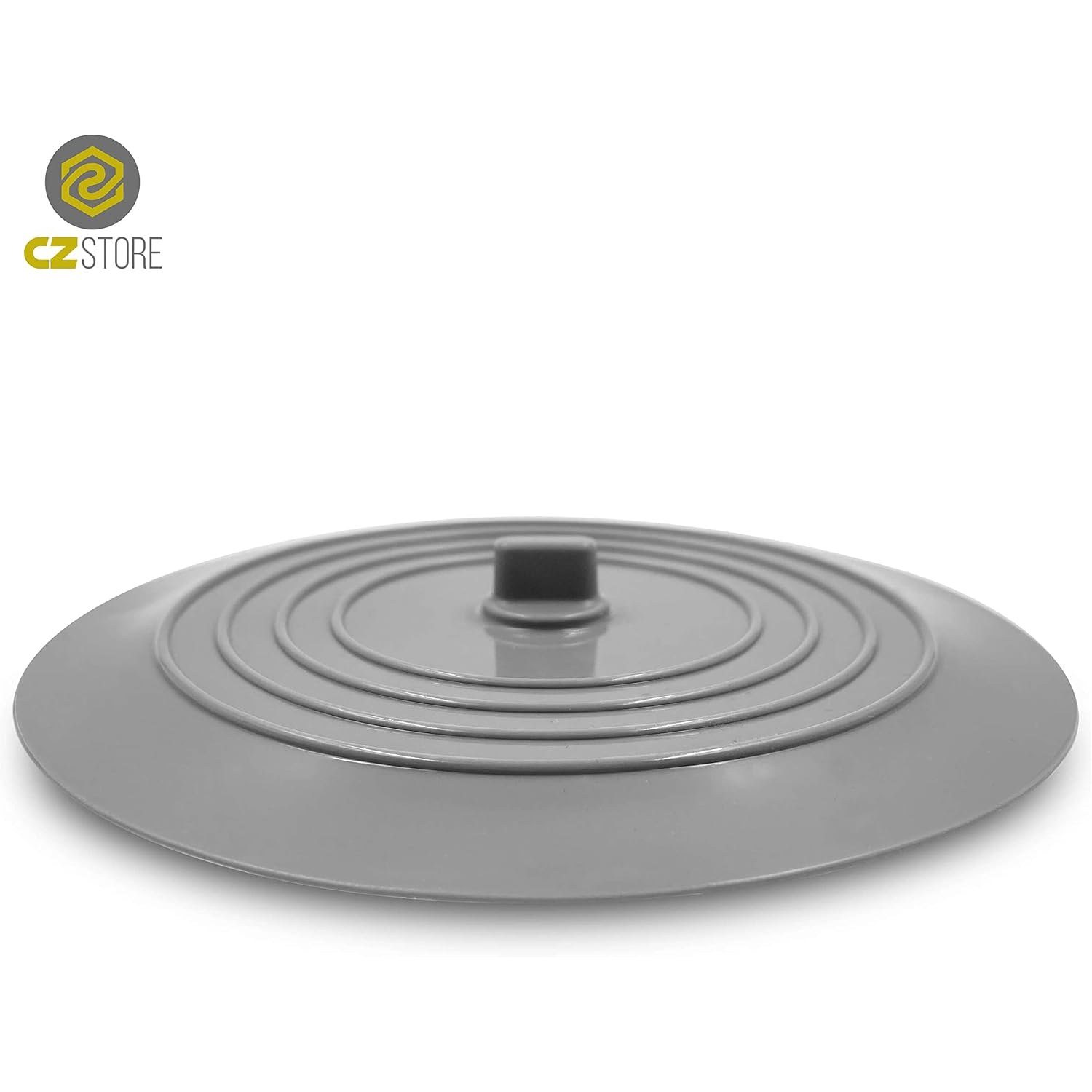
The design is simple. You get a soft silicone disc, 15.2cm across in this case, with a small moulded tab on top. You lay the disc over the wet drain opening and press down in the middle. Air pushes out from under the centre towards the edges, and the flexible silicone settles against the surrounding surface.
From there, two things keep it sealed. The silicone grips the wet surface, and the weight of the water above presses it down harder the fuller the sink gets. That is why a flat plug often holds better in a full bath than in an inch of water.
Draining is the easy part. Pull the tab and the seal breaks instantly. Air gets underneath, and the water starts going. There is no chain to fish out, no lever to push, and nothing hot to reach into.
Where it works, and where it does not
The 15.2cm width is the whole point. It is wide enough to overlap standard kitchen wastes, bath wastes, basin openings, laundry trough drains, and most shower tray wastes. More overlap means more sealing surface and a better hold.
Smooth surfaces are its friend. Stainless steel, ceramic, enamel, acrylic, and chrome waste plates all give a good seal. So do most smooth composite sinks.
Where it struggles is rough ground. Deep scratches around a drain, heavy limescale build-up, textured stone, or a raised grate all give water a path to sneak out. If the surface around your drain is not flat and smooth within about 2cm of the opening, the seal will be weaker. Sometimes a proper clean fixes it completely, because old soap scum and mineral crust are often the real culprits.
One honest limitation: it is a solid disc, not a strainer. If you want water to drain while catching hair, that is a different product. This one either holds water or it is lifted away.
Who gets the most out of it
Renters do well with it. You cannot always change the fittings in a place you do not own, and a flat plug needs no installation at all. The same applies in student housing and shared flats where the original plugs vanished years ago.
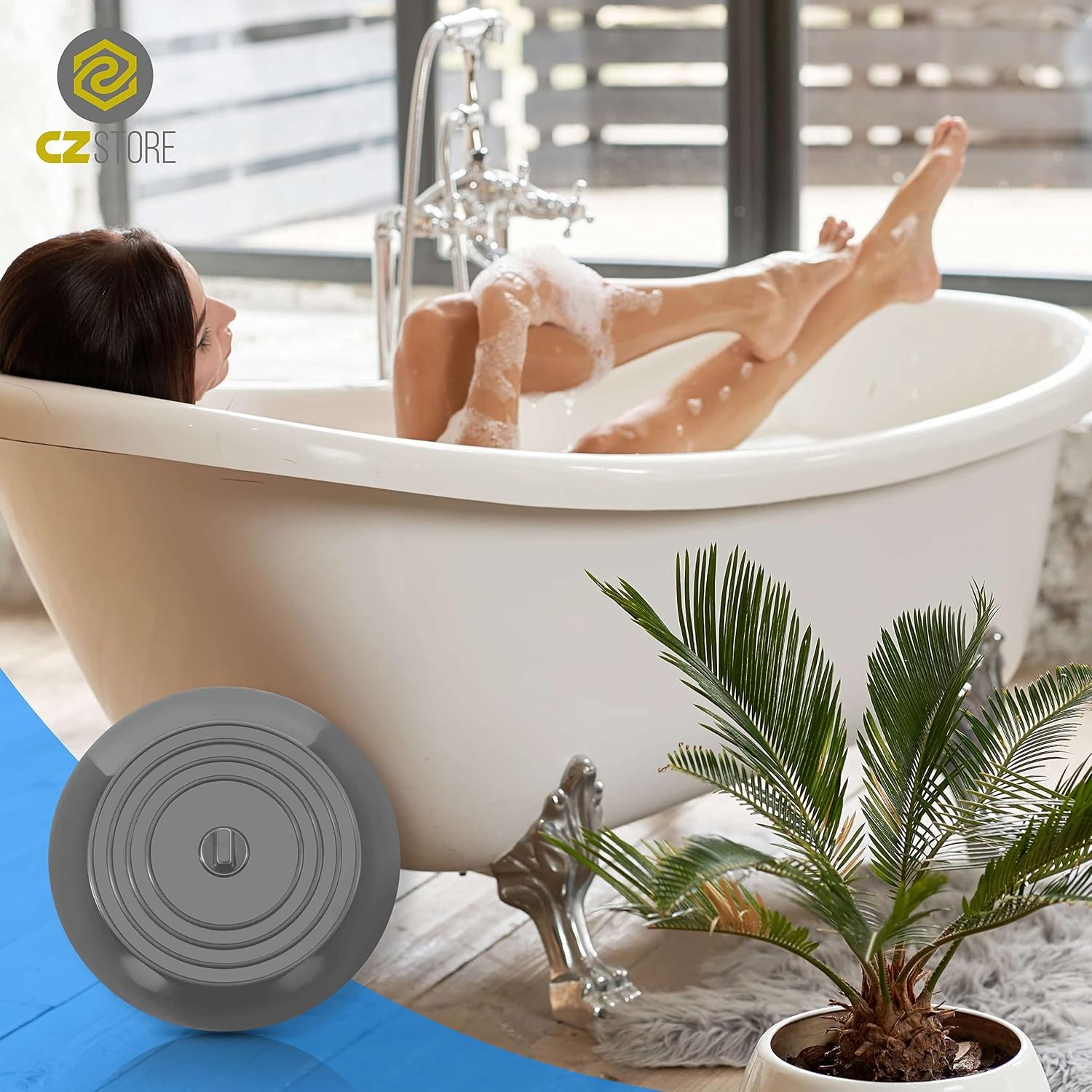
Travellers are the other obvious group. Plenty of hotels and holiday rentals have a basin with no plug whatsoever, which makes hand washing clothes or shaving awkward. A flat silicone disc weighs almost nothing and packs completely flat. People who want the best universal bath plug for travel usually land on this shape for that reason.
Parents find a use for it too. Small baby baths and sinks used for bathing often have odd drains, and a disc that just covers the opening saves the hunt for a specific part. Always keep an eye on the water and the child regardless of what plug you use.
Then there are the people who simply have a drain that annoys them. A bath that loses two inches of water over a long soak, or a kitchen sink that slowly empties while you are washing up. A flat plug laid over the existing waste often fixes the symptom without touching the plumbing.
How to choose one
A few things matter when picking a flat drain plug.
Width is first. Bigger discs cover more drains and give more sealing area, but a very large disc on a small basin can look clumsy and may overhang the bowl's curve. Around 15cm is a good middle ground. Measure the flat zone around your drain, not the drain hole itself, since the flat zone is what the disc has to grip.
Material matters next. Silicone stays flexible, resists water, and does not go tacky with age the way cheap rubber can. This plug is made of silicone, which is the right choice for a part that lives in a wet environment.
Look for a decent tab. Without one, breaking the suction means digging a fingernail under the edge, usually in hot water. A moulded tab on the top face is much nicer to use day to day.
Think about where it will live. If you leave it over the drain between uses, the colour becomes part of your sink. This one is listed in grey, which is quiet and does not show water marks as clearly as a bright colour would.
Finally, count how many you need. Most households want more than one. Having a spare in the kitchen and another in a travel bag means you never have the plug in the wrong room.
Getting the best seal
A few small habits make a real difference.
Wet both surfaces first. A dry plug on a dry sink traps air and makes a poor seal. Splash a little water around the drain before you lay the disc down.
Press from the centre out. Put the disc down flat, then push the middle and work outwards with your fingers so the air escapes past the edge. If you press the edges first, you trap a bubble underneath.
Clean the ring around the drain now and then. Soap film, grease, and limescale build up slowly and you may not notice until the plug starts letting water past. A quick scrub with a non-abrasive cleaner resets it.
If a slow leak persists, check for grit. A single grain of sand under the rim creates a channel. Lift, rinse, and reseat.
Care and life span
Care is simple. Rinse it under warm water after use and wipe it dry. Mild dish soap handles grease from the kitchen and soap film from the bathroom. A soft cloth is all you need.
Stay away from bleach soaks, strong solvents, and scouring pads. Abrasives leave fine scratches in the sealing face, and scratches are exactly what lets water through. Sharp tools used to lever it up can nick the edge for the same reason.
Store it flat. Over the drain is the natural home, since it doubles as a cover and you always know where it is. In a drawer, lay it flat rather than wedging it under heavy items.
Treated like that, silicone lasts a long time. It does not harden, crack, or go sticky the way old rubber bungs do after a few years of hot water.
The short version
A flat silicone drain plug solves a nuisance that standard plugs keep creating. It does not need to match your fitting, because it covers the drain instead of going into it. At 15.2cm across, this one spans kitchen sinks, baths, basins, shower trays, laundry tubs, and baby baths, which makes it genuinely useful in more than one room.
It seals best on smooth surfaces, it lifts away with one pull of the tab, and it washes clean in seconds. It packs flat for travel and sits neatly over the drain as a cover the rest of the time.
If you have a drain that will not hold water, or you are tired of arriving somewhere and finding no plug at all, this is a cheap and simple fix. Measure the flat area around your drain, and if it is smooth and under 15cm wide, you are in good shape.