
The complete guide
How to Choose a Pop Up Basin Plug That Actually Seals
The small part that causes the biggest annoyance
A basin plug is one of those things you never think about until it fails. Then you think about it every single morning. You fill the sink to shave or soak something, walk away for thirty seconds, and come back to a half empty bowl. Or you press the cap and it refuses to pop back up, so you are digging at it with a fingernail while the water sits there going cold.
The frustrating bit is that most people assume this means replacing the whole waste, calling a plumber, or living with it. None of those are true. The part that wears out is the bouncing core, the spring-loaded insert that sits inside the metal waste body. The waste body itself, the bit screwed through the porcelain with the trap underneath, almost never fails. Swap the core and you have a working plug again.
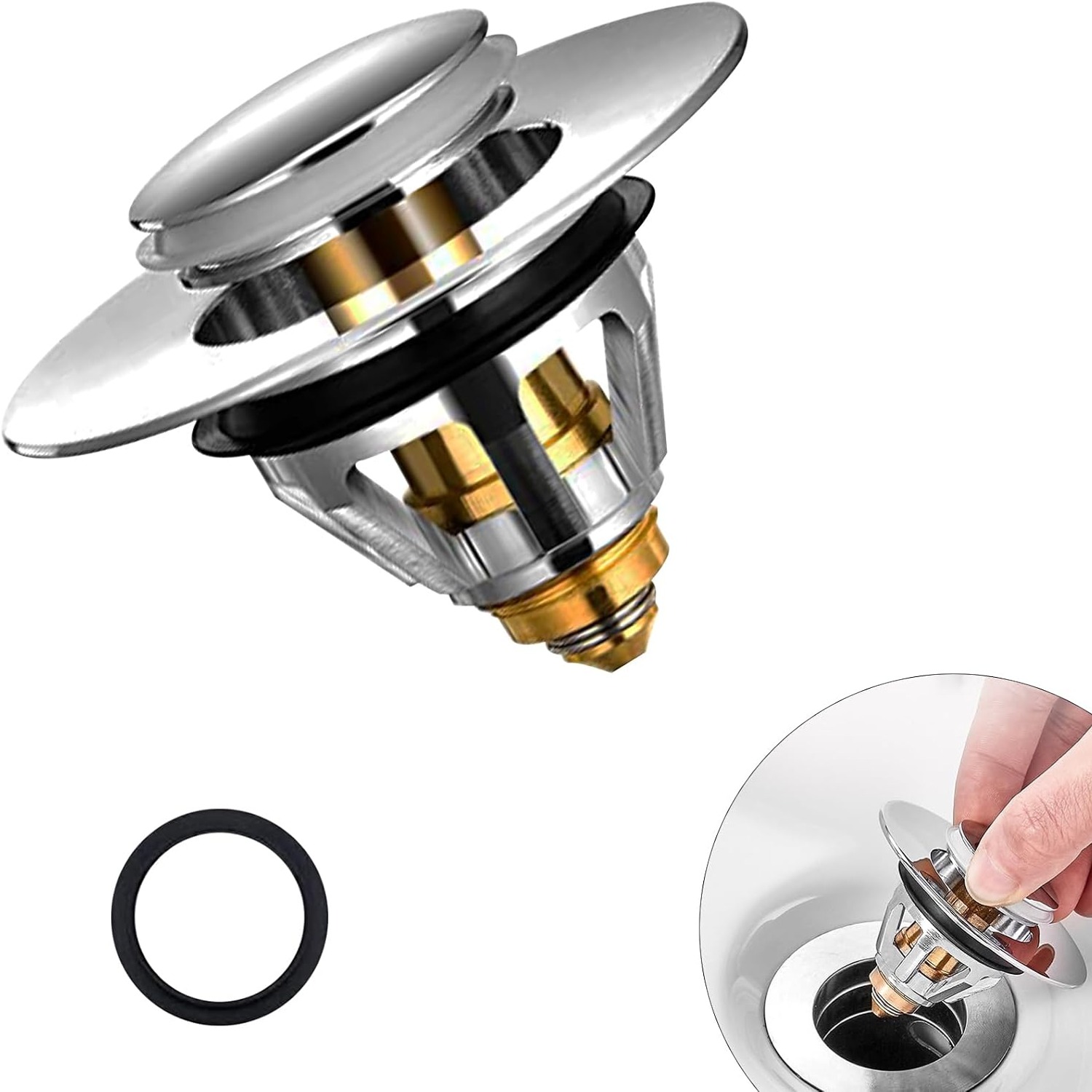
That is what this pop up basin plug is. A complete replacement core with a brass body, a stainless steel spring and a basket strainer built into the middle of it.
How a click clack plug works
The mechanism is simpler than it looks. Inside the core there is a spring and a small latch. Press the cap down and the latch catches, holding the cap in the sealed position against a rubber washer. Press it again and the latch releases, the spring pushes the cap up, and water flows around the edges and down the drain.
That is where the name comes from. Click going down, clack coming up. There is no rod, no lever behind the tap, no linkage under the basin to seize up. Fewer moving parts in a wet place generally means fewer things to go wrong.
The seal happens where the underside of the cap meets the waste rim. This is worth knowing, because when a click clack plug starts leaking it is almost never the spring. It is a single hair laid across that seal, or a ring of dried soap scum. Wiping it clean fixes a surprising number of plugs people were about to throw out.
What the strainer adds
A plain push button plug lets everything straight through. Hair goes down, meets the bend in the trap, and starts building a mat that catches more hair. Six months later the basin takes a minute to empty and you are pouring caustic chemicals down it.
This core has a basket strainer sitting in the flow path. Hair and larger debris collect in the basket instead of travelling into the pipe. You lift the core out, tip the basket into the bin, rinse it and push it back. Thirty seconds, once a week or so.
It is not a filter in any fine sense. Soap, toothpaste and fine grit still pass through, and they should. What it catches is the stuff that actually causes blockages. For anyone with long hair in the house, or a shared family bathroom, this single feature is the difference between a drain that works and a drain you argue about.
Getting the size right
This is the part to slow down on, because it is the only way a replacement core goes wrong.
The fit range is 34mm to 38mm inner diameter. The strainer section measures 33.5mm across, which lets it sit inside a standard waste with a little clearance. A rubber ring comes in the box so that if your hole is towards the wider end, you can build out the diameter and keep the core sitting snug and centred.
To measure, take out the old core first. Then measure straight across the inside of the metal waste opening, from one inner edge to the other, in millimetres. Do not measure the chrome rim you can see from above, because that includes the flange and will read several millimetres bigger. A cheap steel ruler or a tape measure is fine. If you have a digital caliper, even better.
Standard bathroom basins in most countries land comfortably inside this range. Kitchen sinks are the common exception, because they frequently use a wider waste. Baths vary a lot. If your number comes back above 38mm, this is not the right part and no amount of rubber ring will make it seal properly.
Materials and why they matter here
A plug lives underwater. Not occasionally, constantly. Anything that corrodes or swells is going to fail.
The maker gives the material as brass, with stainless steel in the spring core. Brass is the traditional choice for plumbing fittings for good reason. It handles constant damp without rusting and holds a thread and a seal well. Stainless steel in the spring means the bounce stays firm instead of going soft after a few hundred cycles.
The cheaper alternative you will find everywhere is plated plastic. It looks identical in a photo. It fails differently though, usually by the plating flaking off around the cap edge and the plastic going brittle where the spring loads it. Metal costs more up front and tends to stay in service longer.
Who this suits
If you have a basin that drains slowly despite nothing obvious being wrong, this is worth trying before you buy chemicals. If your current plug will not hold water, this is a direct fix. If you have inherited an old basin with a seized lever mechanism behind the tap, fitting a spring core means you can stop using the lever entirely.
It also suits renters. There is no pipe work, no sealant and nothing permanent, so you can take out the original core, keep it in a drawer, fit this, and put the old one back on the day you move out.
It is less suited to anyone with a non standard or oversized waste, or to a bath with a deep recessed fitting. Measure first and you will know within a minute which camp you are in.
Fitting it
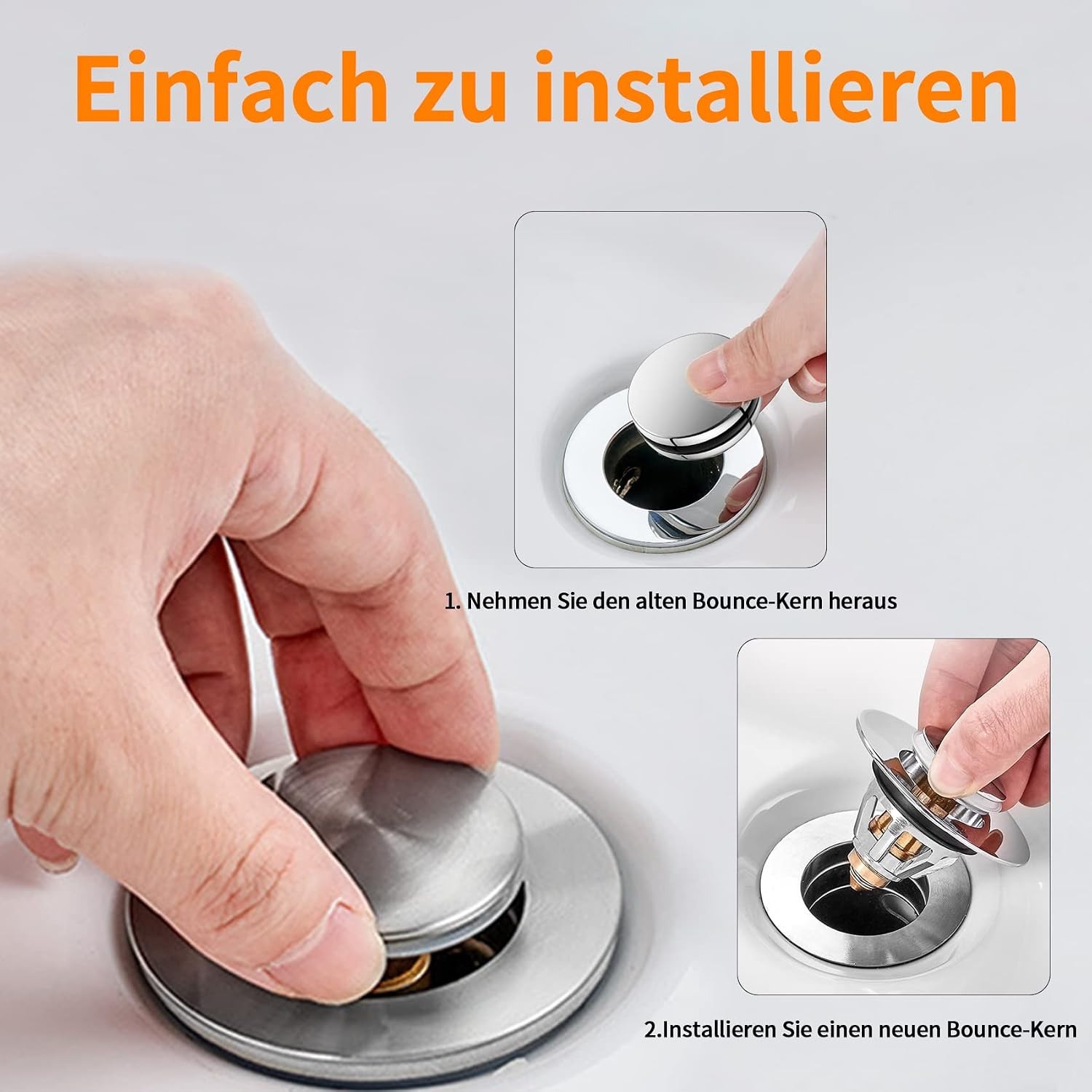
Press the old core so it stands up, then pull it straight out. Some designs need the cap unscrewed anticlockwise first. If it resists, give it a wiggle rather than yanking.
With the old one out, you get a clear view of the waste. Take a cloth or an old toothbrush and clean around the inside, especially the rim where the new seal will land. Years of soap film builds up there and a clean surface seals far better than a greasy one.
Drop the new core in. If it sits loose, add the rubber ring. Press the cap down and check it latches. Press again and check it springs back cleanly. Fill the basin a few centimetres and leave it two minutes. If the level holds, you are finished.
Keeping it working
Empty the strainer basket regularly. That is really the whole maintenance routine.
Beyond that, wipe the cap with warm soapy water and dry it, which keeps water spots and limescale from setting. Skip the bleach, the scouring powder and the wire wool, all of which dull the finish without doing anything useful. If the action ever feels sticky, lift the core out, rinse the spring under hot water to shift the soap film, dry it and refit.
Do those two things and a well made core like this will outlast several of the plastic ones it replaced.
The short version
A click clack plug fails at the core, not the whole waste, so replacing the core is the cheap fix. Measure the inner diameter of your drain hole before ordering, because 34mm to 38mm is the range that works. Brass and stainless steel handle constant water better than plated plastic. The built-in basket catches the hair that causes most slow bathroom drains, as long as you empty it. And the install genuinely takes a couple of minutes with nothing but your hands.