
The complete guide
Choosing a Sink Strainer That Actually Stays Put
The small problem that turns into a big one
A blocked kitchen drain almost never arrives without warning. It starts with water standing a little longer in the bowl than it used to. Then the washing-up water takes a minute to clear instead of a few seconds. Then one evening you pour a pot of pasta water down the sink and it comes back up at you.
What has happened is simple. Months of rice, pasta, vegetable peelings, coffee grounds and bits of fat have been slipping through the plug hole, and each one has stuck to the inside of the pipe or settled in the trap. On its own, none of it matters. Together, it narrows the pipe until the water cannot get past.
The same thing happens in the bathroom, except there the main offender is hair. Hair wraps around anything it meets, then soap scum and shampoo residue cling to it, and before long there is a plug of grey matter sitting in the waste pipe.
A sink strainer solves this in the most direct way possible. It puts a fine metal barrier between the sink and the pipe, so the stuff that causes blockages stays where you can see it and bin it.
How a strainer with a handle actually works
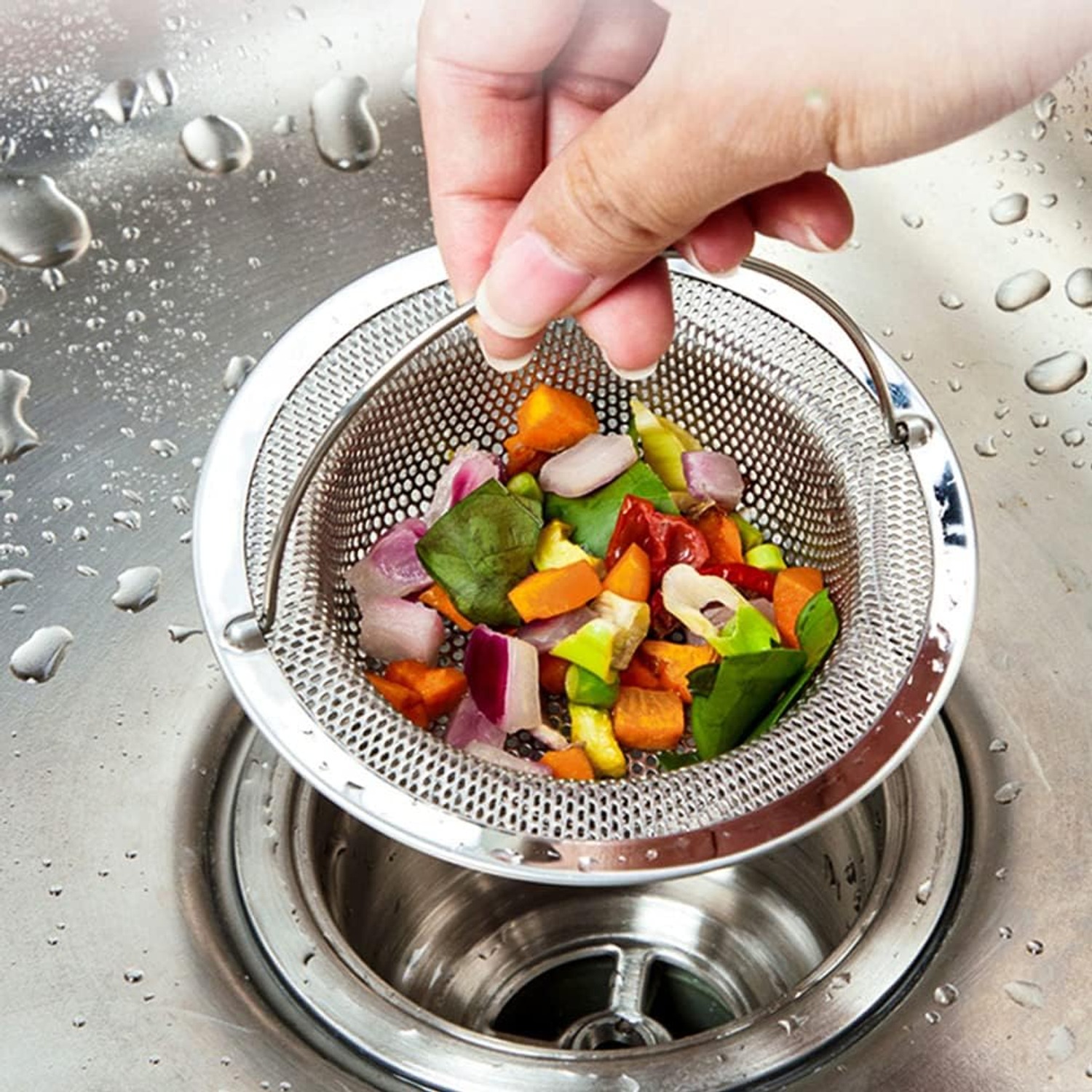
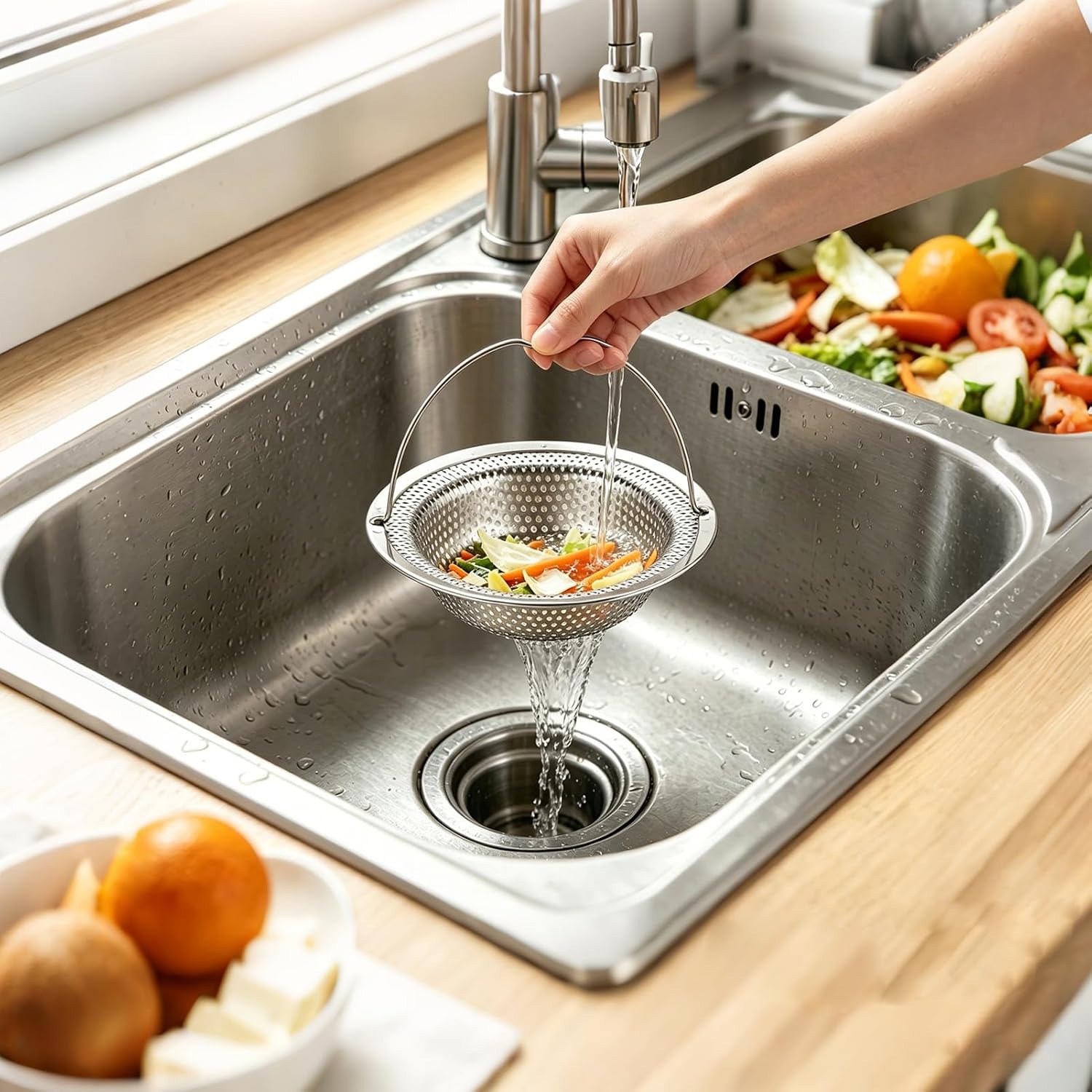
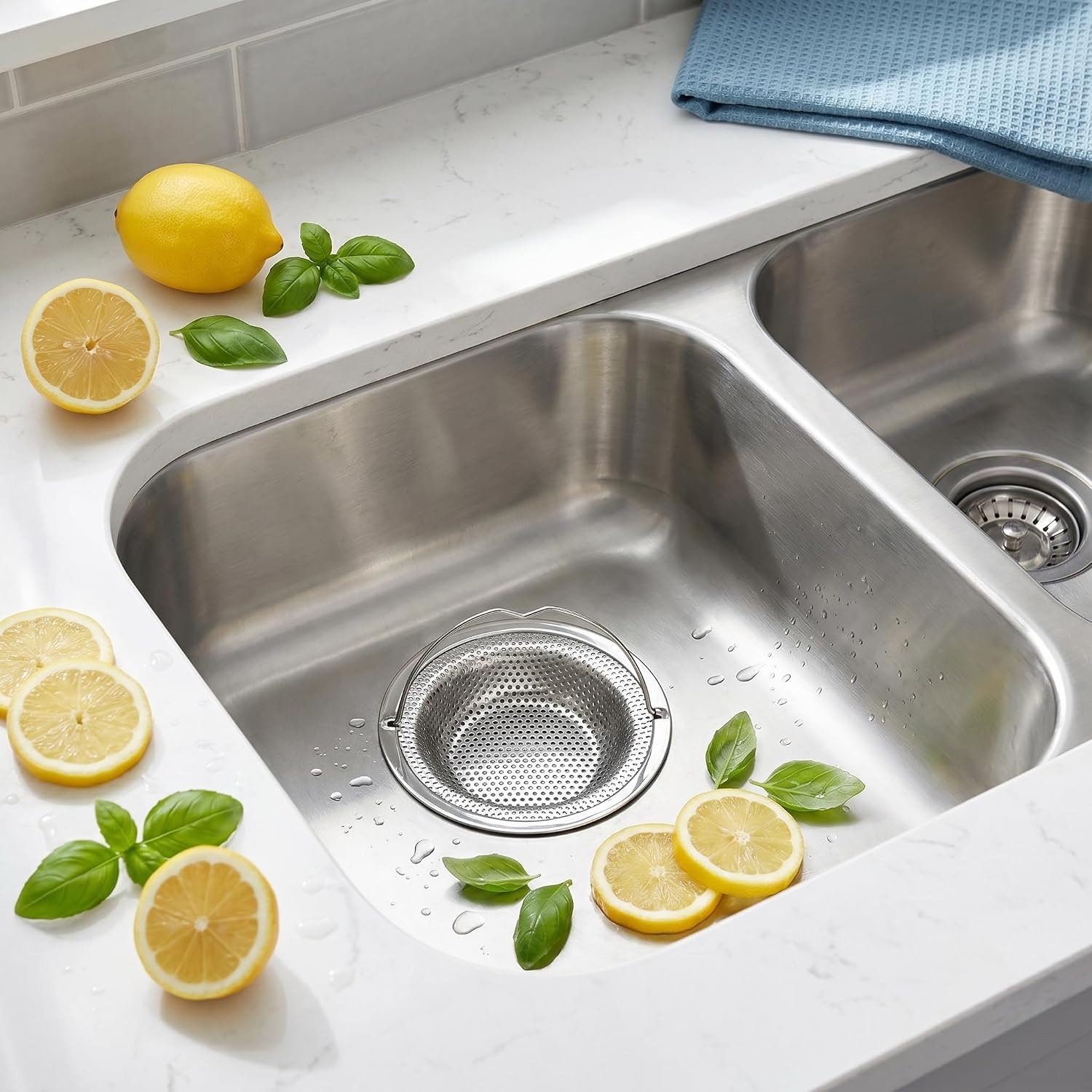
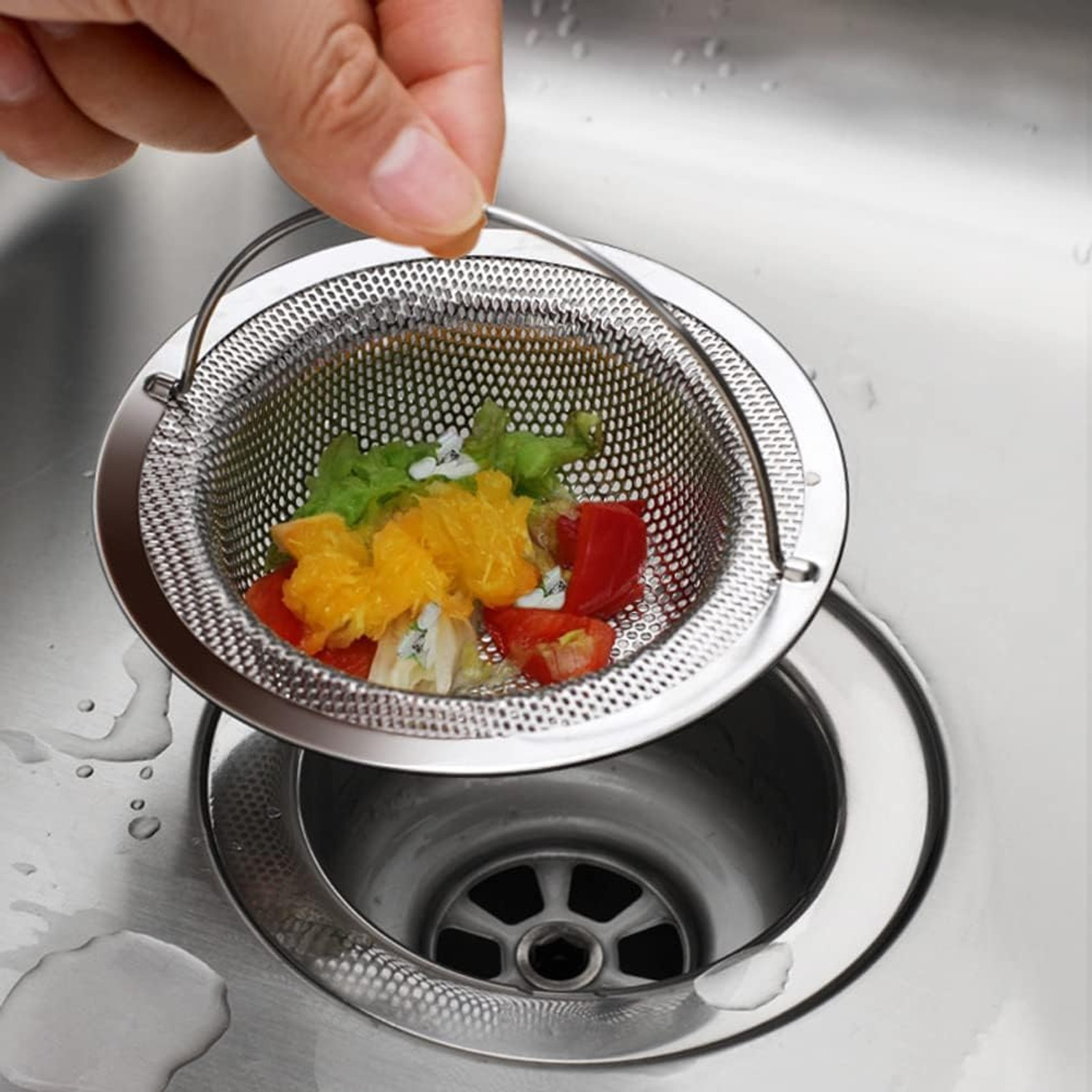
The idea is not complicated. The strainer is a shallow metal basket that drops into the plug hole recess. Water passes through the perforations in the base and sides, and anything solid stays behind.
The handle is what separates a strainer you will actually use from one that ends up in a drawer. Picture emptying a strainer without one. Your hands are already wet, the basket is full of soggy food, and you have to pinch the rim between two fingers to lift it out. Most people do it once or twice and then decide it is easier to just let things wash down the drain.
With a handle, you grip the loop, lift the whole basket out, tip it over the bin and tap the edge. The waste falls out. A quick rinse under the tap and it goes straight back. The job takes about five seconds, which is short enough that you will keep doing it.
This particular model is listed with a removable design and a handle across the top, in a set of two.
The size question
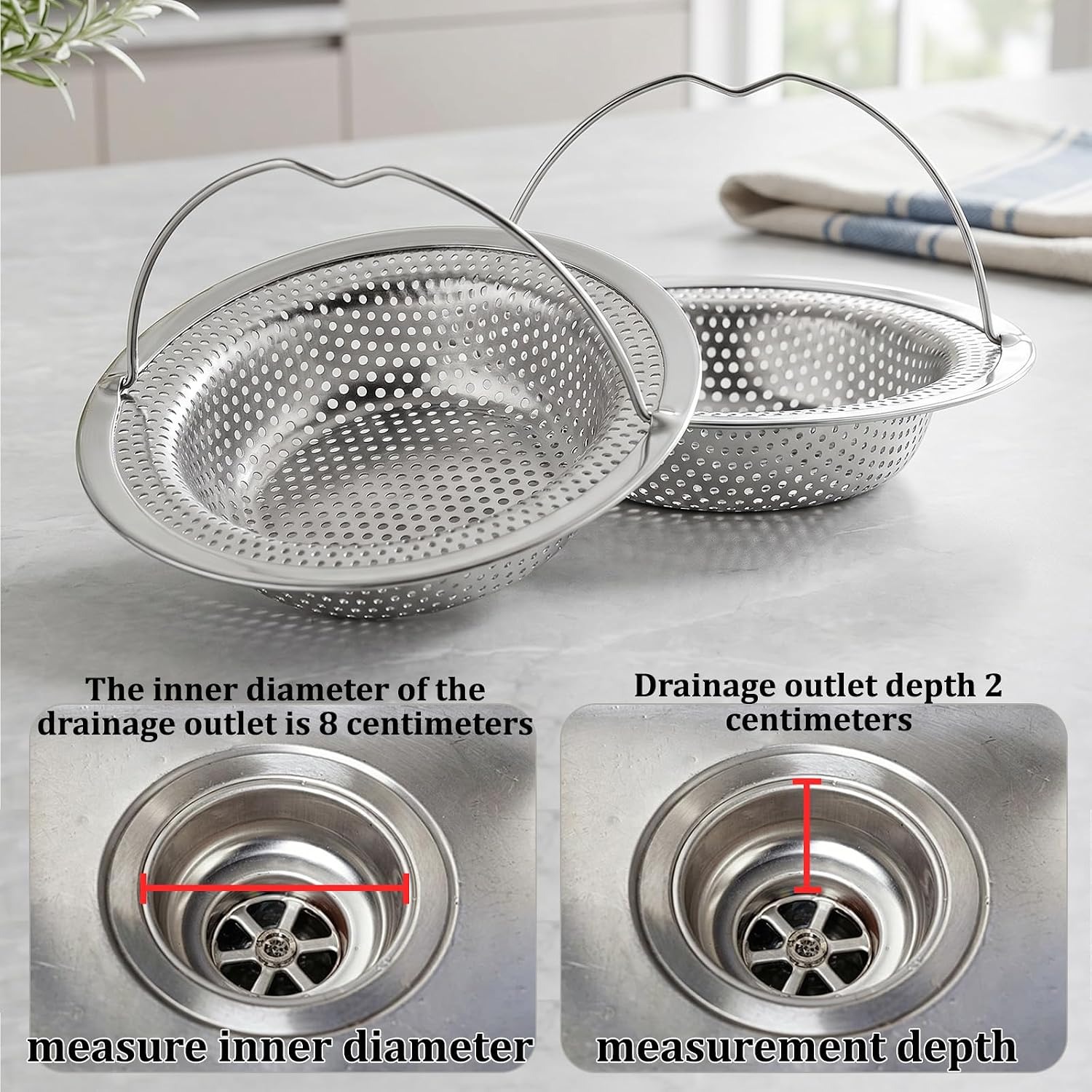
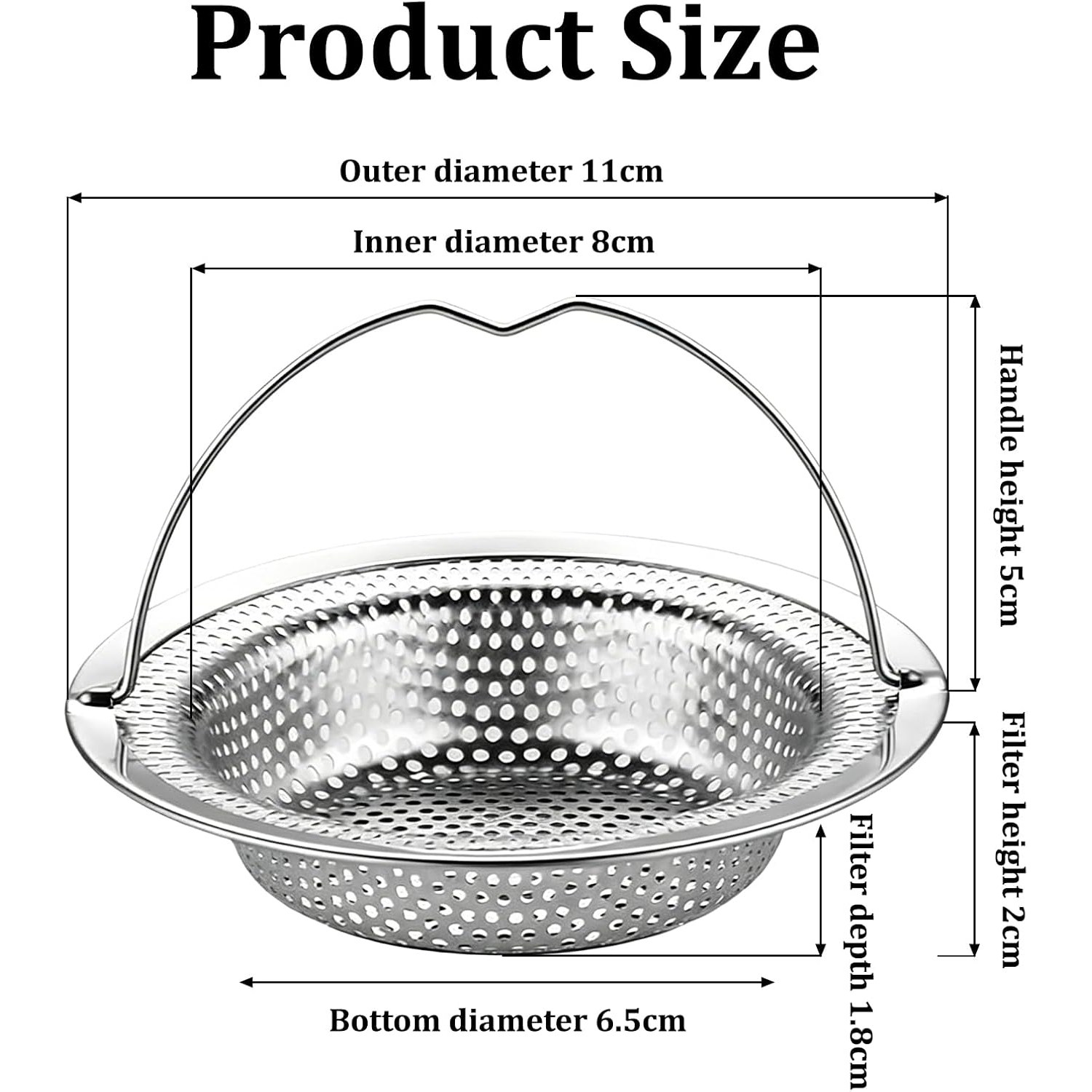
Fit is the single thing worth getting right before you buy any sink strainer. These measure 11 cm wide and 7 cm high, with a depth of 2 cm, and the listed compatible groove diameter is 11 cm.
Most standard kitchen sinks in Europe, Australia and North America use a waste opening somewhere close to that figure, which is why 11 cm is such a common size for a kitchen sink basket strainer. But sinks vary, and a strainer that is 5 mm too wide will sit on top of the waste instead of dropping into it.
Take two minutes and measure before you order. Put a tape measure or ruler across the opening of your plug hole, edge to edge, at the widest point. If you get something around 11 cm, you are in good shape. If your sink is noticeably smaller, as some bathroom basins are, this one will not drop in.
Depth matters too, in a smaller way. At 2 cm deep, the basket sits low. It will not get in the way when you are stacking plates or rinsing a tray, and it holds a reasonable amount of waste before it needs emptying.
Why stainless steel over plastic
Walk down any supermarket aisle and you will find plastic sink guards for very little money. They work, up to a point. The trouble is what happens after a few months.
Plastic softens when you pour boiling water over it, and anyone who drains pasta in the sink does that regularly. The plastic can warp just enough that it stops sitting flat in the plug hole. It also stains. Tea, turmeric, tomato sauce and coffee all leave their mark, and no amount of scrubbing brings it back.
Stainless steel does none of that. Pour a pot of boiling water straight over it and nothing happens. It does not stain in the same way, and because the surface here is unfinished rather than coated, there is no plating to flake off at the edges.
It also holds its shape, which matters more than it sounds. A strainer that has gone slightly out of round will not seat properly, and a strainer that does not seat properly lets waste slip down the side. For a rust free sink strainer that stays flat and keeps working, metal is the straightforward choice.
Where the second one goes
A two-pack gives you options, and the obvious second home is the bathroom.
Hair is responsible for an enormous share of household drain problems, and it is much easier to catch at the surface than to pull out of a trap later. A strainer in a shower tray will collect the day's shedding in one visible clump that you can lift out and bin. The same applies to a bathroom basin, as long as the waste opening is close enough to 11 cm.
Some people use the second one differently. Keep it in the cupboard and swap it in while the first is being properly washed, so there is never a gap where the sink is unprotected. Others put one in a utility sink or an outdoor sink, where grit and soil cause the same kind of silting up.
If you have a waste disposal unit, check your unit's instructions before putting any loose strainer in the opening. Disposal units have their own fittings and a strainer may not sit right.
Keeping it clean
A strainer only works if you empty it, and it only stays pleasant if you clean it.
Emptying after each wash-up is the easy habit. Tip the contents into the bin while they are still fresh, before anything has a chance to break down and smell. If you leave a full basket overnight, you have effectively moved the odour problem from the pipe to the sink, which is not an improvement.
Once a week or so, give it a proper wash. Warm water and a little dish soap, with a soft brush worked over the perforations, clears anything that has dried into the holes. An old toothbrush does the job well. If the drainage has got slower, blocked holes are almost always the reason, and a brush fixes it in under a minute.
Skip the steel wool and the heavy abrasive powders. They scratch the surface, and scratches give food something to cling to. Drying the strainer when you remember helps keep water marks from building up, though it is not essential.
Who this suits
Anyone who cooks regularly will get the most from it. If you chop vegetables, drain pasta, rinse rice or wash up by hand, you are sending small solids towards your pipes every day.
It suits renters especially well. You cannot do much about old pipework in a flat you do not own, but you can stop adding to the problem, and a strainer is something you take with you when you leave.
Shared houses benefit too, because you are managing other people's habits as well as your own. A visible strainer is a quiet reminder that scraps go in the bin.
The one group who should check carefully first are people with unusual sinks. Belfast sinks, some designer basins and older fittings can have waste openings that sit outside the standard range. Measure first.
The short version
A sink strainer is one of the cheapest pieces of insurance in a kitchen. It costs a fraction of a plumber's call-out and takes a few seconds a day to maintain.
This set gives you two stainless steel strainers sized at 11 cm across with a 2 cm depth, each with a lift-out handle. The metal handles hot water and does not warp or stain the way plastic does. The handle means emptying it is quick enough that you will actually bother.
Measure your plug hole, confirm you are near 11 cm, and put one in the kitchen and one in the shower. Then forget about it, apart from the few seconds a day it asks for.