
The complete guide
How To Choose And Use A Drain Brush Set
The problem nobody deals with until it is too late
A drain rarely blocks overnight. It fills in slowly. Hair goes down the shower, soap and conditioner stick to it, and over a few months that mat spreads sideways until the water starts pooling around your feet. In the kitchen it is grease and food fragments instead, cooling on the inside of the pipe and catching everything that follows. By the time you notice, the pipe has been narrowing for ages.
Most people reach for a bottle of chemical cleaner at that point. It usually works, in the sense that the water goes away. What it tends to do is melt a passage through the softest part of the clog while the hardened ring around the outside stays stuck to the pipe wall. The drain runs fine for a fortnight, then slows again, and you buy another bottle. That cycle is expensive, it is hard on older pipework, and it means storing something caustic under the sink.
A drain brush works differently. It scrubs. You are physically removing the layer rather than dissolving a hole through it, which is why the result lasts longer and why a brush is worth having before anything actually goes wrong.
What is in this kit and why four pieces
The set contains four tools because household drains are not all the same shape.
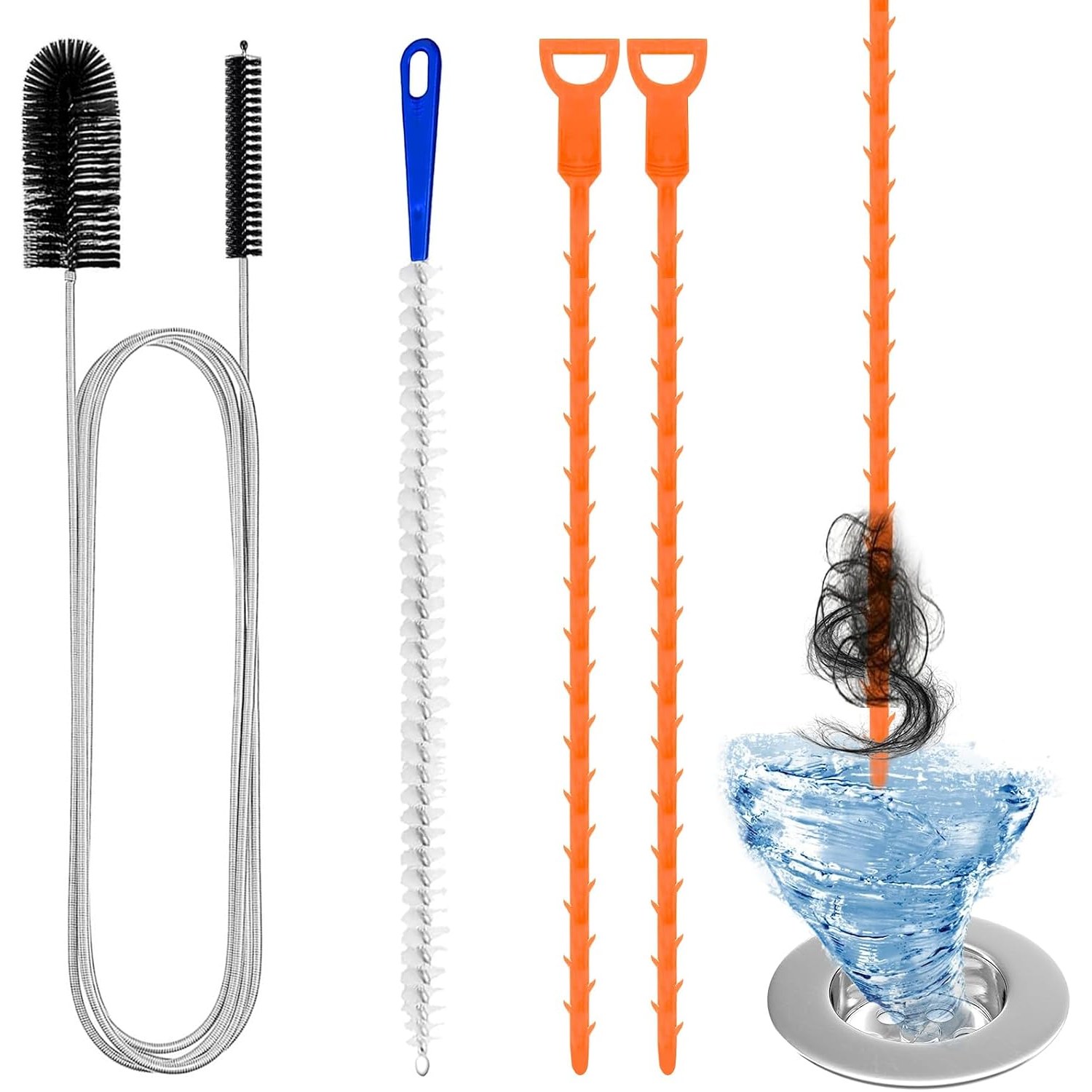
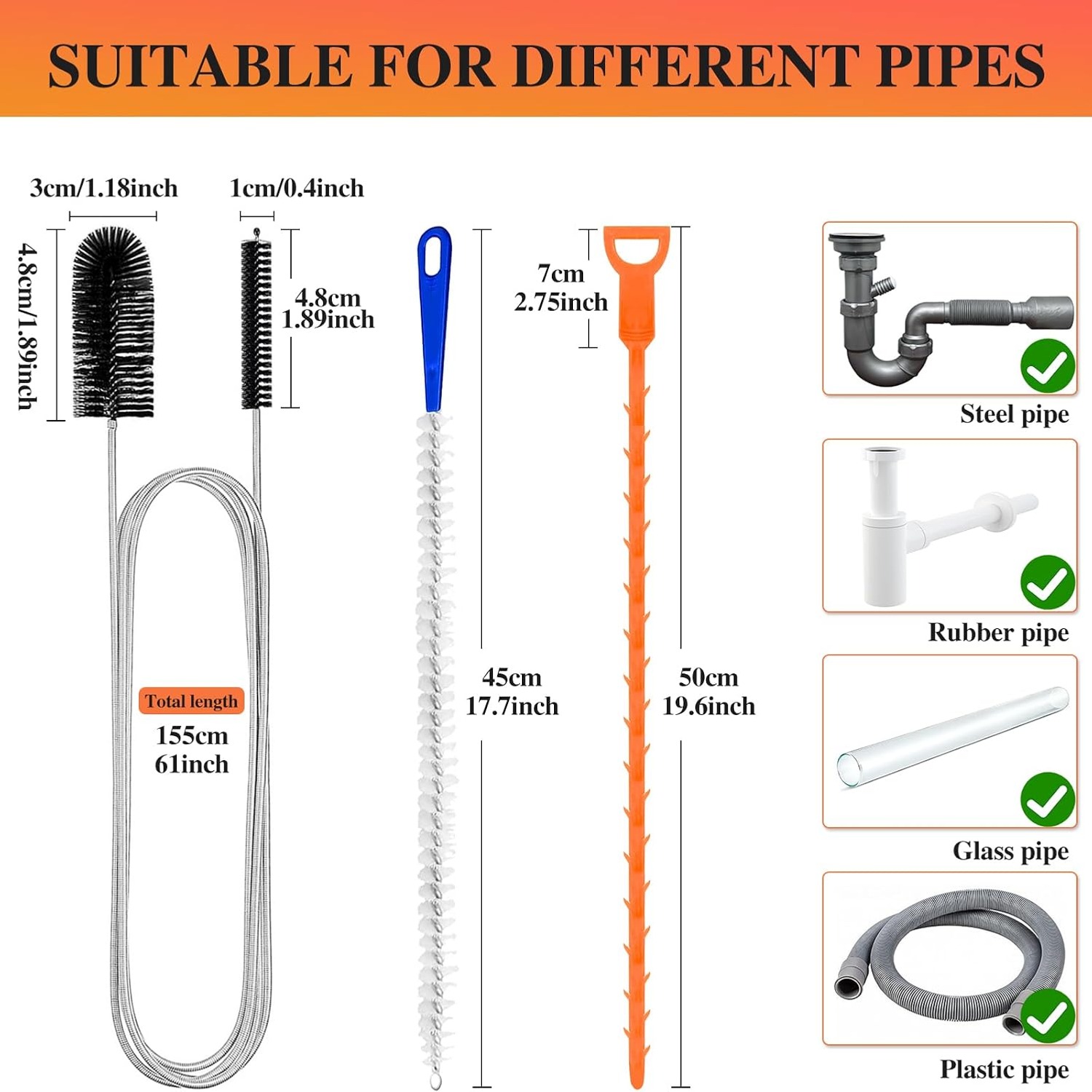
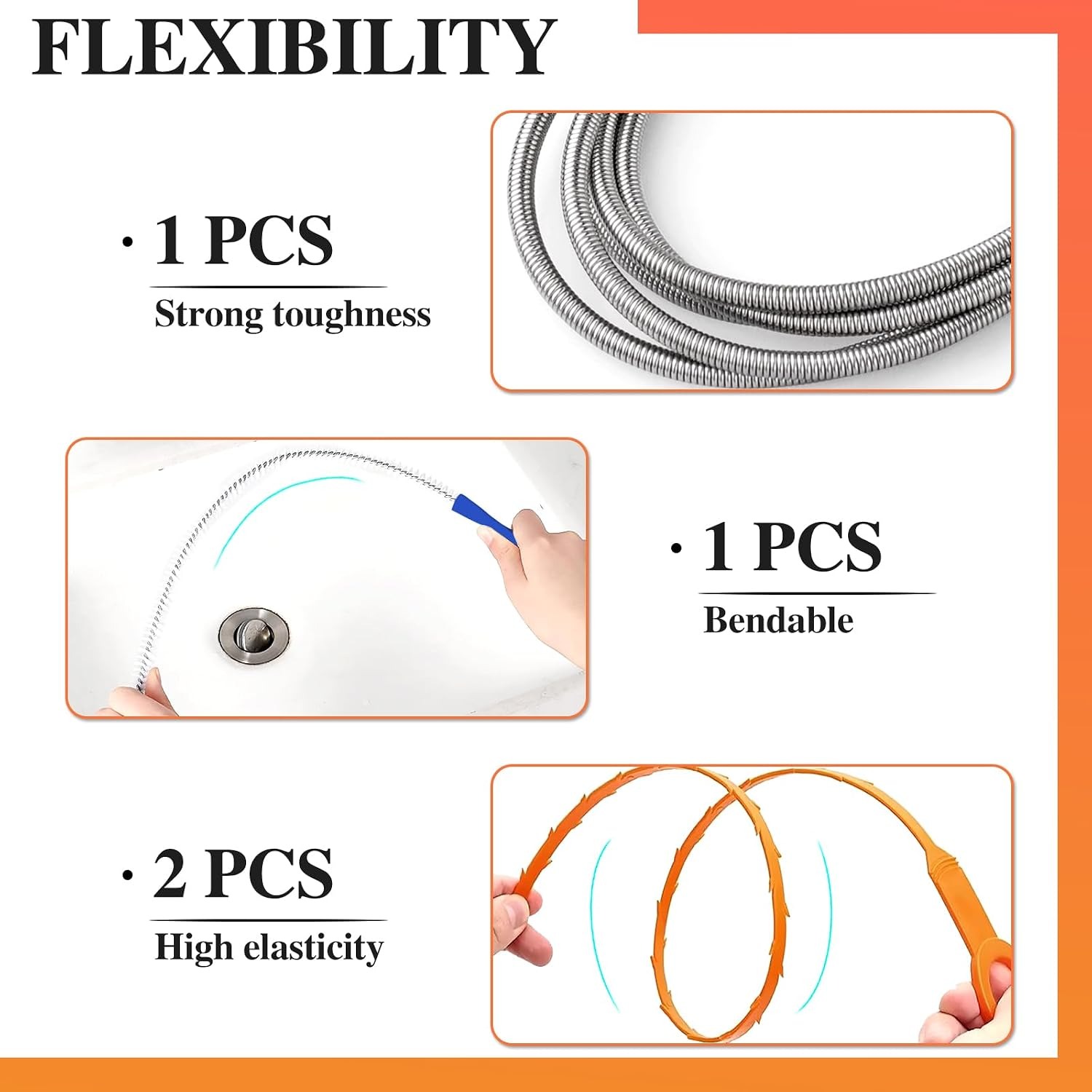
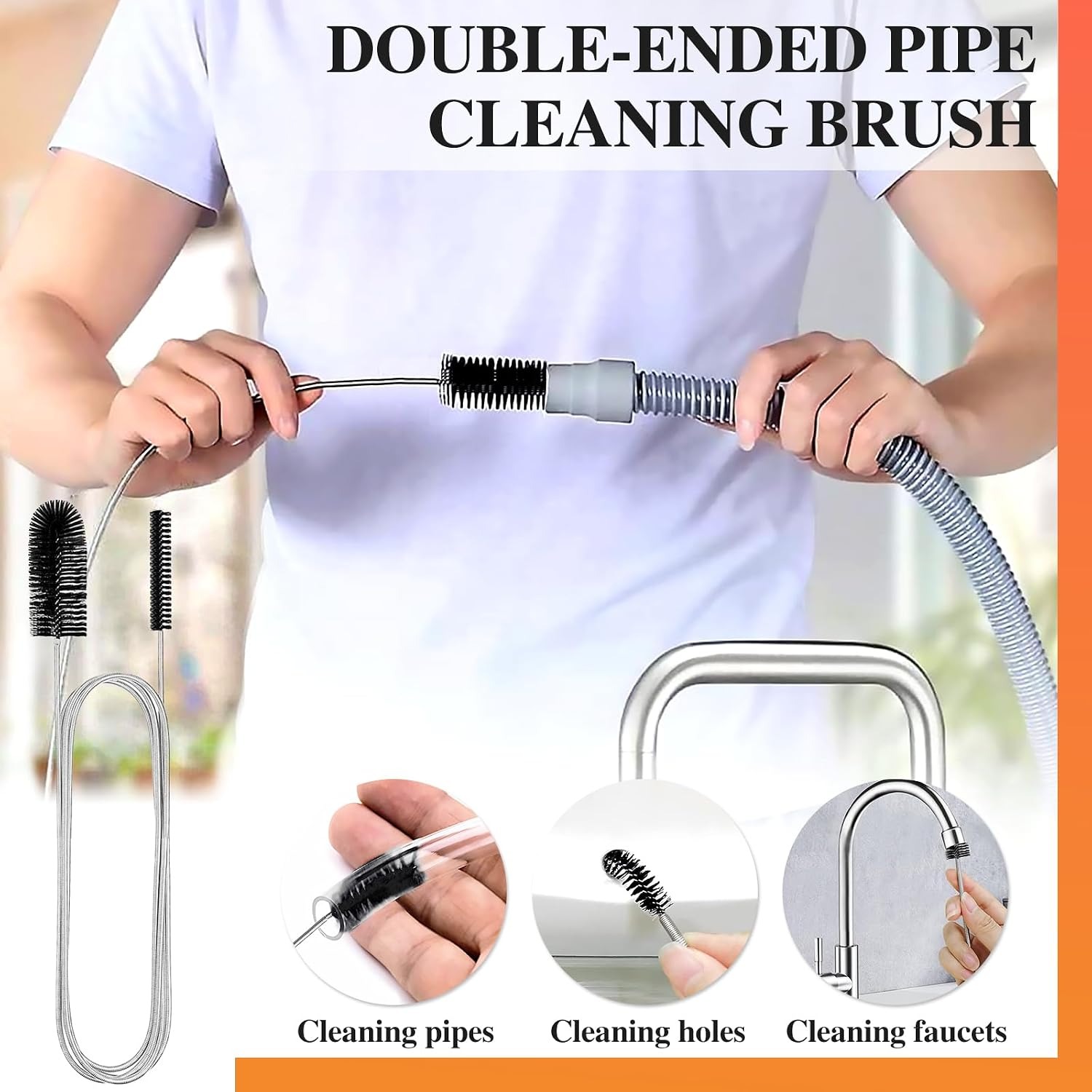
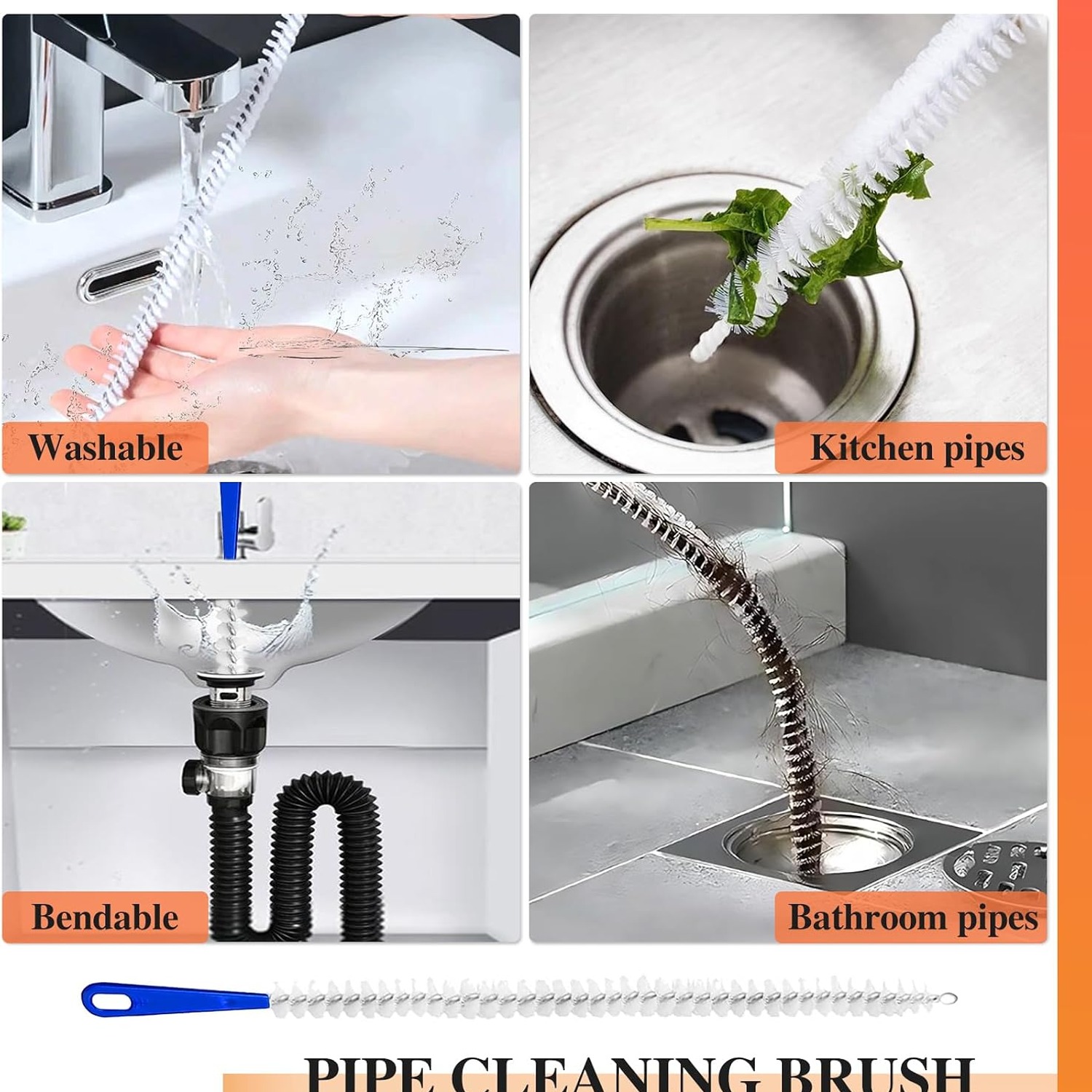
The headline item is a 155cm flexible brush. The core is stainless steel, which gives it the spring to follow a bend without collapsing, and nylon bristles run along both ends. Length is the thing that separates a useful drain tool from a frustrating one. A basin trap is the first bend, and plenty of gunk sits past it. A short brush stops at the trap and makes you think the pipe is clean when it is not.
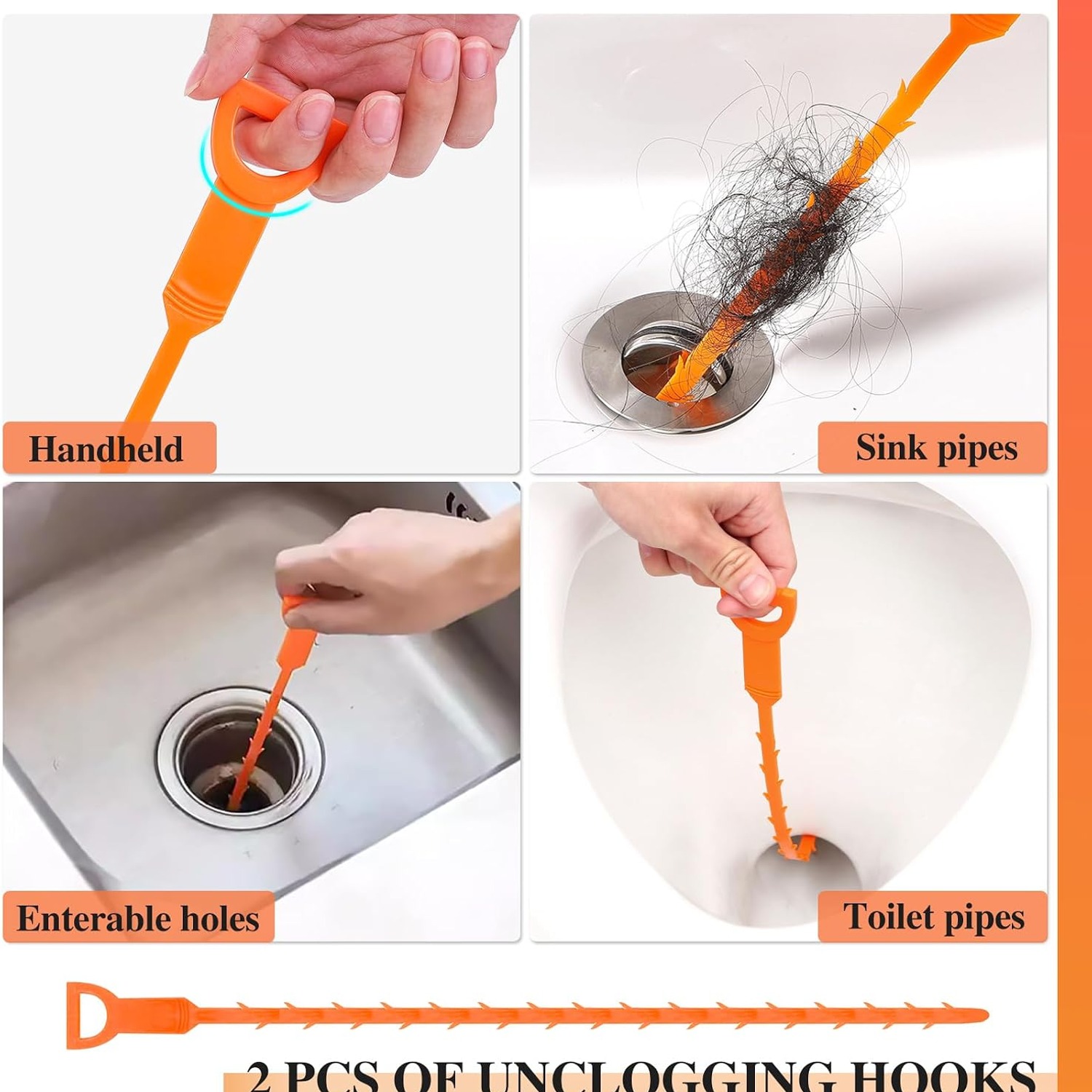
Then there are three barbed drain cleaner sticks, one 45cm and two 50cm. These are plastic, flexible, and lined with small backward-facing teeth. They are the fastest answer to a hair clog. Push one down past the grate, twist, lift, and the mat comes up with it. Having three means you can leave one in each bathroom and still have a spare, which is more useful than it sounds because the moment you have to go hunting for a tool, you stop doing the job regularly.
The two types cover different failure modes. Sticks remove the lump. The long brush cleans the wall. Together they handle the vast majority of domestic drain trouble.
How to actually use it
Start with the sticks if the water is standing. Feed one in slowly, let the teeth pass the hair rather than pushing the whole mass deeper, then rotate a quarter turn and draw it back. Do this two or three times. Have a bin bag or old newspaper to hand because what comes out is unpleasant and you do not want to carry it across the bathroom floor.
Once the standing water has gone, switch to the long brush. Run the tap so there is some flow to carry loosened debris away. Feed the rod in with a gentle twisting motion. When it meets resistance, do not shove. Back off a few centimetres, twist, and push again. The flexible core wants to follow the pipe, and if you force it you just kink it against the inside of a bend.
Work the brush back and forth over the same section several times. You will feel the difference when the wall is clean, there is less drag and the rod slides more freely. Finish with hot water down the drain for thirty seconds to flush out whatever you have scraped loose.
For a kitchen sink, a squirt of washing up liquid in the hot water flush helps lift the grease you have just broken up.
Beyond the bathroom sink
The reason this kit earns its storage space is everything else it cleans.
Aquarium keepers will recognise the problem immediately. Filter hoses fill with biofilm and algae and the flow drops off. A long flexible brush pushed through the tubing solves it in a couple of minutes, and it is one of the better aquarium tube brush options because of the length rather than anything clever about the design.
Washing machine outlet hoses are another one. If your machine smells and you have already run a hot maintenance wash, the residue is often sitting in the outlet. Detach it, brush it through, reconnect.
Coffee machines, especially bean to cup models with internal tubing, benefit from a thin brush and plenty of clean water afterwards. Fridge defrost drain holes block with crumbs and gunk, which is the usual reason water appears in the bottom of the salad drawer. And cars have drain channels in the sunroof and door frames that fill with grit and rotting leaves, then overflow into the cabin. A flexible rod clears those without taking anything apart.
How to choose a drain brush set
If you are comparing options, a few things matter more than the marketing.
Length first. Anything under a metre is a sink-trap tool, not a pipe tool. Second, core material. A stainless steel core holds its shape and resists rust far better than a plain wire that corrodes after three uses. Third, whether the brush is flexible enough to bend but firm enough to push. Something that collapses the moment it meets resistance is no use at all.
Bristle material is worth a thought too. Nylon is gentle on PVC pipework and on porcelain, which matters if you are working near a visible finish. Stiff metal snakes have their place for serious blockages, but for routine cleaning they are more aggressive than you need.
Finally, think about whether you get more than one tool. A single brush covers one job. A kit with hair hooks as well covers the two situations you will actually meet.
Looking after it
This part is short because there is not much to it. Rinse the brush under hot running water straight after use so nothing dries onto the bristles. Wash with warm soapy water, shake it out, and let it dry completely before it goes back in the cupboard. Damp storage is what kills cleaning tools.
Keep the long rod loosely coiled. A sharp kink in the stainless core creates a weak point, and that is where it will eventually fail. A hook on the inside of a cupboard door is ideal. Failing that, a drawstring bag under the sink keeps everything together so you are not fishing a stick out from behind the bleach.
The sticks need even less care. Rinse, dry, store.
A realistic maintenance routine
The best use of a kit like this is prevention rather than rescue. Once a month, run a stick down the shower drain and the bath. It takes under a minute per drain and it stops the hair mat ever forming. Once every couple of months, run the long brush through the kitchen sink and the bathroom basin.
If you have long hair in the house, or several people sharing one bathroom, tighten that up to fortnightly for the shower. If you cook with a lot of fat, do the kitchen more often and always chase it with hot water.
Doing it on a schedule is far easier than doing it in a panic with water rising around the plughole.
The short version
This is a four piece kit built around one long, flexible, double ended brush and three barbed hair hooks. The brush reaches 155cm, which gets it past the trap and into the part of the pipe where the real build-up lives. The sticks pull hair clogs out whole rather than pushing them further along.
It is chemical free, washable and reusable, and it works on far more than drains: aquarium hoses, washing machine outlets, coffee machine tubing, fridge drain holes and car drain channels all respond to the same tool.
Buy it before you need it, keep it where you can reach it, and use it for two minutes a month. Your drains will behave, and you will stop buying bottles of the caustic stuff.