
The complete guide
How to Choose a Square Shower Drain That Actually Works
The problem nobody plans for
Most bathroom renovations get planned around the tiles, the tapware and the shower screen. The drain gets chosen last, usually from whatever the merchant has in a box. Then one of three things happens. It smells. It blocks. Or it sits in the middle of a beautiful new floor looking like a cheap afterthought.
A floor drain is a small part doing a big job. Every litre of water that leaves your shower passes through it, along with hair, soap, shampoo residue and whatever got tracked in on your feet. It also has to stop sewer gas coming back the other way. Getting it right costs very little more than getting it wrong, and it is a lot easier to do at the start than to fix later.
What this drain is
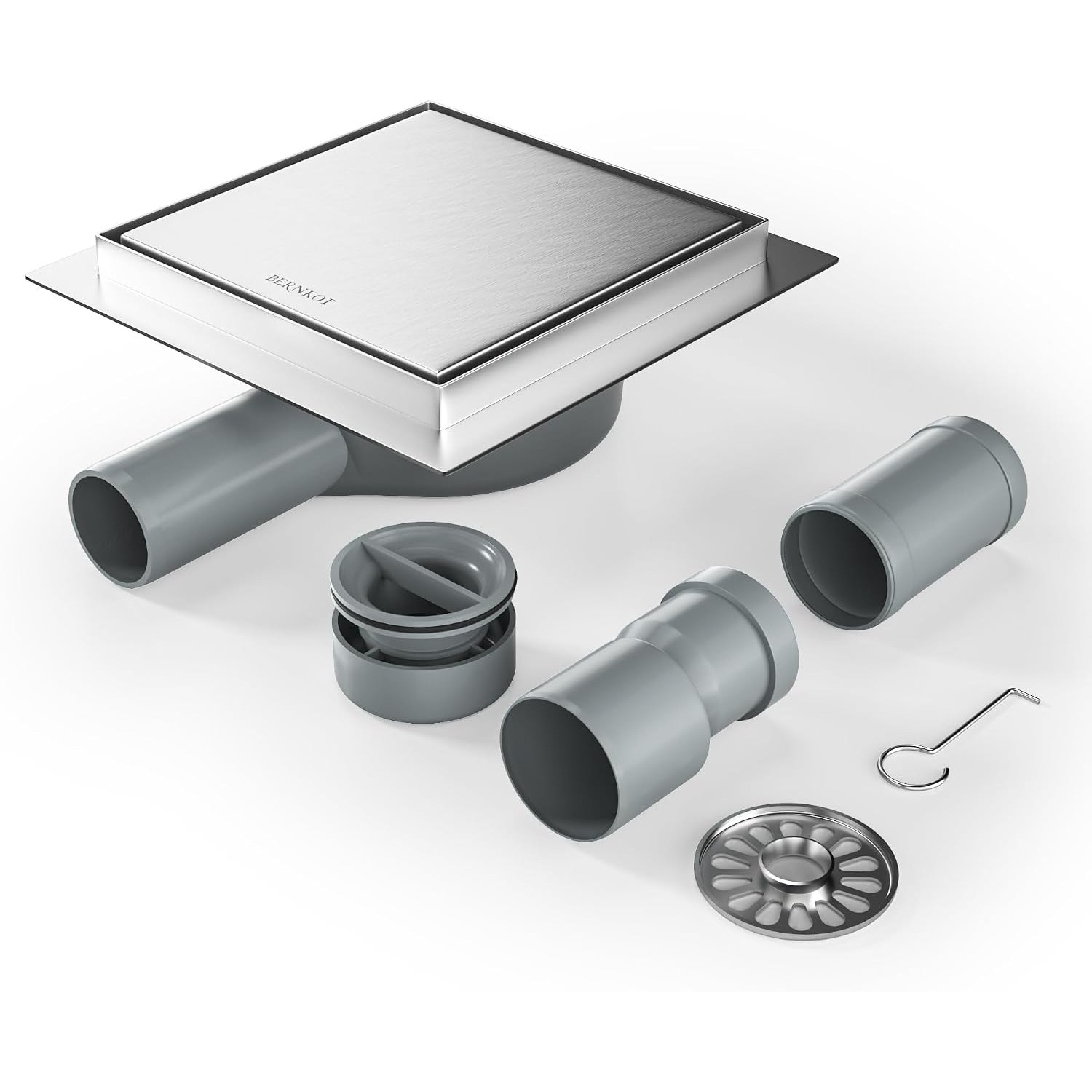
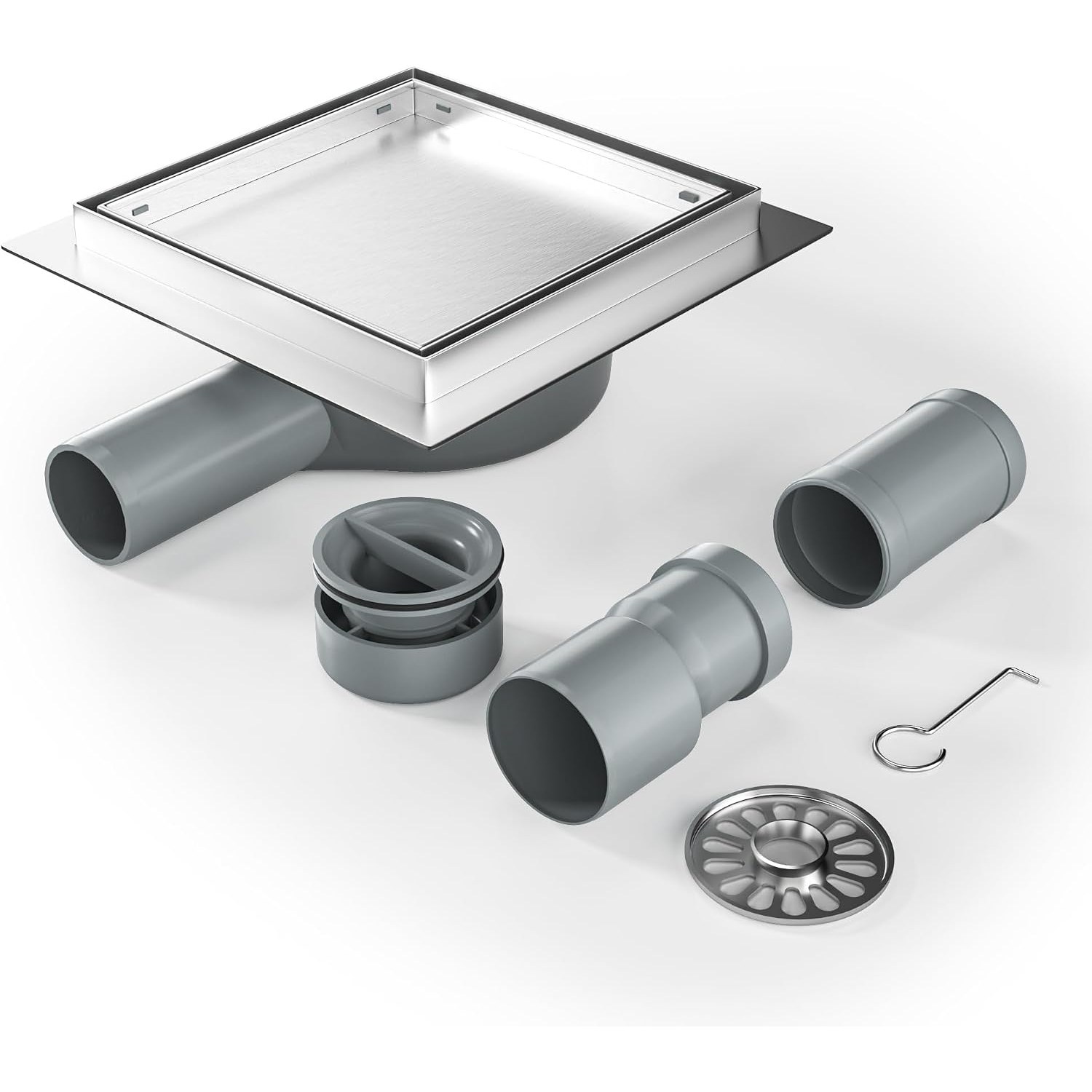
This is a 15 x 15 cm square floor drain made from SUS304 stainless steel with a brushed finish. It comes as a full kit rather than just a grate, so the drain body, siphon, odour stopper, hair catcher, pipe connections, lifting hook and an installation guide all arrive together.
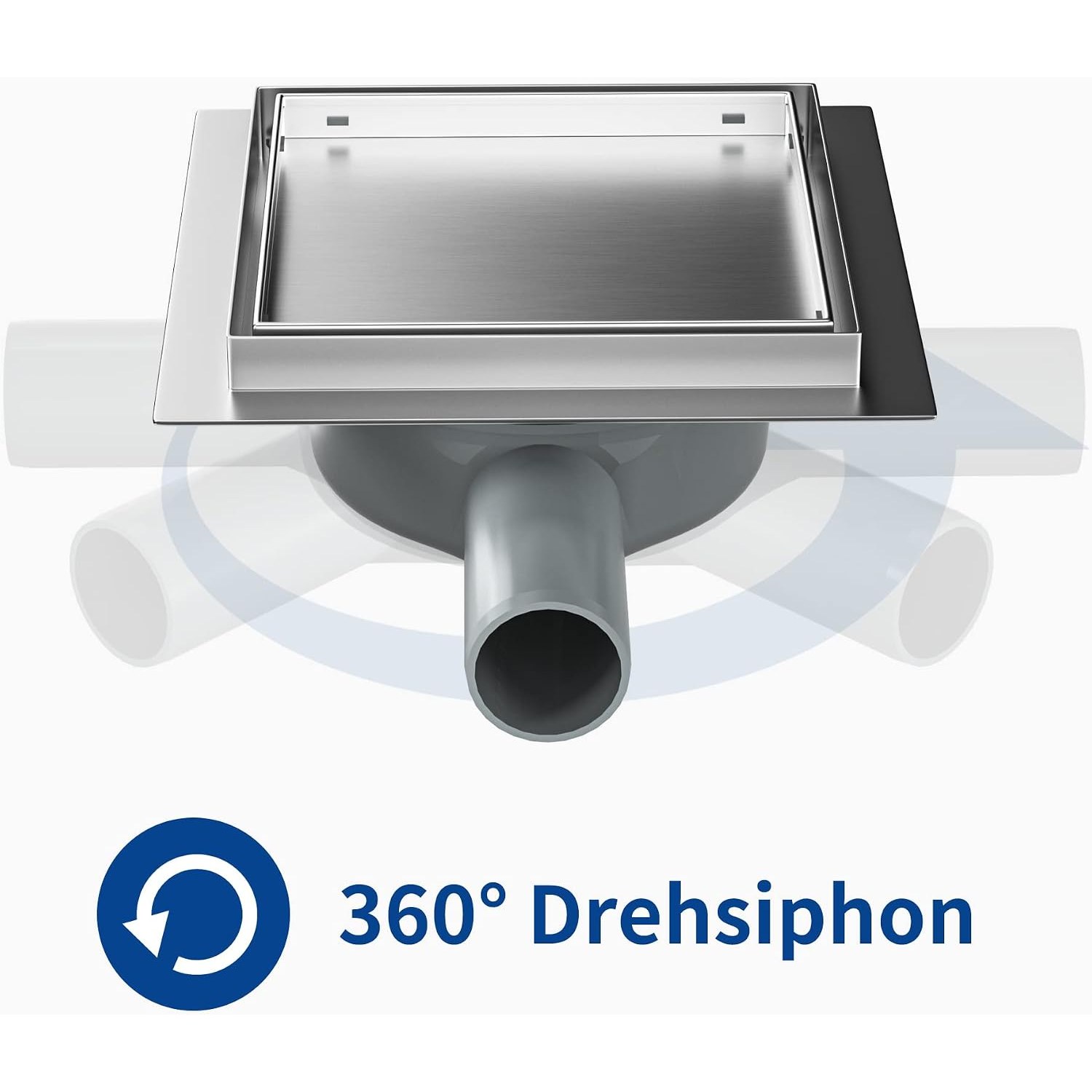
Two details separate it from a basic drain. The first is the reversible grate. One side is plain brushed steel. The other is a shallow tray designed to hold a piece of your own floor tile. The second is the siphon, which rotates a full 360 degrees so the outlet can point in any direction.
Why 304 stainless matters
Stainless steel is not one material. The number after it tells you the alloy mix, and that mix decides how it behaves in a wet room.
Grade 304 contains enough chromium and nickel to form a protective layer that reforms itself when scratched. That is the reason it is used so widely for sinks, benches and bathroom fittings. Cheaper drains sometimes use a lower grade, or a thin plated coating over something else. Those look identical in the box and start to show rust spots in a year or two around the edges where water sits.
The brushed finish helps as well, for a boring but useful reason. A mirror polish shows every water mark and fine scratch. A brushed surface scatters light, so the small marks a floor drain inevitably collects do not stand out.
The two-faced grate
This is the feature worth thinking about before you order your tiles.
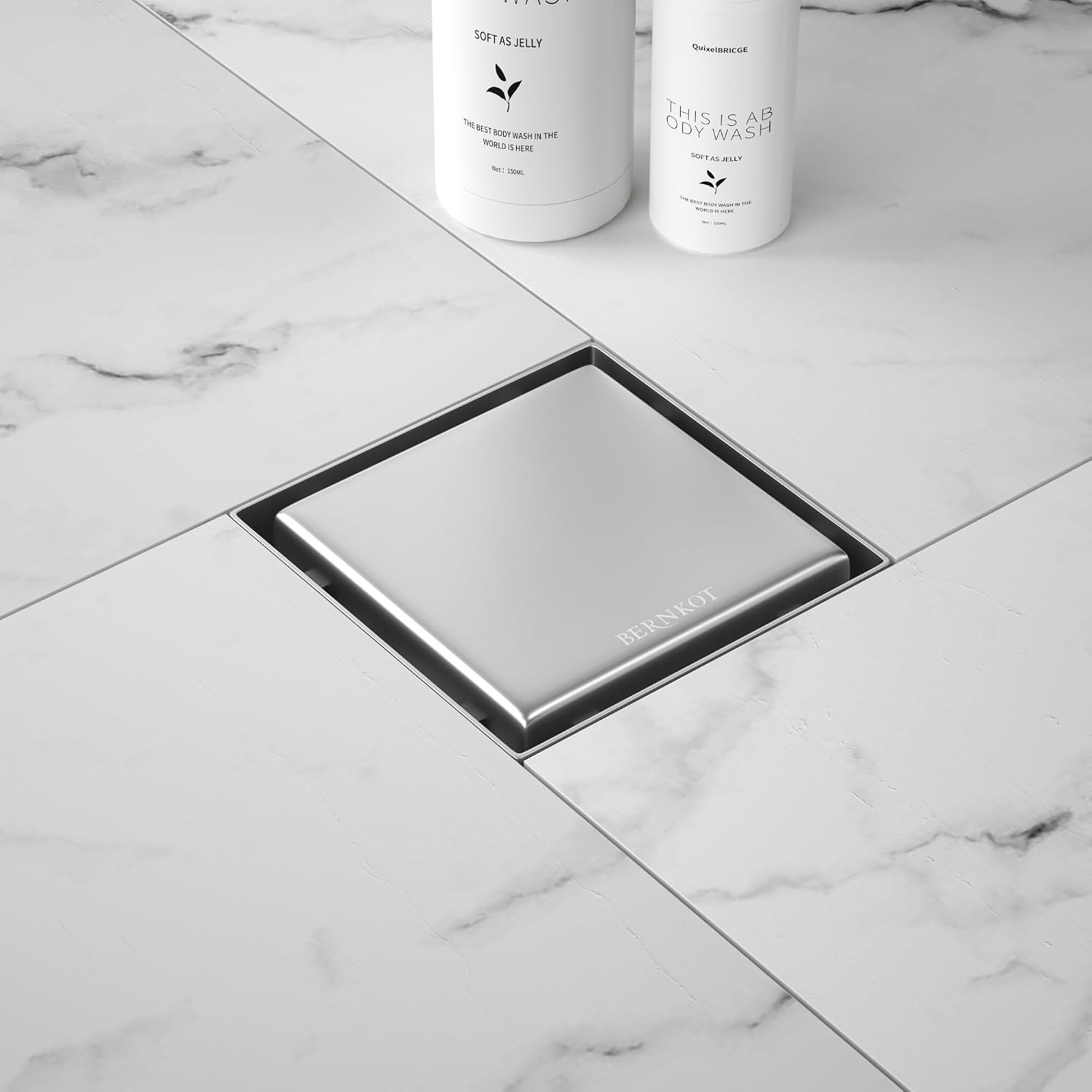
Leave the brushed steel side up and you get a neat square plate. It suits a modern bathroom and it is the easy choice. It also means you can see at a glance when hair is building up, which some people prefer.
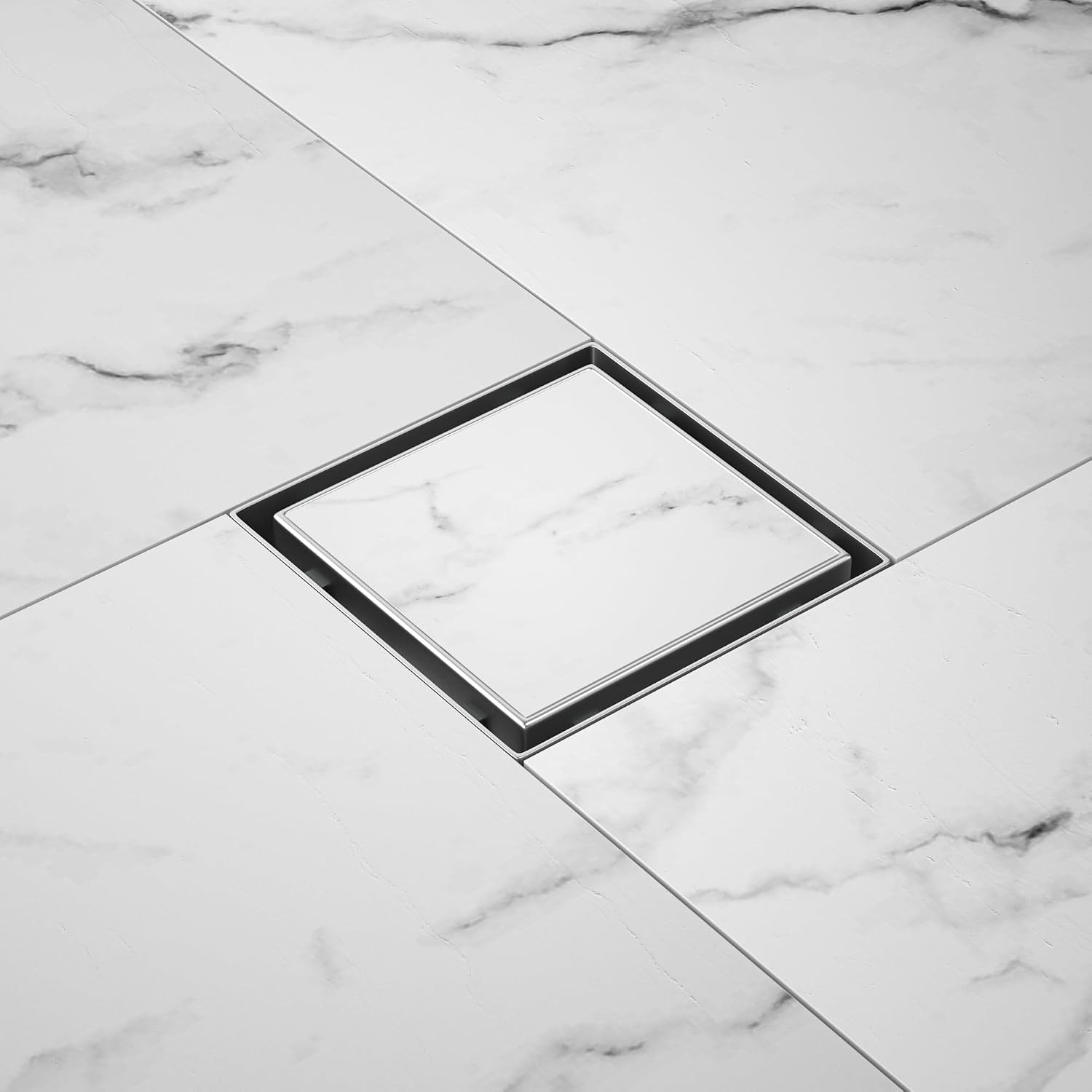
Turn the plate over and you have a recess for a tile insert. Your tiler cuts a piece from the same batch as your floor, bonds it in with waterproof adhesive and grouts the edge. Done properly, the only sign of the drain is a thin grout line and a narrow slot around the perimeter where the water enters. In a floor laid with large-format tiles, that is the difference between a continuous surface and a floor with a silver square stamped in it.
A tiled insert is slightly more work and slightly less forgiving. It needs a competent tiler and a tile thin enough to sit in the tray. If you are not sure, order the drain, hand it to your tiler and let them tell you. Either way you have the option, which is more than most drains give you.
The siphon and why rotation helps
Underneath the grate sits the siphon. It holds a small pool of water that blocks sewer gas, the same principle as the bend under a sink. This kit also includes a separate odour stopper as a second line of defence, useful in a bathroom that only gets used occasionally and where the water seal can evaporate.
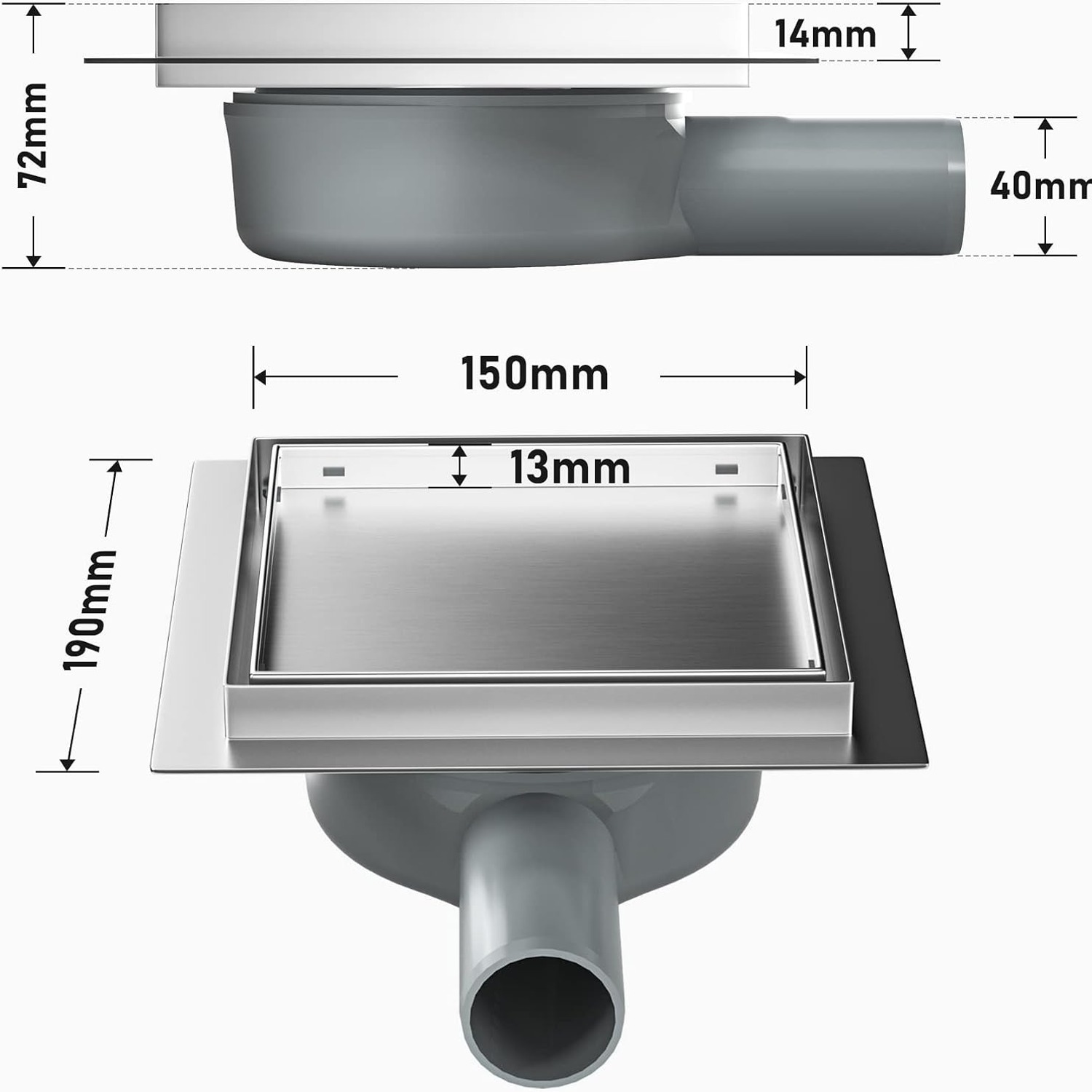
The rotation is a renovation feature. In a new build you run the pipe wherever you want and the drain follows. In a renovation you are stuck with a pipe that already exists, often in an inconvenient spot under a concrete slab or between joists you would rather not cut. Being able to turn the outlet to meet the pipe, rather than moving the pipe to meet the drain, saves real time and real money. The kit includes DN40 and DN50 connections, which covers the two sizes you will usually find.
Who it suits
Anyone replacing a tired drain in an existing shower is the obvious candidate, particularly if the old one is round and the new tiles are square. The rotating outlet makes a swap much less painful.
Wet room builders are the second group. With no shower tray, the floor drain becomes a visible design element, and the tileable option lets it stop being one.
It also works outside the bathroom. Laundries, kitchens, garages, balconies and terraces all use floor wastes, and a square 15 x 15 cm unit lines up with tile and paver joints better than a round one. If you are hunting for the best bathroom floor drain and also need something for the garage, there is no reason it cannot be the same part.
How to choose, in practical terms
Start with three measurements. Your existing waste pipe diameter, so you know whether you need the DN40 or DN50 connection. The depth available under your finished floor, since every drain body needs room below the tile. And the size of your tiles, if you plan to use the tileable side of the grate.
Then think about the look. Steel face up is simple and low effort. Tiled insert is cleaner looking but needs a tiler who will take care over it.
Finally, think about who cleans it. A removable hair catcher sounds like a small thing until you have fished hair out of a fixed grate with a bent coat hanger. The lifting hook included here exists for exactly that reason, and it also stops people levering at the grate with a screwdriver and chipping the tile edge.
Keeping it working
Cleaning takes two minutes. Lift the grate with the hook, pull the hair catcher, empty it in the bin, rinse both parts and put them back. Every week or two is plenty in a family bathroom.
Use warm water and a mild detergent. Skip bleach, scouring powder and abrasive pads, all of which can dull brushed stainless. If you have hard water and see white marks, a soft cloth and a little white vinegar diluted in water will usually lift them, followed by a rinse.
One more habit worth having. If a shower or floor waste goes unused for weeks, the water in the trap evaporates and the smell comes back. Pour a jug of water down it occasionally and the problem goes away.
The short version
A floor drain is cheap compared with the floor it sits in, so it is worth spending a little thought on. This one gives you 304 stainless steel, a grate you can show or hide, a siphon that turns to meet your pipework, and a filter you can actually clean. Measure your pipe and your floor depth, decide whether you want steel or tile on top, and the rest is straightforward.