Europe Drains Company
Company
Shop By Category
T&Cs
Shop Online
  • Size, material and fit listed
  • Free tracked delivery across Europe over €120
  • 14-day returns

Air Pressure Drain Cleaner Pump | Compressed air pipe cleaner | drain pump with pressure gauge

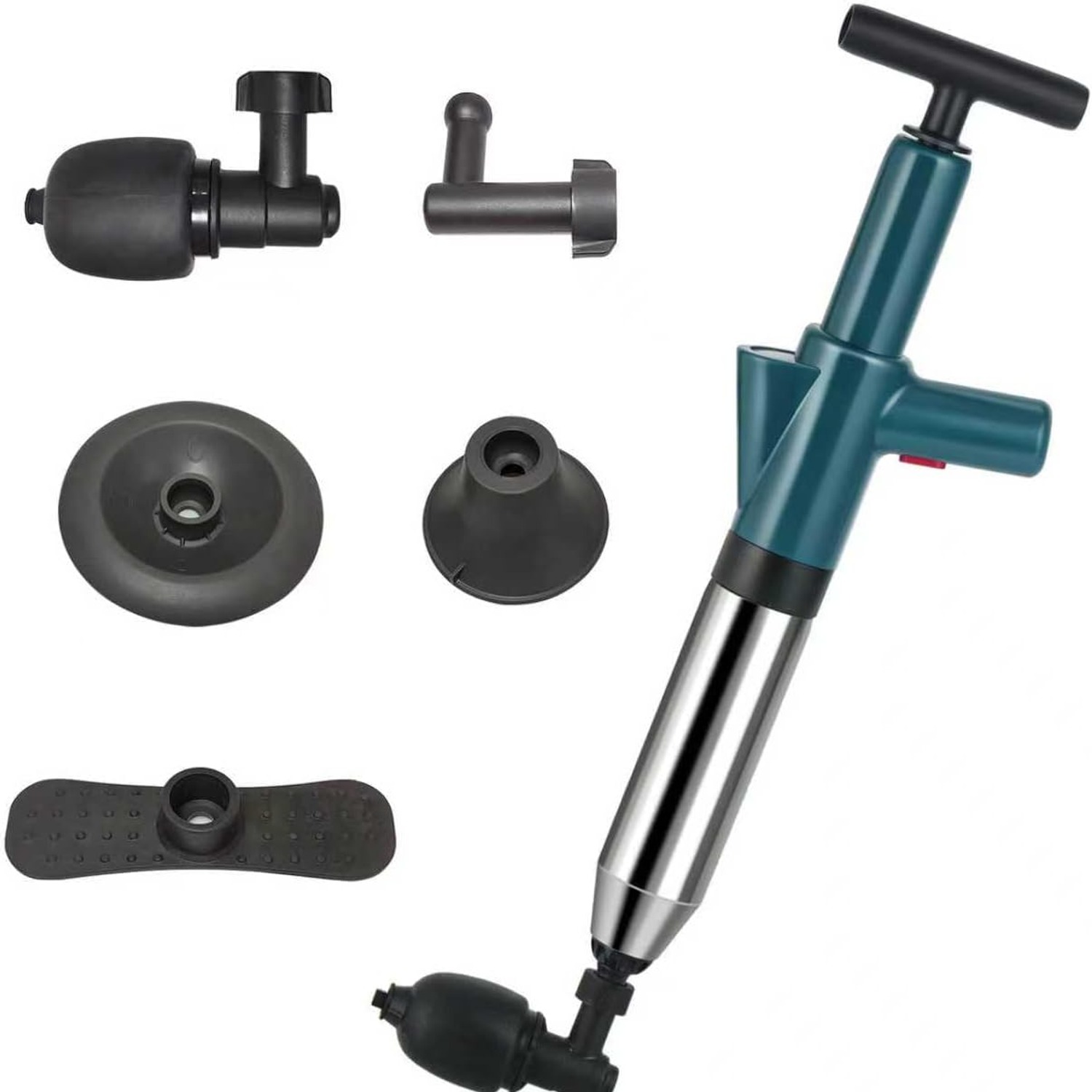
Air Pressure Drain Cleaner Pump with Pressure Gauge and 4 Heads

€37.99 €45.99 Save €8
  • Adjustable 0-8 Bar
  • Built-In Gauge
  • Four Suction Heads
  • Non-Slip Handle

Price: €37.99 €45.99

  • Free tracked delivery across Europe on orders €120+, otherwise a flat €15
  • Pay by card or PayPal, handled by the payment provider
  • 14-day right of withdrawal, plus the two-year legal guarantee
Product specifications
BrandALLILUYAA
Model NumberSTQ03
ColourDark Green
Maximum PressureUp to 120 PSI (0-8 bar adjustable)
Suction Heads Included4
Pressure GaugeBuilt in
Product Dimensions33.95 x 27.5 x 6.9 cm
Item Weight900 g
Batteries RequiredNo
ConditionNew
Weight900 g
Shipping & returns

Tracked delivery to all 27 EU countries. It is free on orders of €120 or more, and a flat €15 below that. We dispatch within one working day, and most orders arrive within 3 to 9 working days from the order date, depending on the country.

If you are a consumer in the EU, the Consumer Rights Directive 2011/83/EU gives you 14 days from the day you receive your order to withdraw for any reason, and a further 14 days to send it back. You may handle and inspect a product as you would in a shop. If it has been used beyond that, we may reduce the refund to reflect the loss in value. We refund the price you paid, including standard delivery. You pay the direct cost of returning it unless the item is faulty.

If it arrives faulty, damaged or not as described, we put it right at no cost to you under the two-year legal guarantee of conformity, Directive (EU) 2019/771, return postage included.

Shipping details · Refunds and returns

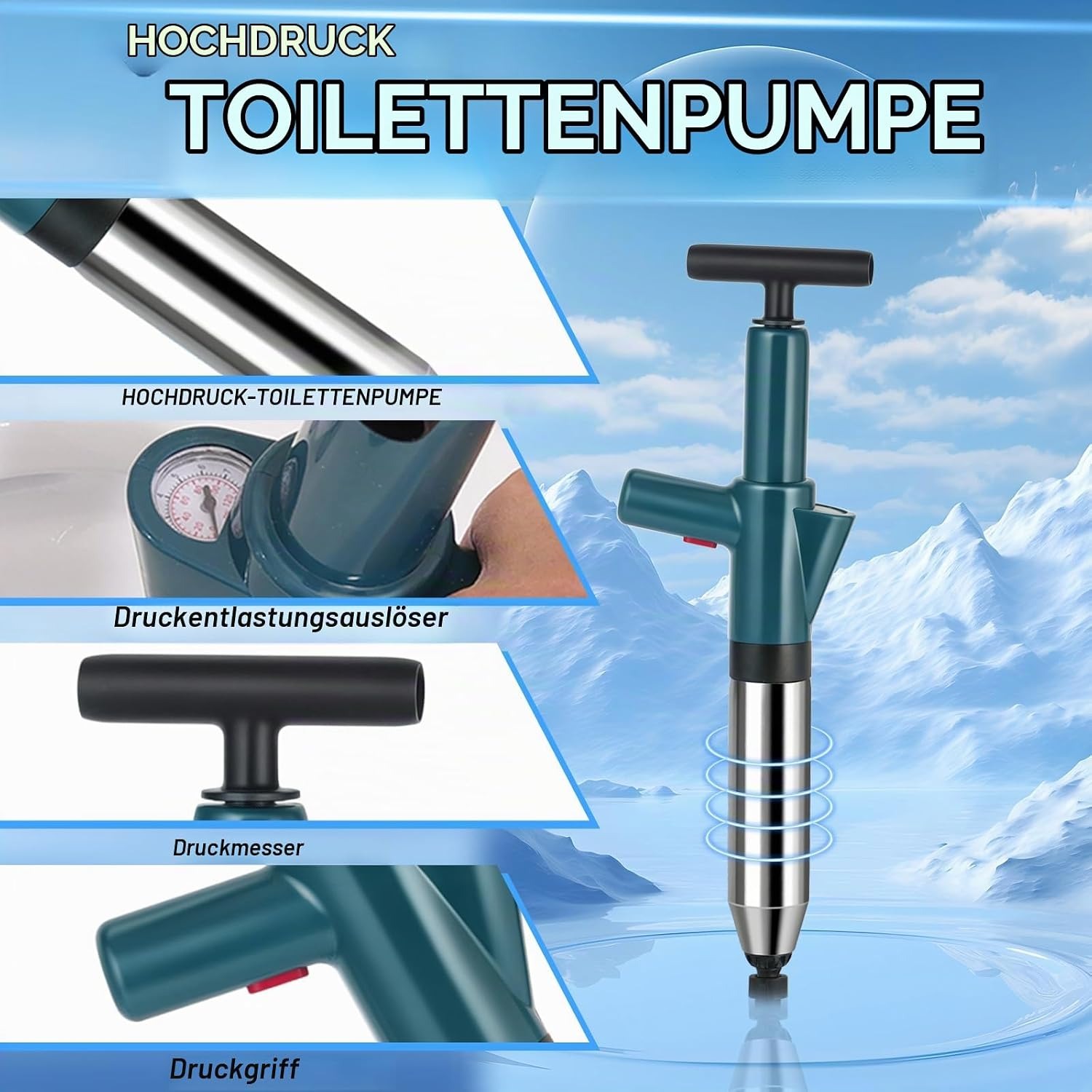
Adjustable 0-8 BarDial the force to suit the drain instead of guessing.
Built-In GaugeWatch the pressure build so you never overdo it.
Four Suction HeadsSeals on toilets, sinks, baths and floor drains.
Non-Slip HandleABS body with a stainless steel outer for a firm hold.

Clear a stubborn blockage in seconds with an air pressure drain cleaner pump that does the hard work for you.

A built-in gauge lets you dial the pressure from 0 to 8 bar, and four interchangeable heads seal against toilets, sinks, baths and floor drains so the blast goes down the pipe instead of back at you.

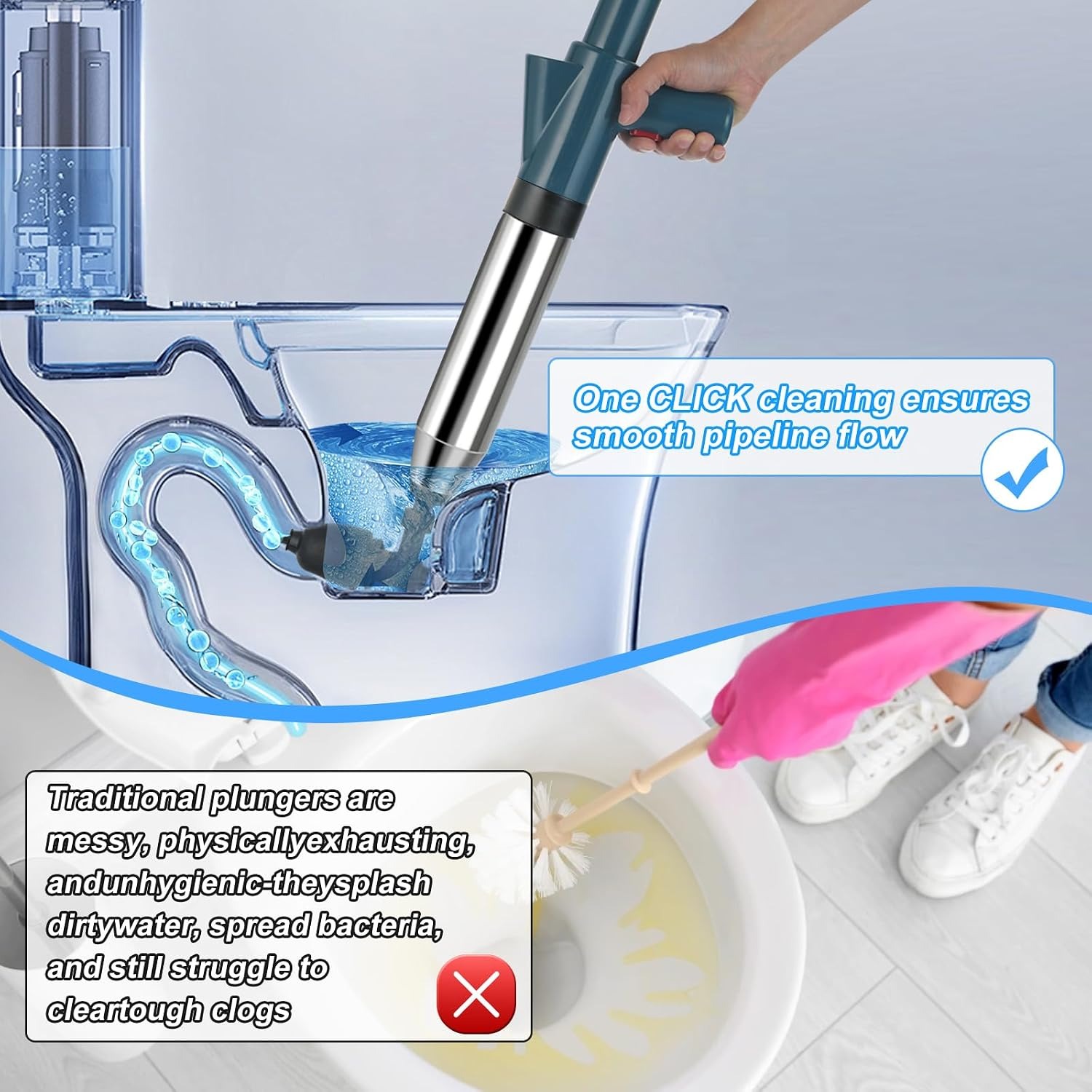
A manual air pressure drain cleaner pump that stores compressed air and releases it into the pipe in one quick burst.

The built-in gauge shows pressure in real time so you can work between 0 and 8 bar with confidence.

Four interchangeable suction heads cover toilets, bathtubs, kitchen sinks, wash basins and floor drains.

The ABS body is reinforced on the outside with stainless steel and finished with an ergonomic, non-slip handle.

No batteries, no power lead and no chemicals, so it is ready whenever a drain backs up.

Air Pressure Drain Cleaner Pump with Pressure Gauge and 4 Heads

Most blockages are not solid plugs. They are soft build-ups of hair, grease, soap and food that slowly narrow the pipe until water stops draining. A rubber plunger pushes water back and forth across that build-up and often just squashes it tighter. This air pressure drain cleaner pump works differently. You pump air into the chamber, press the head against the drain opening, and release the stored pressure in one sharp burst that travels down the pipe and breaks the obstruction apart.

Air Pressure Drain Cleaner Pump with Pressure Gauge and 4 Heads

The pressure gauge is the part that makes it practical for home use. You can see exactly how much force you have stored before you let it go, which means you are not guessing. The supplier guidance suggests roughly 1 to 2 bar for sink and kitchen sink clogs, 3 to 4 bar for toilets, 5 to 6 bar for floor drains and sewer pipes, and 7 to 8 bar only where you genuinely need the extra push. Starting low and working up is almost always the smarter approach.

Air Pressure Drain Cleaner Pump with Pressure Gauge and 4 Heads

Four suction heads ship with the pump, each shaped for a different drain opening. The wide heads suit toilet bowls and floor gullies, while the narrower ones fit basin and bath outlets. A good seal matters more than raw pressure, because any gap lets the air escape sideways instead of travelling down the pipe. Swapping heads takes seconds and there are no tools involved.

Build quality is straightforward and sensible. The body is non-slip ABS plastic with a stainless steel outer section, so it resists corrosion in a damp bathroom and copes with repeated pressurising. The handle is shaped for a two-handed grip, which you will want when you are pumping. At 900 g it is light enough to keep in a cupboard under the sink rather than out in a shed.

There is nothing to charge, plug in or refill. No batteries are needed and no chemicals go down the drain, which is worth something if you are on a septic system or simply do not like pouring caustic liquid into your pipes. It is a tool you buy once and keep, and most households only need it a few times a year.

Not sure yet? That is fine.

A drain part has to fit the drain you have, and you cannot always judge that from a photograph. If you are a consumer in the EU, you have 14 days from the day you receive it to withdraw for any reason under the Consumer Rights Directive 2011/83/EU, and a further 14 days to send it back. You may handle and inspect a product as you would in a shop. If it has been used beyond that, we may reduce the refund to reflect the loss in value. We refund the price you paid, including standard delivery, and you pay the direct cost of return.

If it turns up faulty, damaged or not as described, that is on us. The two-year legal guarantee of conformity under Directive (EU) 2019/771 covers you, and we pay the return postage. Read the full detail on our refunds and returns page, or ask us anything before you order.

Frequently Asked Questions

What is an air pressure drain cleaner pump?

It is a hand-operated tool that stores compressed air inside a chamber and then releases it into a blocked drain in one quick burst. The shock of moving air and water breaks up the clog and pushes it along the pipe. It replaces the push-and-pull action of a traditional rubber plunger.

How is this different from a normal plunger?

A plunger relies on you pushing water back and forth, which often just compresses a soft blockage. This pump stores energy first and then releases it all at once, so the pipe gets a single strong pulse instead of lots of weak ones. It also lets you set the pressure before you fire.

How much pressure does it produce?

It reaches up to 120 PSI, with a working range on the gauge of 0 to 8 bar. You choose how much pressure to build before you release it. Most household blockages clear well below the maximum.

What pressure should I use for a kitchen sink?

The supplier guidance recommends around 1 to 2 bar for sink and kitchen sink blockages. Start at the low end and only increase if the water is still not moving. Sink traps and waste pipes are narrower and more fragile than soil pipes, so restraint pays off.

What pressure should I use for a toilet?

Roughly 3 to 4 bar is suggested for toilet blockages. Make sure the head is pressed firmly into the bowl outlet so the air goes down rather than back up. There should be some standing water in the bowl to help carry the pulse.

What pressure should I use for a floor drain?

Floor drains and sewer pipes usually need more, around 5 to 6 bar according to the supplier guidance. These pipes are wider so the pulse spreads out and loses some punch. Settings of 7 to 8 bar are reserved for genuinely high-pressure situations.

Does it come with a pressure gauge?

Yes, the gauge is built into the pump so you can watch the pressure climb as you work the handle. That removes the guesswork and helps you avoid firing more force than the pipe needs. It is one of the main reasons this design is easier to live with than a plain air blaster.

How many suction heads are included?

Four different heads come in the box. Each is shaped for a particular drain opening, covering toilets, bathtubs, kitchen sinks, wash basins and floor drains. They swap over by hand with no tools.

Which head should I use for a bathtub?

Use the head that most closely matches the diameter of your bath outlet so the rim seals flat against the surround. If your bath has an overflow, cover it with a damp cloth before you fire, otherwise pressure escapes there. A good seal matters more than the exact head size.

Do I need batteries or power?

No. The pump is entirely manual, with no batteries required and no mains lead. That makes it one of the best drain cleaning tool options for places with no nearby socket, like outdoor gullies.

Will it work on hair clogs?

Hair matted with soap is one of the most common bathroom blockages and air pressure usually shifts it well. The burst breaks the mat apart so the pieces wash through. For very dense hair close to the drain opening, pulling it out first with a hook makes the best hair clog remover approach.

Can it clear grease blockages?

It often can, especially if the grease has only partly set. Running hot water down the pipe first softens the build-up and makes the air pulse far more effective. Heavy, fully hardened grease in a long run may need a plumber.

Is it safe for older pipes?

Start at the lowest setting that might work and increase gradually. Old, brittle or badly jointed pipework can be damaged by any high-pressure tool, including this one. If you know the plumbing is fragile or has had leaks, get it checked before using high settings.

Can I use it on a septic system?

Yes. It uses only air and the water already in the pipe, with no chemicals involved, so nothing harmful reaches the tank. That makes it a sensible pick if you want the best drain unblocker that will not upset the bacteria in a septic system.

Does it work on toilets with low water?

It works best when there is some water sitting in the trap, because water transmits the pulse better than air alone. If the bowl is nearly empty, add a jug of water before you fire. Do not overfill, or you may get splashback.

How do I stop water splashing back at me?

Keep the head pressed down firmly and squarely so there is no gap for pressure to escape. Use the lowest pressure that does the job, and stand slightly to one side as you release. Old clothes and rubber gloves are a good idea for toilet work.

The gauge is not moving when I pump. What is wrong?

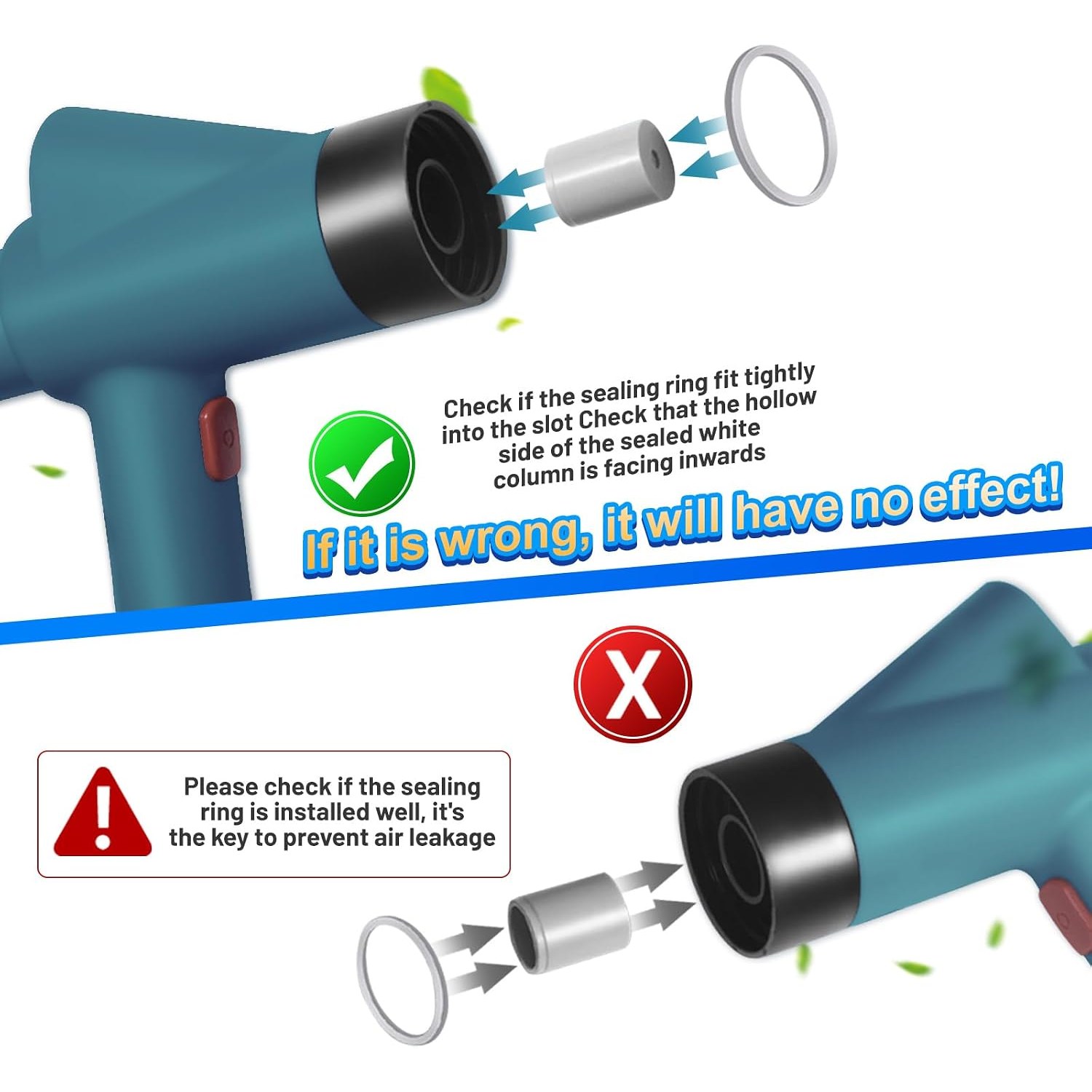
Usually the sealing ring has shifted out of its groove. Open the pump, check the ring is seated properly all the way round, then reassemble and try again. A ring that is twisted or pinched lets air leak out faster than you can pump it in.

What is it made from?

The body is non-slip ABS plastic reinforced on the outside with stainless steel, which resists corrosion in damp bathrooms. The specific material of the suction heads is not stated by the maker. The handle is shaped for a comfortable two-handed grip.

What colour is it?

It is dark green. Colour is the only finish listed for this model in the supplier details.

How big and heavy is it?

The product measures 33.95 x 27.5 x 6.9 cm and weighs 900 g. That is small enough to keep in a bathroom cupboard or a toolbox rather than needing shed space. The weight is manageable for most adults to operate one-handed on the handle.

How many times can I use it?

There is no limit beyond ordinary wear. You can pressurise and fire it as many times as a job needs, letting the chamber refill between shots. Rinsing it after each session keeps the seals in good condition for years.

Do I need any other tools with it?

For most jobs, no. A bucket, a cloth for the overflow and a pair of gloves make things tidier. A drain hook or snake is a useful companion for removing hair you can reach by hand.

How do I clean it after use?

Rinse the body and the head you used with clean water, then wipe everything dry before storing. Release any leftover pressure first. Do not put it away wet, since trapped moisture is hard on seals.

How should I store it?

Keep it dry, out of direct sunlight and with no pressure left in the chamber. Storing the heads loose in a bag beside the pump stops them being squashed out of shape. A cupboard under the sink works perfectly well.

Can one tool handle the whole house?

Yes, that is the point of the four heads. The same pump covers the kitchen sink, the bathroom basin, the shower, the bath, the toilet and outdoor floor drains. For most homes it is the best plumbing tool for home drain problems you can keep in one place.

Is it suitable for someone with limited strength?

Pumping takes some effort, but you can build pressure slowly over several strokes rather than all at once. The gauge means you can stop as soon as you reach the setting you need, which avoids over-pumping. Lower settings for sinks require much less work than the top of the range.

Will it damage a toilet bowl?

Used at the recommended 3 to 4 bar with the head seated correctly, it should not. Problems arise when people jump straight to maximum pressure on a fixture that does not need it. Build up gradually and stop as soon as the water clears.

Does it make a mess?

Properly sealed, it is tidier than repeated plunging. Any mess usually comes from a poor seal or from firing at too high a setting. Lay a towel around the fixture the first time until you get a feel for it.

How is it delivered and can I return it?

It ships in protective packaging with the heads included. If it arrives damaged or faulty, contact us with your order number and photos and we will sort out a replacement or refund. Standard return terms for your storefront apply, so check the delivery and returns page for timings.

What if it is not right for my situation?

If the tool does not suit your plumbing or does not do what you expected, get in touch while it is unused and in its packaging and we will arrange a return. Some blockages sit far down the line or involve collapsed pipework, and no handheld tool will fix those. Tell us what happened and we will point you to a better option if we have one.

How to Choose and Use an Air Pressure Drain Cleaner Pump

6 min read Drains Company

The problem with a slow drain

Nobody thinks about drains until the water stops going down. Then it becomes the only thing in the house that matters. You get the sink filling while you rinse a plate, the shower tray ankle deep by the time you are done, or the toilet rising instead of falling after a flush.

Most of these blockages are not dramatic. There is rarely a lost toy or a brick in the pipe. What you usually have is a soft plug of hair, soap scum, cooking fat, coffee grounds and bits of food that has built up over months. The pipe narrows a little at a time until one day there is not enough space left for the water.

That matters because it changes what works. A rubber plunger pushes water one way, then pulls it back. On a soft blockage, that often just packs the material tighter against the pipe wall. You feel like you are making progress because the water moves a bit, then it stops again an hour later.

How air pressure clears a pipe

An air pressure drain cleaner pump takes a different route. You pump air into a sealed chamber until the gauge reads the pressure you want. Then you seat the head over the drain and release everything in one burst.

The pulse travels down the pipe and hits the blockage from one side with real force. Because the burst is instant rather than gradual, it tends to break the plug apart instead of compressing it. The water sitting in the trap carries the energy along, which is why these tools work better when there is some water in the system.

The whole thing takes seconds. Pump, seal, fire, check. If the water drains away, you are finished. If it does not, you add a bit more pressure and go again.

Why the gauge matters more than the maximum

Plenty of air drain tools advertise a big headline pressure figure. This one reaches up to 120 PSI, which is plenty. But the number that actually changes how you use it is the gauge on the body, which reads from 0 to 8 bar.

Without a gauge you are working blind. You pump until your arms say stop and then fire whatever you happened to build. On a kitchen waste pipe that is a bad habit, because those pipes are narrower and the joints are not designed for much shock.

With the gauge you can match the force to the fixture. The supplier recommends roughly 1 to 2 bar for sinks and kitchen sinks, 3 to 4 bar for toilets, 5 to 6 bar for floor drains and sewer pipes, and 7 to 8 bar only when the situation genuinely calls for it. Treat those as starting points, not targets. The best air pressure plunger technique is to begin lower than you think you need and step up one notch at a time.

Getting the seal right

This is where most people go wrong on the first attempt, and it has nothing to do with pressure.

Air follows the easiest path. If there is any gap between the head and the drain surround, the burst escapes sideways into the room instead of down the pipe. You get a loud noise, a wet floor and a drain that is still blocked.

Four heads come with the pump, each shaped for a different opening. Pick the one that sits flattest against your fixture, not the biggest one. Press down firmly with both hands before you release. On a bath or basin, cover the overflow with a wet cloth, because that opening is a direct escape route for the pressure.

A little water around the rim helps the seal grab. If you are working on a toilet, make sure there is water in the bowl. On a dry floor gully, pour a jug in first.

Which drains it suits

The four heads cover the usual list. Toilets, bathtubs, kitchen sinks, wash basins and floor drains are all within range. For a typical house that is every drain you have.

It is a good fit if you want the best sink unblocker that does not involve pouring caustic chemicals down the pipe, or if you are on a septic tank and do not want to kill the bacteria doing the work. Only air and the water already in the system go into the pipe.

It is also worth having if you rent out property or manage a holiday let, where a blocked toilet on a Sunday evening is an expensive phone call. The tool pays for itself the first time you avoid a call-out.

Where it is less suited is deep structural problems. If a pipe has collapsed, if roots have grown in from outside, or if the blockage sits thirty metres down a shared line, no handheld tool will reach it. Signs of that include several fixtures backing up at once, gurgling from a drain you are not using, or a smell outside near an inspection chamber. Call someone with a camera at that point.

Using it without making a mess

Wear gloves and old clothes the first couple of times. Lay a towel around the base of the fixture. Stand slightly to one side as you release rather than directly over the opening.

Work in stages. Fire once at a low setting, then look. If the water level drops at all, that is progress and another shot at the same setting will often finish it. If nothing at all happened, check your seal before you reach for more pressure, because nine times out of ten the seal is the issue.

Run hot water down the pipe afterwards for a minute or two. That flushes the broken-up debris further along so it does not settle again a few inches down.

For hair in a shower or bath, it helps to pull out what you can reach with a hook first. The pump then only has to deal with what is deeper in the pipe.

Looking after it

Rinse the body and the head you used under clean water, then dry everything before it goes back in the cupboard. Make sure no pressure is left in the chamber when you store it.

The one part worth checking is the sealing ring. If you pump and the gauge does not climb, the ring has almost certainly slipped out of its groove. Open the pump, reseat the ring all the way round so it lies flat, and close it again. That fixes the problem in nearly every case.

Store it somewhere dry and out of strong sun. Rubber and sunlight are a poor combination over the long run.

At 900 g and just under 34 cm long, it fits in the cupboard under the sink alongside the cleaning bottles. Keeping it where the problem happens means you actually use it.

The short version

A plunger works by moving water back and forth. This works by storing air and releasing it in one hit, which is far better at breaking up the soft, matted blockages that cause most household drain trouble.

The gauge is the feature that makes it sensible for everyday use. Set 1 to 2 bar for sinks, 3 to 4 for toilets, 5 to 6 for floor drains, and keep the top of the range for the jobs that really need it. Four heads cover every drain in a normal house, and nothing needs charging or plugging in.

Get the seal right, start low, and work up. Most blockages give way long before you reach the maximum.

Browse the shop

Got a drain that will not clear?

Keep this pump under the sink and handle the next blockage yourself, without chemicals or a call-out fee.

Ask us a question

Page summary

The ALLILUYAA air pressure drain cleaner pump (model STQ03) is a manual, hand-pumped drain unblocker that stores compressed air and releases it in a single burst to clear clogs in toilets, bathtubs, kitchen sinks, wash basins and floor drains. It reaches up to 120 PSI and has a built-in pressure gauge with an adjustable 0-8 bar working range, with suggested settings of 1-2 bar for sinks, 3-4 bar for toilets and 5-6 bar for floor drains. Four interchangeable suction heads are included. The body is non-slip ABS plastic reinforced with stainless steel and fitted with an ergonomic handle. It is dark green, weighs 900 g and measures 33.95 x 27.5 x 6.9 cm. No batteries or power source are required. Material of the suction heads and country of origin are not specified by the maker.