
The complete guide
How to Choose a Pop Up Sink Plug with Strainer
The small part that causes the most annoyance
Nobody buys a house and thinks about the basin plug. Then one morning you fill the sink to shave and by the time you have finished, half the water has quietly disappeared. Or worse, the water that should be disappearing is not, because a decade of hair has built up in the trap and the basin now drains at the pace of a slow puncture.
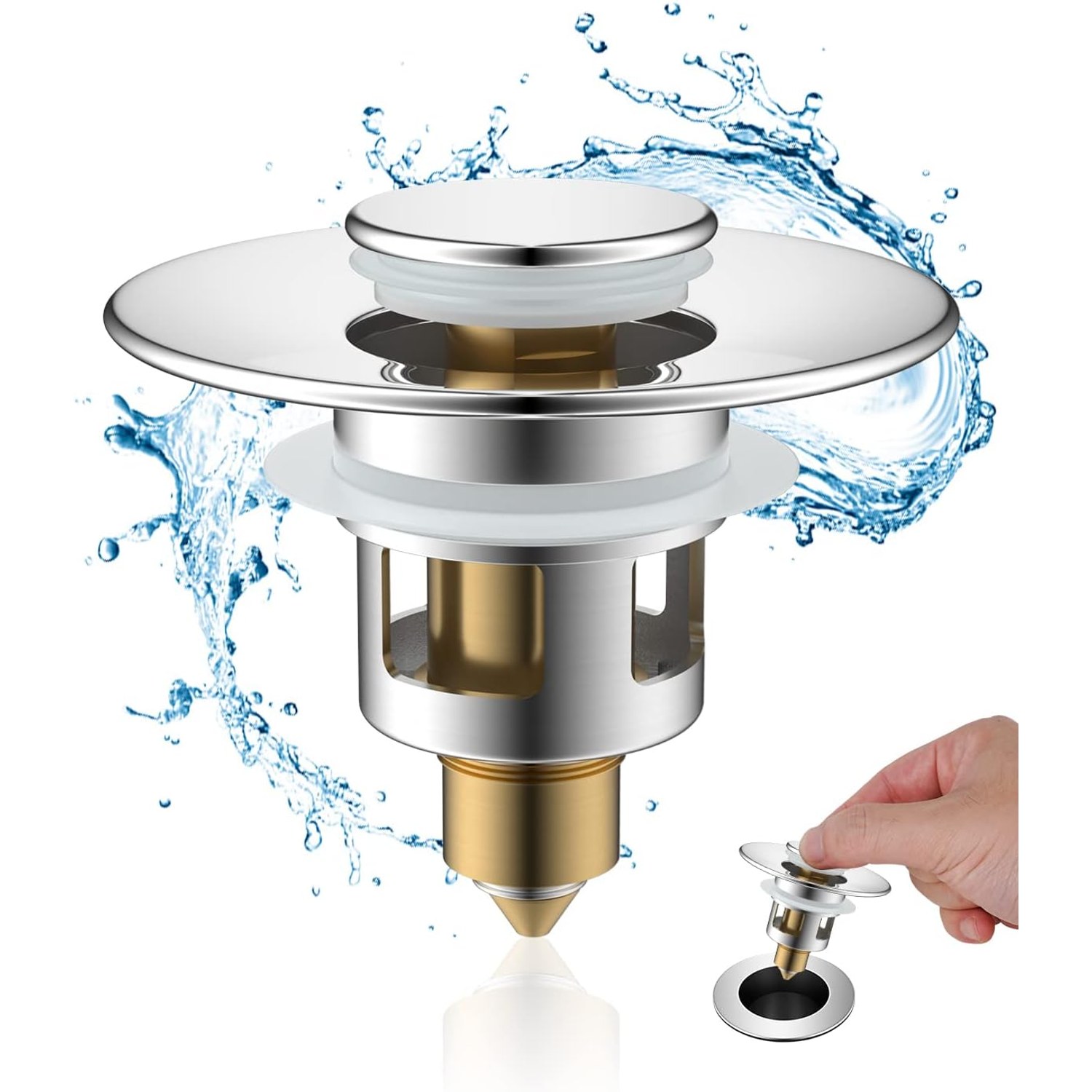
Both problems trace back to the same little component. A plug that has lost its seal, and a drain with nothing stopping hair from going down it. A pop up sink plug with strainer fixes both at the same time, and it does it without a plumber's visit or a trip under the basin with a torch between your teeth.
How a press-action plug works
Older basins used a pivot rod. You lift a lever behind the tap, a bar under the sink pushes up on the plug stem, and the plug rises. It works until the linkage corrodes or slips out of adjustment, at which point the plug either will not seal or will not lift.
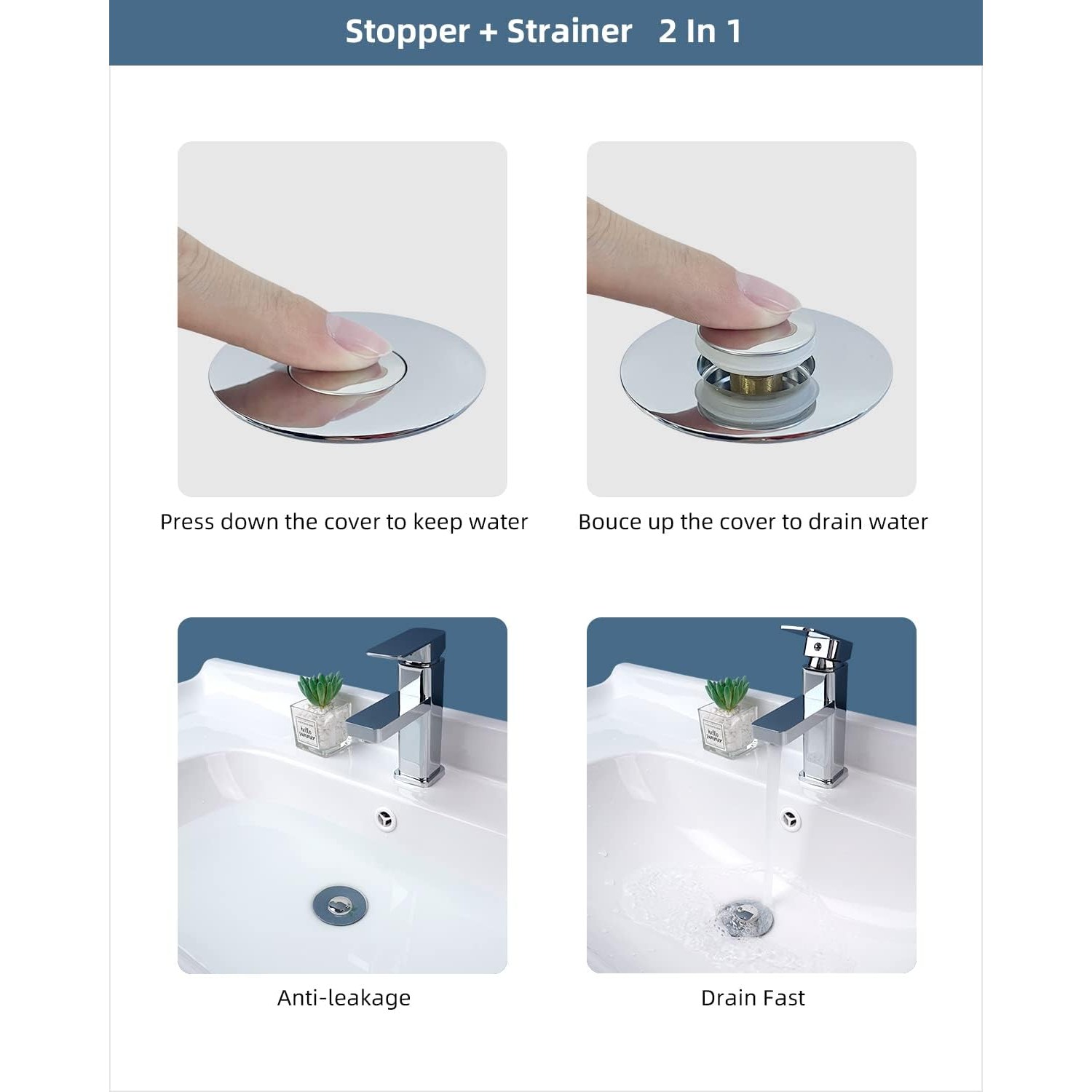
A press-action plug does away with all of that. The whole mechanism lives inside the plug body. Press the cap down and a spring-loaded catch holds it in the closed position against the drain seat. Press it again and the catch releases, the spring pushes the cap back up, and the water runs away. Nothing passes through the basin wall, nothing needs adjusting, and nothing hangs under the sink waiting to seize.
That self-contained design is also why fitting takes a minute. You lift out whatever is in the drain now, wipe the seat, and drop the new plug in.
What the strainer actually does
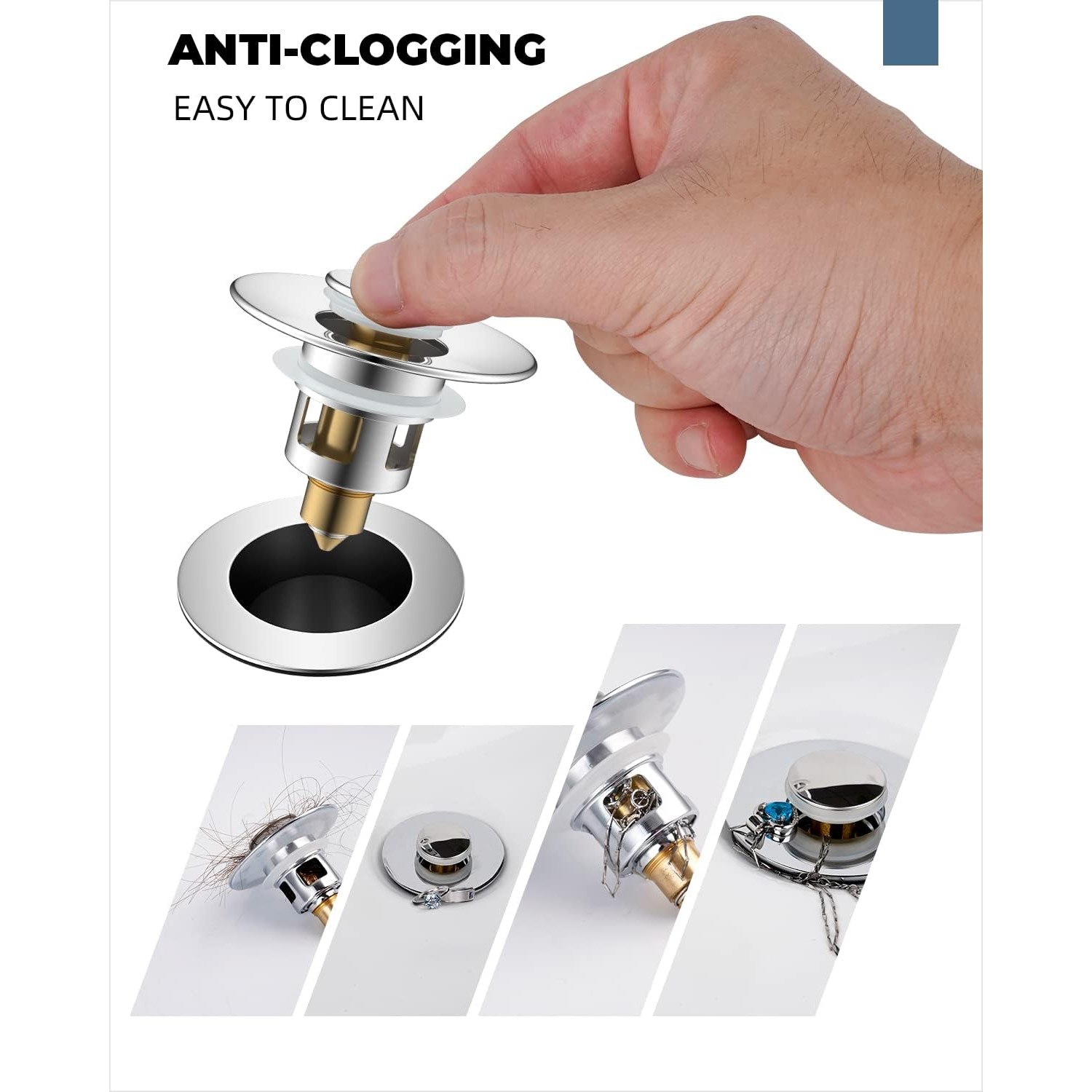
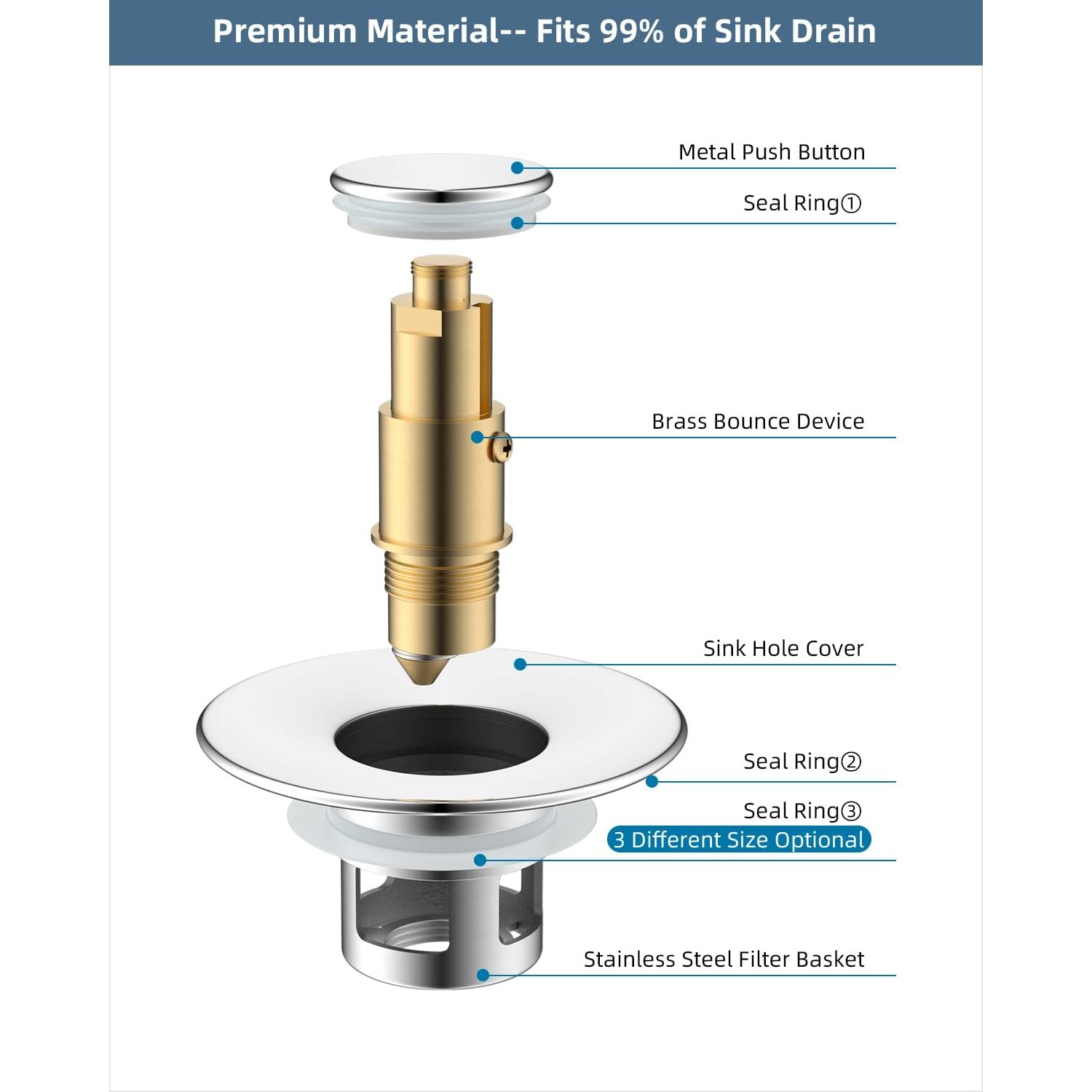
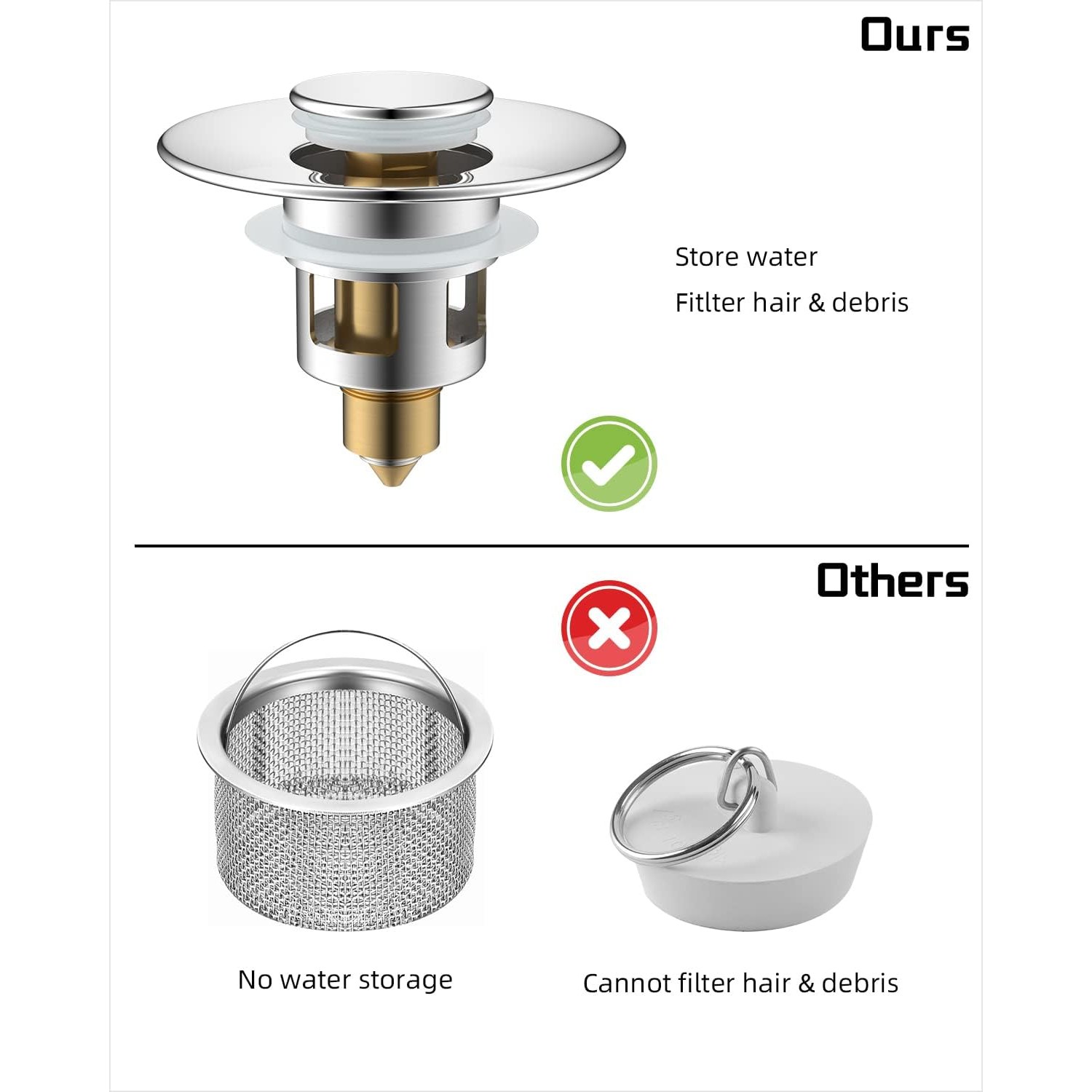
The filter basket is the part people end up most grateful for. It sits inside the plug body, below the cap and above the pipe. Hair, soap fragments and the odd bit of grit land in the basket instead of slipping past into the trap.
The reason that matters is simple. Hair is the root cause of most blocked bathroom basins. It wraps around itself, catches soap residue and toothpaste, and gradually forms a plug of its own in the bend of the pipe. Once that happens you are into drain rods, caustic cleaner or a call-out charge.
With a hair catcher for bathroom sink use, the mess stays where you can see it and reach it. Lift the basket, tip it in the bin, rinse under the tap, drop it back. Ten seconds, once a week, and the problem never builds.
Sizing, which is the one thing worth getting right
Basin drain openings are not standardised in the way you might hope. Different manufacturers, different decades and different basin styles all vary. That is why this plug ships with a set of rubber rings.
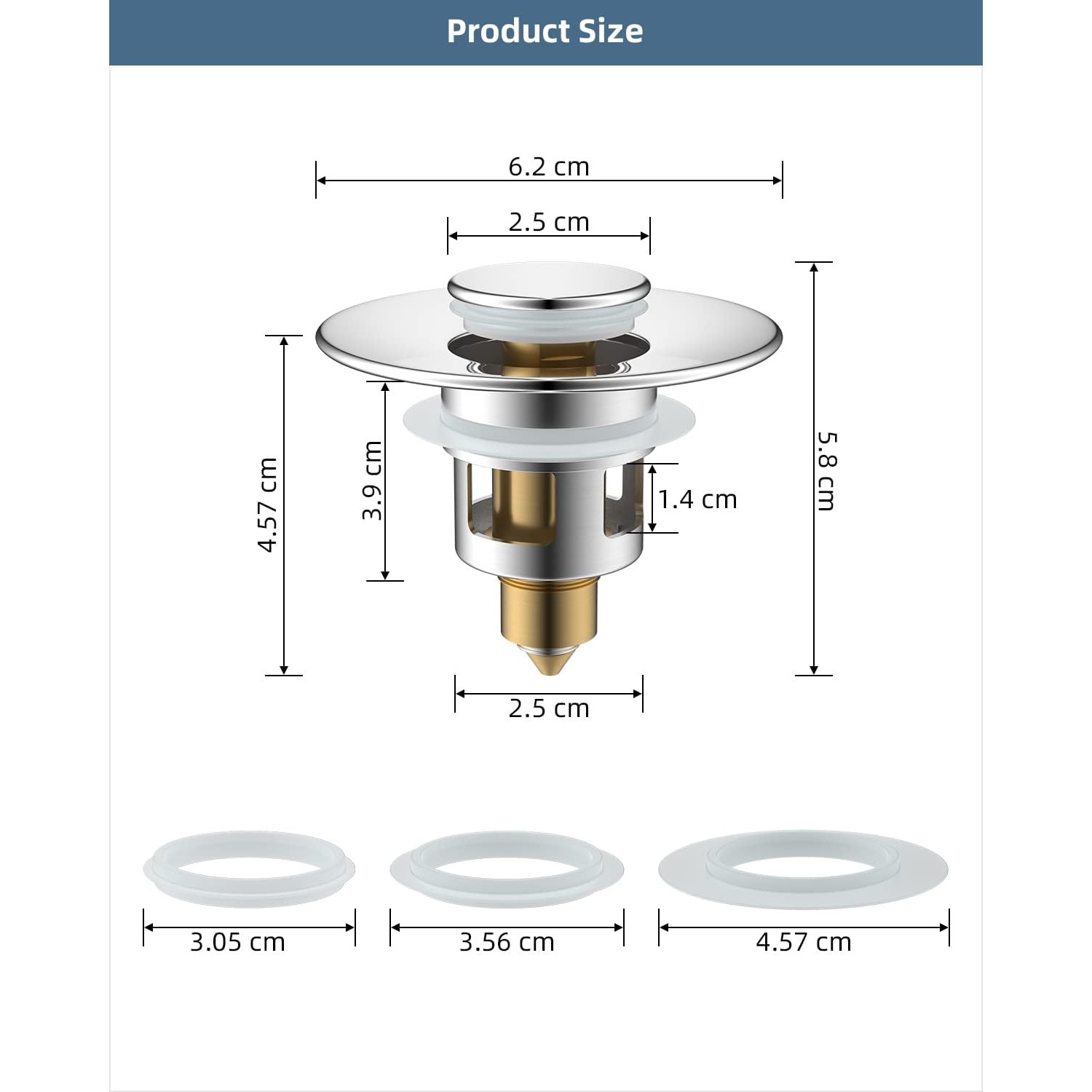
The plug covers inner diameters of roughly 25mm to 46mm. The rings let you build up the outside of the plug body until it sits snug in your particular hole. Fewer rings for a tighter opening, more rings for a wider one.
To measure, take out the existing plug and measure straight across the inside of the metal drain opening. Not the ceramic rim, and not the outside edge of the chrome collar. The inside, where the plug actually seats. Write the number down before you order and you remove nearly all the risk of a mismatch.
If your measurement comes in under 25mm or over 46mm, this is not the plug for you, and no amount of rings will change that. A loose plug cannot seal, and a plug that is too wide will never sit down into the seat.
Materials and why brass turns up so often in bathrooms
The body of this plug is brass, finished in silver. Brass is used across plumbing for a straightforward reason. It handles constant wetting and drying without the problems that catch out cheaper metals, and it machines well enough to make a precise seat.
The parts that do the sealing are rubber. There is a pad under the cap that makes contact with the drain seat, and the sizing rings around the body. Rubber is the right material for a seal because it has a bit of give, which lets it conform to small imperfections in an old drain opening.
Keep that in mind when you clean. Bleach and strong drain products are hard on rubber. They make it brittle, and brittle rubber is exactly what causes a plug to start leaking. Warm soapy water is genuinely all that is needed.
Who this suits
Renters get a lot out of it. Nothing is cut or drilled, the original plug goes back in a drawer, and the whole thing reverses when you move out. For a few minutes of work you get a basin that holds water properly and a drain that stops blocking.
Families with long hair in the house are the other obvious group. If you have ever pulled something horrifying out of a bathroom trap, you already understand the value of an anti clog bathroom drain plug. The basket means that mess never makes it past the plug.
It also suits anyone who has inherited a basin with a broken pop-up lever. Rather than dismantling the linkage, you simply remove whatever is left and fit a self-contained plug in its place.
Fitting it, step by step
Start by taking the old plug out. Some lift straight away. Some with a pivot rod need the rod unscrewed from behind the basin first, which is usually a knurled nut you can turn by hand.
Wipe the drain seat with a cloth. Old soap residue and limescale on the seat are a common reason a new plug does not seal, and thirty seconds of wiping saves a lot of head scratching later.
Test the fit without rings first. If the plug drops in loose, add a ring and try again. You want it snug enough that it does not rattle but not so tight that you have to force it.
Press the cap down and fill the basin a couple of centimetres. Leave it five minutes. If the level holds, you are done. If it creeps down, lift the plug, check the pad is seated flat and the seat is clean, and try again.
Living with it
Day to day there is almost nothing to think about. Leave the cap up and the basin drains while the basket catches debris. Press it down when you want to fill up.
Once a week, lift the basket and empty it. The best time to do this is when you are already cleaning the basin, so it becomes part of a routine rather than a separate chore.
Every few months, have a quick look at the rubber rings. If one has shifted, reseat it. If the seal starts letting water past and cleaning the seat does not fix it, that is usually the rubber telling you its time is up.
The short version
A basin plug is a small part doing a job you rely on every day. When it stops sealing, or when the drain behind it starts to clog, the fix does not need to involve pipework.
This plug presses down to hold water and presses again to release it. The basket inside catches hair before it becomes a blockage. The supplied rings let it sit properly in drain holes between about 25mm and 46mm. It is brass, it is 6.2cm across, and it goes in without tools.
Measure your drain hole, order the plug, and spend two minutes fitting it. Then forget about it, which is exactly what you want from a basin plug.