
The complete guide
Choosing a Stainless Steel Drain Cover That Actually Keeps Working
The problem nobody notices until it rains
Most drain covers get ignored. They sit in a courtyard or beside a back step, half covered in leaf litter, doing a job that only becomes visible when they stop doing it. Then there is a heavy shower, the water backs up across the paving, and suddenly you are out in the rain with a screwdriver trying to lever off a rusted grate.
The usual culprit is not the pipe. It is what got into the pipe. Leaves, bark chips, seed pods, cigarette butts, bits of plastic. All of it washes toward the lowest point in a yard, and if the cover has rusted through or gone missing, straight down it goes. Once debris builds up in a bend, clearing it is a job for a hose and a lot of patience.
A good square floor drain cover solves this at the top of the system. Debris lands on the grate where you can see it. You sweep it off, and the water keeps moving. It is a cheap bit of hardware that saves an expensive problem.
How this cover works
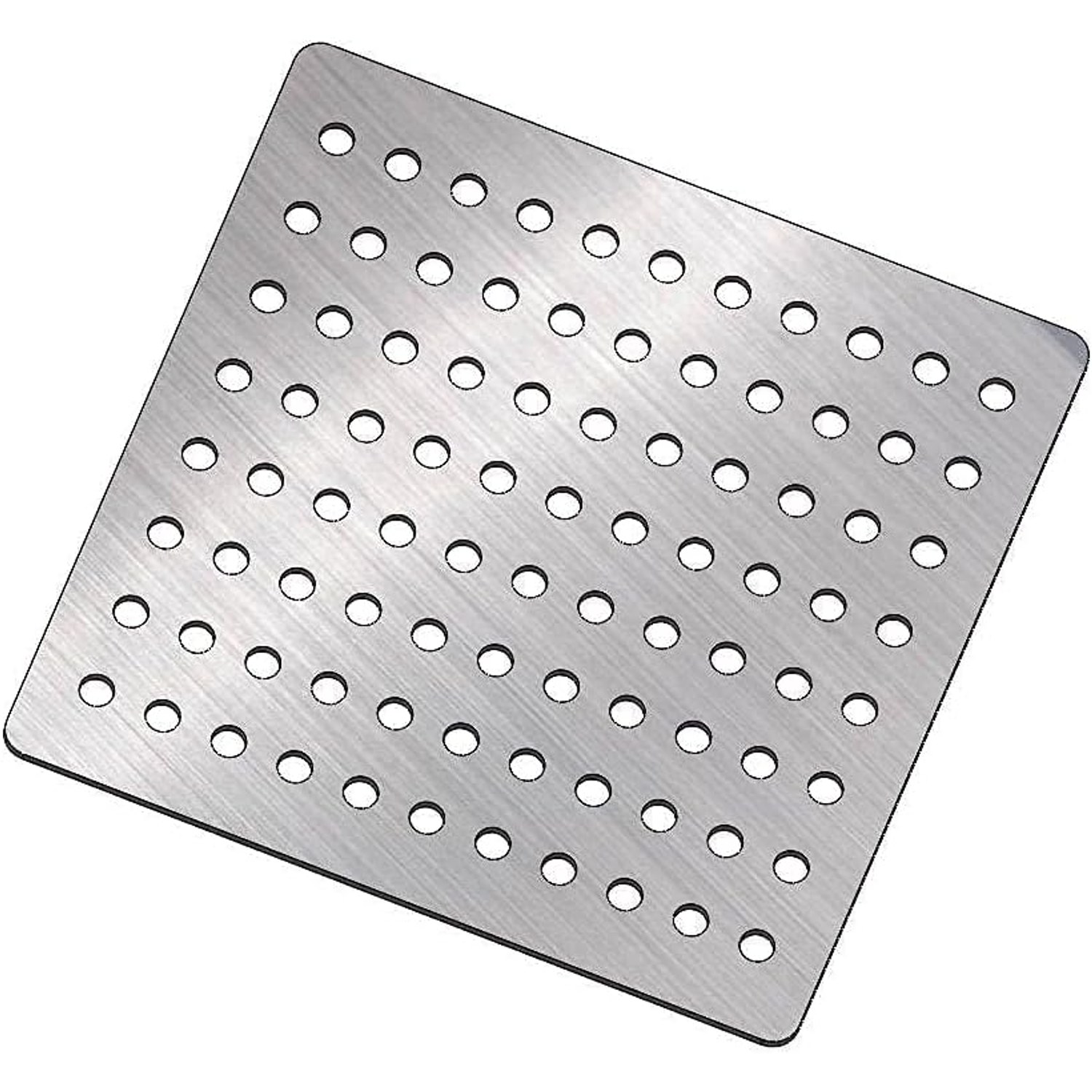
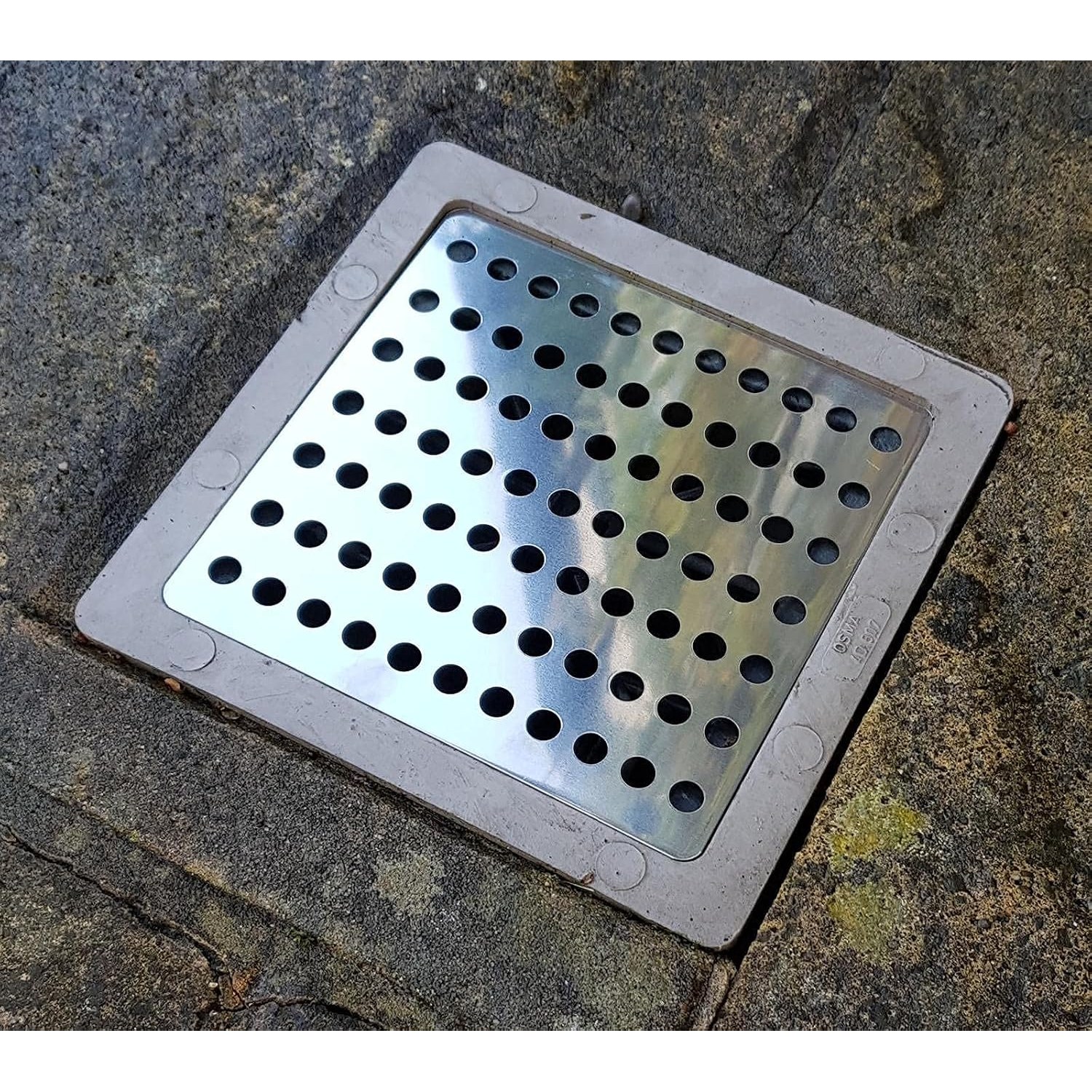
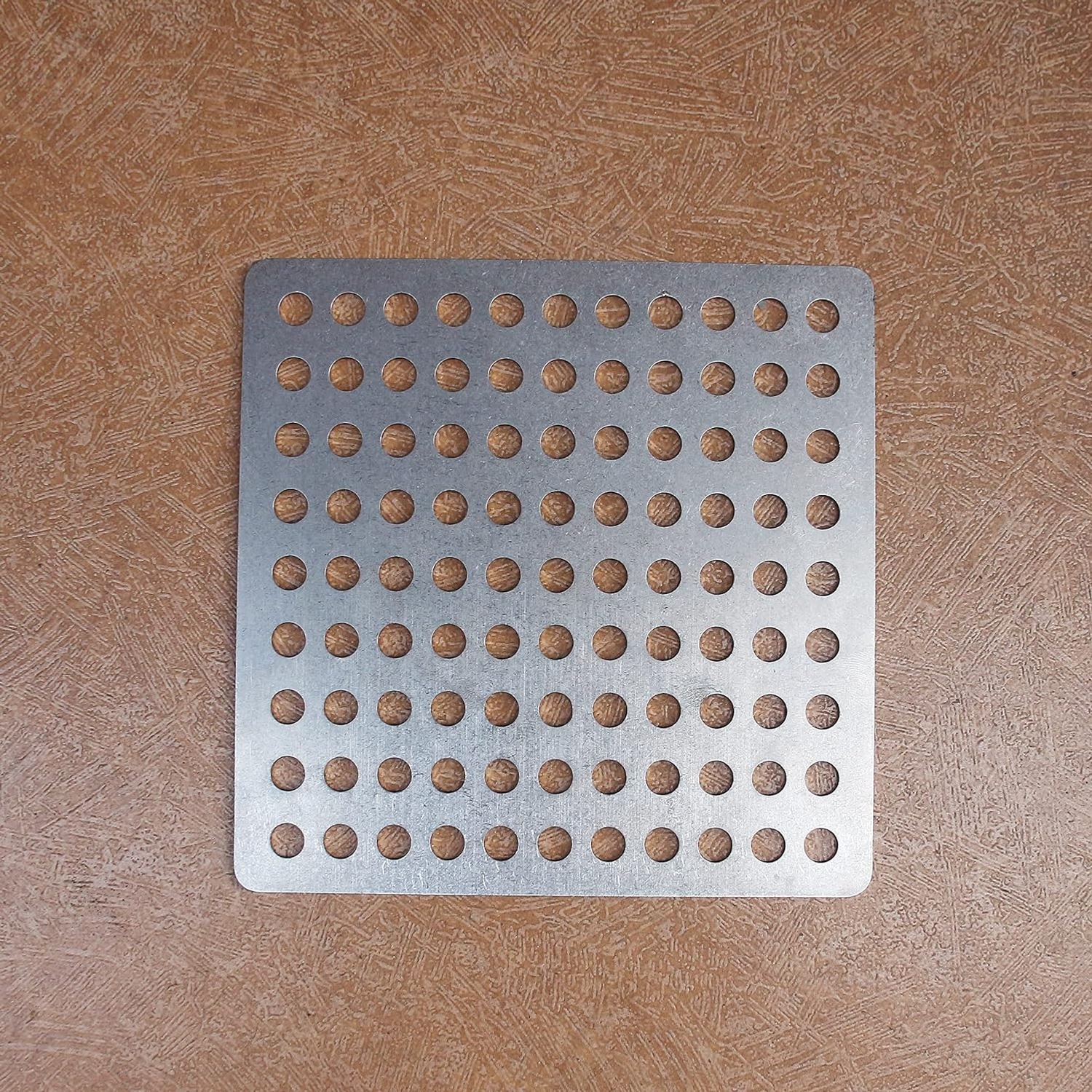
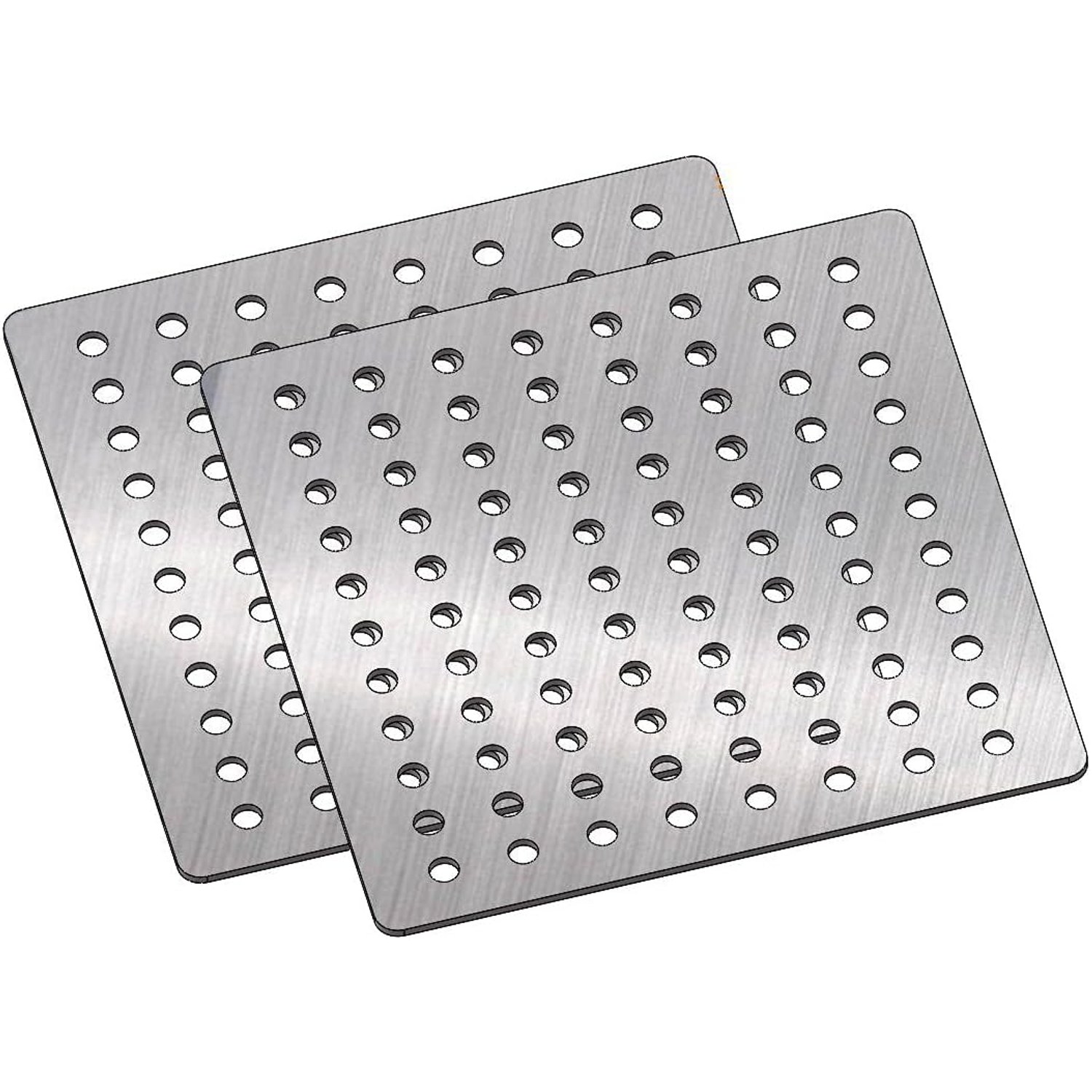
The design here is straightforward. A flat square of stainless steel, 15 x 15cm, with 99 holes drilled across the face. Each hole measures 8mm. That size is the key number. Big enough that rainwater pours through without ponding, small enough that anything the size of a leaf or a twig stays on top.
Hole count matters too. Ninety-nine openings across a 15cm square gives plenty of total open area. A grate with a few wide slots can shift the same volume of water, but it lets much more rubbish pass. A grate with tiny pinholes blocks debris well but floods when the rain really comes down. Ninety-nine 8mm holes lands in the middle of that trade-off, which is where most home drains want to be.
The material thickness is 1.5mm. That is thin enough to sit almost flush with surrounding pavers and tiles, so it does not become a trip hazard or snag a broom. It is still solid steel, not a pressed foil. At 196 grams, the cover has enough weight to stay settled in position but lifts out with one hand when you want to rinse it.
Why stainless steel is worth it here
Drain fittings live in the worst conditions in a house. Constant moisture, grit, sun, foot traffic, and in coastal areas a steady dose of salt in the air. Ordinary steel covers painted black look fine for a season or two. Then the paint lifts, the rust starts at the edges, and you get orange staining bleeding onto the paving around the drain. That staining is often harder to remove than the cover was to replace.
Stainless resists that. The chromium in the alloy forms a protective layer that repairs itself when scratched, which is why stainless cutlery and sinks survive decades of use. A stainless drain cover will not weep rust into your concrete. It keeps looking like a deliberate part of the space rather than a neglected one.
Plastic covers are the other common option. They are cheap and they do not rust, but they go brittle under UV. Leave one in full sun for a few summers and it cracks the first time someone steps on it awkwardly. Steel does not have that failure mode.
The finish on this one is smooth with no burrs on the edges. That sounds like a small detail until you are kneeling on wet paving, fishing out a grate full of sludge with bare hands. Smooth edges make maintenance a two-minute job instead of something you keep putting off.
Where it suits
The 15 x 15cm square is a common size, which is why it turns up in so many places. Garden drains at the bottom of a slope. Courtyard outlets. Driveway channels. Sewer inlets on older properties. Balcony drains in apartment buildings. Laundry floor wastes. Garage and workshop floors where you hose down regularly.
Indoors it works just as well as out. The silver stainless finish sits neatly against tile and polished concrete, and it does not discolour from detergent or mopping. People fitting out a laundry or a wet room often want something that looks intentional rather than utilitarian, and a clean square of brushed steel does that job quietly.
One thing to be honest about: this is a cover for normal foot traffic. No load rating is given for it. If your drain sits where a car, a trailer or a loaded wheelbarrow crosses regularly, you want a heavy-duty grate designed and rated for that. Using a 1.5mm cover under a vehicle wheel is asking for a bent piece of steel and a damaged drain.
Getting the fit right
This is where most drain cover purchases go wrong, so take two minutes with a tape measure.
Measure the opening itself, not the old cover. Old covers warp, and a bent grate can read 2cm bigger than the hole it sits over. Measure both directions, because drains that look square are sometimes slightly rectangular.
Then look at how the cover is meant to sit. Some drains have a recessed lip or shoulder built in, designed for the cover to drop into so the top finishes flush with the paving. Others are just a plain hole, and a cover has to rest on the surrounding surface. For the first type, you need the cover to be slightly smaller than the outer rim and large enough to span the inner opening. For the second, you need the cover to be comfortably bigger than the hole with good overlap on all sides.
If your measurements land close to 150mm, this cover is worth a look. If you are 10mm or more off in either direction, go hunting for a size that matches. A cover that is slightly too small can tip and fall straight in, which is a genuinely annoying way to lose a drain cover.
Keeping it working
Maintenance is the part people skip, and it is also the part that determines whether a drain cover does its job for years or clogs up by the second autumn.
The routine is simple. Lift it out, tip off the leaves, rinse it under a hose or tap. If the holes have gone green or furry with algae, a soft brush and warm soapy water will clear them. Dry it off with a cloth and the steel keeps its shine. The whole thing takes less time than making a coffee.
Frequency depends on what is around. Under a deciduous tree, check it weekly from the first leaf drop through to midwinter. In a sheltered spot with nothing overhanging, a monthly glance is plenty. The thing to watch is the surface of the grate. If you cannot see steel between the debris, water is not getting through.
Two things to avoid. Skip the steel wool, because the loose steel particles it leaves behind will rust on the surface and make it look like the stainless has failed when it has not. And go easy on bleach and strong scouring powders, which can dull the finish over time.
In coastal areas or near a pool, give it a plain freshwater rinse now and then. Salt and chlorine sitting on any stainless surface for long stretches will eventually leave marks.
The short version
A drain cover is a small purchase with an outsized effect on how a yard or wet area behaves. This one is a 15 x 15cm square of stainless steel, 1.5mm thick, with 99 drilled holes at 8mm each. It filters out the leaves and grit that block drains, it resists the rust that kills painted steel covers, and at 196 grams it lifts out easily when it needs a clean.
Measure your opening first. Match the square footprint. Then rinse it off a few times a year and more or less forget about it, which is exactly what a drain cover should let you do.