Europe Drains Company
Company
Shop By Category
T&Cs
Shop Online
  • Size, material and fit listed
  • Free tracked delivery across Europe over €120
  • 14-day returns

Pressure Washer Pipe Cleaning Hose 10m | Drain jetter hose | pipe cleaning hose for pressure washers

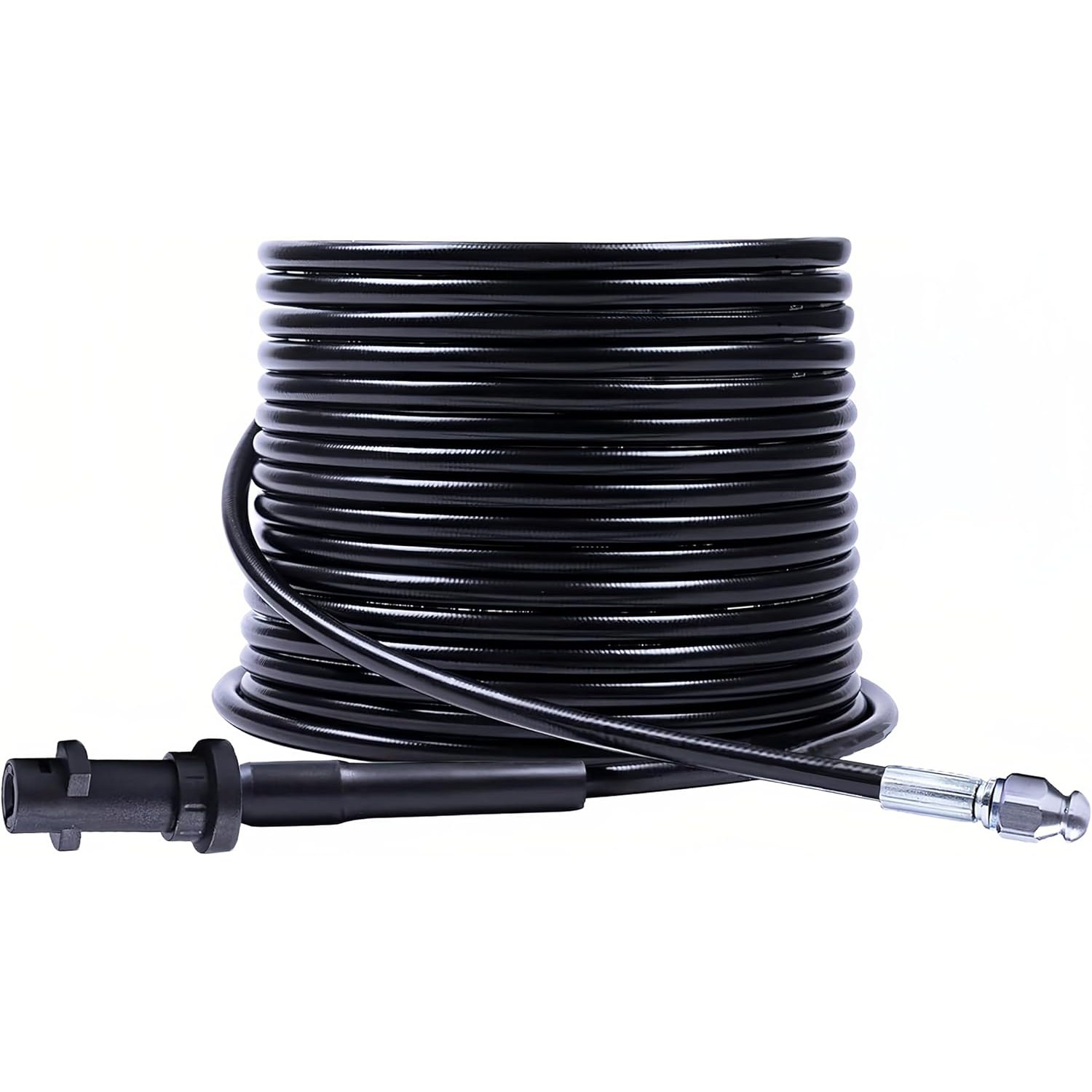
10m Pressure Washer Pipe Cleaning Hose with Jetter Nozzle

€36.99 €43.99 Save €7
  • Forward and Reverse Jets
  • 10 Metre Reach
  • Rated to 180 Bar
  • Swappable Parts

Price: €36.99 €43.99

  • Free tracked delivery across Europe on orders €120+, otherwise a flat €15
  • Pay by card or PayPal, handled by the payment provider
  • 14-day right of withdrawal, plus the two-year legal guarantee
Product specifications
Item Length10 metres
Maximum Pressure180 bar
Outside Diameter12.7 mm
Nominal Wall Thickness6.35 mm
MaterialCopper and plastic
ColourBlack
BrandStone Banks
ManufacturerStone Banks
Number of Packs1
Unit Count1
Country of OriginChina
Shipping & returns

Tracked delivery to all 27 EU countries. It is free on orders of €120 or more, and a flat €15 below that. We dispatch within one working day, and most orders arrive within 3 to 9 working days from the order date, depending on the country.

If you are a consumer in the EU, the Consumer Rights Directive 2011/83/EU gives you 14 days from the day you receive your order to withdraw for any reason, and a further 14 days to send it back. You may handle and inspect a product as you would in a shop. If it has been used beyond that, we may reduce the refund to reflect the loss in value. We refund the price you paid, including standard delivery. You pay the direct cost of returning it unless the item is faulty.

If it arrives faulty, damaged or not as described, we put it right at no cost to you under the two-year legal guarantee of conformity, Directive (EU) 2019/771, return postage included.

Shipping details · Refunds and returns

Forward and Reverse JetsFront opening cuts into the blockage while rear jets flush it back out.
10 Metre ReachEnough length for most house drains, downpipes and garden runs.
Rated to 180 BarBuilt to take the pressure of a typical domestic washer.
Swappable PartsThe nozzle and fittings can be changed to suit different jobs.

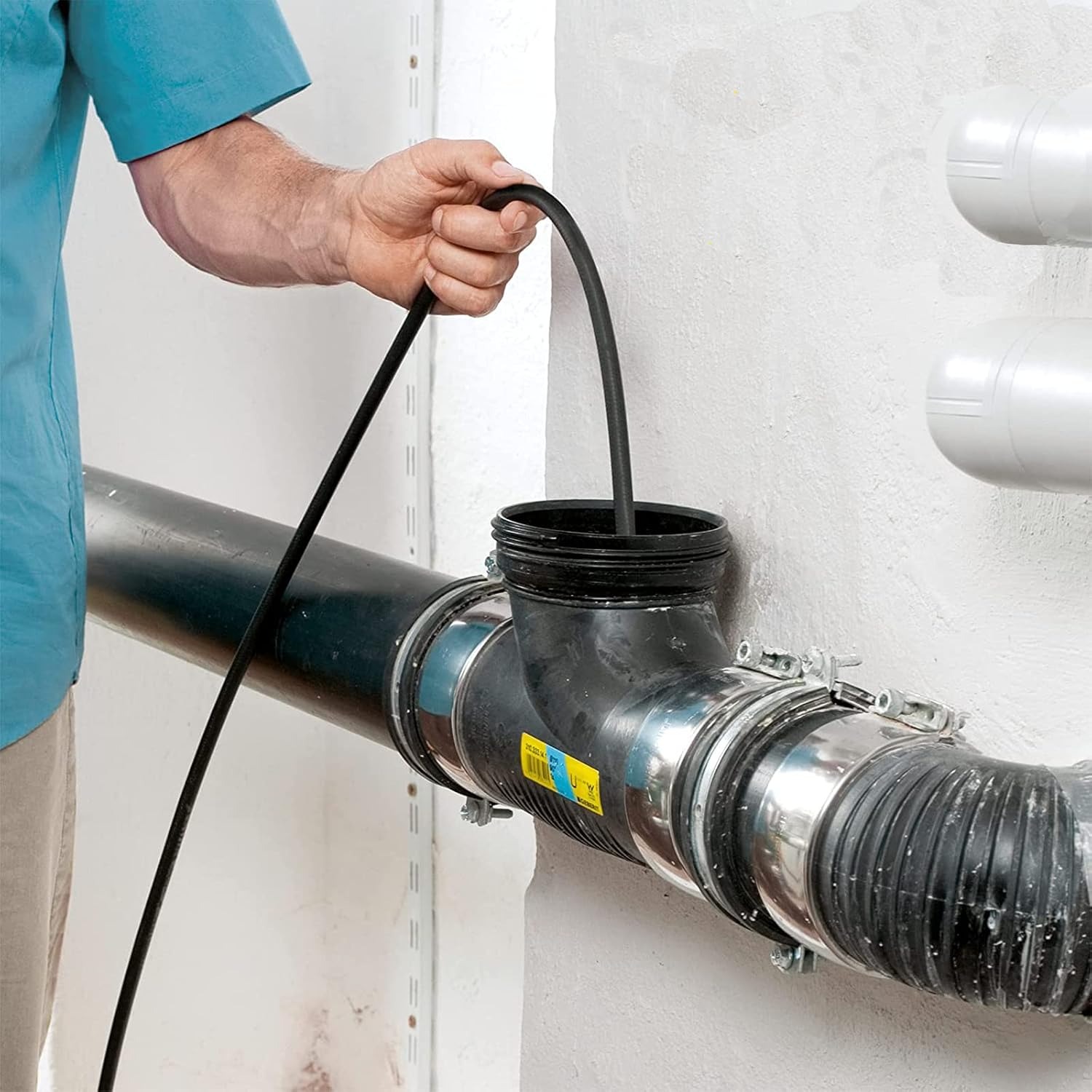
Clear a blocked drain yourself with a 10m pressure washer pipe cleaning hose that turns your existing machine into a proper jetter.

A 10 metre hose rated to 180 bar, finished with a forward-and-reverse jet nozzle that pulls itself along the pipe while it flushes the blockage back out.

Turns a pressure washer you already own into a drain jetter without buying a separate machine.

The 10 metre hose reaches well past the first bend in most household drains and downpipes.

A jet nozzle sprays forwards and backwards at once, so it breaks the blockage and pushes the mess back toward the opening.

The rear jets also drive the hose deeper into the pipe as you feed it in, which saves a lot of pushing.

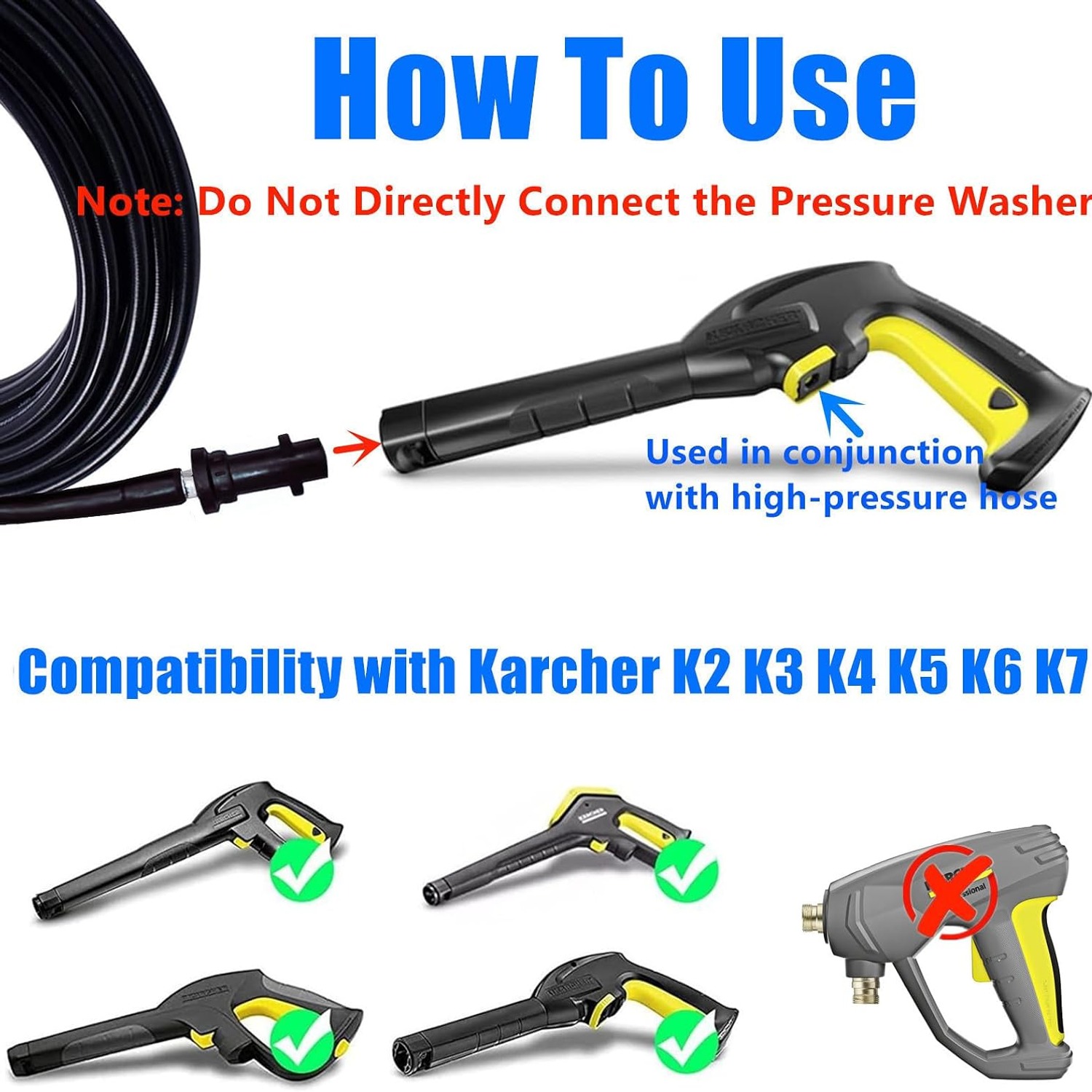
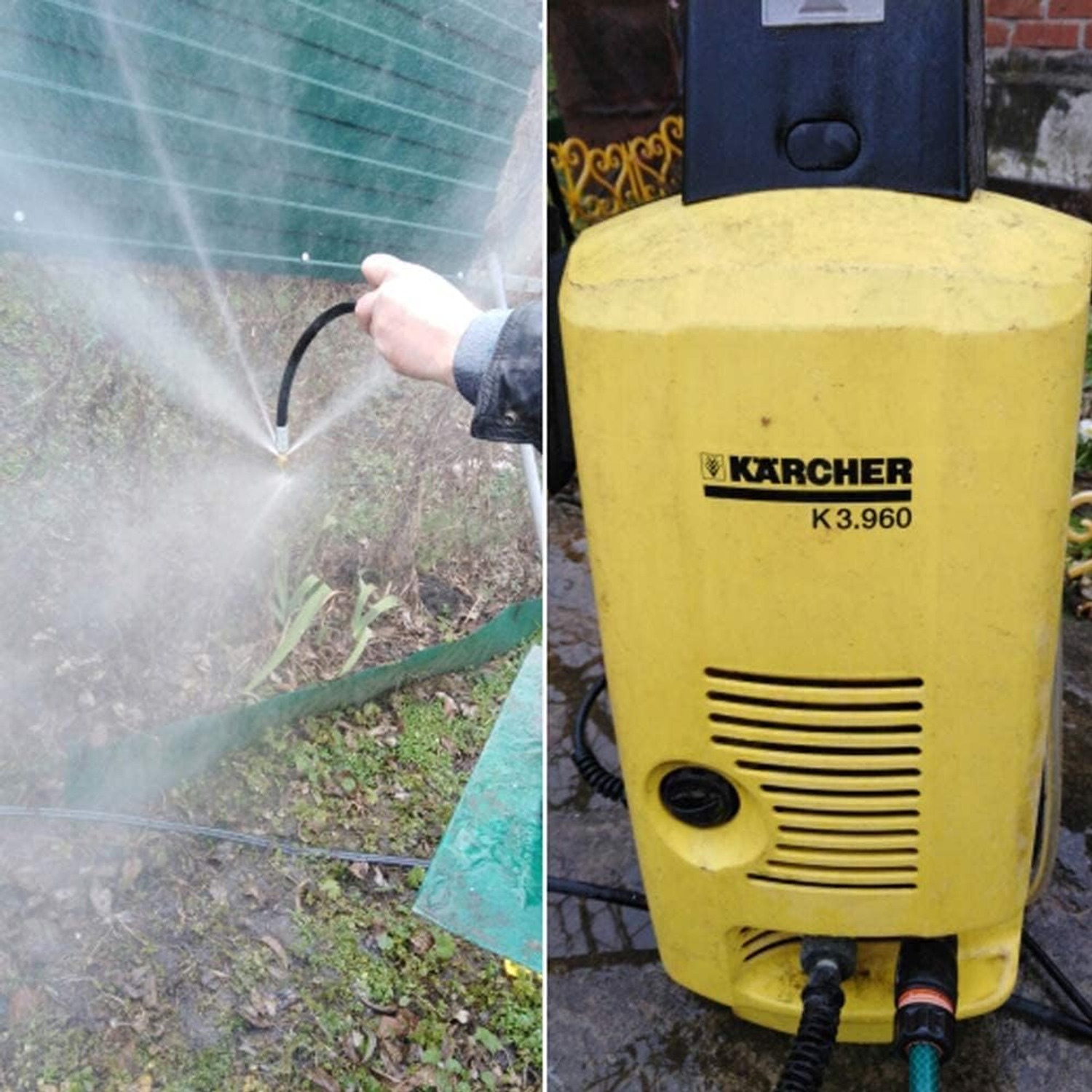
Rated to a maximum pressure of 180 bar and designed to fit Kärcher machines, so no extra adapter is needed.

10m Pressure Washer Pipe Cleaning Hose with Jetter Nozzle

A blocked drain is one of those jobs that feels like it needs a professional, right up until you see the bill. This 10 metre pipe cleaning hose takes a tool most people already have in the shed, the pressure washer, and gives it a second job. You connect the hose in place of your lance, feed the nozzle into the pipe, and let water pressure do the work that a plunger or a bottle of chemicals cannot.

10m Pressure Washer Pipe Cleaning Hose with Jetter Nozzle

The clever part is the nozzle. Water leaves through a small opening at the front and through three openings angled backwards at the rear. The front jet attacks whatever is causing the blockage. The rear jets do two things at once, flushing the loosened material back toward you and pulling the hose further along the pipe as water pushes against the walls. That self-feeding action is why a jetter hose gets around bends that a rigid rod will not.

10m Pressure Washer Pipe Cleaning Hose with Jetter Nozzle

Ten metres is a sensible working length for a house. It covers a kitchen waste run, an outside gully, a downpipe, and most of the distance between an inspection chamber and the next one. The hose has an outside diameter of 12.7 mm and a nominal wall thickness of 6.35 mm, so it is slim enough to turn corners but still has body to it when you push.

10m Pressure Washer Pipe Cleaning Hose with Jetter Nozzle

Maximum pressure is listed at 180 bar, which covers the output of a typical domestic pressure washer. The parts are made from copper and plastic and the hose is black. Components can be swapped out, so if you work through a nozzle or want a different spray pattern for a particular job, you are not stuck with the one you started with.

10m Pressure Washer Pipe Cleaning Hose with Jetter Nozzle

This version is made to fit Kärcher machines directly. That matters more than it sounds, because adapters are where most drain cleaning kits leak. A direct fit means fewer connections, less fiddling in the cold and wet, and nothing spraying back at you halfway through the job.

Not sure yet? That is fine.

A drain part has to fit the drain you have, and you cannot always judge that from a photograph. If you are a consumer in the EU, you have 14 days from the day you receive it to withdraw for any reason under the Consumer Rights Directive 2011/83/EU, and a further 14 days to send it back. You may handle and inspect a product as you would in a shop. If it has been used beyond that, we may reduce the refund to reflect the loss in value. We refund the price you paid, including standard delivery, and you pay the direct cost of return.

If it turns up faulty, damaged or not as described, that is on us. The two-year legal guarantee of conformity under Directive (EU) 2019/771 covers you, and we pay the return postage. Read the full detail on our refunds and returns page, or ask us anything before you order.

Frequently Asked Questions

What does this hose actually do?

It converts your pressure washer into a drain jetter. Instead of spraying a surface, the water is fired down a pipe through a special nozzle to break up and flush away a blockage. You feed the hose into the drain and the water does the rest.

How long is the hose?

The hose is 10 metres long. That is enough to reach well past the first few bends in most household drains, downpipes and gully traps. For longer runs between inspection chambers you may need a longer hose.

What pressure is it rated for?

The maximum pressure is 180 bar. That sits comfortably above the output of most domestic pressure washers, so a typical home machine will not over-pressure it. Always check your own machine's rating before use.

Which pressure washers does it fit?

It is made to fit Kärcher machines directly, with no adapter needed. If you have a different brand you would need a matching adapter, which is not included here. Check your machine's connector type before ordering.

How does the nozzle work?

There is a small opening at the front and three openings angled backwards at the rear. The front jet attacks the blockage head on. The rear jets flush loosened material back toward the drain opening and push the hose deeper into the pipe.

Does it pull itself along the pipe?

Yes. The rearward jets create thrust that drives the nozzle forward, so once it has a grip you mainly guide and feed the hose rather than force it. This is what makes it one of the best drain jetter hose options for bends.

What is the hose made from?

The listed materials are copper and plastic, and the colour is black. The outside diameter is 12.7 mm and the nominal wall thickness is 6.35 mm. No further material detail is given by the supplier.

Will it go around bends?

It is a flexible hose rather than a rigid rod, so it follows the shape of the pipe. Tight back-to-back bends can still catch, in which case ease the hose back and feed it in again slowly. Keeping the water running helps it find the way.

Can I use it on a downpipe or gutter outlet?

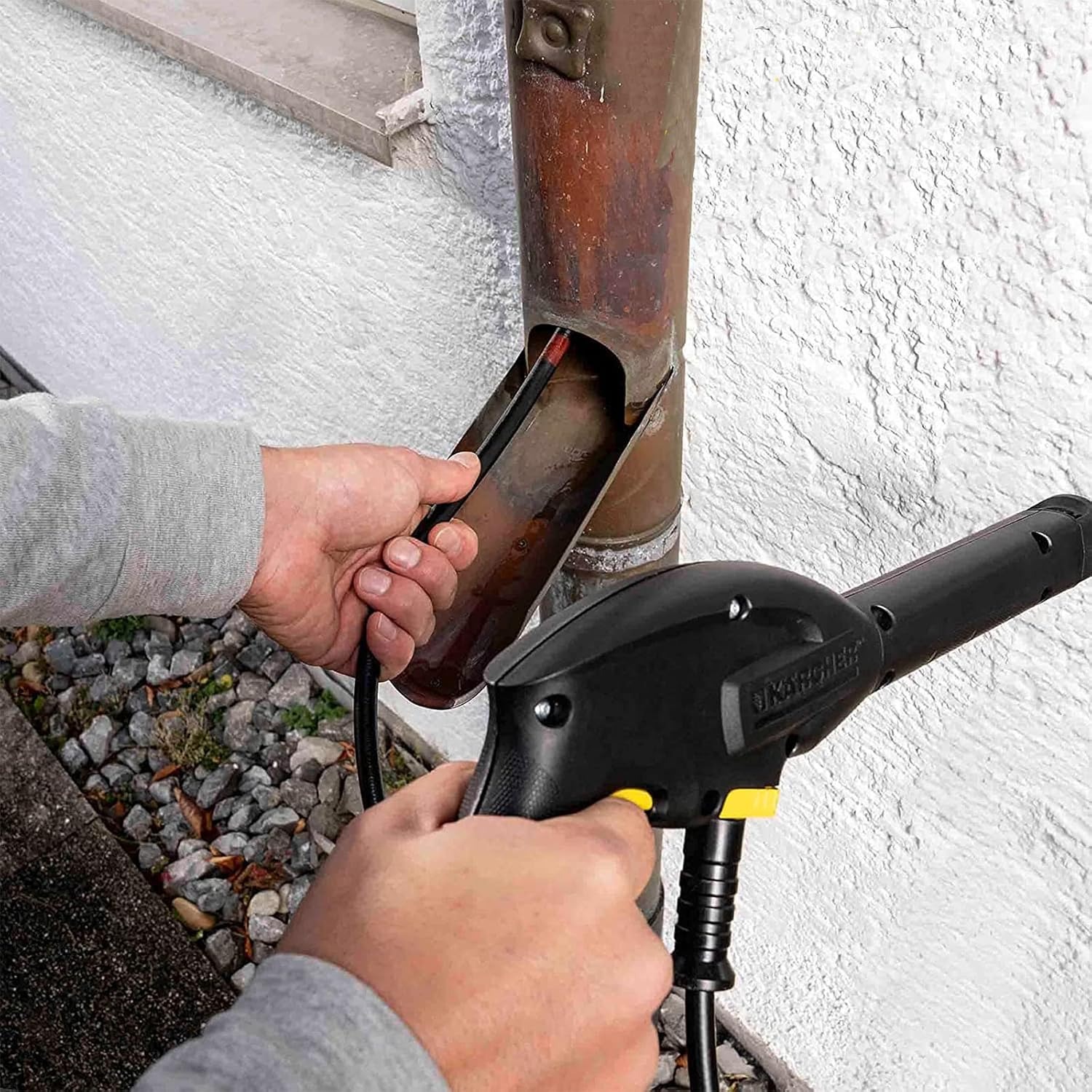
Yes. A 10 metre length suits most downpipes and gutter outlets on a house. Feed the nozzle in from the bottom opening and let the rear jets push leaf debris back out toward you.

Is it safe for plastic pipes?

Modern PVC and clay drainage pipes in good condition normally handle jetting fine. Old, cracked or badly joined pipework is a different matter, so if you suspect damage, have the line inspected first. Start at a lower pressure setting if your washer allows it.

Do I need chemicals as well?

Usually not. Water pressure handles grease, soap scum, leaf litter and silt without any chemical help. Chemicals also make the splash-back far less pleasant to deal with.

How do I stop it spraying back at me?

Always push the nozzle at least 30 to 50 cm into the pipe before you squeeze the trigger, and release the trigger before you pull it back out. That single habit prevents almost all of the mess. Wear eye protection and gloves regardless.

What safety gear should I wear?

Eye protection is the important one, because drain water carries grit and bacteria. Add waterproof gloves and old clothing or waterproofs. Boots with grip help if you are working on a wet paved area.

Can children or pets be nearby?

Keep both well away. The water stream is powerful enough to injure skin at close range, and drain water is not clean. Set up a clear working area before you start.

How do I know the blockage has cleared?

Water will start running freely away instead of pooling, and you will feel the hose move with much less resistance. Run clean water down the line afterwards to confirm. It is worth jetting a little past the blockage point to clear the residue.

How often should I use it?

For most homes, once or twice a year as maintenance is plenty, usually before autumn leaf fall and again in spring. Kitchen waste lines that handle a lot of cooking fat may want a more frequent flush. Regular use is far easier than clearing a solid blockage.

Can I use it on a toilet waste pipe?

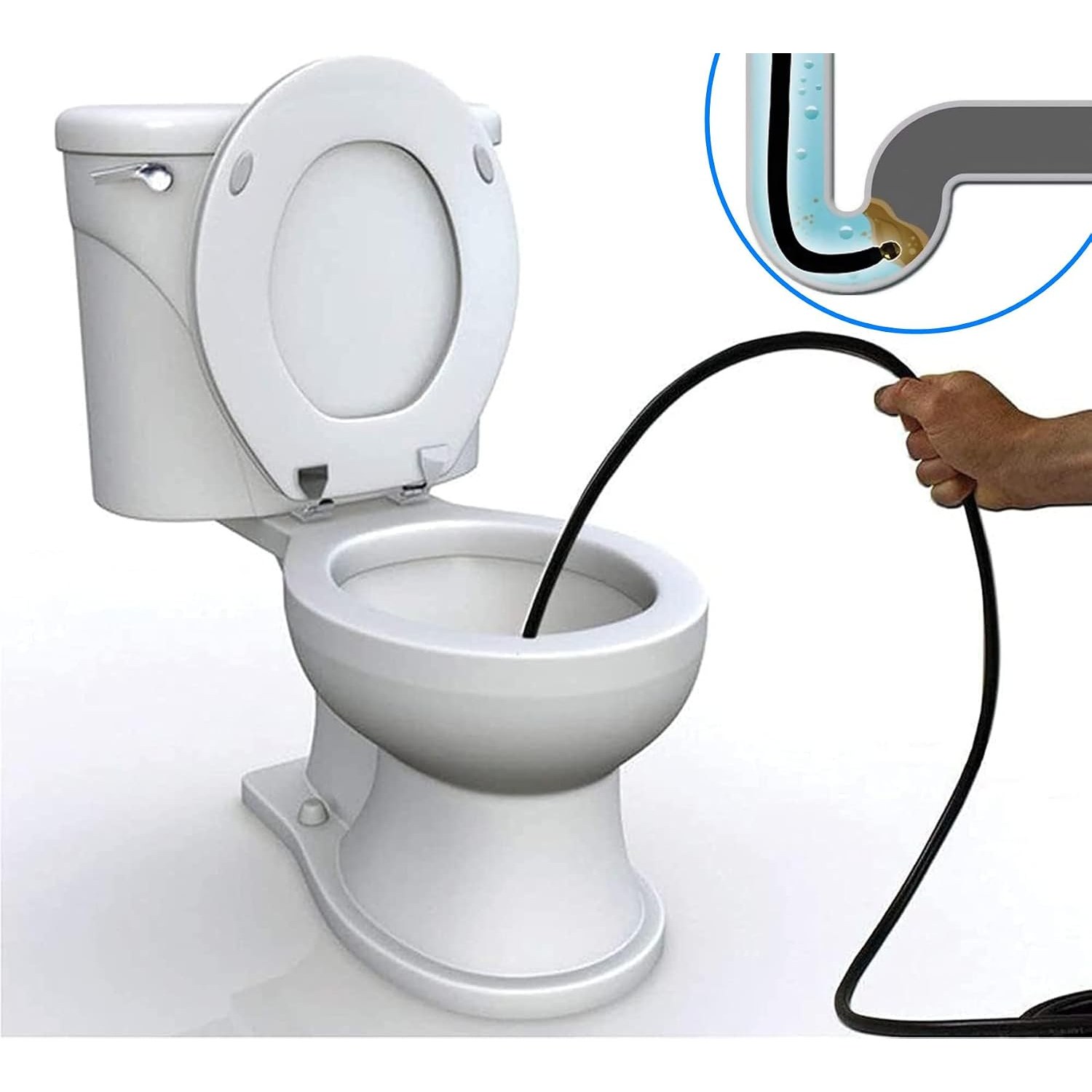
It can be used on waste lines, but you need to get the nozzle into the pipe itself, usually through an inspection chamber or rodding eye rather than through the pan. Forcing a hose through a WC trap risks damaging the ceramic. Access the line properly instead.

What about tree roots?

Water jetting will clear fine root hairs and the silt that collects around them, but it will not cut through a thick root mass. If roots keep returning, the pipe likely has a crack or open joint that needs repair. A camera survey is the next step there.

How do I clean it after use?

Run clean water through the hose and nozzle for a minute to flush out grit. Check that all four nozzle openings are clear, poking any blockage out with a fine wire. Let it dry before coiling it loosely for storage.

How should I store it?

Coil it loosely rather than folding it, and hang it or lay it flat in a dry place. Keep it out of direct sunlight and away from hard frost. Tight kinks are the main thing that shortens a jetter hose's life.

Can the nozzle be replaced?

Yes. The parts can be freely exchanged, so you can fit a different nozzle or replace a worn one rather than buying a whole new kit. That makes it a sensible long-term pick if you expect to use it regularly.

Why does the hose stop moving forward?

Usually it has met a sharp bend, a step in the pipe, or a solid blockage it needs more time on. Pull back half a metre and feed again, keeping water flowing. If it refuses after several attempts, there may be a collapsed section.

Is it suitable for a commercial or trade user?

It is a capable hose for domestic drains and light trade work around a property. Full-time drainage work generally calls for a dedicated high-flow jetting machine. For a landlord, caretaker or handyman, this covers most day-to-day calls.

Will it work with a battery pressure washer?

Low-pressure battery or portable washers do not usually generate enough flow to drive a jetter nozzle properly. You want a mains electric or petrol machine with a decent bar rating and flow rate. Check your machine's specification first.

What is included in the box?

The maker's details covers one 10 metre hose with its jet nozzle, supplied as a single pack. No separate accessories, adapters or carry case are specified by the supplier. Anything beyond the hose and nozzle is not listed.

How heavy is it?

The weight is not specified by the maker. As a guide, a 10 metre hose of this diameter is light enough for one person to carry and feed by hand. We would rather leave the figure blank than guess.

Does it make a good gift?

It suits anyone who owns a pressure washer and a house with drains, which is a lot of people. It is a practical present for a new homeowner, a keen DIYer, or someone who has just paid a call-out fee they did not enjoy. Pair it with eye protection and gloves for a complete kit.

How long does delivery take?

Delivery time depends on your country and the address you give at checkout. The estimate is shown during checkout before you pay. Tracking details are sent by email once the parcel leaves the warehouse.

Can I return it if I change my mind?

Yes, unused items in their original condition can be returned within the returns window shown on our returns page. Keep the packaging until you are sure you are keeping it. Contact us first and we will walk you through the process.

What if it is not right for my machine or my drains?

Get in touch and tell us what pressure washer you have and what you were trying to clear. If the fitting does not match or the hose is not suitable for your job, we will arrange a return under our standard policy. If a different product would suit you better, we will say so rather than push a sale.

How to Choose and Use a Pressure Washer Pipe Cleaning Hose

6 min read Drains Company

The problem with a slow drain

You notice it before you admit it. The sink takes a few seconds longer to clear. The shower tray holds a puddle around your feet. The outside gully gurgles when the washing machine empties. Then one wet week in autumn it stops draining altogether and there is dirty water sitting where it should not be.

At that point most people reach for a bottle of caustic gel, then a plunger, then the phone. The gel rarely gets past the first bend because it is heavier than water and sits in the trap. The plunger only moves what is within a metre or so of the opening. The phone call gets the job done, but a drainage call-out costs more than the tool you are reading about, and that is for one visit on one drain.

A pipe cleaning hose solves the part the other two cannot reach. It gets a working jet of water several metres down the line, around bends, and into the exact spot where fat, silt and leaf mulch have built up into a plug.

How a drain jetter hose works

The hose connects to your pressure washer in place of the normal lance. All of the pressure your machine produces is sent down 10 metres of narrow hose to a brass nozzle on the end.

That nozzle is where the design matters. A small opening faces forward and fires a thin jet straight down the pipe. Three more openings face backwards at an angle. When you pull the trigger, water leaves those rear openings and pushes against the pipe walls, which creates thrust in the forward direction. The hose starts crawling into the drain on its own.

So two things happen at the same time. The forward jet chews into the blockage. The rear jets scour the pipe walls behind the nozzle and flush everything loose back toward the opening you are standing at. That rearward flush is the bit that actually clears the pipe. A forward jet alone just punches a hole through a blockage and leaves the rest clinging to the walls, which is why the drain blocks again a month later.

The thrust is also why a flexible hose beats a rigid rod around bends. Rods want to go straight. The hose follows whatever shape the pipe takes, as long as water keeps flowing.

What the numbers mean

This hose is rated to a maximum of 180 bar. Most domestic pressure washers sit somewhere between 100 and 160 bar, so there is headroom. If you own a bigger petrol machine, check its rating against that 180 bar figure before connecting.

The outside diameter is 12.7 mm with a nominal wall thickness of 6.35 mm. In practice that means a hose slim enough to pass through a standard 40 mm waste pipe and a 110 mm soil pipe without snagging, but with enough wall to hold shape when you push it. Very thin hose coils up on itself at the first obstruction. Very thick hose will not turn a tight bend.

Ten metres is the length that suits a house. From a kitchen gully to the inspection chamber is usually under five metres. A two-storey downpipe is around six. The run between two chambers on a small property is often seven or eight. Longer hoses exist, but they are heavier to handle and lose more pressure along the way, and most people never use the extra length.

The parts here are copper and plastic, finished in black, and they can be exchanged. That is worth knowing. Nozzles are the wear item on any jetter because they are firing grit-laden water through tiny openings. Being able to swap one rather than replace the whole kit is the difference between a tool you keep and a tool you throw away.

Who it suits

Anyone who already owns a Kärcher pressure washer is the obvious fit, because this version connects directly with no adapter. Adapters are the usual weak point on cheap drain kits. Every extra joint is somewhere for water at high pressure to find its way out, usually onto your arm.

Beyond that, it suits homeowners with a bit of outside drainage, people with gutters that fill with leaf litter every autumn, and anyone managing a rental or a holiday let where a blocked drain means a phone call at an awkward hour. Gardeners use them on land drains and soakaway outlets. Caravan and boat owners use them on grey water lines.

It is less suited to someone doing drainage work full time. A professional clearing commercial lines all day wants a dedicated high-flow jetting machine with a petrol engine and a much longer hose reel. This is a domestic tool that happens to be good enough for light trade work.

Using it without making a mess

The single most useful habit is simple. Push the nozzle into the pipe before you squeeze the trigger, and release the trigger before you pull it back out. Thirty to fifty centimetres inside is enough. Get this wrong once and you will be hosing yourself down along with the drain.

Wear eye protection. Drain water carries grit and bacteria, and a jet at 150 bar sends it everywhere. Gloves and old clothes are sensible. Boots with decent grip help, because the ground around a drain becomes a skating rink fast.

Feed the hose in steadily rather than shoving it. Let the rear jets do the pulling. When it slows, back off half a metre and feed again. Working the nozzle back and forth over a blockage is far more effective than parking it in one spot and hoping. Once water starts running away freely, keep going another metre or two to clear the residue, then flush the line with clean water.

If the hose stops dead and will not move after several patient attempts, stop. That can mean a collapsed pipe, a displaced joint, or a serious root intrusion, and no amount of water pressure fixes those. That is the point to call someone with a camera.

Looking after it

Flush the hose and nozzle with clean water after every job. Grit left inside the nozzle openings dries hard and blocks them, and a blocked rear jet kills the self-feeding action. Hold the nozzle up to the light and check all four openings are clear. A fine wire clears anything stubborn.

Let it dry, then coil it loosely. Do not fold it or cinch it tight with a cable tie. Kinks are what finish a jetter hose, not pressure. Store it somewhere dry, out of direct sun, and away from hard frost.

Before each use, run your hand along the length looking for cuts, bulges or soft spots, and check the fitting for leaks. If you find damage, stop using it. A hose that fails at 150 bar is not a minor problem.

The short version

If you own a pressure washer and a house with drains, this hose pays for itself the first time it saves a call-out. Ten metres covers nearly every domestic run. The forward jet breaks the blockage, the rear jets flush it out and pull the hose along, and the 180 bar rating means a normal home machine will not strain it. Parts can be swapped when they wear.

Keep the nozzle inside the pipe before you pull the trigger, wear eye protection, flush it after use, and coil it without kinks. Do that and it will handle the autumn leaf clear-out, the kitchen fat build-up, and the gully that gurgles, year after year.

Browse the shop

Not sure it fits your washer?

Send us the make and model of your pressure washer and we will tell you straight whether this hose connects without an adapter.

Ask us a question

Page summary

The Stone Banks pressure washer pipe cleaning hose is a 10 metre drain jetter hose that attaches to a domestic pressure washer in place of the standard lance. The nozzle sprays through a forward opening and three rearward openings, so it cuts into a blockage while the rear jets flush debris back out and drive the hose further along the pipe. Maximum pressure is 180 bar. The hose has a 12.7 mm outside diameter and a 6.35 mm nominal wall thickness, and is made from copper and plastic in black. It is designed to fit Karcher machines without an adapter, and individual parts can be exchanged. Country of origin is China. Weight and packed dimensions are not specified by the maker.