

The complete guide
How to Choose and Use a Pipe Cleaning Spiral
The slow drain that turns into a blocked one
Nobody buys a drain tool on a good day. It usually happens after a week of watching the sink empty a little slower each morning, and then one evening it just sits there, full, with a ring of grey water that will not move. At that point most people pour something caustic down the plughole, wait, and find it has made no difference.
That is not bad luck. It is a mismatch between the tool and the problem. Chemicals work on thin films and light build-up. What is usually sitting in a household waste pipe is something more solid: a knot of hair bound up with soap scum, a lump of cooled fat, a face cloth, a child's toy, or years of scale narrowing the pipe until the first bit of debris jams it shut. You cannot dissolve that. You have to go and get it.
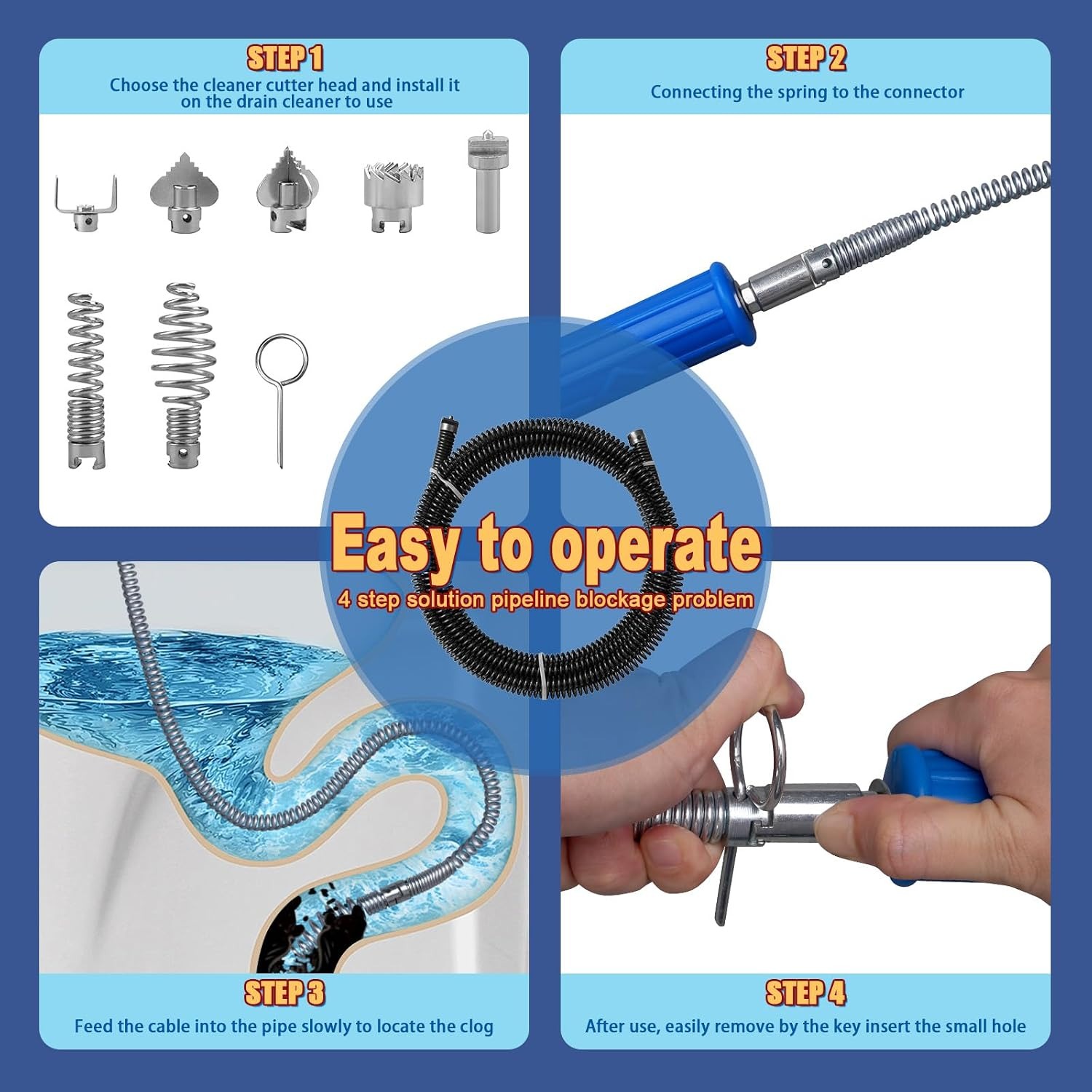
A pipe cleaning spiral does exactly that. It is a long steel coil you feed into the drain opening until the end touches the blockage, then you turn it. The head on the tip bites in, breaks the mass apart, winds the fibrous bits onto itself and either pulls them back out or leaves small enough pieces for the water to carry away. It is simple, it is mechanical, and it works on the kind of clogs that laugh at liquid cleaner.
What the 12mm size actually means
Spiral thickness is the single most useful number on a drain auger, and 12mm sits in a sweet spot for home use.
Thin spirals around 6mm to 8mm are very flexible and will go almost anywhere, but they have a habit of coiling up inside a wide pipe. You turn the handle, the spiral winds up like a spring somewhere in the middle, and nothing happens at the far end. They are fine for a basin trap and not much else.
Thick spirals of 16mm and up carry enormous twisting force, which is what you want for a main sewer line. The trade-off is that they struggle to turn through the sharp bends behind a vanity or under a shower base, and they are heavy to handle.
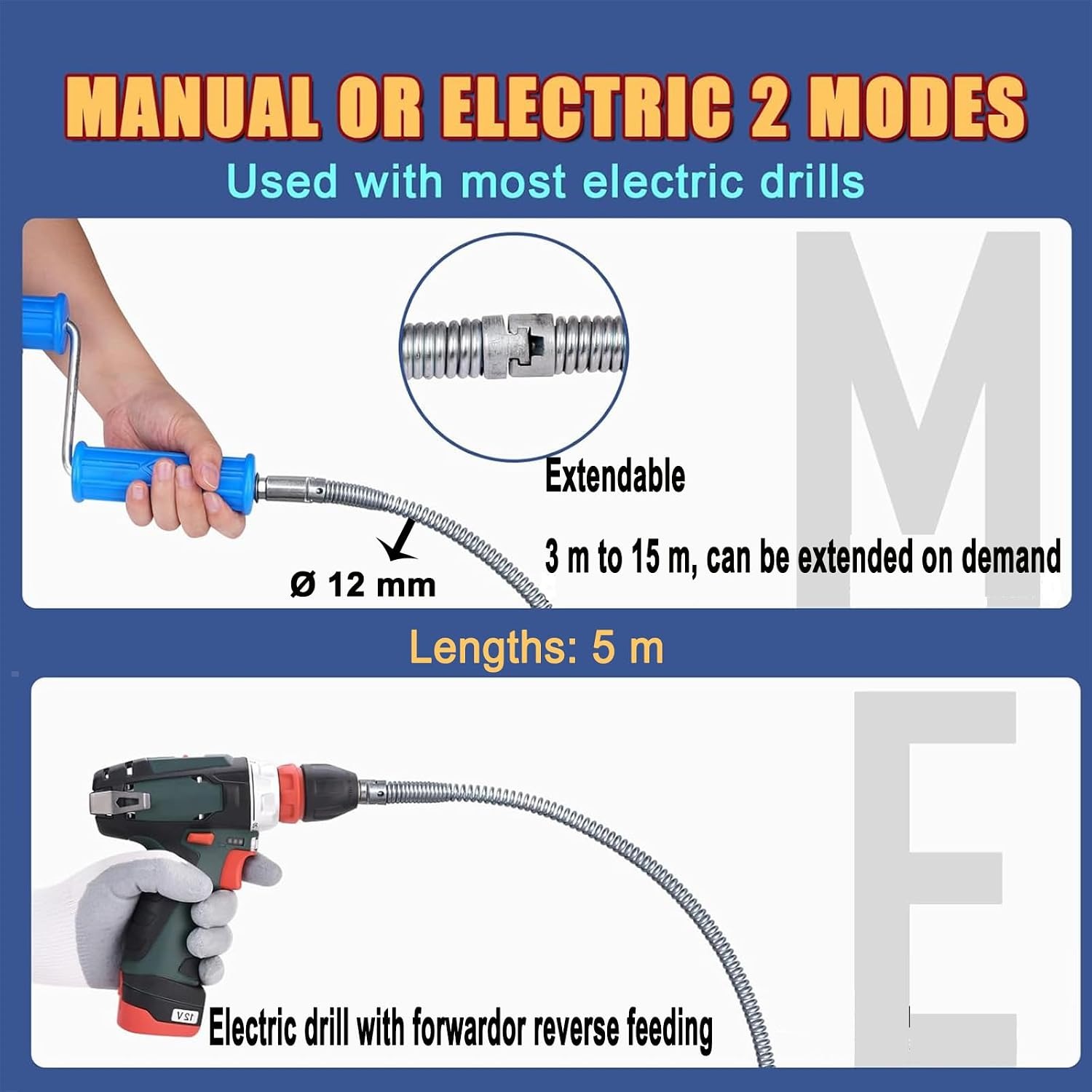
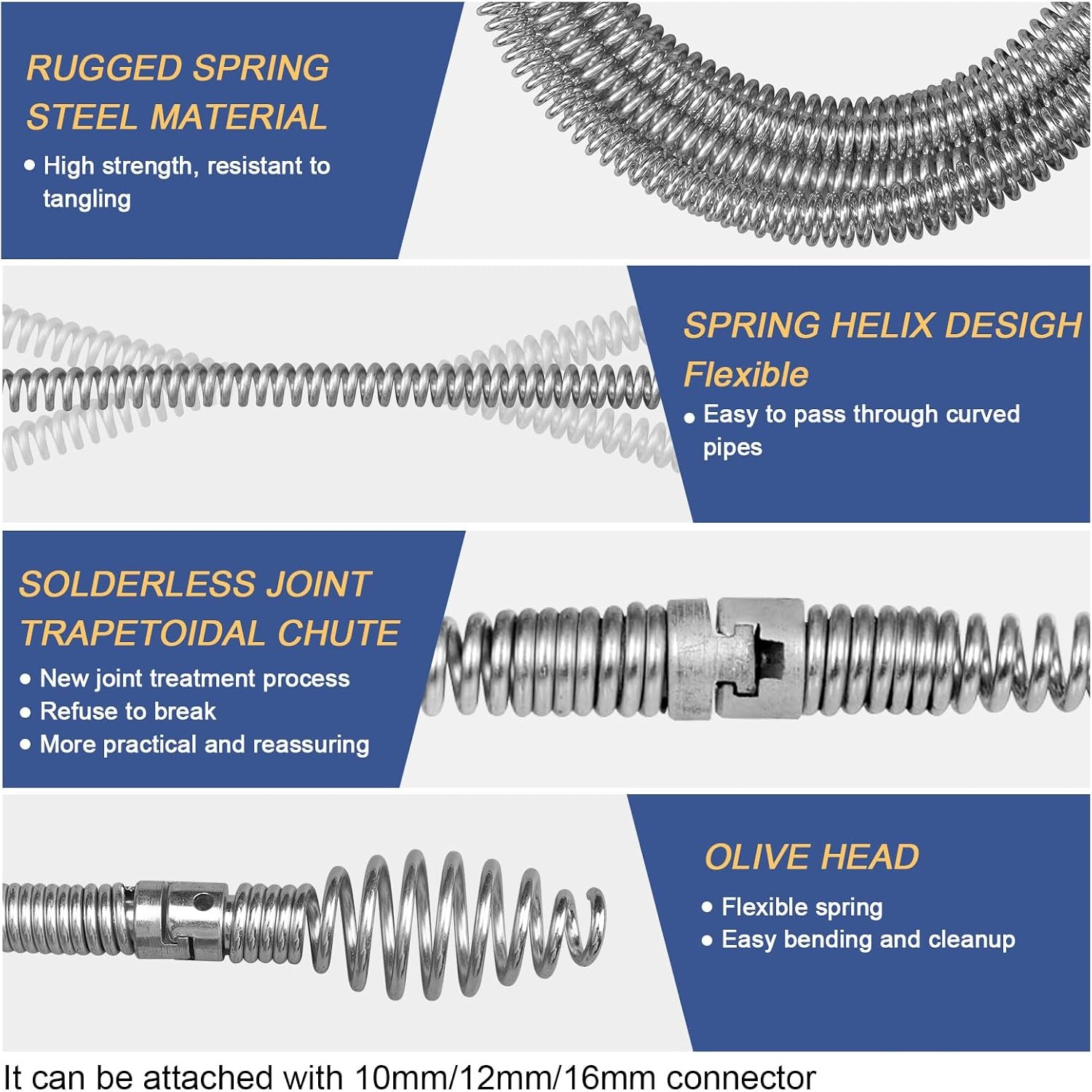
A 12mm steel drain spiral splits the difference. It bends past ninety degrees without folding flat, so it follows household pipework, and it still transmits enough torque down five metres of length to cut through a real obstruction. For sinks, baths, showers, laundry tubs and floor wastes, it is the size most people end up wanting.
Why five metres is usually enough
People often assume a clog is deep. It rarely is. The overwhelming majority of household blockages form within the first two or three metres of the drain opening, because that is where the direction changes. Water slows at a bend, debris settles at the slow spot, and the pile grows from there.
Five metres gives you the trap, the drop, the first horizontal run and a comfortable margin beyond. If the water in several fixtures is backing up at once, that points to a shared line further out, and the coupling on this spiral lets you add more sections of 10mm, 12mm or 16mm to reach it. Start with what you have, though. Adding length before you need it only makes the tool harder to control.
Matching the head to the mess
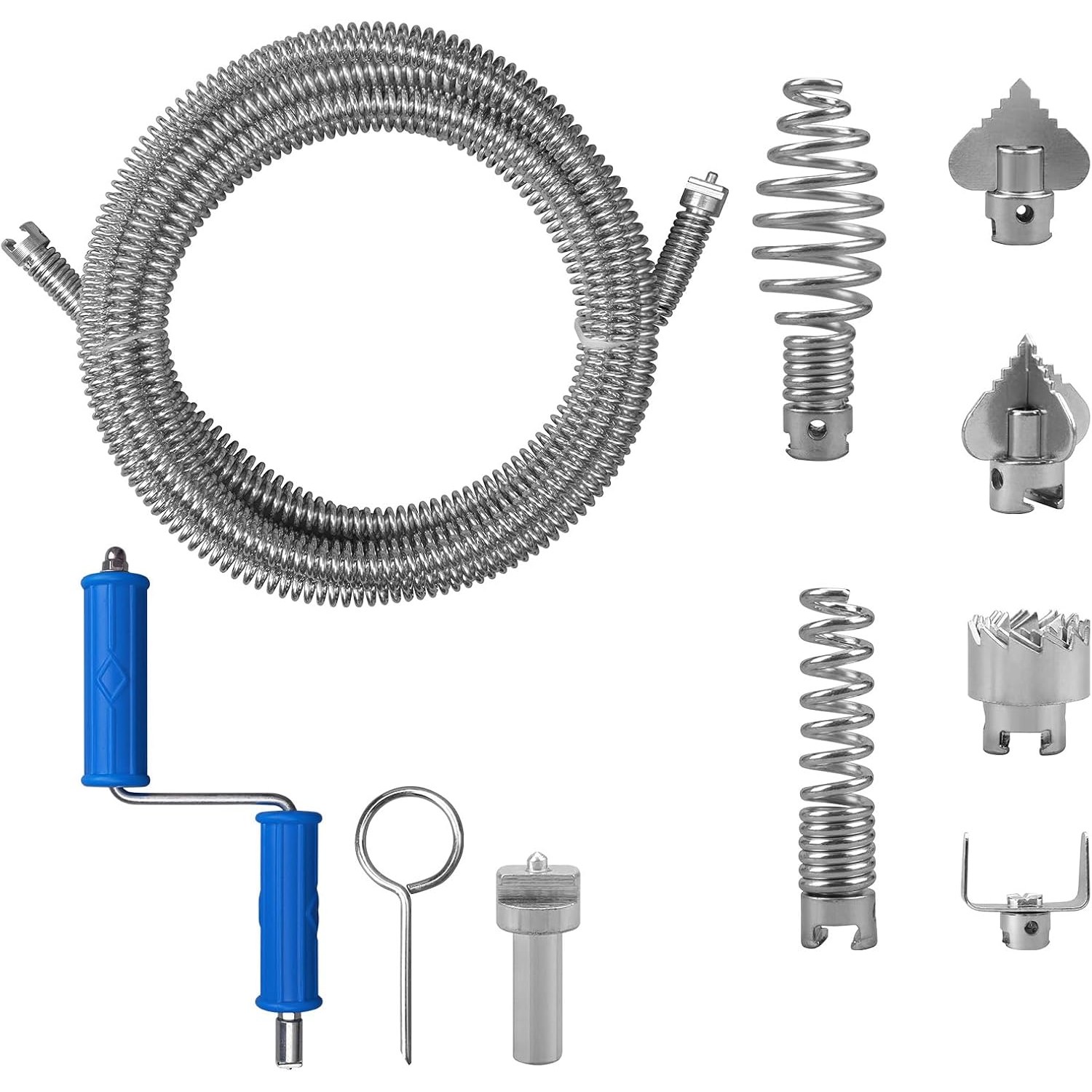
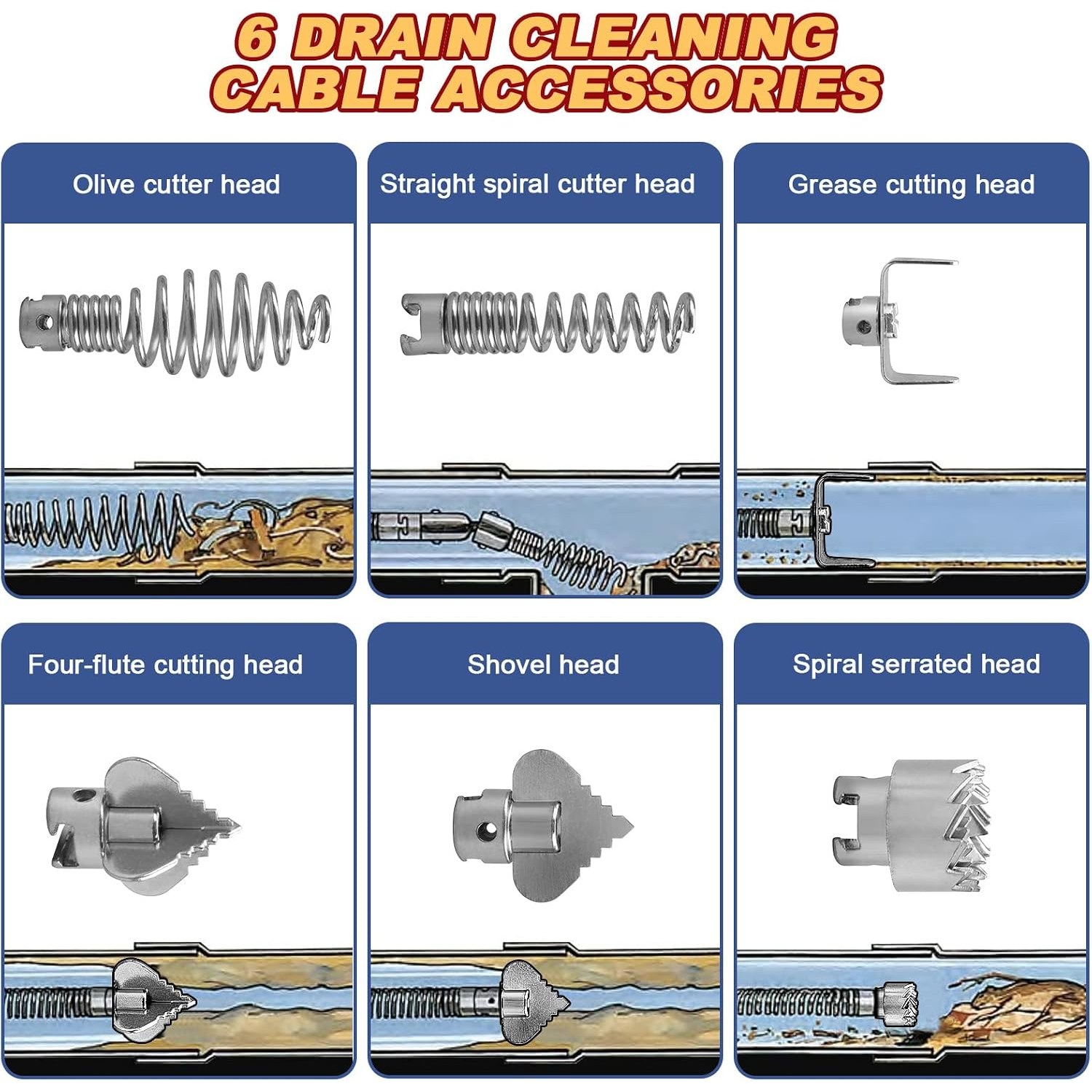
Six cutter heads come with the set, and knowing roughly what each is for saves a lot of guesswork.
The spiral-toothed head is the one to reach for when hair is involved, which in a bathroom it almost always is. It grabs strands and winds them on, so the clog comes out with the tool rather than being pushed along.
The olive slicer has a rounded, tapered shape that feels its way through soft build-up without digging into the pipe wall. It makes a good first attempt when you are not sure what you are dealing with, especially in older pipework.
The C-slicer and the straight spiral slicer scrape. They are the right choice for grease and soap scum that has coated the inside of a kitchen or laundry line, because the problem there is a narrowed pipe rather than a single plug.
The four-blade cutting head is the aggressive option, meant for firm obstructions that will not break up any other way. Save it for when the gentler heads have failed.
The scoop slicer drags loose material back out, which is handy once something has been broken up and you want to clear the debris rather than hope it flushes.
Heads swap over without tools, so changing approach mid-job is quick. Just brush grit out of the slot before fitting the next one so the connection seats properly.
Hand cranking versus running a drill
Both adapters are in the box, and the order you use them in matters more than most people expect.
Start by hand. The manual crank gives you feedback. You feel the moment the head touches something, you feel whether it is soft or solid, and you feel if the spiral has started winding up instead of turning. That information keeps you from doing damage. A surprising share of blockages clear in a couple of minutes this way.
Switch to the drill adapter when a clog genuinely will not move. Use a low gear, a moderate speed and short bursts of a few seconds at a time. Keep forward pressure light and steady. High speed does not help, because the head needs time to cut rather than skim, and a fast-spinning spiral that catches can whip the loose length between your hand and the drain. Slow and deliberate wins here.
Whichever drive you use, turn clockwise going in. Clockwise keeps the coil tight and the couplings together. Reversing can loosen a joint and leave a section of spiral in the pipe, which turns a small job into a genuinely annoying one.
Working safely and sensibly
Wear sturdy gloves. Drain water is dirty, the cutter heads have real edges, and a rotating spiral will pinch bare skin. Put on eye protection too, since water tends to flick back out of the drain the moment the blockage breaks.
Clear the area under the sink and put a bucket and old towels down before you start. Once a clog releases, whatever was held behind it comes through quickly.
Keep the exposed length of spiral between your hand and the drain opening short, around twenty to thirty centimetres. A long loose section is what buckles and flails. Feed a bit, turn a bit, feed a bit more.
If the pipe is old cast iron or galvanised steel with visible corrosion, stay gentle and stick to the softer heads. A spiral will not make a sound pipe fail, but it can find a weak spot that was already there.
Looking after it
Steel and drain water are a poor long-term combination, so a minute of care after each job pays off. Rinse the full length with clean water, wipe it dry with a rag, then coil it loosely. Tight kinks create a permanent weak point where the spiral will want to fold next time.
Store the cutter heads together in a dry bag or box. They are small and easy to lose in a toolbox. If your shed or garage is damp, wipe a light film of machine oil along the spiral before putting it away.
Who it suits
This is a tool for someone who looks after their own home or rental property and would rather spend an hour on a Saturday than wait for a call-out. It covers kitchen sinks, bathroom basins, baths, showers, laundry tubs and floor wastes, which is most of what goes wrong in a house.
It is not a replacement for a plumber when something bigger is happening. Multiple fixtures backing up at once, sewage smell, or water appearing where it should not all point to a problem past the fixture line, and that needs proper diagnosis.
The short version
A 12mm spiral at five metres, with six heads and the choice of hand or drill drive, handles the blockages that actually occur in homes. Start by hand, start with the gentlest head, turn clockwise, and keep the loose length short. Rinse it, dry it and coil it loosely afterwards. Done that way, it will clear drains for years and pay for itself the first time you use it.