

The complete guide
Choosing an 80cm Linear Shower Drain, A Practical Buyer's Guide
The problem with the old round drain
Most bathrooms were built around a point drain. One round grate in the middle of the shower floor, and four small tiled planes sloping down to meet it. It works. It has worked for decades. But it brings a few headaches you only notice once you live with them.
The tile has to be cut into wedges to make those four falls, so you end up with more grout lines in the wettest part of the room. Grout lines collect soap film. Large format tiles become difficult, sometimes impossible, because a big tile cannot bend in two directions at once. And the grate itself sits right where you stand, so you feel it underfoot.
A linear channel solves most of that at once. Water runs in one direction towards a long slot, usually at the back wall. The floor becomes a single sloping plane. You can run big tiles with few cuts, the grate is out of the main standing area, and the whole floor reads as one surface rather than a pinwheel of triangles.
That is the appeal, and it is why linear drains turned up first in hotels and then worked their way into ordinary home renovations.
How this one works
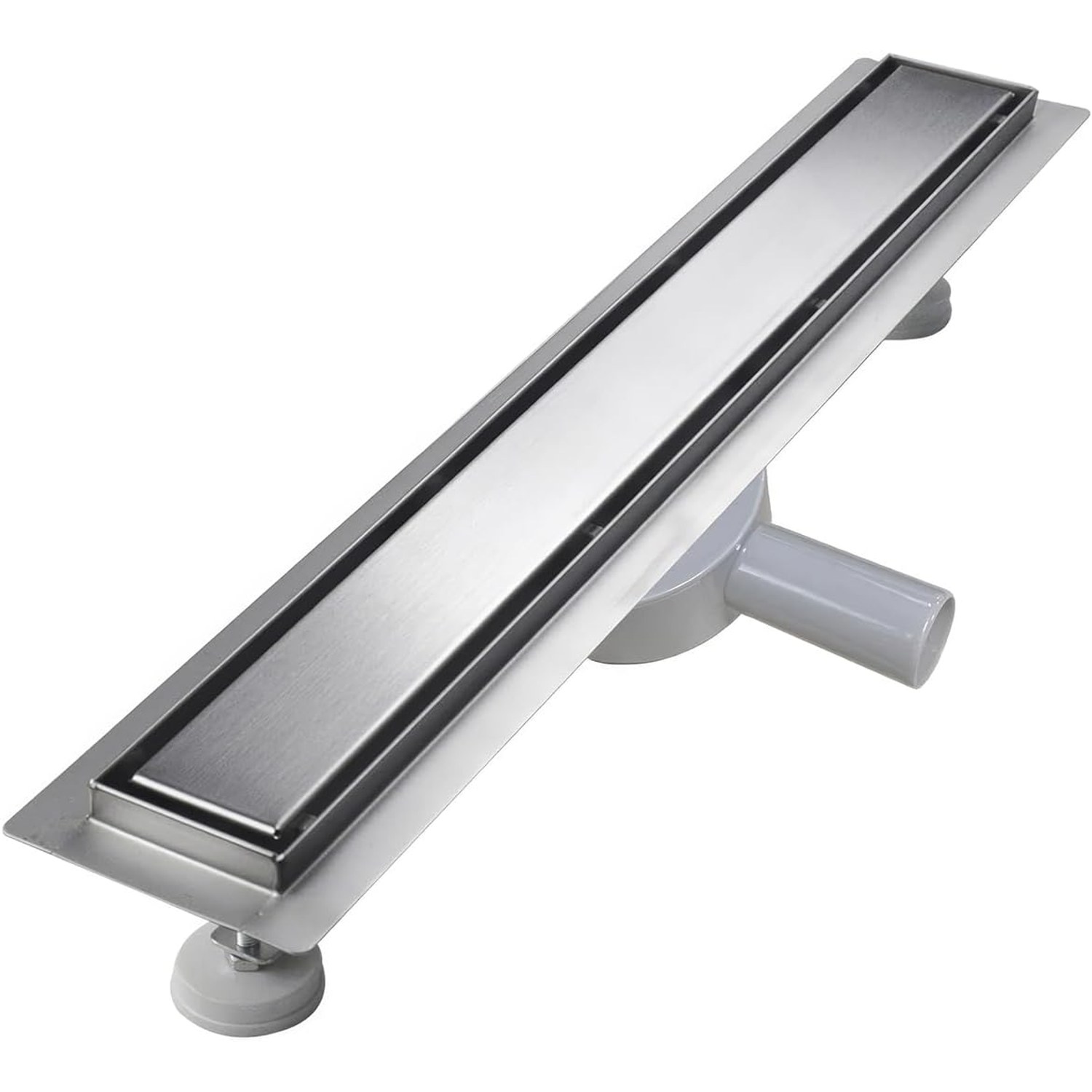
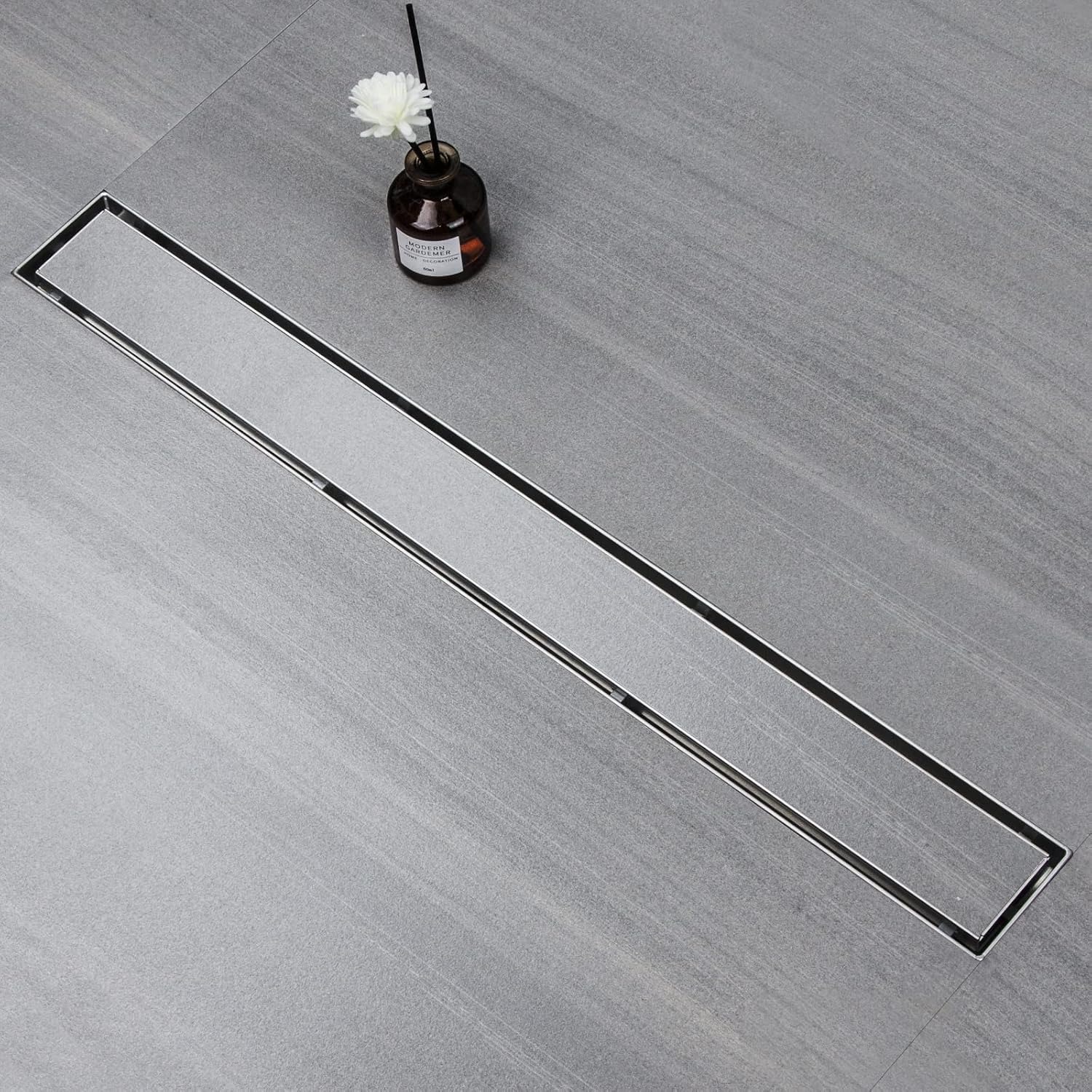
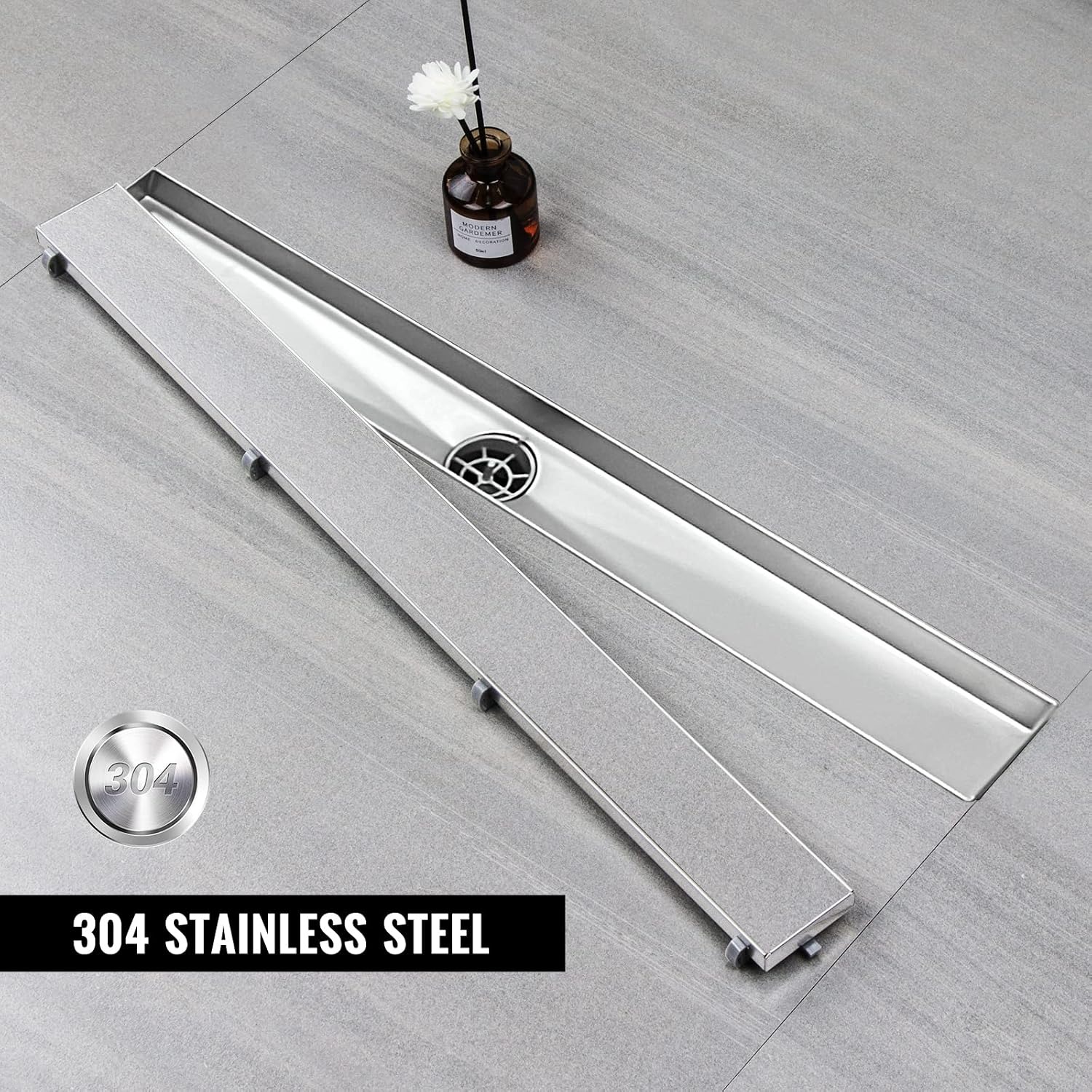
The unit is a stainless steel shower channel 80cm long, with a glossy finish available in silver and black. Three parts matter.
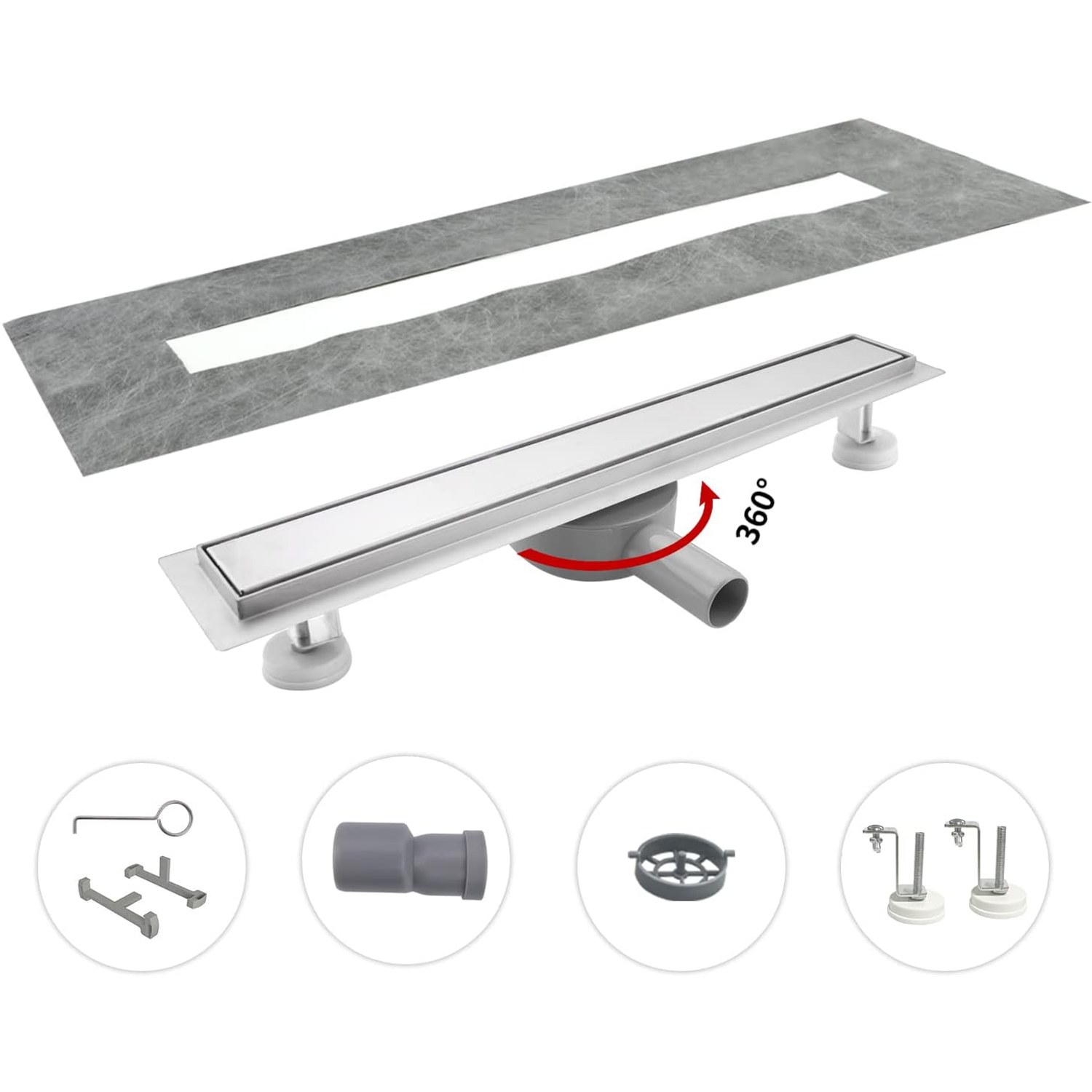
First, the grate. It lifts out by hand. That sounds minor until you need to get hair out at nine on a Sunday night. No screwdriver, no fuss, lift and rinse.
Second, the strainer. Underneath the grate sits a removable hair strainer basket. It catches hair, grit and the occasional bottle cap before any of it reaches your waste pipe. Pulling hair out of a basket is a different experience to pulling it out of a trap with a bent coat hanger.
Third, the siphon. This is the trap that holds a small reservoir of water, and that water is the seal that keeps drain smells out of the bathroom. On this model the siphon rotates a full 360 degrees horizontally. That rotation is the quiet hero of the design. In a renovation, your existing waste pipe is wherever a plumber put it in 1987, and it almost never lines up with where you want the channel. A fixed outlet means cutting floor and moving pipe. A rotating one usually means you can work with what is there.
Flow is handled by an X-shaped internal path rated at up to 40 litres per minute. Put that in context. A fairly generous domestic shower head runs around 9 to 12 litres per minute. Even a big rainfall head with a decent pump rarely gets close to 40. You have headroom, which means the channel empties faster than you fill it and water does not pool.
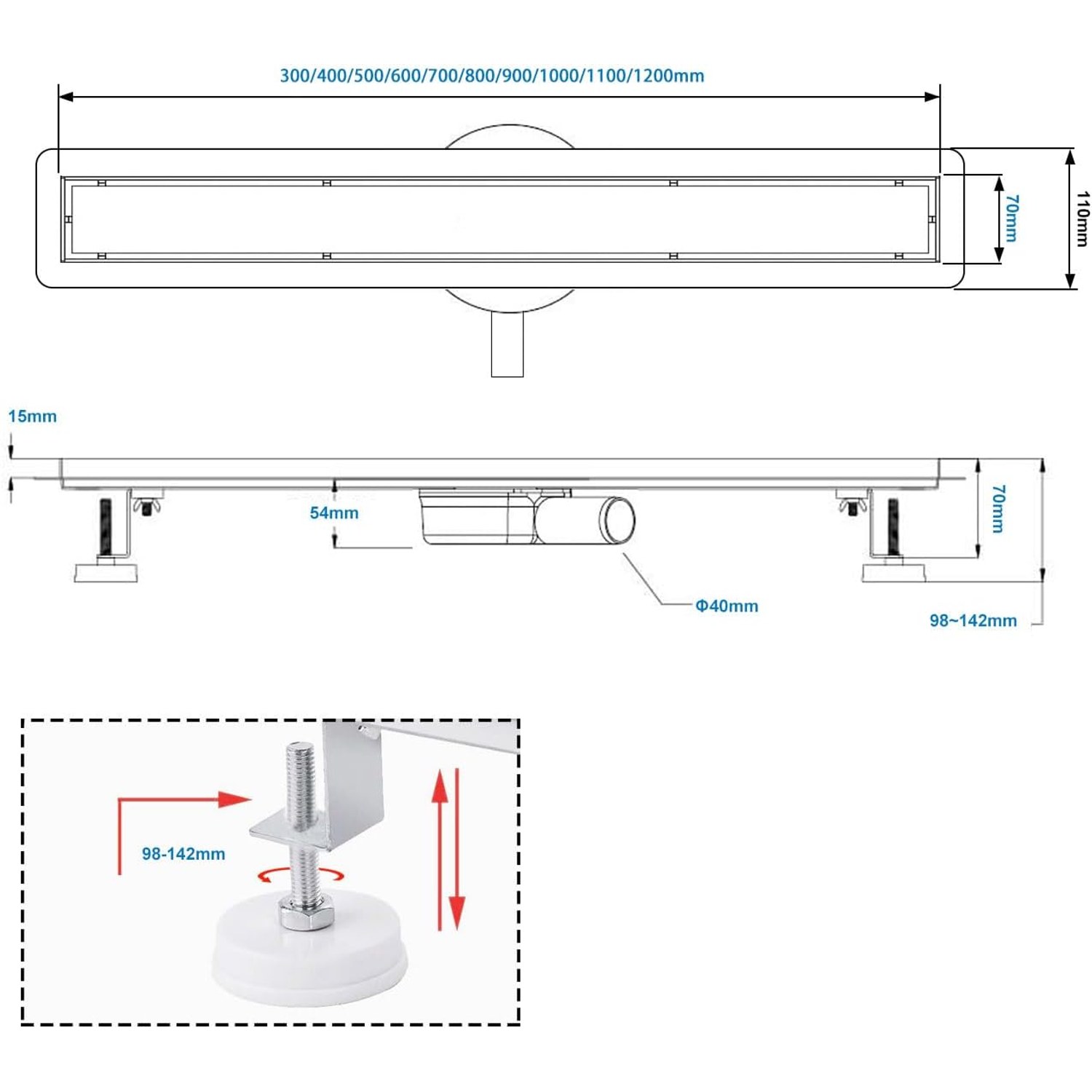
The feet are height adjustable. That is how the grate ends up sitting flush with your finished tile instead of standing slightly proud or sitting in a dip. Tile thickness and adhesive bed vary, so adjustable feet give your tiler the tolerance they need.
Who it suits
This size works for a few common setups.
A standard walk-in enclosure, roughly 80 to 90cm wide, with the channel running along the back wall. This is probably the most common use. The grate sits out of the way, the floor falls back towards it, and the glass screen stays clear of the drain.
A wet room where the channel runs across the shower zone. In an open wet room, a linear drain across the boundary between the shower area and the rest of the floor catches splash-out as well as the main flow.
A threshold install, where the channel sits at the entry to the shower. Less common, but useful when the waste has to be on the near side of the room.
It is less suited to people who want to drop a drain into an existing finished floor without retiling, and it is not designed for preformed acrylic trays, which come with their own waste fittings.
How to choose the right length
Measure the internal width of the shower enclosure, wall to wall, not the external footprint. A channel should sit comfortably within that span with tile either side, so you usually want the drain a bit shorter than the opening. For an 80cm channel, a shower around 85 to 100cm wide is a comfortable fit, though your tiler may have a view based on the tile module you have chosen.
Also think about where the grate lands relative to your tile joints. A channel that finishes mid-tile looks accidental. One that lines up with a grout line looks deliberate. Set this out on paper before anything gets glued down.
Finally, check the waste. You need to know where the pipe is, what diameter it is, and whether there is enough depth in the floor build-up to accommodate the trap. The outlet diameter is not specified by the maker, so confirm it from the packaging or the included instructions before you buy waste fittings.
Installation notes
Assembly is required and English instructions come in the box. Beyond that, the honest advice is that the drain is the easy part. Waterproofing is the hard part.
The channel has to be bedded in, connected to the waste, and then tied into the waterproof membrane so that any water getting past the tile still ends up in the drain rather than in the floor. Every leak story you have heard about a wet room comes down to that junction. If you are confident with tanking systems, go ahead. If you are not, have a tiler or plumber do the install and keep your warranty and your ceiling below intact.
Set the fall before you lay tile. A single plane running towards the channel, gentle but consistent. Too flat and water sits. Too steep and the floor feels odd underfoot.
Living with it
Cleaning is simple and should be routine. Every week or two, lift the grate, pull the strainer, rinse both under warm water, wipe the inside of the channel with a soft cloth and mild soap, and put everything back. Five minutes.
Skip the bleach and the scouring pads. Strong chemicals and abrasives dull a glossy stainless finish faster than anything else, and once the shine is gone it does not come back. Drying the grate after cleaning keeps water spots down, especially in hard water areas.
One more habit worth having. If the shower goes unused for a long stretch, say a holiday home or a guest bathroom, run the tap for a few seconds when you are back. That tops up the water seal in the trap, which can evaporate over weeks, and stops any smell coming through.
The short version
An 80cm linear channel gives you a flatter floor, fewer cuts, fewer grout lines and a drain that stays out from underfoot. This one is stainless steel with a glossy finish, rated to 40 litres per minute, with a removable hair strainer and a 360 degree rotating siphon that makes retrofit installs considerably less painful. Height adjustment lets you set it flush with the tile.
The specs that are published are solid. The ones that are not, outlet diameter and exact grate width, are worth confirming before you commit, especially if you are matching existing pipework.
Measure your shower, find your waste, and plan the drain before the screed goes in. Do that and this is a straightforward, long-lived piece of bathroom hardware. Do it in the wrong order and no drain, however good, will save you.