
The complete guide
How to Choose a Basin Sink Plug That Actually Holds Water
The small part that ruins a basin
Nobody buys a house and thinks about the sink plug. You think about it the first morning you fill the basin to shave, turn around to find a towel, and come back to a bowl with an inch of water left in it. Or when you are soaking a stained shirt and the water quietly drains away overnight.
A failed plug is rarely dramatic. It is a slow seep around the edge, a plug that sits at a tilt, a push mechanism that no longer locks down. The basin still works. It just does not hold water, which is half of what a basin is for.
The fix is cheap and takes about ten seconds. The trick is buying the right plug the first time instead of the second or third time.
What goes wrong with the original
Most basin plugs fail in one of a few predictable ways.
Plastic bodies crack. The stem takes the force every time you press down, and after a few years of that the plastic develops a hairline split. Water finds the split before you do.
Rubber seals harden. A fresh seal is soft and squashes against the drain wall. An old one has gone stiff and glossy, and it no longer deforms enough to close the gap. You can sometimes get a few more months out of it by cleaning the soap film off, but it is on borrowed time.
Pop-up linkages seize. If your basin has a rod behind the tap connected to a lever under the sink, that linkage sits in a damp cupboard collecting corrosion. When it stiffens, the plug stops seating fully. Fixing the linkage usually means lying on your back with a torch.
Chrome flakes off thin plating. Once the plating lifts, the base metal underneath starts to look rough, and no amount of cleaning brings it back.
A solid replacement plug sidesteps most of this. There is no linkage to seize, and a brass body does not crack the way plastic does.
How a seated plug works
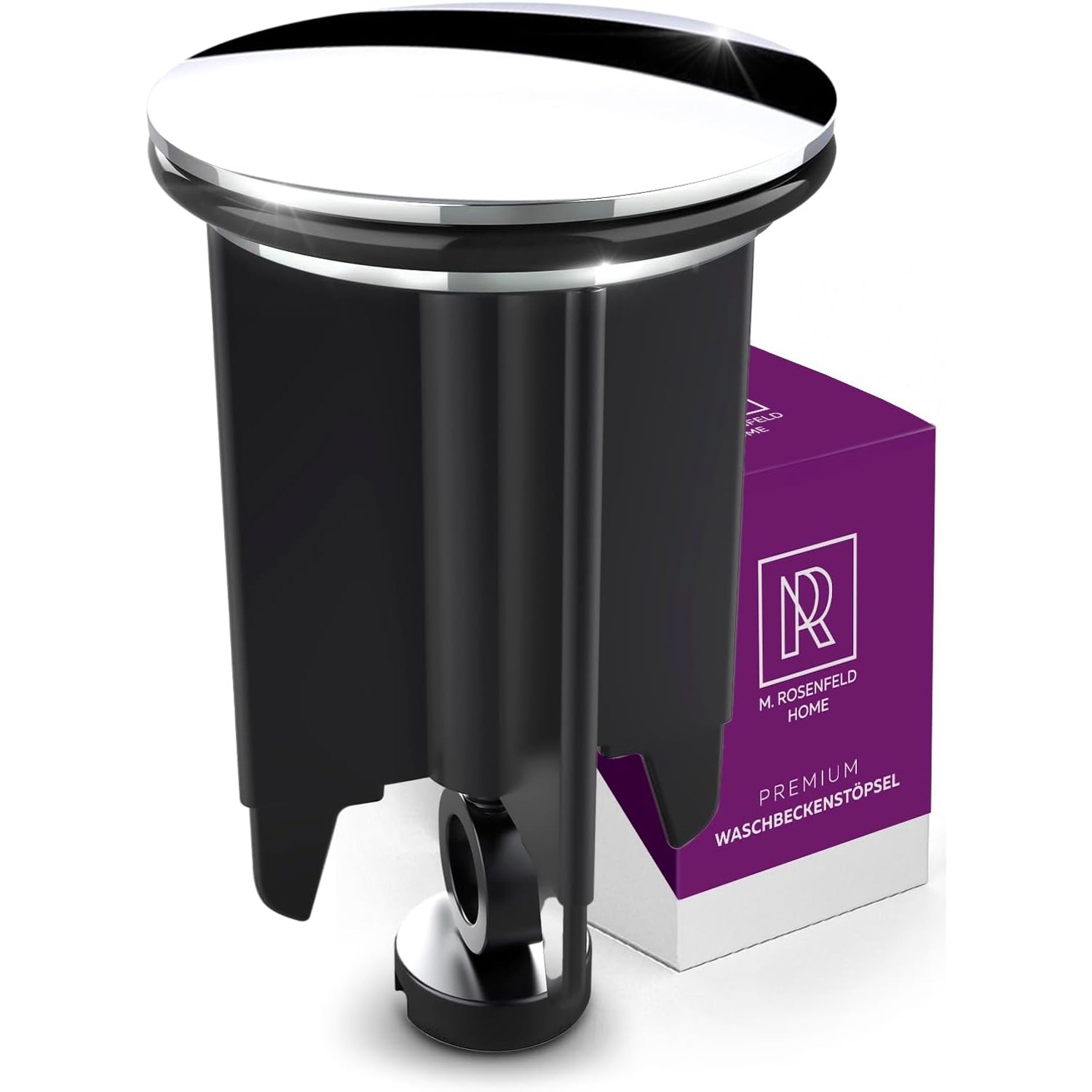
This style of plug drops into the drain opening and stays there. It is not tied to a chain, and it is not connected to anything under the sink.
Two things make it seal. The first is a rubber ring around the body of the plug. When the plug is pressed down into the drain, that ring is squeezed between the brass body and the inside wall of the waste. The squeeze is what closes the gap.
The second is the set of side guides running down the body. Guides sound like a minor detail, but they are doing the important work. If a plug can tip sideways in the drain, the seal goes tight on one side and loose on the other, and water escapes through the loose side. Four guides keep the plug sitting square so the rubber stays in even contact all the way around.
Height adjustment matters too. Waste fittings are not all the same depth. A plug with a fixed height either sits proud of the basin floor or sinks too deep to seal. Being able to adjust the height by hand means one plug covers the range of common fittings instead of just one.
Who this suits
If your basin drain opening is the standard 40mm, this is a straight swap. That covers most bathroom basins, most bidets and most small hand basins in guest toilets.
It is a good choice if you want something you can fit yourself. No spanner, no sealant, no trip to the hardware shop for an adapter. You pull the old one out, push this one in, and run the tap to check.
It is a good choice for rentals and managed properties, because nothing permanent happens to the basin. You can take it with you when you leave.
It is not the right plug for a kitchen sink or a bath. Both of those use larger wastes, and a 40mm plug will simply sit loose. Measure first and save yourself the return.
How to measure before you buy
This takes thirty seconds and prevents the most common mistake.
Pull out whatever plug is in the drain now. Put a ruler or a tape across the inside of the drain opening, edge to edge at the widest point. You want the inside diameter of the hole, not the outside of the waste ring sitting on top of the ceramic.
If you get something close to 40mm, you are in the right territory. Common sizes run close together, so an accurate reading matters more than a rough glance.
While you are in there, look at how deep the waste sits and whether there is an overflow slot in the side of the basin. Overflows are fine with this type of plug, since the overflow channel runs inside the ceramic and feeds into the waste below the plug seat. Your overflow keeps working exactly as it did.
Brass, chrome and why the material matters
Brass is used in plumbing for a reason. It does not rust, it machines accurately, and it stays dimensionally stable through thousands of hot and cold cycles. A brass body under a chrome surface gives you a part that keeps its shape rather than slowly distorting.
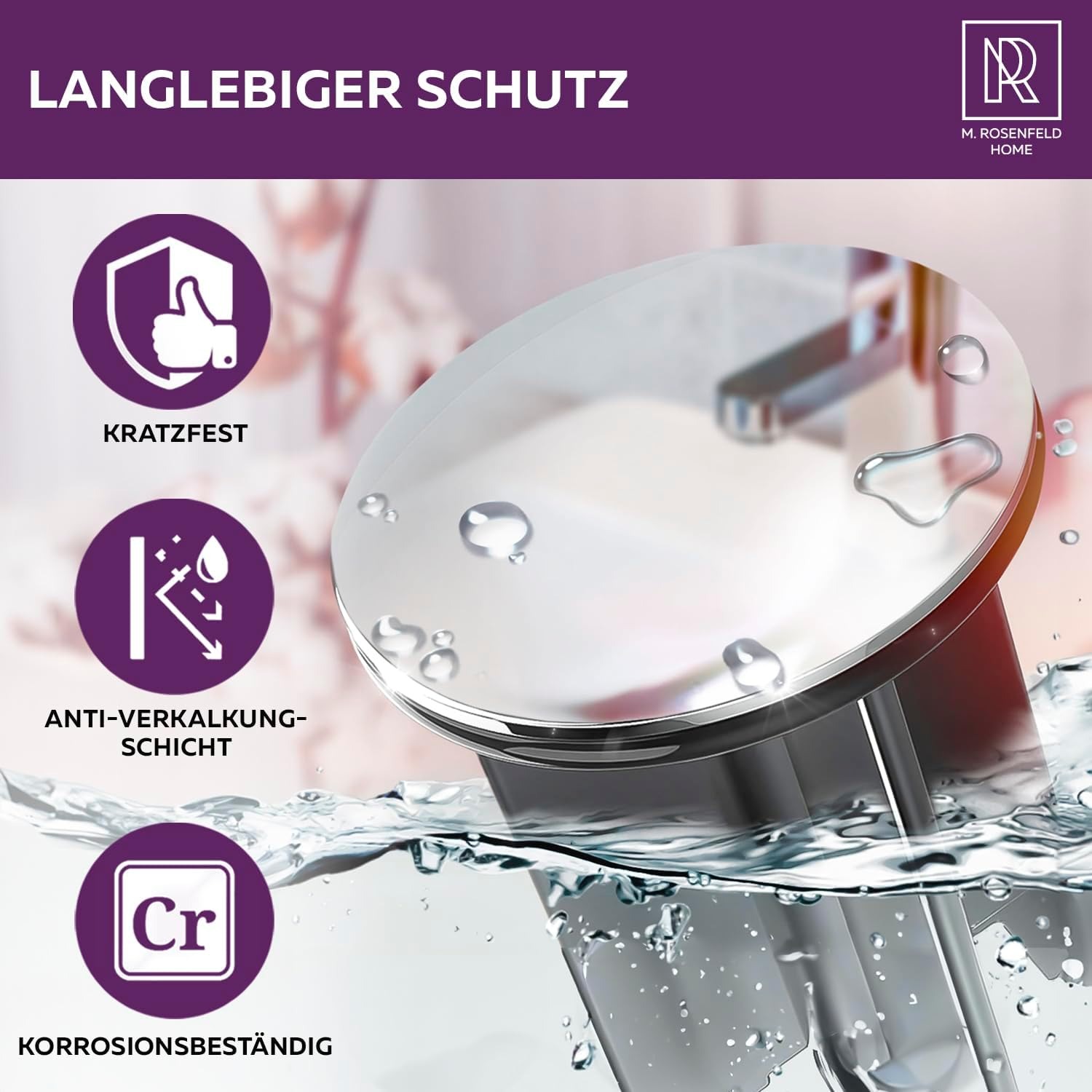
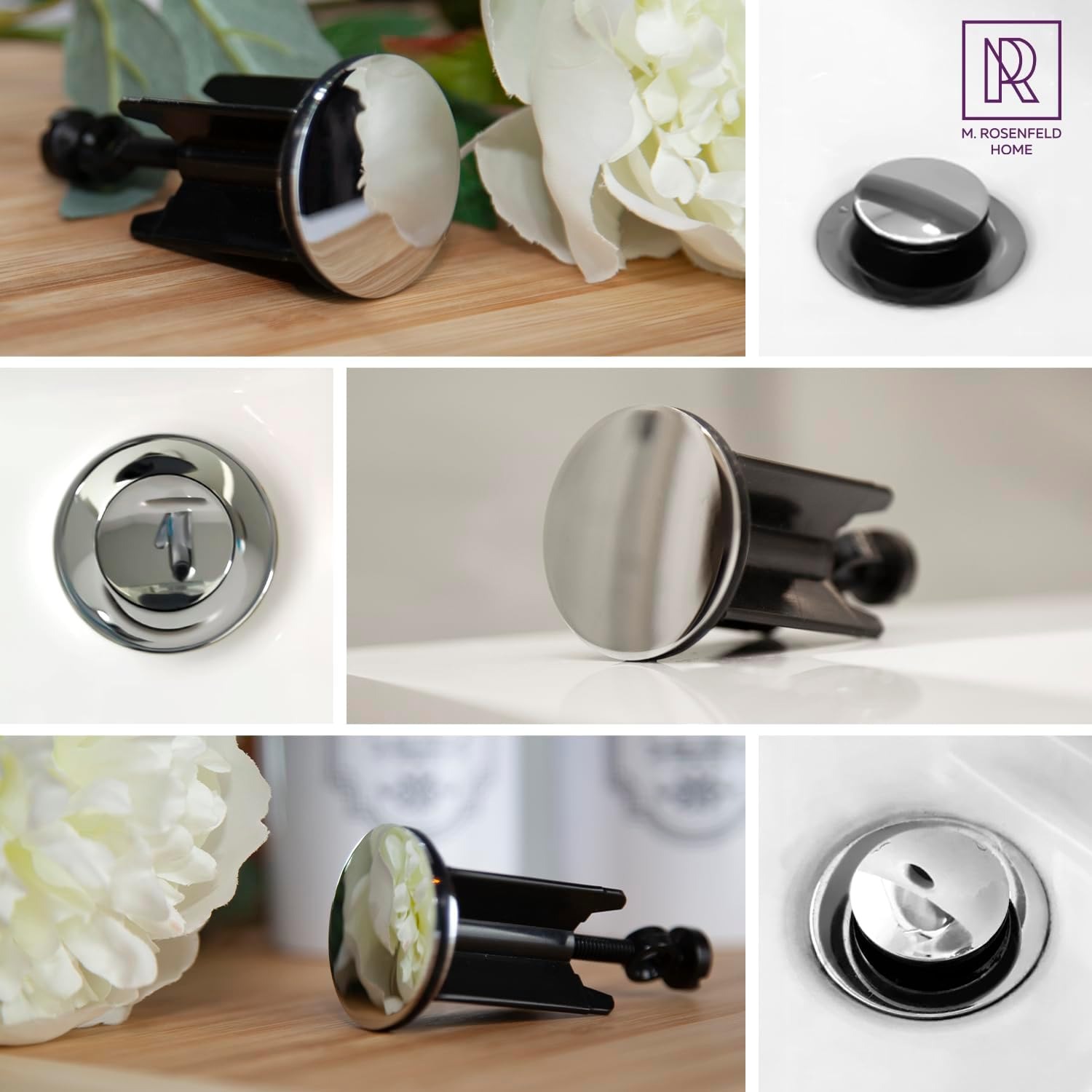
The chrome plating on the outside does two jobs. It gives a hard, smooth surface that resists water marks and cleans easily, and it matches the look of standard chrome taps and wastes. The visible cap of the plug is a small piece of metal sitting in the middle of your basin, so it is worth it looking deliberate rather than like a repair.
Finishes do vary slightly between manufacturers. Next to a bright chrome waste ring this blends in well. Next to brushed nickel or matte black fittings it will read as a different finish, which may or may not bother you.
Keeping it working
Care is simple, and doing it keeps the seal alive much longer than ignoring it.
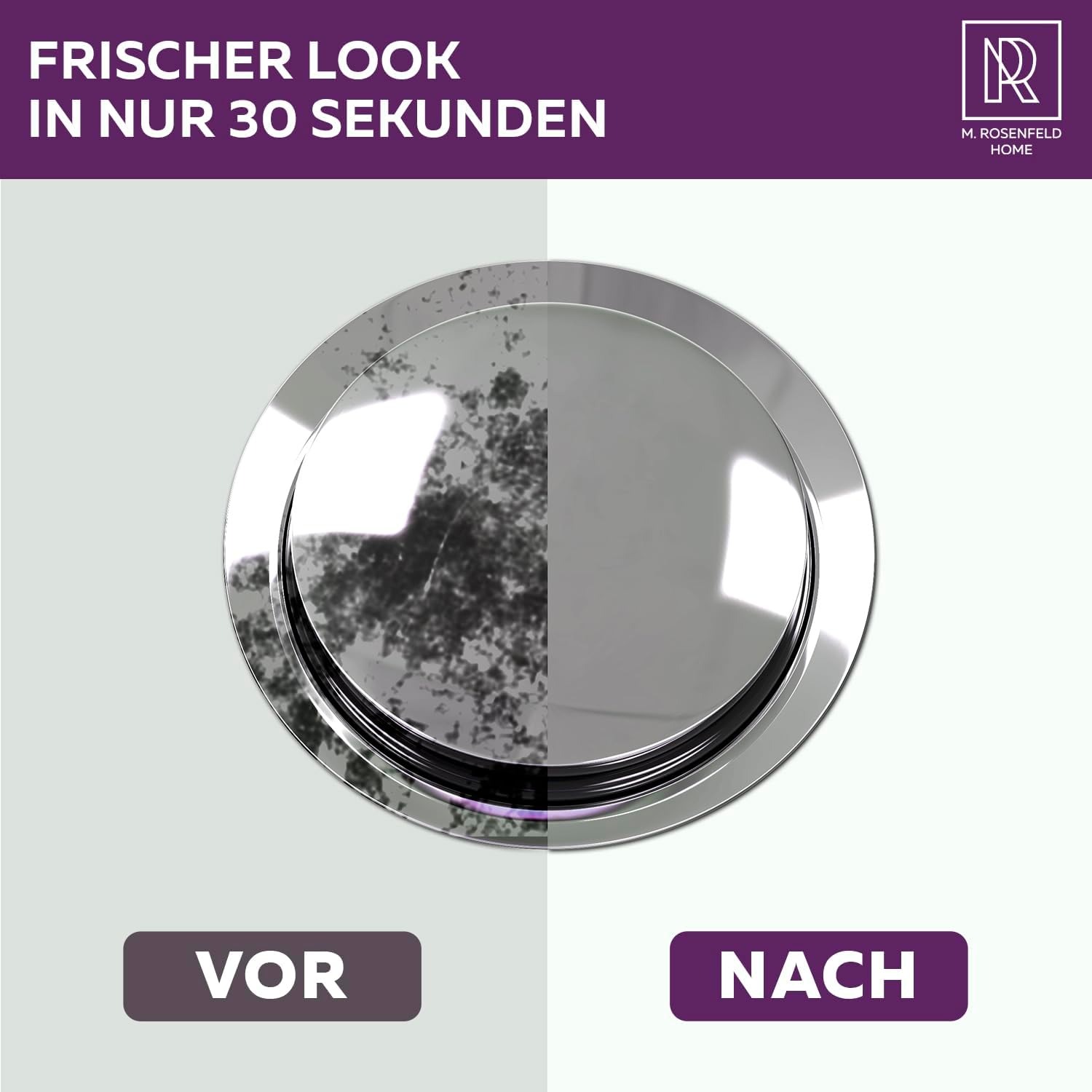
Rinse and dry. After the basin drains, a quick rinse under the tap and a wipe with a soft cloth clears soap film off the rubber and water spots off the chrome. Soap film on a seal is one of the main causes of a plug that mysteriously starts leaking.
Lift it out weekly. Hair and toothpaste gather under every plug. Thirty seconds with the plug out and a rinse keeps the drain running at full speed.
Skip the harsh stuff. Scouring pads scratch chrome. Strong acidic descalers and chlorine cleaners can dull the plating and harden rubber over time. Mild soapy water handles almost everything, and for stubborn limescale a gentle descaler used briefly and rinsed off will do.
If the plug does start to seep, check these in order. Is it pressed fully down? Is it sitting square? Is there a hair caught under the rubber ring? Nine times out of ten it is one of those three and not a fault with the plug.
The short version
A basin plug is a cheap part that has an outsized effect on whether your bathroom feels well kept. When the original goes, you do not need a plumber and you do not need to replace the whole waste.
Measure the inside of your drain opening. If it comes out at 40mm, a solid brass plug with a rubber seal and side guides will drop straight in and hold water properly. Fit it by hand, rinse it now and then, and it quietly does its job for years.
That is the whole story. Small part, easy fix, basin that actually fills.